
Table of Contents
If you’re researching outdoor solar pole lanterns, chances are you’re not looking for marketing fluff. You want to know whether a solar light post will actually light your driveway, how long it will last, what it really costs, and whether you’ll regret not running a wired line instead.
By the end of this article, you’ll know exactly when outdoor solar lights for posts make sense, when they don’t, how bright they really are, and what separates a reliable solar light from a disappointing one.
Introduction: Why Solar Lampposts Are Replacing Traditional Outdoor Lighting
Ten years ago, solar post lights were mostly decorative. Today, they’re legitimate lighting tools. Improvements in LED efficiency, battery chemistry, and charge controllers—concepts borrowed from solar inverter technology—have pushed modern outdoor solar pole lanterns into serious territory.
Homeowners are installing solar light post systems along long driveways to avoid trenching. HOAs are choosing outdoor solar lights for posts because they eliminate permitting headaches. Even small commercial properties are using solar light solutions for perimeter lighting where running conduit would be cost-prohibitive.
The shift isn’t ideological. It’s practical.
What Is a Solar Lamppost and How Does It Work?
At its core, a solar light post is a self-contained lighting system. There’s no mystery here—just components working together efficiently.
Core components of a solar light post
A typical solar light post includes:
- A photovoltaic panel mounted on top or integrated into the fixture
- A rechargeable battery housed in the post or head
- High-efficiency LEDs
- A charge controller that regulates power flow (conceptually similar to a solar inverter, though far smaller in scale)
During the day, the panel converts sunlight into electricity. That energy is stored in the battery. At dusk, a sensor triggers the LEDs.
How modern controllers improve reliability
One thing many buyers overlook is the controller. Older outdoor solar pole lanterns used simple on/off circuits. Modern systems use smarter regulation inspired by solar inverter logic—managing voltage, protecting batteries, and adjusting output based on remaining charge. That’s why today’s outdoor solar lights for posts can last through cloudy days without going dark at midnight.
Types of Solar Lampposts and Pole-Mounted Solar Lights
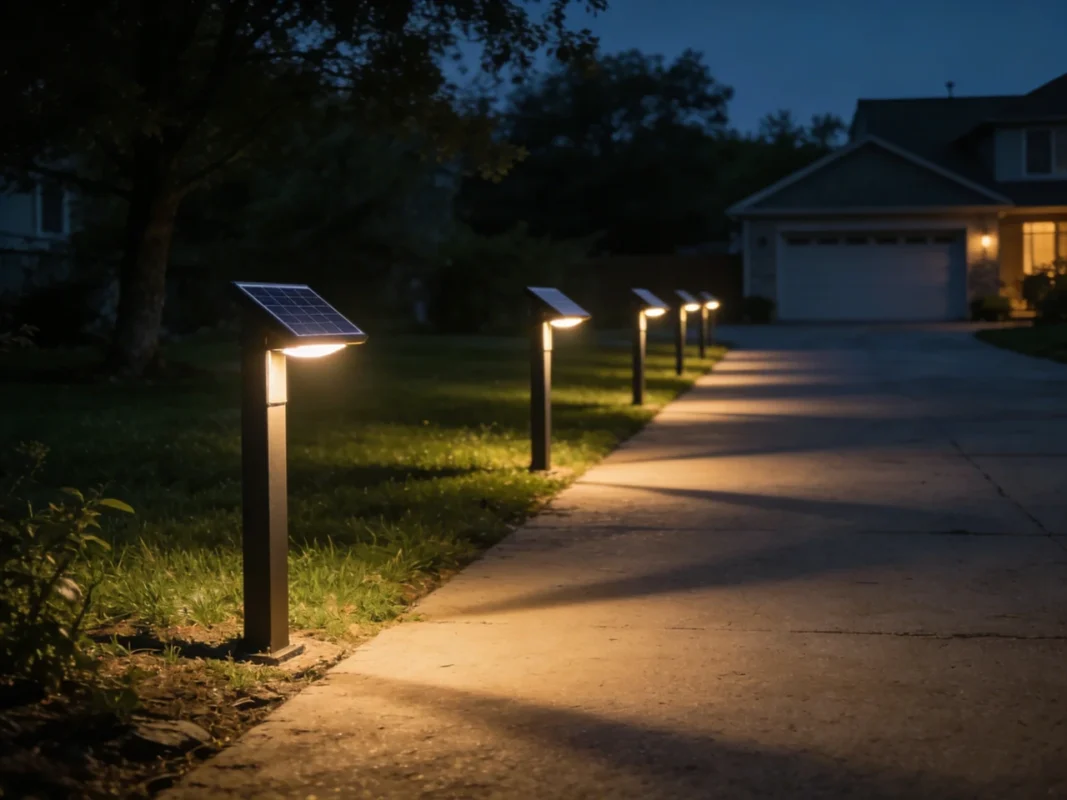
Not all solar lampposts are built for the same job. One of the biggest reasons people end up disappointed with a solar light post is that they unknowingly purchase the wrong type of product for their application. On paper, many models look similar. In real-world use, the differences become obvious within the first few weeks.
This section breaks down the main categories of outdoor solar pole lanterns and outdoor solar lights for posts, explaining where each type excels, where it struggles, and how experienced installers decide which style belongs in which location.
Residential vs Commercial Solar Lampposts
At a glance, residential and commercial solar lampposts can look nearly identical. The internal components tell a very different story.
Residential solar lampposts are designed primarily for homes, gardens, and small properties. They focus on visual appeal, moderate brightness, and compact size. Typical output ranges from 200 to 800 lumens, which is more than enough for walkways, garden borders, and light driveway marking.
These systems usually contain smaller batteries and modest solar panels. That keeps cost down and appearance streamlined, but it also means runtime is more limited during long cloudy stretches.
Commercial solar lampposts, on the other hand, are engineered for performance first. They use larger solar panels, higher-capacity batteries, and heavier-duty poles. Light output commonly starts around 1,000 lumens and can exceed 3,000 lumens for security-oriented installations.
From an electrical perspective, commercial units rely on smarter charge regulation concepts similar to those used in a solar inverter, optimizing charging efficiency, protecting batteries, and managing discharge rates. This is why commercial-grade outdoor solar pole lanterns maintain more consistent brightness throughout the night.
Practical takeaway: If your goal is ambiance or pathway guidance, residential-grade units are sufficient. If your goal is area lighting or security, commercial-grade outdoor solar lights for posts are the safer choice—even on residential property.
Decorative vs Functional Designs
This distinction matters more than most buyers realize.
Decorative solar lampposts are designed to look good first and illuminate second. Their housings often include frosted panels, ornamental frames, and warm color temperatures. Light is diffused in many directions, creating a soft glow rather than a focused beam.
They work well for:
- Garden paths
- Front-yard accents
- Landscape symmetry
They do not work well for:
- Driveway illumination
- Security lighting
- Task lighting
Functional solar lampposts prioritize beam control. They use reflectors or lenses to direct light downward and outward where it’s needed. The fixtures may look simpler, but they produce noticeably better ground-level illumination.
From field experience, homeowners who choose decorative units for functional tasks almost always end up upgrading later. Choosing function first saves money in the long run.
Outdoor Solar Pole Lanterns vs Deck Post Cap Lights
This is one of the most common points of confusion.
Deck post cap lights are small solar lights designed to sit on top of 4×4 or 6×6 posts. Most produce between 30 and 150 lumens. They’re excellent for:
- Marking deck edges
- Highlighting railings
- Creating atmosphere
They are not substitutes for a true solar light post.
Outdoor solar pole lanterns are full-height fixtures mounted on poles, usually 6 to 10 feet tall. Because of the mounting height and larger internal components, they can illuminate a wide area.
Think of it this way:
- Deck post cap light = accent marker
- Solar lamppost = area light
Trying to light a driveway with deck post caps is like trying to light a room with nightlights.
Integrated Solar Head vs Remote Panel Systems
Most modern outdoor solar lights for posts use an integrated panel mounted on top of the fixture. This design is clean, simple, and works well in open-sun environments.
However, some higher-performance solar lampposts use remote solar panels connected by cable. The light head mounts where illumination is needed, while the panel is positioned in full sun nearby.
Remote-panel systems are valuable when:
- The post location is shaded
- The site has tall trees or buildings
- Maximum charging is required
These systems borrow design logic from larger solar power systems, including charge management approaches similar to a solar inverter. They cost more but can dramatically improve reliability in challenging sites.
Single-Head vs Multi-Head Solar Light Posts
Single-head solar light posts use one light fixture per pole. They are common, affordable, and simple to install.
Multi-head solar lampposts feature two or more light heads mounted on the same pole. Each head typically shares the same battery and panel system.
Advantages of multi-head designs:
- Wider coverage area
- Fewer poles needed
- Balanced illumination
Trade-offs:
- Higher cost
- Larger battery and panel required
For wide driveways or open courtyard spaces, multi-head outdoor solar pole lanterns can reduce the total number of fixtures while maintaining uniform brightness.
Fixed-Brightness vs Adaptive Output Solar Lampposts
Some solar lampposts operate at a constant brightness all night. Others use adaptive output.
Fixed-brightness systems:
- Simple electronics
- Predictable output
- Easier to evaluate
Adaptive-output systems:
- Start bright, then gradually dim
- Adjust brightness based on battery state
- Often incorporate motion sensors
Adaptive designs extend runtime, especially in winter, but quality varies. Well-designed systems use intelligent power management concepts drawn from solar inverter technology. Poorly designed ones can feel erratic.
For most residential users, a fixed-output solar light post with sufficient battery capacity provides the most consistent experience.
Warm White vs Cool White Solar Lampposts
Color temperature affects both appearance and perceived brightness.
- Warm white (2700K–3000K): Softer, inviting, traditional look
- Neutral white (3500K–4000K): Balanced appearance
- Cool white (5000K+): Brighter, more clinical, better for security
Decorative outdoor solar pole lanterns typically use warm white. Functional outdoor solar lights for posts often use neutral or cool white.
Pole Height Variations
Pole height directly influences coverage:
- 6-foot poles: pathways, gardens
- 7–8-foot poles: driveways, yards
- 9–10-foot poles: wide areas, security
Higher poles require higher lumen output. A 1,000-lumen solar light post on a 10-foot pole will feel dimmer than the same light on a 6-foot pole.
Material Choices and Structural Design
Common pole materials include:
- Aluminum
- Powder-coated steel
- Composite materials
Look for corrosion-resistant coatings and sealed battery compartments. Structural rigidity matters more than aesthetics, especially in windy locations.
Experienced installers prioritize:
- Thick-walled poles
- Stainless fasteners
- Gasketed enclosures
These details determine whether your solar lamppost lasts five years or fifteen.
Choosing the Right Type: A Practical Framework
Instead of starting with price, start with purpose:
- Pathway or garden → Decorative residential solar lamppost
- Driveway or yard → Functional residential solar light post
- Large property or security → Commercial solar lamppost
- Shaded location → Remote-panel system
When the type matches the application, outdoor solar pole lanterns perform impressively. When it doesn’t, even expensive products disappoint.
Understanding these categories upfront prevents most of the problems people associate with solar lighting.
Pros and Cons of Solar Lampposts (Real-World Perspective)
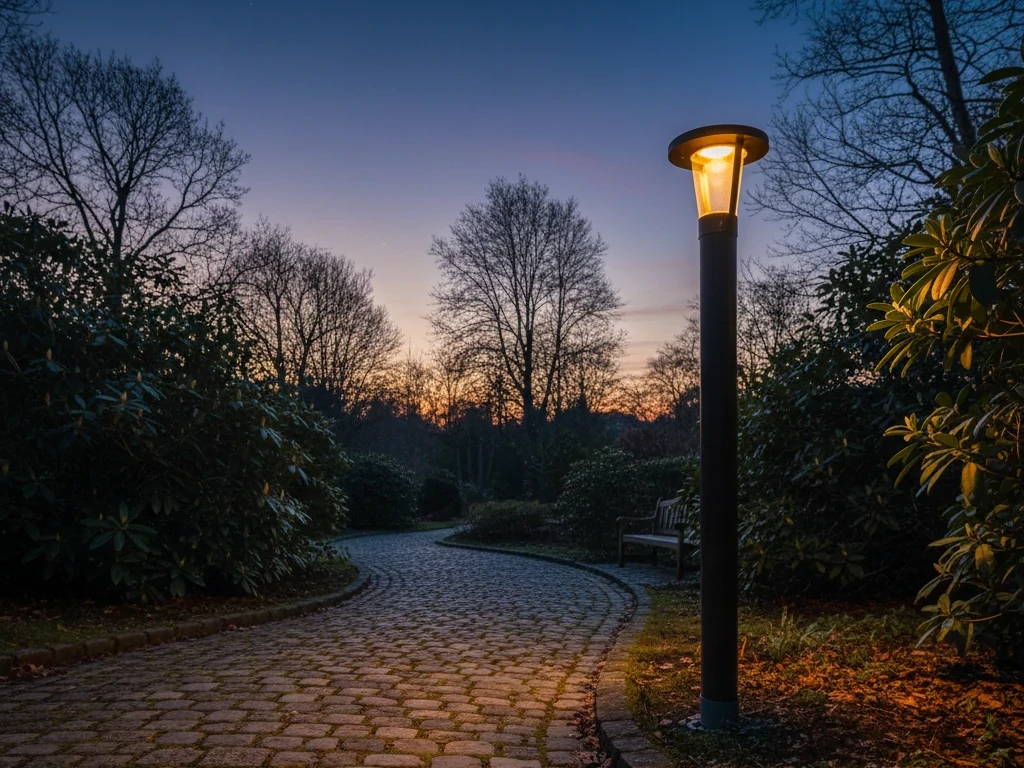
When evaluating solar light posts for your property, it’s easy to get swayed by glossy pictures or high lumen claims. The reality, from years of installing and maintaining outdoor solar pole lanterns, is nuanced. Solar lampposts work exceptionally well in some situations, and poorly in others. Understanding the pros and cons is crucial to avoid disappointment and maximize return on investment.
Pros
- No Trenching or Wiring Required
One of the biggest advantages of outdoor solar lights for posts is the simplicity of installation. Unlike traditional wired lampposts, solar lampposts do not require digging trenches, running conduit, or paying an electrician. In practice, a homeowner can install a standard 6–8 foot solar light post in under an hour. For long driveways or remote areas, this is a massive time and cost saver.
- Lower Lifetime Cost
While upfront costs of quality solar light posts can be higher than basic wired lights, the absence of electricity bills and reduced maintenance typically outweighs the initial expense over 10–15 years. Many installations recoup the premium cost in energy savings alone, and the reduced labor cost makes solar lampposts especially appealing for HOAs and commercial properties.
- Works During Power Outages
Unlike grid-tied lighting, solar pole lanterns remain operational during blackouts. This is particularly valuable in areas prone to storms or power instability. Even a moderate-output solar lamppost can provide crucial lighting for safety, helping illuminate pathways, driveways, and entry points when it’s needed most.
- Flexibility in Placement
Since solar light posts aren’t constrained by wiring, they can go wherever sunlight is available. You can place them in long stretches of yard, along garden paths, or at property perimeters without worrying about access to electrical circuits. For shaded or irregular spaces, using remote-panel designs or adaptive battery systems ensures consistent performance.
- Sustainability and Green Appeal
Solar lampposts harness renewable energy, producing zero emissions during operation. For environmentally conscious homeowners or businesses, outdoor solar pole lanterns provide a visible commitment to sustainability, often enhancing property appeal.
Cons
- Dependence on Sunlight
A major limitation of solar light posts is sunlight dependency. Even high-quality outdoor solar lights for posts will underperform if installed in shaded areas or in regions with limited sun exposure. North-facing installations or locations blocked by tall trees often require supplemental solutions, such as larger solar panels or remote-panel designs, to achieve consistent illumination.
- Battery Replacement is Inevitable
While LEDs and panels last decades, the battery—the heart of a solar lamppost—will eventually wear out. Typical lifespan ranges from 3–7 years depending on battery chemistry and environmental conditions. Heat, cold, and charge cycles all impact longevity. Experienced users plan for this replacement as part of long-term maintenance.
- Inconsistent Brightness in Poor Conditions
Unlike wired lighting, solar lampposts can dim on cloudy days or in winter months. Even the best solar light post with intelligent charge controllers may reduce output to conserve battery life. For critical lighting applications, such as security or high-traffic areas, it’s important to consider lumen output relative to expected sunlight conditions.
- Marketing Claims Can Be Misleading
Many solar lampposts advertise impressive lumen outputs, long runtimes, or “all-weather” capabilities. In practice, some of these claims are optimistic. Real-world experience shows that beam angle, pole height, and reflective design impact effective brightness more than raw lumens. Homeowners often report disappointment when purchasing units based solely on the box numbers.
- Higher Upfront Cost Compared to Basic Fixtures
Although solar lampposts save money over time, the initial purchase is usually higher than basic wired outdoor lights. For properties requiring multiple fixtures, this can be a significant factor. It’s worth comparing total cost of ownership rather than upfront price alone.
Real-World Perspective Summary
From professional experience, the success of solar light posts depends less on marketing and more on design, placement, and system understanding:
- Best use cases: pathways, gardens, long driveways, remote or off-grid locations
- Avoid: shaded areas, applications requiring extremely high lumen output without backup power
Solar Lamppost Brightness Explained: Lumens, Coverage & Visibility
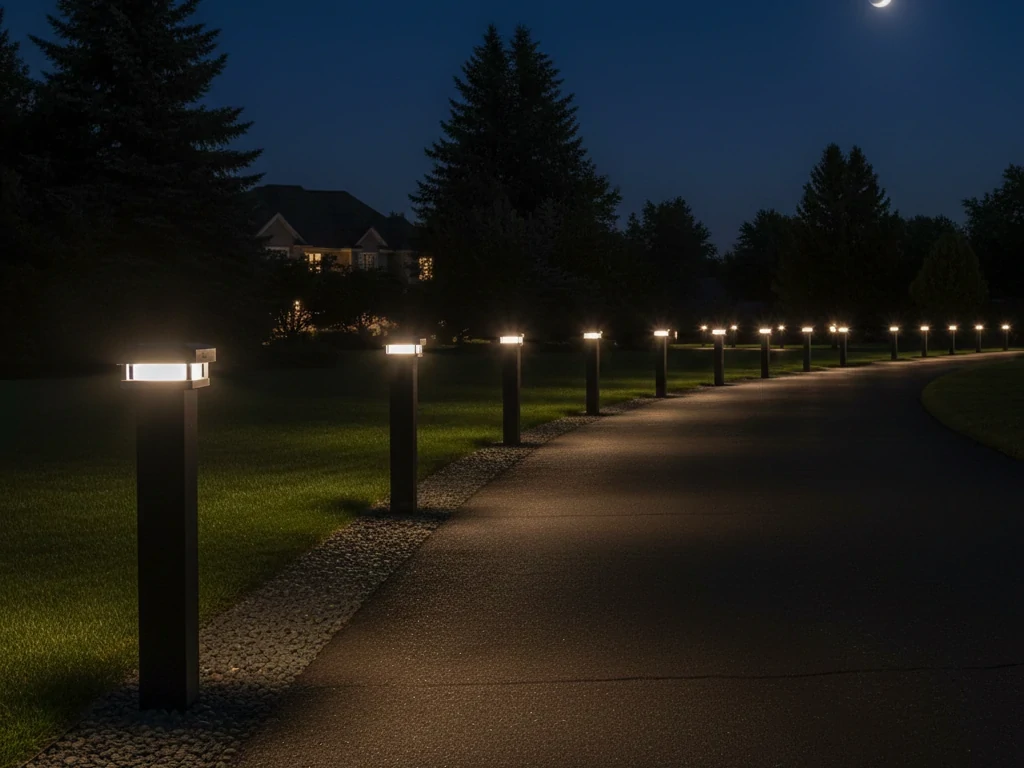
One of the most common reasons homeowners feel underwhelmed with outdoor solar pole lanterns is brightness. They buy a solar lamppost because the box claims “800 lumens,” only to find it barely lights their pathway. Understanding how lumens, beam coverage, and mounting height interact is crucial to getting reliable, functional lighting from your solar light post.
What Lumens Really Mean for Outdoor Solar Lights
Lumens measure the total amount of visible light a fixture emits. Many buyers mistakenly equate lumens with brightness at ground level. In reality, lumens only tell part of the story. The design of the fixture—reflectors, lensing, and beam angle—often has a greater impact on perceived brightness.
For example, a 600-lumen outdoor solar light with a focused downward beam can illuminate a 30-foot driveway more effectively than a 1,000-lumen decorative post that disperses light in all directions.
Key takeaway: Don’t rely solely on lumen ratings. Consider how the light spreads, pole height, and placement relative to pathways or work areas.
Recommended Lumens by Use Case
Real-world installations provide a clearer guide:
- Pathways and garden posts: 100–300 lumens. Enough for safe walking without overpowering your garden. Decorative solar light posts often fall in this range.
- Driveways and yards: 300–800 lumens. Ensures cars, pets, and people are visible, even in dim light. Functional outdoor solar pole lanterns typically operate here.
- Security or large area lighting: 1,000–2,000+ lumens. Used on commercial properties or long driveways. These require larger batteries and solar panels to sustain overnight illumination.
For homeowners installing multiple posts, balancing lumen output with battery capacity prevents mid-night dimming, especially in regions with less sun.
Beam Spread and Coverage
Lumens alone won’t tell you whether a solar light post will light your desired area. Beam spread, angle, and height are critical:
- Narrow beams concentrate light for tasks or security.
- Wide beams diffuse light for general ambiance.
- Higher poles (8–10 feet) require more lumens to achieve the same perceived brightness at ground level as shorter poles.
Experienced installers often recommend mock placements or test units to see how light falls over your property before buying multiple fixtures. This prevents the common “too dim, too scattered” problem.
What Are the Highest Lumens for Solar Post Lights?
Modern high-output outdoor solar lights for posts can reach 2,000–4,000 lumens. However, these levels introduce trade-offs:
- Large batteries and panels are required to sustain runtime.
- Beam diffusion and pole height affect perceived brightness.
- Even with high lumens, poor reflector design can reduce effective illumination.
For comparison, a 3,000-lumen solar light post on a 10-foot pole in a shaded driveway may run out of power by midnight, whereas a 1,200-lumen post in full sun can provide consistent light all night.
Color Temperature and Perceived Brightness
Perceived brightness also depends on color temperature:
- Warm white (2700K–3000K): Creates a soft, inviting glow. Ideal for gardens and pathways.
- Neutral white (3500K–4000K): Balanced brightness, suitable for general areas.
- Cool white (5000K+): Appears brighter and is preferable for security lighting.
For many solar light post installations, choosing neutral or cool white improves visibility without dramatically increasing lumen output.
How Long Do Solar Lampposts Last? (Panels, Batteries & LEDs)
When investing in outdoor solar pole lanterns, longevity is one of the most critical considerations. Buyers often ask, “Will my solar light post last more than a few seasons?” The answer depends on which components you focus on: solar panels, LEDs, and batteries. Understanding the real-world lifespan of each part helps you plan maintenance and avoid surprises.
Solar Panels: The Longest-Lasting Component
Solar panels in lampposts are remarkably durable. Most high-quality photovoltaic cells retain 80–90% of their original efficiency after 20–25 years. Panels are sealed against moisture and debris, meaning they are rarely the first failure point.
Expert insight: Electrical engineers specializing in outdoor lighting note that degradation is gradual. Panels may produce slightly less power in year 15, but intelligent charge controllers in modern solar light posts compensate by managing battery charge more efficiently, ensuring nighttime brightness remains consistent.
Practical tip: Keep panels clean and free from obstructions. Even high-end outdoor solar pole lanterns lose 10–20% efficiency if dust, pollen, or leaves accumulate. Seasonal cleaning is cheap, easy, and dramatically extends panel performance.
LEDs: Decades of Service
LEDs are the heart of any solar light. Unlike incandescent or fluorescent bulbs, LEDs in solar lampposts often last 50,000+ hours, which translates to over 10–15 years of nightly use.
Why LEDs don’t fail quickly:
- They generate far less heat than traditional bulbs.
- They are solid-state, meaning no filament can burn out.
- They tolerate frequent on/off cycles without impact.
In field installations, it’s rare to see an LED fail before the battery does. This makes them effectively maintenance-free for the life of the fixture.
Batteries: The Real Limiting Factor
Batteries are the component that requires attention. Their lifespan varies by chemistry, environmental conditions, and charge management:
- Lithium-ion: 3–5 years
- LiFePO₄ (lithium iron phosphate): 5–7 years
- NiMH or sealed lead-acid: 2–4 years
Battery performance is heavily influenced by temperature extremes. Heat accelerates chemical degradation, while cold reduces capacity temporarily. Overcharging or deep discharge without proper regulation can further shorten life.
Field insight: Many modern solar light posts integrate adaptive charge controllers, inspired by small-scale solar inverter logic, to protect batteries. These systems adjust output during low sunlight and prevent overcharging, extending battery life by 20–30% in real-world conditions.
Signs Your Solar Lamppost Needs Battery Replacement
Even without technical testing, several indicators suggest battery replacement is due:
- The light fades earlier each night
- The brightness is inconsistent from day to day
- The system doesn’t reach full brightness even after sunny days
Replacing the battery restores full performance, often making an older solar light post feel like new again.
Environmental Impact on Lifespan
Location matters. Solar lampposts in mild climates with consistent sun may see batteries last their full rated lifespan. Those in regions with extreme heat, heavy snow, or long cloudy periods may require earlier replacement. Proper pole placement, sun exposure, and using adaptive systems are the keys to mitigating environmental stress.
Real-World Maintenance Tips
- Clean the panels at least twice a year to remove dust and debris.
- Inspect batteries every 2–3 years, particularly if you notice reduced nighttime runtime.
- Check enclosures for water intrusion or corrosion. A sealed battery compartment is essential.
- Plan replacements proactively, especially in multi-post installations, to avoid uneven lighting across a property.
Summary
In practical terms:
- Panels: 20–25 years, minimal maintenance
- LEDs: 50,000+ hours, often outlasting the battery
- Batteries: 3–7 years, depending on chemistry and environment
A well-maintained solar light post can provide reliable outdoor illumination for over a decade. The secret is understanding which component limits life (usually the battery), protecting it, and choosing outdoor solar pole lanterns with smart charge management. By focusing on these details, homeowners and professionals alike can maximize uptime and satisfaction.
Where Should You Place a Solar Lamppost for Best Performance?
Installing outdoor solar pole lanterns isn’t just a matter of sticking a pole in the ground. Placement dramatically affects performance, longevity, and brightness of your solar light post. From years of field installations, experts consistently emphasize that sunlight, spacing, and surroundings are the three most critical factors.
Sunlight Requirements
A solar light post depends on its solar panel to charge the battery. Most systems require 6–8 hours of direct sunlight per day to achieve full-night operation. Less sunlight means the light may dim early, or not reach full brightness.
Key placement rules:
- Position the solar panel in an area free from shadows caused by trees, buildings, or fences.
- Avoid north-facing locations in the Northern Hemisphere. South-facing or southwest-facing panels generally receive the most sun throughout the year.
- Consider seasonal changes: a spot that is sunny in summer may be shaded in winter due to tree growth or sun angle.
Expert insight: Some high-performance outdoor solar lights for posts include adaptive charge controllers that mimic small-scale solar inverter logic, optimizing battery charging even in less-than-ideal sunlight. However, no system can compensate entirely for consistently shaded locations.
Avoid Common Placement Mistakes
- Under dense tree canopies: Even partial shading can reduce runtime by 30–50%.
- Too close to structures: Roof eaves or walls can block direct sunlight, especially in winter.
- Crowded spacing: Installing poles too close together may create uneven illumination, while leaving large gaps can leave dark spots.
Optimal Pole Spacing
Proper spacing ensures even illumination across pathways, driveways, or garden areas. Field-tested recommendations:
- Pathways: 10–15 feet between posts
- Driveways: 15–25 feet apart, depending on lumen output and pole height
- Open yards or larger areas: 20–30 feet apart, using higher-lumen solar light posts
Multi-head solar lampposts can reduce the total number of posts needed in wide areas, but always test coverage to avoid blind spots.
Consider Pole Height
Pole height influences light distribution. Taller poles spread light over a larger area but reduce perceived brightness on the ground if lumen output is insufficient.
- 6–7 feet: ideal for garden paths and small yards
- 8–10 feet: suitable for driveways, large yards, or security applications
Choosing the right height in combination with lumen output ensures your outdoor solar pole lanterns provide both safety and aesthetic appeal.
Ground Reflection and Surface Considerations
The type of surface beneath your solar light post also impacts perceived brightness:
- Light-colored concrete, gravel, or stone reflects more light, improving visibility.
- Dark surfaces, mulch, or dense grass absorb light, making the same fixture appear dimmer.
When planning placement, take into account not just the distance between posts, but also how the light interacts with the ground and surroundings.
Special Situations
- Shaded sites: If you must place a solar lamppost in a partially shaded area, consider using a remote solar panel mounted in full sun, connected to the pole via cable.
- Security lighting: Position posts to illuminate entrances, corners, and high-traffic areas, not just to line a path decoratively.
- Aesthetic installations: For decorative garden or patio lighting, follow visual symmetry and sightlines, balancing brightness with ambiance.
Practical Placement Checklist
- Ensure at least 6–8 hours of direct sunlight.
- Avoid shadows from trees, walls, or seasonal foliage.
- Space poles according to the application (pathway, driveway, yard).
- Match pole height and lumen output to the area being illuminated.
- Consider reflective surfaces and light absorption in the surrounding area.
- Test placement with one fixture before committing to multiple posts.
Solar Lamppost Costs: What You Really Pay Over Time
When evaluating outdoor solar pole lanterns, upfront price is just the beginning. Experienced installers and homeowners know that the total cost of ownership—including installation, maintenance, and electricity savings—provides a clearer picture. This section breaks down what you can realistically expect to spend on a solar light post over its lifetime and compares it to traditional wired lighting.
How Much Does a Solar Light Post Cost?
The cost of a solar light post varies widely depending on output, design, and durability. Based on field surveys and market research:
- Decorative residential units: $80–$200 per post
- Functional residential or small driveway units: $200–$500 per post
- High-output or commercial-grade solar lampposts: $500–$1,200+ per post
Factors that influence price include:
- Lumen output: Higher lumens require larger batteries and solar panels.
- Battery chemistry and capacity: Lithium iron phosphate or high-capacity lithium-ion batteries increase both performance and cost.
- Pole height and construction materials: Taller poles and corrosion-resistant materials are more expensive.
- Weatherproofing and electronics: Sealed enclosures, high-quality charge controllers, and adaptive systems add to cost.
Expert insight: A high-quality solar light post is an investment in both convenience and longevity. Cheaper models may save money upfront but often have shorter battery life or lower lumen performance.
Lifetime Cost Considerations
Unlike wired lighting, outdoor solar lights for posts do not consume electricity. Over 10–15 years, the lack of energy bills can offset higher upfront costs.
Typical lifetime costs include:
- Initial purchase and installation – usually the bulk of the expense
- Battery replacement – every 3–7 years depending on chemistry
- Minor maintenance – cleaning panels, checking seals, replacing LEDs if necessary (rare)
Practical calculation: A 6-post driveway system using mid-range solar lampposts ($300 each) may cost ~$1,800 upfront. Over 15 years, with 1–2 battery replacements per post and minimal maintenance, the total cost may rise to ~$2,500. Compare this to wired alternatives: trenching, conduit, electrical labor, and ongoing electricity usage often exceed $3,000–$3,500 over the same period.
Solar vs Wired Lamppost Cost Comparison
Wired lampposts have lower purchase prices for individual units, often $50–$150 per fixture. However, installation costs are high due to:
- Trenching and conduit
- Electrical permits and inspection fees
- Connection to grid circuits
- Labor for multiple poles
Electricity costs add up over time, especially for high-lumen or multiple-unit systems. In contrast, solar light posts are self-contained and use renewable energy, eliminating both wiring labor and recurring electricity costs.
Real-world insight: Even for long driveways or perimeter lighting, solar lampposts frequently achieve break-even within 5–7 years. For off-grid locations, they are often the only practical solution.
Cost vs Performance Trade-offs
When budgeting for a solar light post, it’s tempting to buy the cheapest model. Experienced installers advise against this because:
- Lower-cost units may have smaller batteries, leading to shorter nighttime runtime.
- Inadequate panel size reduces efficiency on cloudy days.
- Cheap electronics may fail within 1–2 seasons.
Investing in a mid-range or high-quality outdoor solar pole lantern ensures brighter, longer-lasting illumination and reduces frustration over battery replacements or dim lighting.
Choosing the Right Solar Lamppost: Buyer Checklist
Before buying outdoor solar lights for posts, evaluate:
- Verified lumen output
- Battery chemistry and capacity
- Panel orientation
- Weather rating
- Battery access for replacement
If a product hides its battery or specs, that’s a red flag.
Conclusion: Are Solar Lampposts Worth It in 2026 and Beyond?
If you value flexibility, lower long-term cost, and independence from the grid, outdoor solar pole lanterns are absolutely worth considering. The key is understanding how a solar light post actually performs in the real world—not how it looks on the box.
Choose wisely, place thoughtfully, and treat your solar light system like the miniature power plant it is—one guided by the same principles that make large-scale solar inverter systems reliable. Done right, outdoor solar lights for posts can serve you well for years, quietly doing their job every night.
Frequently Asked Questions
How much does a solar light post cost?
The cost varies depending on lumen output, pole height, and battery size:
• Decorative residential posts: $80–$200 each
• Functional residential posts: $200–$500 each
• Commercial or high-output posts: $500–$1,200+ each
Practical insight: While the upfront cost may seem high compared to wired options, solar lampposts save money over time by eliminating electricity bills and expensive installation labor. Over a 10–15 year period, total cost of ownership often ends up lower than traditional wired lighting.
Where should I place a solar lamp post?
Optimal placement depends on sunlight, coverage needs, and surrounding obstacles:
• Ensure 6–8 hours of direct sunlight daily
• Avoid shaded areas under trees, roofs, or walls
• Space posts according to application: 10–15 feet for pathways, 15–25 feet for driveways, 20–30 feet for open areas
• Consider reflective surfaces and ground type for improved perceived brightness
Expert tip: Test one unit before installing multiple posts to ensure coverage and brightness meet your expectations.
How long do solar post lights last?
The lifespan varies by component:
• Solar panels: 20–25 years with minimal efficiency loss
• LEDs: 50,000+ hours, often outlasting batteries
• Batteries: 3–7 years depending on chemistry and usage
Replacing the battery restores full performance. Maintenance, such as cleaning panels and checking enclosures, extends the overall lifespan.
Are solar lamp posts any good?
Yes, when properly chosen and installed:
• They provide reliable lighting for paths, driveways, and yards
• Work during power outages, unlike wired systems
• Offer energy savings and environmentally friendly operation
• Require minimal maintenance if panel exposure, battery capacity, and placement are correct
Caution: Poor placement, undersized batteries, or low-quality units can lead to dim or inconsistent lighting.
How many lumens should a post light be?
Lumens indicate total light output, but effective brightness depends on beam spread and pole height:
• Garden paths: 100–300 lumens
• Driveways: 300–800 lumens
• Security or commercial areas: 1,000–3,000+ lumens
Tip: Choose lumen output according to the area and desired brightness. Higher poles need more lumens for the same perceived brightness at ground level.
What are the highest lumens for solar post lights?
High-performance outdoor solar lampposts can reach 2,000–4,000 lumens, typically in commercial or security-grade units.
• These require larger solar panels and batteries to sustain all-night performance.
• Beam design, mounting height, and environmental factors influence perceived brightness.
Field insight: Even high-lumen posts under shade or poor panel orientation may fail to deliver expected illumination.
Do solar lampposts work in cloudy weather?
Yes, but with reduced performance:
• Panels collect less energy, so the battery may not fully charge
• Lights may dim or shut off early to conserve power
• Using a high-capacity battery or remote-panel system can mitigate performance drops
Can I install a solar light post myself?
Absolutely. Installation is straightforward:
• No trenching or wiring is required
• Most units come with a simple anchor or ground sleeve
• Typical installation time is under an hour per post
Pro tip: Level the pole and ensure the solar panel faces unobstructed sunlight for best performance.
How do I maintain a solar lamppost?
Routine maintenance keeps your posts performing optimally:
• Clean panels twice a year to remove dust, pollen, or leaves
• Inspect batteries every 2–3 years and replace when capacity drops
• Check pole enclosures for water intrusion, corrosion, or loose hardware
• Adjust placement if nearby vegetation grows and casts new shadows
Can I use a solar lamppost for security lighting?
Yes, if you choose the right type:
• Use high-lumen, functional posts rather than decorative models
• Opt for taller poles and cool or neutral white LEDs for maximum visibility
• Consider adaptive or motion-sensor models to extend battery life
Field insight: Well-placed, commercial-grade solar light posts can provide reliable perimeter security, especially in off-grid or remote locations.