
When it comes to designing a home, hallways are often overlooked—but the right hallway light fixture can completely transform these transitional spaces. A well-chosen light not only illuminates your path but also enhances safety, style, and the overall flow of your home. In this guide, we’ll walk you through everything you need to know about selecting, measuring, and installing your ideal hallway light fixture, including expert tips, the latest trends for 2026, and practical advice for both DIY enthusiasts and professional installers.
Understanding Hallway Lighting Essentials
Hallways are more than just transitional spaces—they set the tone for your home and impact both safety and aesthetics. Choosing the right hallway light fixture requires understanding the space, types of lighting, and how light affects perception. Let’s break down the essentials so you can make an informed, expert-level decision.
Why Hallway Lighting Matters
Lighting in a hallway is about more than just visibility. A properly lit corridor:
- Enhances Safety: Prevents trips and collisions, especially in homes with children or elderly residents.
- Improves Perception of Space: Even a narrow hallway can feel wider and more welcoming with evenly distributed light.
- Sets the Mood: Warm or soft lighting creates a cozy ambiance, while bright, neutral lighting improves clarity and navigation.
Expert Insight: Interior designers often call hallways the “first impression corridor.” A hallway light fixture that balances brightness and style can make an immediate positive impression on guests while complementing your overall interior design.
Types of Hallway Light Fixtures
Choosing the right type of hallway light fixture is key for functionality and style. Common options include:
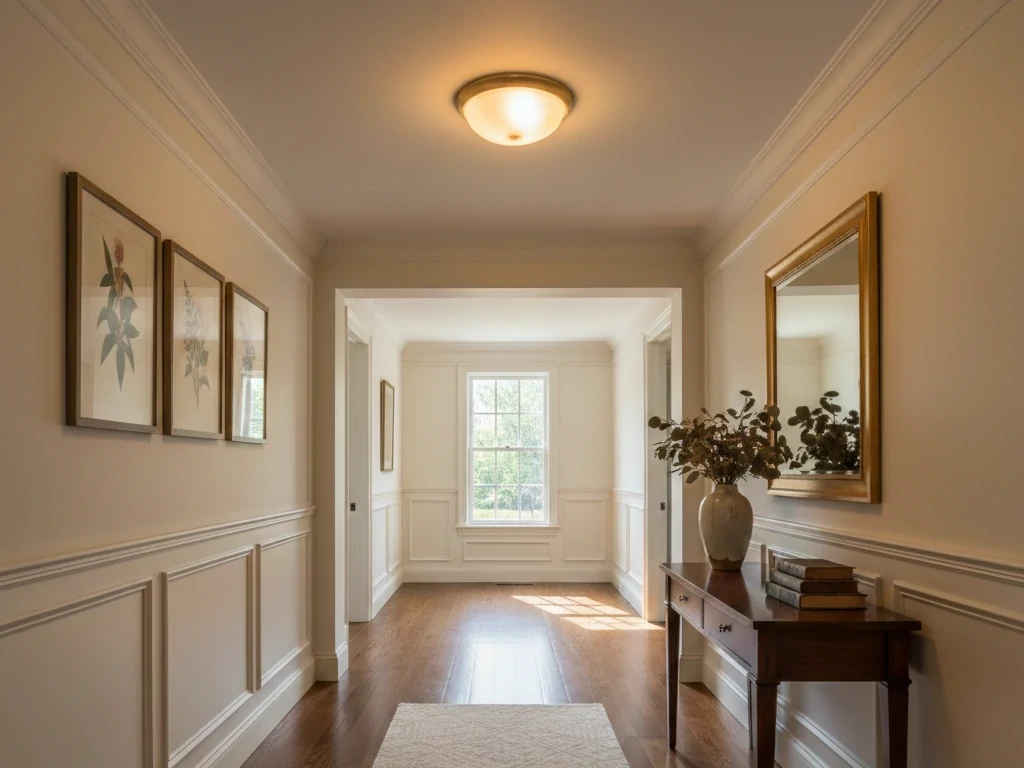
- Flush Mount Hallway Ceiling Lights
- Sit close to the ceiling, ideal for low ceilings.
- Slim design maximizes headroom while providing even illumination.
- Energy-efficient LED flush mounts are particularly practical for long-term use.
- Semi-Flush Mount Fixtures
- Hang slightly below the ceiling, creating decorative impact.
- Work well in hallways with higher ceilings or when a statement fixture is desired.
- Recessed Lighting
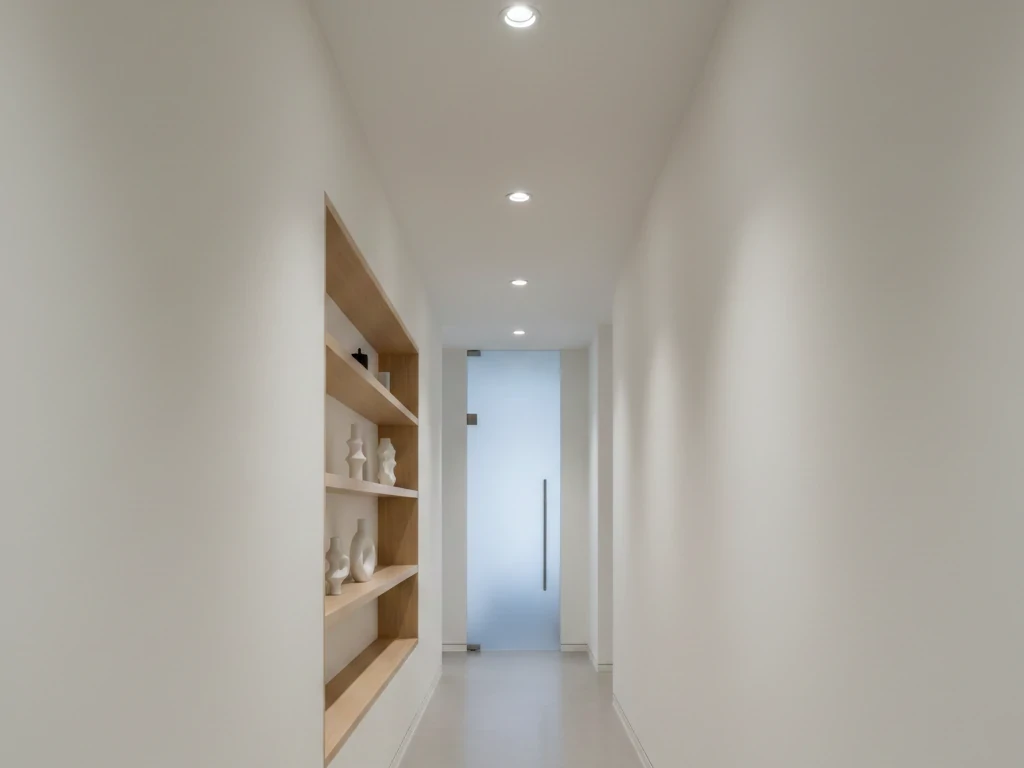
- Built into the ceiling for a clean, minimalist look.
- Ideal for long hallways to avoid overcrowding while maintaining bright, even lighting.
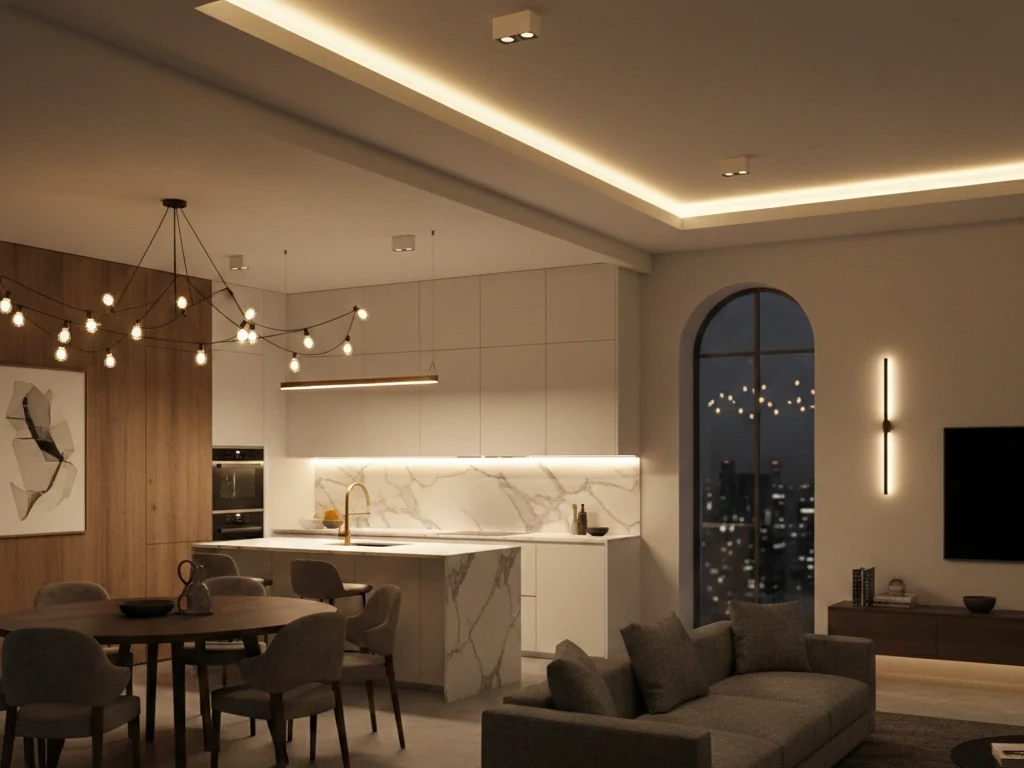
- Track or Accent Lighting
- Directs light to highlight artwork, photographs, or architectural details.
- Often used in wider hallways for depth and visual interest.
Practical Tip: For narrow hallways, flush mount hallway ceiling lights are usually the best choice—they prevent obstructions while ensuring sufficient illumination. Combining flush mounts with recessed or accent lighting can create layered, professional-looking lighting.
How Lighting Affects Hallway Functionality
- Even Illumination Prevents Shadows: Poorly positioned lights can create dark spots, making the hallway feel cramped.
- Color Temperature Matters: Warm white light (2700–3000K) feels cozy, while neutral white (3500–4000K) improves visibility and alertness.
- Fixture Placement: Position fixtures along the hallway’s centerline to avoid uneven lighting; longer hallways may require multiple fixtures spaced evenly.
By understanding these basics, homeowners can select a hallway light fixture that balances style, functionality, and comfort—laying the groundwork for selecting the right ceiling light size and type in the next steps.
How to Measure for the Right Ceiling Light
Selecting the perfect hallway light fixture isn’t just about style—it’s about proportion. Choosing a fixture that’s too small or too large can throw off the balance of your hallway, creating either a cramped or overwhelming look. Measuring correctly ensures your ceiling light complements the space, provides optimal illumination, and fits safely.
Why Accurate Measurements Matter
Proper measurement affects:
- Safety: Prevents a flush mount from hanging too low in narrow hallways.
- Aesthetics: Ensures the fixture is proportional to the hallway’s width and length.
- Functionality: Guarantees even light distribution without dark spots.
As one lighting designer explains, “Even the most stylish flush mount can feel awkward if it’s not scaled to the space. Measurement is the first step in achieving both function and design harmony.”
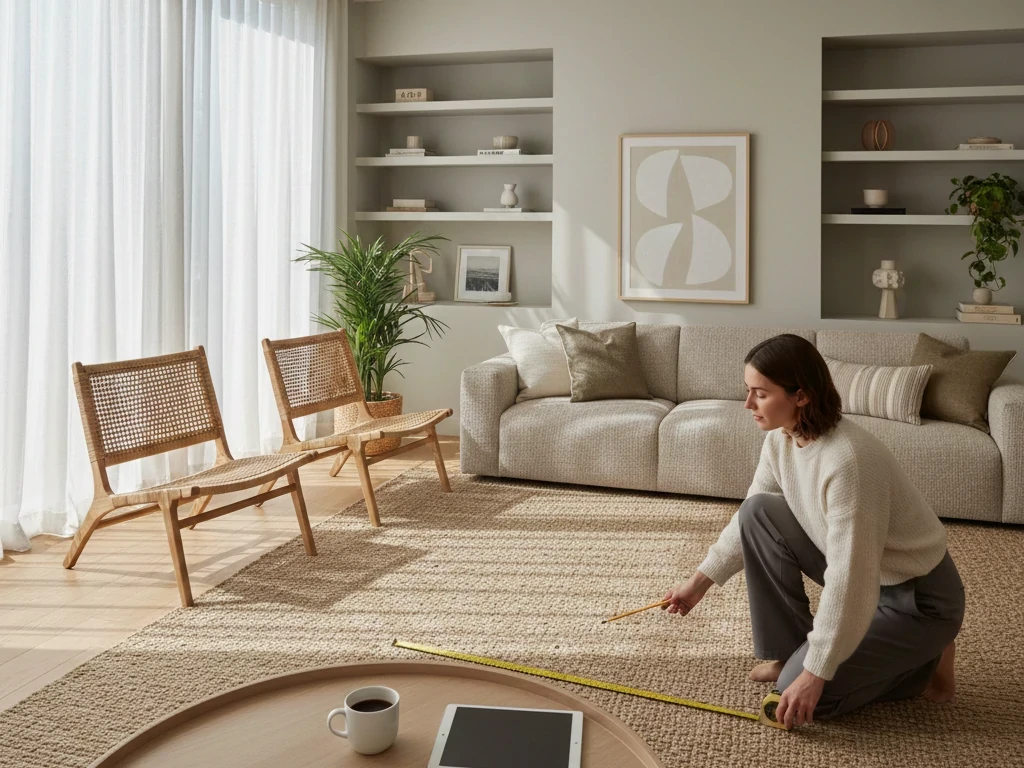
How to Measure a Round Flush Light
Many homeowners struggle with how to measure a round flush light. Follow this practical, step-by-step approach:
- Measure the Diameter
- Use a tape measure to find the widest point across the fixture.
- For circular flush mounts, the diameter determines how much visual presence the fixture will have in the hallway.
- Measure the Height
- Determine the distance from the ceiling to the bottom of the fixture.
- Ensure at least 7 feet of head clearance to prevent accidental bumps in narrow corridors.
- Check Clearance from Walls
- Maintain a distance equal to roughly half the fixture’s diameter from nearby walls.
- This prevents shadows and uneven lighting along the hallway.
Pro Tip: If you have a long hallway, consider multiple smaller flush mounts instead of one large fixture to maintain even illumination.
Calculating Ideal Ceiling Light Size
Determining the right ceiling light size is key for balance and proportion. A widely accepted formula in interior lighting is:
Ceiling Light Diameter (in inches) = (Room Length + Room Width in feet) × 1.5
Example: For a 10×12-foot hallway: (10 + 12) × 1.5 = 33 inches diameter.
Additional considerations:
- Low Ceilings: Use flush mount or LED flush mount fixtures to maintain clearance.
- Long Hallways: Multiple smaller fixtures can prevent dark patches and create visual rhythm.
- Style and Design: Even if the formula suggests a larger fixture, consider the hallway’s decor and ceiling height before finalizing.
Expert Insight: Lighting consultants recommend always measuring before buying. A fixture that’s too large or too small will compromise both style and function, regardless of its design quality.
Tips for Consistent Lighting in Hallways
- Center the Fixture: Align flush mounts along the hallway’s centerline for balanced illumination.
- Maintain Even Spacing: For multiple fixtures, measure equal distances to avoid uneven brightness.
- Consider Dimmers or Adjustable LEDs: Control the light level to match time of day and desired ambiance.
By combining precise measurement with thoughtful fixture selection, you can ensure your hallway light fixture illuminates safely, looks proportional, and enhances the overall design.
Choosing the Right Hallway Light Fixture
Selecting the perfect hallway light fixture goes beyond aesthetics. It’s about combining function, style, and proportion so the hallway feels safe, inviting, and visually balanced. Whether you’re installing a new fixture or replacing an old one, understanding key considerations ensures your hallway lighting serves both practical and design purposes.
Factors to Consider Before Choosing a Fixture
Before picking a fixture, assess your hallway and its requirements:
- Ceiling Height and Hallway Width
- Low ceilings (<8 feet) → flush mount hallway ceiling lights work best.
- High ceilings → semi-flush or decorative fixtures can add character without crowding.
- Narrow hallways → avoid oversized fixtures that can overwhelm the space.
- Brightness and Color Temperature
- LED options allow precise control over lumen output.
- Warm white (2700–3000K) creates a cozy feel.
- Neutral white (3500–4000K) enhances visibility in functional spaces.
- Style and Design
- Align the fixture with the hallway’s decor: minimalist, traditional, or contemporary.
- Consider textures, finishes, and shapes to complement walls and flooring.
- Energy Efficiency and Longevity
- LED flush mount fixtures are cost-effective, long-lasting, and low-maintenance.
- Dimmable LEDs provide flexibility for different times of day.
Expert Tip: A fixture that balances brightness, size, and style transforms a simple hallway into a functional, inviting passageway.
How to Choose a Ceiling Light
Selecting the right ceiling light involves a step-by-step approach:
- Define the Purpose
- Is the hallway purely functional, or does it serve as a design statement?
- For long hallways, layered lighting (flush mounts + recessed lights) may be needed.
- Measure and Calculate
- Use ceiling light size formulas to determine proportional dimensions.
- Ensure at least 7 feet of clearance for flush mounts.
- Choose the Type
- Flush mount hallway ceiling lights for low ceilings.
- Semi-flush for higher ceilings or statement lighting.
- Consider recessed or accent lighting for added dimension.
- Style and Finish
- Match the fixture’s aesthetic to hallway decor.
- Choose finishes that complement wall color and flooring for a cohesive look.
- Installation Feasibility
- Verify wiring, ceiling structure, and weight limits.
- For heavier fixtures, consider professional installation.
Pro Insight: “Selecting the right ceiling light is both an art and a science,” notes an interior lighting consultant. “A well-proportioned flush mount creates a polished look while ensuring the space is safe and welcoming.”
Flush Mount vs. Semi-Flush Mount Fixtures
Understanding the difference helps you make informed choices:
- Flush Mount Hallway Ceiling Lights
- Sit close to the ceiling.
- Ideal for ceilings under 8 feet.
- Maximize headroom and evenly distribute light.
- Semi-Flush Mount Fixtures
- Hang slightly below the ceiling.
- Suitable for ceilings 8 feet and higher.
- Allow decorative elements without impeding passage.
Rule of Thumb: Lower ceilings → flush mount; higher ceilings → semi-flush mount or decorative fixtures. For narrow hallways, flush mounts are almost always the safest and most visually balanced option.
Practical Tips for a Perfect Hallway Fixture Selection
- Center the Fixture: Align flush mounts along the hallway’s centerline.
- Consider Multiple Fixtures: For hallways longer than 15 feet, space multiple flush mounts evenly.
- Layered Lighting: Combine flush mounts with recessed or accent lights for dimension and style.
- Test Light Output: Use temporary lamps or bulbs to evaluate brightness before final installation.
Following these steps ensures that your hallway light fixture meets both functional needs and aesthetic goals, making your hallway safe, stylish, and welcoming.
Current Hallway Lighting Trends for 2026
Hallway lighting is evolving rapidly. In 2026, homeowners and designers are seeking solutions that combine style, energy efficiency, and smart functionality. Understanding these trends will help you choose a hallway light fixture that not only illuminates effectively but also complements modern design sensibilities.
Minimalist LED Flush Mounts Take Center Stage
- Slim, unobtrusive LED flush mount fixtures continue to dominate hallway design.
- They provide even, bright illumination while preserving headroom in narrow corridors.
- LED flush mounts are energy-efficient, long-lasting, and reduce maintenance compared to traditional incandescent fixtures.
Expert Insight: Interior lighting professionals recommend minimalist LED designs for 2026 hallways because they enhance spatial perception without overwhelming the décor.
Smart and Motion-Activated Lighting
- Motion sensors and smart controls are increasingly popular in hallways.
- These systems automatically turn lights on and off, improving energy efficiency and convenience.
- Dimmable LED flush mounts can adjust brightness based on time of day or occupancy, creating a safer and more flexible environment.
Pro Tip: For families or multi-story homes, motion-activated hallway lighting can prevent accidents while reducing electricity usage.
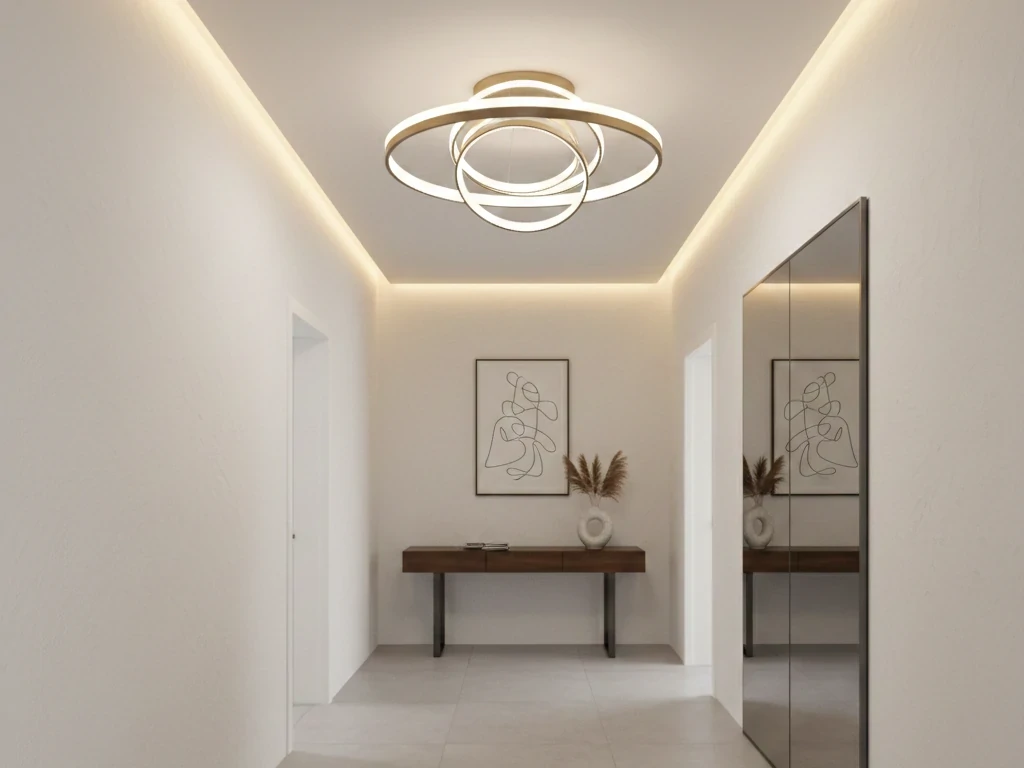
Statement Fixtures in Compact Spaces
- Even small hallways can host design-forward hallway light fixtures.
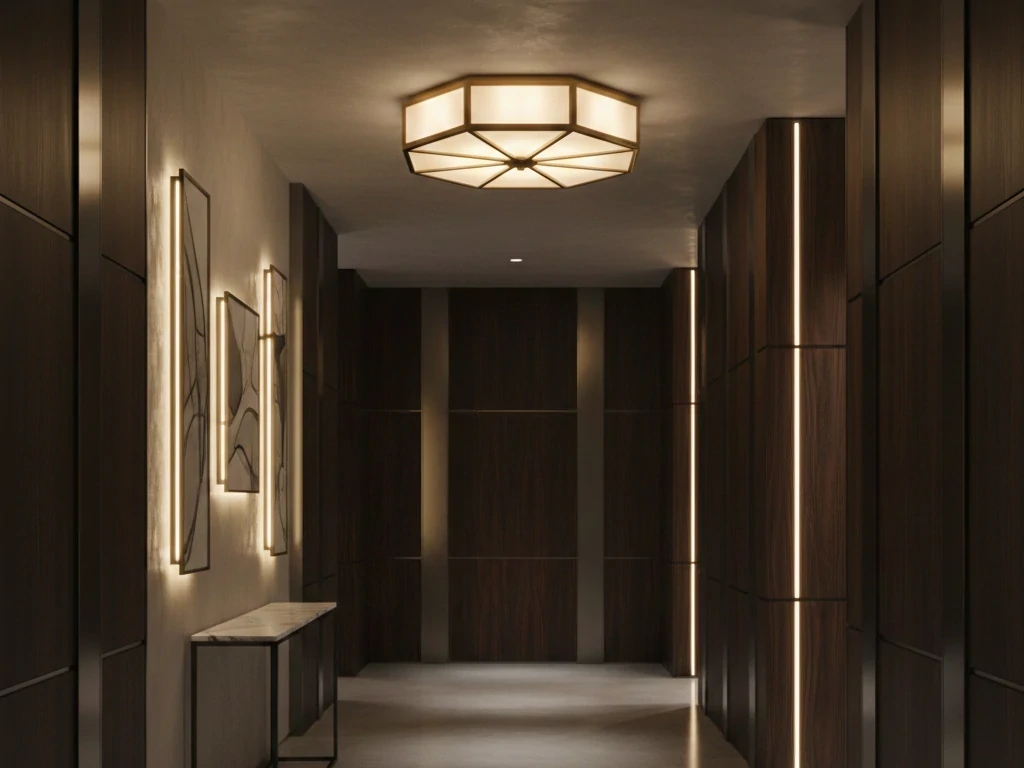
- Semi-flush mount or decorative flush mounts act as artistic focal points without compromising clearance.
- Popular designs include geometric shapes, layered textures, and subtle metallic finishes that add depth.
Rule of Thumb: Keep the fixture proportional to the hallway width. Oversized designs can overwhelm narrow spaces, while tiny fixtures may feel out of place.
Warm and Adjustable Color Temperatures
- Warm white light (2700K–3000K) remains the preferred choice for cozy, inviting hallways.
- Adjustable color temperature LEDs allow homeowners to switch between warmer and cooler tones depending on mood or activity.
- Consistent color across all fixtures prevents visual fatigue and maintains a cohesive aesthetic.
Expert Note: Lighting designers emphasize that hallway color temperature affects both perceived comfort and the home’s overall lighting harmony.
Layered and Functional Lighting
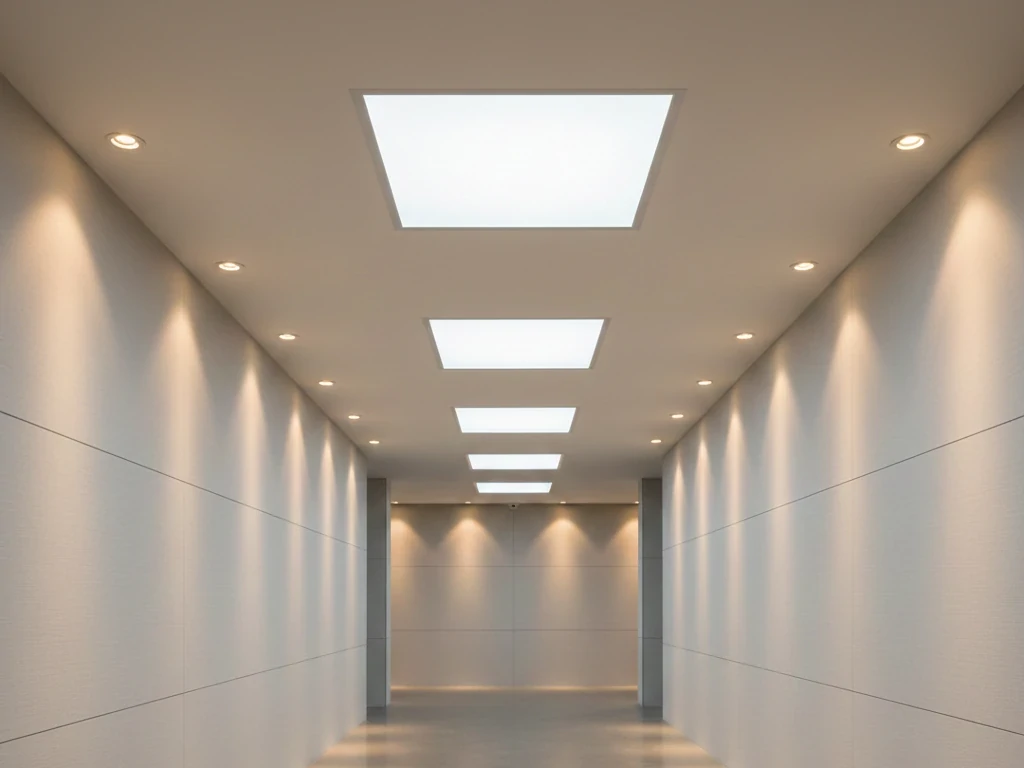
- Combining flush mount hallway ceiling lights with recessed and accent lighting creates layered illumination.
- Layered lighting highlights architectural features, art, or decorative elements without creating glare or shadows.
- Long hallways benefit from multiple smaller fixtures evenly spaced to avoid dark spots.
Pro Insight: Layered lighting is not just decorative; it improves safety and usability, which are critical for hallways that serve as high-traffic corridors.
Energy-Efficient and Sustainable Solutions
- LED technology dominates 2026 trends due to low energy consumption and long life.
- Homeowners are increasingly selecting fixtures with recyclable materials and sustainable manufacturing processes.
- Energy-efficient hallways not only reduce electricity bills but also align with environmentally conscious design practices.
Common Hallway Lighting Mistakes to Avoid
Even with the perfect hallway light fixture, mistakes in selection, placement, or installation can compromise both safety and aesthetics. Understanding the most common pitfalls helps homeowners and designers avoid costly errors and ensures a hallway that is functional, inviting, and visually balanced.
Choosing the Wrong Fixture Size
- Selecting a fixture that is too small makes the hallway feel underlit and cramped.
- Oversized fixtures can overwhelm narrow hallways, creating a claustrophobic effect.
- Rule for Ceiling Lights: Maintain proportionality using the formula: (Room length + Room width) × 1.5 = ideal fixture diameter in inches.
Expert Tip: Always measure your hallway before purchasing a flush mount hallway ceiling light or semi-flush fixture to ensure correct scale.
Poor Placement and Spacing
- Positioning fixtures too close to walls can create harsh shadows.
- Uneven spacing of multiple fixtures leads to dark spots and inconsistent illumination.
- Long hallways benefit from evenly spaced LED flush mount fixtures along the centerline for balanced light distribution.
Practical Advice: Measure the hallway carefully and plan the fixture layout before installation to prevent lighting gaps or overly bright zones.
Ignoring Ceiling Height
- Low ceilings require flush mount fixtures; hanging semi-flush or pendant lights can feel intrusive.
- High ceilings allow for semi-flush mounts or statement fixtures without impacting head clearance.
- Improper ceiling consideration is one of the most common reasons hallways feel awkward or unsafe.
Pro Insight: A ceiling’s height should dictate fixture type first, and style second. Clearance is critical for safety, especially in homes with children or elderly residents.
Underestimating Brightness Needs
- Hallways are high-traffic areas—insufficient illumination can increase the risk of trips and collisions.
- Choosing fixtures without considering lumen output or color temperature may result in dim or uneven lighting.
- For long hallways, multiple fixtures or higher-lumen flush mount hallway ceiling lights are often necessary.
Tip: LEDs provide adjustable brightness options, allowing homeowners to customize light intensity for different times of day or activities.
Neglecting Style Consistency
- A beautiful fixture can look out of place if it clashes with the hallway’s overall decor.
- Mismatched finishes, shapes, or colors disrupt visual flow.
- Cohesive design ensures that your hallway light fixture enhances the home’s aesthetic while remaining functional.
Pro Advice: Consider hallway width, wall colors, flooring, and adjacent room styles when selecting fixtures to achieve a harmonious look.
Skipping Proper Installation or Maintenance
- Improper installation can lead to loose fixtures, wiring hazards, or uneven lighting.
- Neglecting maintenance—like cleaning LED covers or replacing bulbs—reduces fixture lifespan and illumination quality.
- For complex installations or heavy fixtures, hiring a licensed electrician is recommended.
Practical Note: A well-installed and maintained flush mount hallway ceiling light maintains both safety and appearance for years.
Installation and Maintenance Tips
Selecting the perfect hallway light fixture is only half the battle. Proper installation and ongoing maintenance are essential to ensure safety, longevity, and optimal performance. Poorly installed or neglected fixtures can reduce brightness, shorten lifespan, and even create hazards. This section provides expert guidance on installing and maintaining your hallway lighting.
Safe and Effective Installation Practices
- Position Fixtures Correctly
- Center flush mount hallway ceiling lights along the hallway’s length for even illumination.
- For longer hallways, space multiple fixtures evenly to avoid dark patches.
- Check Ceiling and Wiring Compatibility
- Ensure the ceiling can support the fixture’s weight.
- Confirm electrical wiring is up to code and matches the fixture’s voltage and power requirements.
- Use Proper Tools and Hardware
- Secure all mounting brackets and fasteners tightly to prevent loose or unstable fixtures.
- Verify that the fixture is level to ensure both aesthetics and optimal light distribution.
Pro Tip: Always turn off power at the circuit breaker before beginning any installation. Even experienced DIYers should exercise caution when handling electrical components.
Maintenance for Long-Lasting Performance
- Regular Cleaning
- Dust and dirt can reduce a fixture’s light output.
- Use a soft, damp cloth to clean the surface; avoid harsh chemicals that may damage finishes.
- Check and Replace Bulbs Promptly
- For LED flush mounts, replace bulbs with manufacturer-specified equivalents to maintain brightness and color consistency.
- Dimmable LEDs require compatible bulbs and dimmer switches to avoid flickering.
- Inspect for Wear and Tear
- Periodically check for loose screws, wiring issues, or fixture damage.
- Address small problems immediately to prevent larger safety hazards.
Expert Tips for Optimized Hallway Lighting
- Layer Your Lighting: Combine flush mounts with recessed or accent lights to highlight architectural details and maintain consistent brightness.
- Adjust for Hallway Length: Longer corridors may need more than one fixture; spacing should follow proportional guidelines for ceiling light size.
- Test Light Before Final Installation: Temporarily install bulbs to ensure adequate lumen output and uniform illumination.
Lighting Expert Insight: “Even the best LED flush mount can underperform if installed incorrectly,” says a certified lighting designer. “Taking time to plan fixture placement, follow proper installation steps, and maintain regularly ensures both beauty and safety in any hallway.”
Conclusion
A thoughtfully selected hallway light fixture can turn a functional corridor into a welcoming, stylish space. By understanding ceiling light size, learning how to measure a round flush light, and choosing between flush mount and semi-flush options, you can create hallways that are safe, inviting, and visually appealing. Remember to avoid common mistakes, consider the 2026 trends, and always prioritize proper installation and maintenance. With these expert tips, your hallway lighting will not only illuminate your path but also enhance your home’s overall design narrative.
FAQs
What kind of light is best for a hallway?
The best hallway lighting balances visibility, safety, and ambiance. Flush mount hallway ceiling lights or recessed LEDs are ideal for low ceilings, while semi-flush mounts work well for higher ceilings. Experts recommend a neutral or warm white color temperature (2700–4000K) for comfort and functionality. For long hallways, combining multiple fixtures ensures consistent brightness and prevents dark spots.
What is the trend in hallway lighting in 2026?
Current trends emphasize energy-efficient LED flush mounts, minimalist designs, and smart functionality such as motion sensors and dimmable features. Designers also favor layered lighting that combines flush mount hallway ceiling lights with accent or recessed lighting to highlight artwork or architectural features. Warm, adjustable color temperatures are popular for creating inviting and flexible spaces.
What are some common hallway lighting mistakes?
The most frequent errors include:
• Choosing fixtures that are too small or too large for the space.
• Poor placement or uneven spacing, resulting in shadows or dark spots.
• Ignoring ceiling height, leading to clearance issues.
• Underestimating brightness requirements or color temperature.
• Skipping maintenance or installing incorrectly, which reduces lifespan and performance.
Avoiding these mistakes ensures your hallway light fixture is both safe and aesthetically pleasing.
How to measure a flush light fixture?
To measure a flush light fixture:
1. Diameter: Measure the widest point across the circular fixture.
2. Height: Measure from ceiling to the bottom of the fixture; maintain at least 7 feet clearance.
3. Wall Clearance: Ensure at least half the fixture’s diameter distance from nearby walls to prevent shadows.
Accurate measurement helps determine the right ceiling light size and ensures proportional, balanced lighting.
What size should a ceiling light be?
A practical formula is:
Ceiling Light Diameter (in inches) = (Room length + Room width in feet) × 1.5
For example, a 10×12-foot hallway would need a fixture approximately 33 inches in diameter. Adjustments can be made based on ceiling height, hallway width, and whether multiple fixtures are needed for even lighting.
What is the rule for ceiling lights?
• Center the fixture along the hallway’s length.
• Maintain proportional sizing relative to the room’s dimensions.
• Ensure at least 7 feet of head clearance for flush mounts.
• For long hallways, space multiple fixtures evenly to avoid dark areas.
Following these rules ensures a hallway that is functional, safe, and visually balanced.
What size ceiling light for a 10×12 room?
Using the standard formula:
(10 + 12) × 1.5 = 33 inches in diameter.
For low ceilings, consider flush mount hallway ceiling lights; for higher ceilings, semi-flush mounts are acceptable. Multiple smaller fixtures may also be used in long corridors to maintain even illumination.
How do I choose the right ceiling light?
Choosing the right ceiling light involves:
1. Assessing Purpose: Determine if the hallway is functional, decorative, or both.
2. Measuring Correctly: Use how to measure a round flush light techniques and the ceiling light size formula.
3. Selecting Type: Flush mount for low ceilings, semi-flush for higher ceilings, and layered lighting for long hallways.
4. Considering Style and Finish: Match the fixture with decor and hallway proportions.
5. Verifying Installation: Ensure the ceiling supports the fixture, and wiring is safe.
Following these steps guarantees a safe, stylish, and functional hallway lighting setup.