

Table of Contents
When it comes to home comfort, most people think first about heating and cooling systems. But there’s one unsung hero that can have a huge impact on comfort and energy bills — ceiling fan direction. Yes, the direction your ceiling fan spins might seem like a small detail, but it changes how air moves through your room, how comfortable you feel, and even how efficiently your HVAC system runs.
In this guide, we’ll explore ceiling fan direction from every angle — summer settings, winter settings, how to tell which way your fan is spinning, and how proper fan adjustments can save you money all year round. You’ll walk away knowing exactly which fan direction to choose in summer and winter, how to check your fan’s motion, and even how fan lights fit into the mix.
Ceiling Fan Direction in the Summer
What Is the Fan Direction for Summer?
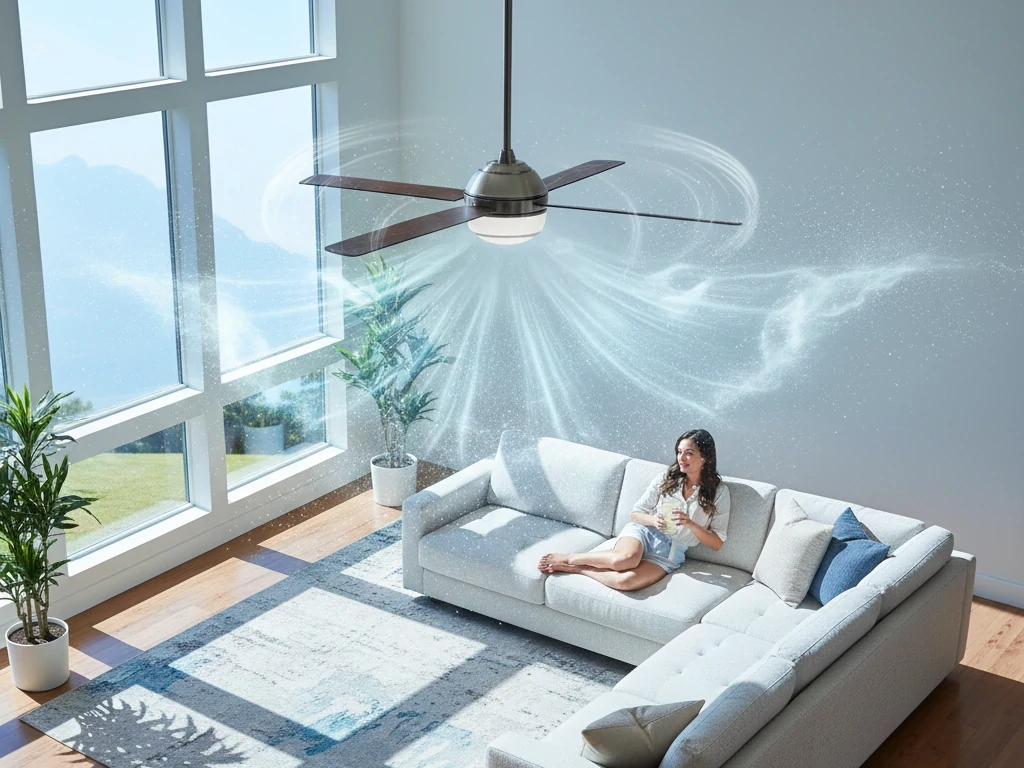
Let’s start with the most common question: what is the fan direction for summer? In the warmer months, you want your ceiling fan to move air downward into the living space. The easiest way to achieve this is to set your fan blades in a counterclockwise rotation when viewed from below. This pushes air toward the floor, creating a refreshing breeze that cools skin through evaporation — the same way a breeze feels cool on a hot day outside.
Picture standing in a warm room with the fan overhead. When the blades spin counterclockwise at a good speed, the air washes down around you, making it feel several degrees cooler even without lowering the thermostat. That’s the power of the correct ceiling fan direction for summer.
Which Way for Fan in Summer — Step-by-Step
You might be wondering, “Okay, how do I get my fan to run counterclockwise?” Most modern ceiling fans have a small switch on the motor housing that lets you flip direction. If the fan is already on, turn it off first. Flip the switch, then power the fan back on and check. At a slow speed, you should feel the breeze coming down into the room. If you feel air pulling up — that’s the opposite of what you want in summer.
Another handy trick: stand directly under the fan and look up. If the blades seem to move from right to left at the front edge, that’s counterclockwise rotation — perfect for summer.
Summer Energy Benefits
Now, let’s talk about energy. A properly set ceiling fan doesn’t reduce the room’s temperature — it creates what experts call a “wind-chill effect.” This cool breeze lets you set your thermostat a few degrees higher without feeling warmer. Over time, that can add up to real savings on your cooling bill.
When your ceiling fan direction encourages downward airflow, your air conditioner doesn’t have to work as hard to maintain comfort. That also means less wear and tear on your cooling equipment and a potentially longer lifespan for that system.
Ceiling Fan Direction in the Winter
Which Fan Direction for Winter?
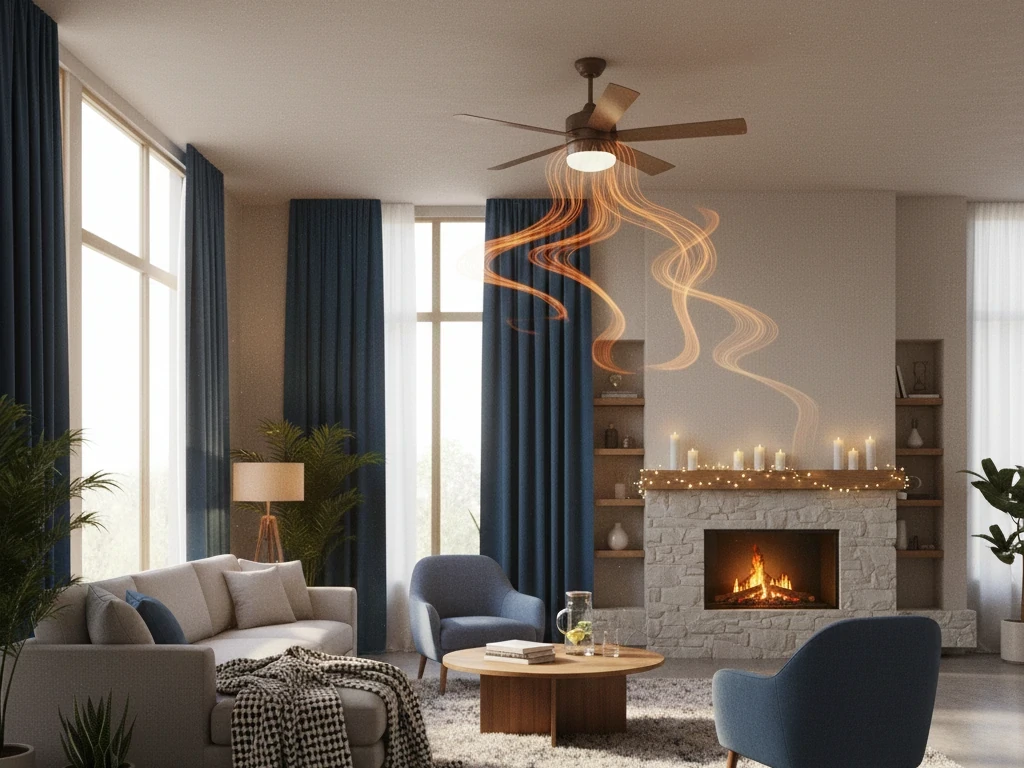
In winter, the goal flips. Instead of pushing cool air down, you want to move warm air that naturally rises toward the ceiling back down into the living space. That’s where ceiling fan direction for winter comes into play.
For winter comfort, set your fan blades to rotate clockwise at a low speed. This creates an updraft along the walls, gently pulling cool air up and forcing the warmer air near the ceiling to mix back down into the room. It doesn’t feel like a cooling breeze — and that’s exactly the point. You’re redistributing warmth, not generating a chill.
Why Clockwise Helps Heat Distribution
Warm air naturally moves upward, collecting near the ceiling. In many homes, a lot of that heat just sits there, even when rooms far below feel chilly. By running your fan clockwise, you encourage that trapped warmth to circulate without producing a strong draft you’d feel on your skin.
It’s important to keep the fan speed low. If the fan spins too quickly in the winter, it can create a draft that makes the room feel cooler — the exact opposite of what you want. At low speed, the movement is subtle but effective, reducing the strain on your heating system and helping every corner of the room feel more balanced in temperature.
Using Fans With Your Heating System
You might be thinking, “Does this really make a difference?” The answer is Yes — especially if your thermostat is far from certain rooms or if your ceilings are tall. By re-circulating warm air, a correctly set fan can help reduce temperature stratification (that feeling where your head is warm but your feet are cold). It also means your heater doesn’t have to run as frequently, which can translate into lower energy bills over time.
How to Tell Your Ceiling Fan Direction
Visual and Feel Test
Understanding ceiling fan direction is one thing. Knowing whether your fan is actually spinning clockwise or counterclockwise is another. Luckily, this is easy to check.
Stand directly beneath your ceiling fan and look up. If the front edge of the blade moves toward the left side of the room, it’s turning counterclockwise. If it moves toward the right, it’s rotating clockwise. Not sure by sight alone? Try the feel test: place your hand a few feet below the fan. Air rushing down toward your hand indicates counterclockwise summer mode. Minimal downward airflow — but no cold breeze — usually means the fan is set for winter.
Using Controls to Reverse Fan Direction
Most ceiling fans have either a small switch on the motor housing or a button on a remote control that lets you change fan direction. If your fan has a wall-mounted control panel or smart features, those may also include a direction toggle. Just remember: always turn the fan off before flipping the direction switch — reversing while the fan is spinning can damage the motor.
Once you set your desired direction, turn the fan back on and double-check. In summer, you’ll want strong downward airflow. In winter, you should see the air gently circulating without a noticeable breeze.
Ceiling Fan Direction by Room & Ceiling Type
Low vs High Ceilings
Ceiling height plays a big role in how effective your ceiling fan direction will be. In rooms with standard ceilings (8–9 feet), the airflow created by counterclockwise operation in summer can directly hit people in the room, creating that refreshing breeze we all want on warm days.
In rooms with high or vaulted ceilings, downward airflow from fans might not feel as noticeable on the floor below unless the fan is mounted lower or uses longer downrods. In these cases, adjusting the fan direction seasonally becomes even more important — and having a fan that can be angled or positioned closer to the living area helps.
Specific Rooms
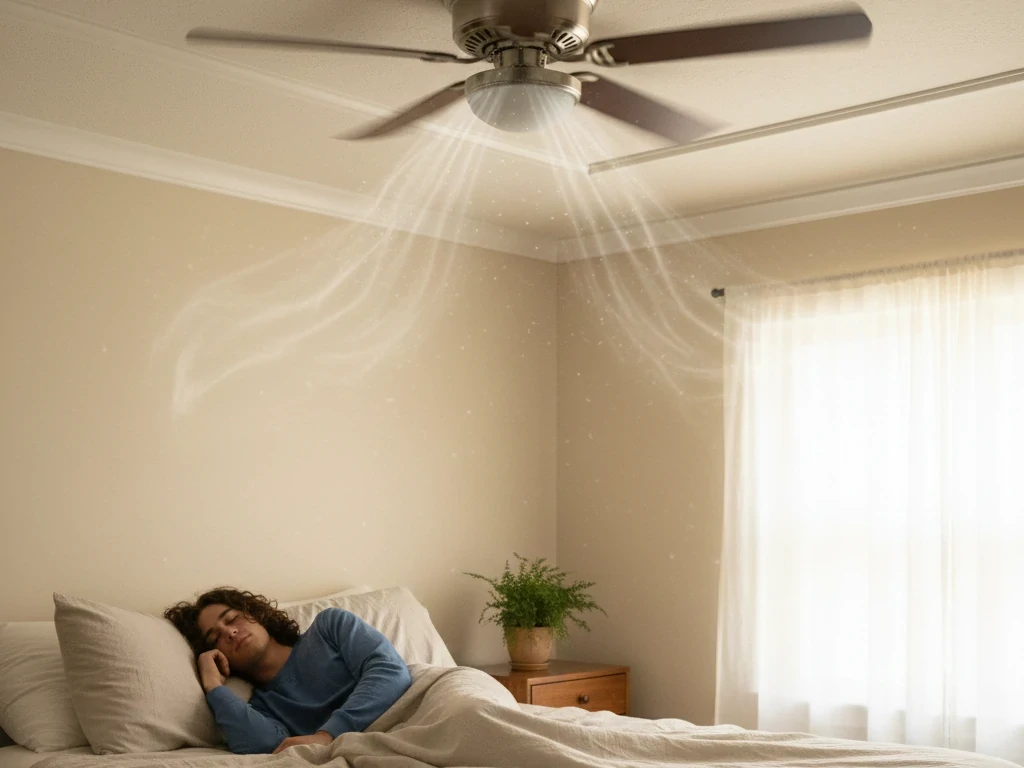
Where the fan lives matters, too. In bedrooms, people tend to want a stronger breeze during summer nights, making counterclockwise rotation essential. In living rooms where people might gather during winter evenings, a clockwise setting with a gentle circulating airflow can dramatically improve comfort.
Kitchens and dining areas benefit from correct ceiling fan direction as well — reducing hot spots in summer and helping distribute cooking heat in winter.
Outdoor spaces with ceiling fans work much the same way. In summer, counterclockwise rotation helps keep air moving and insects at bay. In cooler weather, outdoor fans might not need a winter direction since temperature control isn’t a priority — but knowing the fan direction still helps if the space is semi-enclosed or connected to the indoors.
Fan Lights and Ceiling Fan Direction
Do Fan Lights Affect Direction?
You might be wondering how fan lights fit into all of this. Do additional light fixtures on your ceiling fan change how air moves? The short answer is no — fan lights don’t affect ceiling fan direction. They are simply additional accessories for illumination. Whether you’re using your fan lights for ambiance, task lighting, or decor, the airflow pattern remains controlled by blade rotation alone.
That said, integrating fan lights with your ceiling fan controls can make seasonal adjustments easier. Many remote controls let you manage both fan speed and lights in one place. Just remember: the purpose of your fan lights is comfort and convenience — not airflow direction.
Energy Considerations for Fan Lights
While fan lights don’t impact airflow, they do affect overall energy usage. Using energy-efficient LED bulbs means you get plenty of light without a spike in electricity costs. This can be especially helpful if you rely on fan lights during winter evenings or long summer nights — bright, comfortable light with minimal energy draw.
Common Mistakes and Troubleshooting
Even seasoned homeowners make mistakes with ceiling fan direction. Here are some common pitfalls and how to avoid them:
- Forgetting to change direction with seasons — If your fan is still spinning counterclockwise in winter, it can create unwanted drafts. Likewise, clockwise rotation in summer yields minimal cooling benefit.
- Incorrect fan size — A fan that’s too small for a large room won’t move enough air, even in the right direction. Always choose a fan sized appropriately for the space.
- Wrong blade pitch — Blade angle matters. Shallow-pitched blades don’t move as much air, regardless of direction. Proper blade pitch improves airflow and efficiency.
- Improper installation height — Fans mounted too high or too low can limit airflow effectiveness. Follow installation spacing guidelines for best results.
If your fan just doesn’t feel right — no matter the season — double-check its direction and speed settings. A few adjustments can transform your comfort level dramatically.
Conclusion
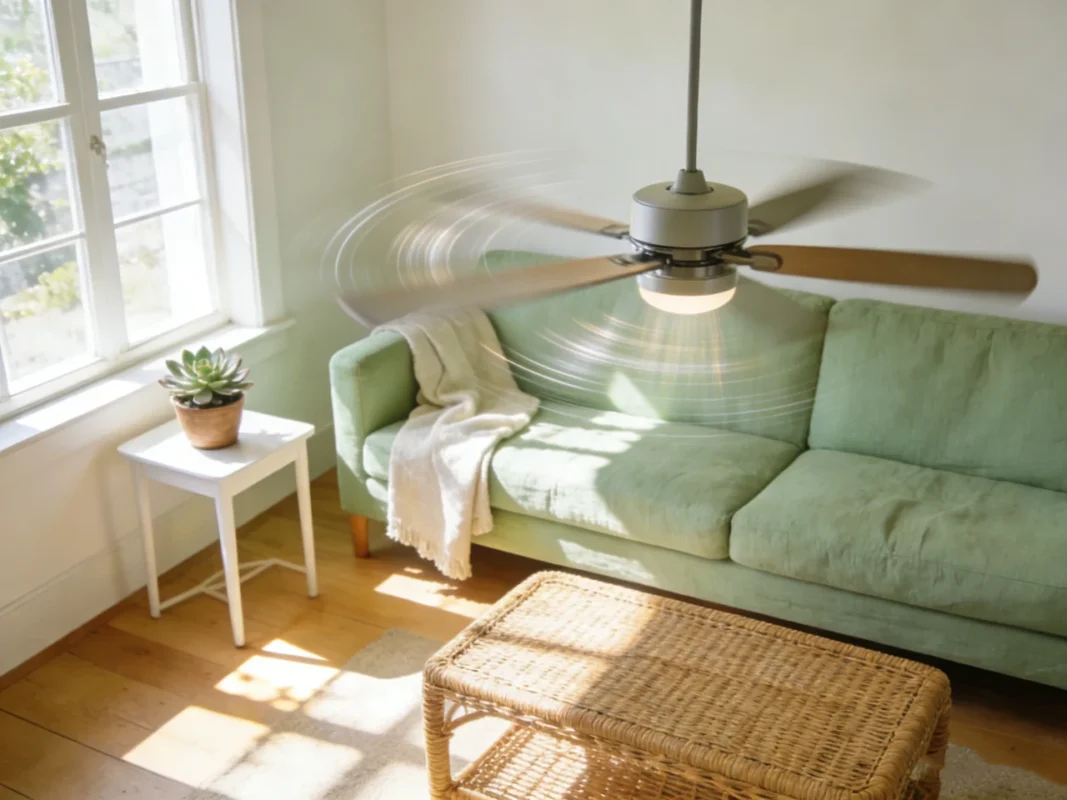
Understanding ceiling fan direction is one of the simplest — and most cost-effective — ways to boost comfort and efficiency in your home year-round. In summer, choose counterclockwise rotation to lower your perceived temperature. In winter, switch to clockwise motion at a slow speed to recirculate warm air. Combined with smart use of fan lights and attention to room layout, this seasonal fan strategy can make your space feel more comfortable and your energy bills more manageable.
Now that you know which way your fan should spin each season, take a moment to check your own ceiling fan. You might be surprised at how much difference a small adjustment can make.
Frequently Asked Questions
Which way should a ceiling fan go to cool down a room?
To cool a room effectively, the ceiling fan should rotate counterclockwise (when viewed from below). This pushes air downward, creating a wind‑chill effect that makes you feel cooler without lowering the room temperature. Use a medium to high speed for maximum cooling in summer months.
How do you tell if your ceiling fan is going clockwise or counterclockwise?
Stand directly under the fan and look up. If the front edge of the blades moves to the left, it’s spinning counterclockwise. If it moves to the right, it’s clockwise. Another method is to place your hand beneath the fan: air pushing down indicates counterclockwise rotation, while minimal downward airflow often means clockwise rotation.
Which fan direction for winter?
In winter, set the ceiling fan to rotate clockwise at a low speed. This gently pulls cooler air upward along the walls and pushes warm air trapped near the ceiling back down into the living space, helping maintain an even temperature throughout the room.
Which way should a ceiling fan be going in the summertime?
During summer, the fan blades should spin counterclockwise. This creates a downward airflow that produces a cooling breeze, helping you feel comfortable without overworking your air conditioning system.
Can ceiling fans actually change room temperature?
Ceiling fans do not lower or raise the actual air temperature. Instead, they create a perception of comfort by moving air across your skin, which can help you feel cooler in summer or allow heat to circulate more evenly in winter, indirectly supporting energy savings.
How often should I change my ceiling fan direction?
It’s recommended to change the fan direction seasonally: once when the weather warms up in spring and again when it cools down in autumn. This ensures optimal airflow for comfort and energy efficiency year-round.
What’s the best speed for winter fan direction?
Use low speed during winter. A slow clockwise rotation allows warm air to circulate gently without producing a draft, maintaining even heat distribution without cooling the room.
Does fan size matter for seasonal direction?
Yes, fan size significantly impacts airflow effectiveness. A larger fan moves more air and works better in bigger rooms. Smaller fans may need higher speeds or additional units to achieve the same seasonal comfort benefits.
Can ceiling fans help reduce energy bills?
Absolutely. Correct ceiling fan direction improves comfort so you can raise your air conditioning set-point in summer or lower your heating set-point in winter, reducing overall energy consumption and saving on utility bills.
Should outdoor ceiling fans follow the same direction rules?
Outdoor fans generally follow the same logic: counterclockwise in summer for airflow and cooling. In cooler months, clockwise rotation is optional depending on whether the space is enclosed and heat distribution is desired. Proper outdoor fan direction can also enhance comfort and deter insects.
Do fan lights affect ceiling fan direction?
No, fan lights do not change how air moves. They simply provide illumination. You can operate fan lights independently of blade rotation, allowing you to adjust both comfort and lighting without compromise.
What should I do if my ceiling fan doesn’t seem to make a difference?
Check the fan’s direction, speed, and installation height. Fans that are too small, too high, or spinning in the wrong direction may not produce noticeable airflow. Adjusting these factors often resolves the problem.