

Table of Contents
If you’ve ever stepped into your backyard at night and thought, “This fence could really use some light,” you’re not alone. A dark fence line can make a beautiful yard feel unfinished—and sometimes even unsafe.
That’s where solar wall lights for fence come in.
They’re simple, energy-free, and surprisingly powerful when installed correctly. But here’s the catch: not all solar lights perform the same, and many homeowners install them in ways that limit their brightness and lifespan.
Over the past decade helping friends and readers troubleshoot dozens of backyard lighting setups—I’ve seen the same questions come up again and again:
- How bright are solar wall lights for fence really?
- Where should you mount them?
- How many do you need?
- Will they still work on shaded fences?
This guide answers all of that.
Whether you’re installing decorative solar fence lights for ambiance, a solar security wall light for safety, or modern solar garden wall lighting to elevate your landscaping, this article walks through everything—from choosing the right fixture to installing it like a pro.
Why Solar Wall Lights for Fence Are Becoming the Go-To Outdoor Lighting Solution
Ten years ago, most fence lighting meant running wires, digging trenches, and calling an electrician.
Today, solar wall lights for fence have changed the game.
Zero Wiring, Zero Electricity Cost
Traditional outdoor lighting often requires:
- Underground cables
- Outdoor transformers
- Professional installation
With solar wall lights for fence, the sun powers everything. Once mounted, they charge during the day and automatically illuminate at night.
For homeowners, that means:
- No electric bill increase
- No trenching cables across the yard
- No complex setup
A well-placed solar garden wall lighting setup can run completely off sunlight for years.
Better Technology Than Most People Expect
Modern solar wall lights for fence now include:
- High-efficiency solar panels
- Lithium batteries
- Motion sensors
- Smart dusk-to-dawn controls
Some solar security wall light models can reach brightness levels over 800 lumens when motion is detected—more than enough for pathways and fence lines.
Instant Outdoor Style Upgrade
Let’s be honest—lighting isn’t just practical.
It’s also about atmosphere.
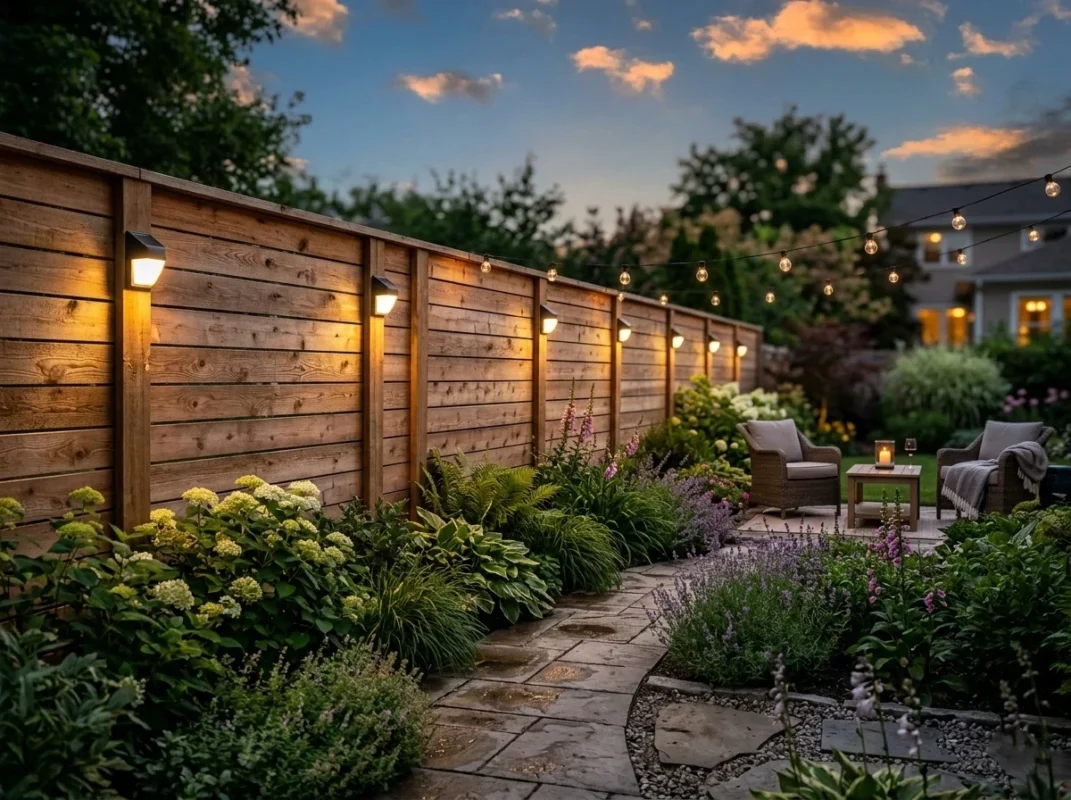
Strategically placed modern solar wall lanterns or up and down solar wall light fixtures can make an ordinary fence look like something from a designer landscape project.
Even simple decorative solar fence lights can completely change the mood of a yard at night.
Types of Solar Wall Lights for Fence (And When to Use Each One)
Before installing solar wall lights for fence, it helps to understand the different styles available.
Each type serves a slightly different purpose.
Decorative Solar Fence Lights
These are the most common solar wall lights for fence.
They prioritize appearance over raw brightness.
Best uses:
- Fence accents
- Backyard ambiance
- Garden borders
Many decorative solar fence lights cast warm light patterns onto the fence surface, creating a cozy nighttime atmosphere.
They’re ideal if your goal is visual appeal rather than security.
Solar Sconce Outdoor Light
A solar sconce outdoor light works similarly to traditional wall sconces used on homes.
Mounted along a fence, these lights provide a more architectural look.
Benefits include:
- Wider light spread
- Elegant design
- Balanced brightness
Homeowners often combine solar sconce outdoor light fixtures with modern solar wall lanterns to create a polished outdoor lighting scheme.
Up and Down Solar Wall Light
One of the most stylish options today is the up and down solar wall light.
Instead of shining in one direction, it projects light:
- upward
- downward
This creates dramatic lighting effects on the fence surface.
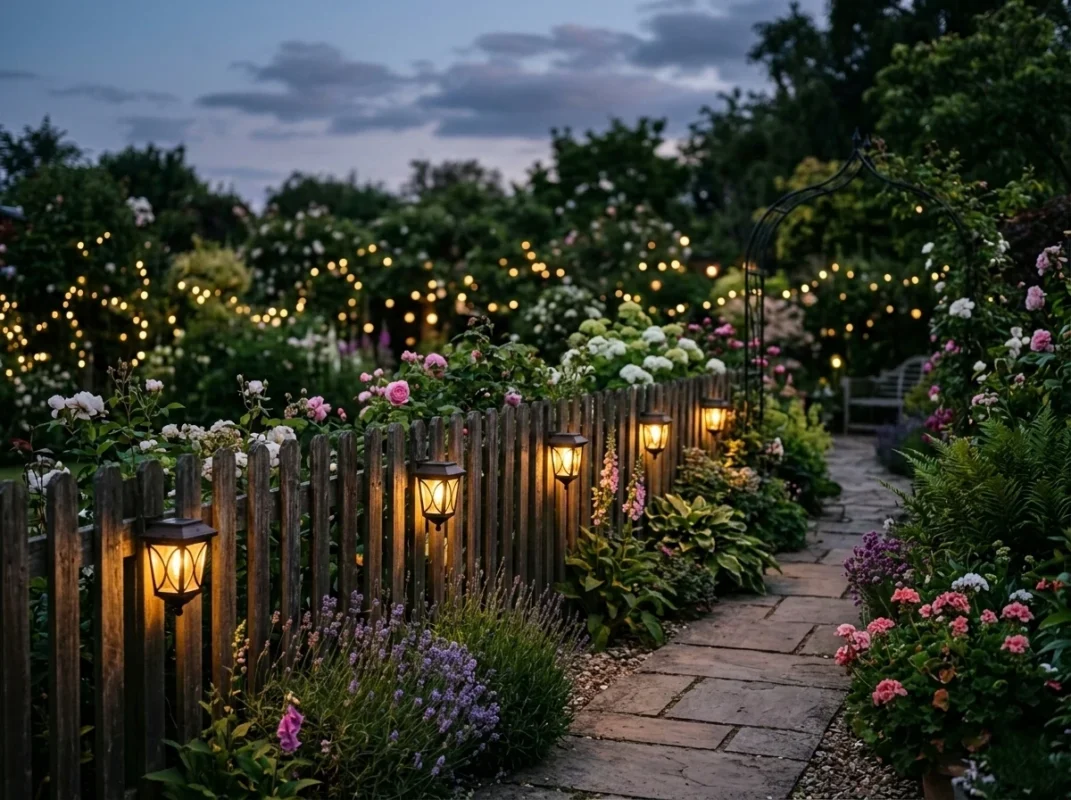
If your goal is modern design, up and down solar wall light installations are one of the best ways to make solar wall lights for fence feel premium.
Solar Security Wall Light
If safety matters most, choose a solar security wall light.
These lights typically include:
- Motion detection
- Higher lumen output
- Wide angle illumination
A properly installed solar security wall light can illuminate the entire fence line when movement is detected.
Many homeowners install solar wall lights for fence primarily for this purpose.
Fence Post Solar Lighting
Instead of mounting on fence boards, fence post solar lighting sits on top of fence posts.
Advantages include:
- Higher light position
- Wider illumination coverage
- Decorative post glow
Many outdoor designers mix fence post solar lighting with solar wall lights for fence to create layered lighting.
How to Choose the Best Solar Wall Lights for Fence
Choosing the right solar wall lights for fence isn’t just about picking a design that looks good in photos. In real-world installations, performance matters far more than appearance. I’ve seen plenty of homeowners install attractive lights only to discover that they barely glow after a few hours. The difference usually comes down to a few practical factors: brightness, battery capacity, solar panel efficiency, and weather durability.
If you want solar wall lights for fence that actually work year-round, it’s worth paying attention to the details below before you buy.
Brightness Levels (Lumens Matter More Than Watts)
One of the most common mistakes people make when buying solar wall lights for fence is assuming all solar lights produce similar brightness. In reality, the light output can vary dramatically.
Brightness is measured in lumens, and this number tells you how much visible light the fixture produces. The right level depends on what you expect the lighting to do.
For example:
- 10–50 lumens: Soft decorative glow for ambiance
- 50–150 lumens: General fence lighting and pathway visibility
- 200–400 lumens: Strong illumination for patios and yard edges
- 400+ lumens: Security-focused lighting for dark areas
If the goal is atmosphere, decorative solar fence lights with lower lumen output are usually enough. But if you’re trying to improve safety along a fence line or near a gate, a brighter solar security wall light will perform much better.
Another design worth considering is the up and down solar wall light, which spreads illumination vertically. These lights often appear brighter because they distribute light across the fence surface instead of focusing it in a single direction.
Battery Capacity and Nighttime Runtime
A solar light is only as good as the battery inside it. During the day, the solar panel stores energy in the battery. At night, that stored power runs the LED.
High-quality solar wall lights for fence typically provide 8–12 hours of lighting after a full day of sun exposure. If the battery capacity is small, the lights may turn off shortly after midnight.
Here are a few practical tips when evaluating battery performance:
- Larger batteries generally mean longer runtime
- Replaceable rechargeable batteries extend product lifespan
- Motion-activated lights conserve power and stay brighter longer
Homeowners installing solar garden wall lighting in shaded areas should prioritize lights with higher battery capacity. This extra energy storage helps maintain consistent performance even during cloudy days.
Solar Panel Size and Charging Efficiency
Not all solar panels are equal. The size and efficiency of the panel directly affect how well solar wall lights for fence charge during the day.
A larger panel collects more sunlight and converts it into energy faster. This is particularly important if your fence receives partial shade from trees, nearby buildings, or tall landscaping.
For example, a solar sconce outdoor light with a larger panel can still charge adequately even when sunlight conditions are less than perfect. Similarly, modern solar wall lanterns designed with high-efficiency panels often perform more reliably throughout the year.
When evaluating solar wall lights for fence, look for designs where the panel faces upward or outward with minimal obstruction. Panels that sit under decorative covers may look stylish, but they sometimes sacrifice charging efficiency.
Weather Resistance and Outdoor Durability
Outdoor lighting must survive far more than just sunshine. Rainstorms, humidity, temperature swings, and dust can all impact performance over time.
That’s why durable solar wall lights for fence should have a waterproof rating of IP65 or higher. This rating indicates the fixture can resist rain and outdoor moisture without damaging the internal electronics.
Durability also depends on the housing material. Well-built fixtures used in fence post solar lighting or solar garden wall lighting are typically made with corrosion-resistant metals or UV-stabilized plastics. These materials prevent cracking, fading, or rust after long exposure to sun and rain.
Another factor many people overlook is sealing quality. A poorly sealed light can allow moisture inside the housing, which may shorten battery life or reduce brightness. Choosing well-constructed solar wall lights for fence helps avoid these issues and ensures the lights continue working through different seasons.
Lighting Style and Direction
Performance is essential, but lighting style also plays a big role in the final result. Different types of solar wall lights for fence create different visual effects along a fence line.
For example:
- Decorative solar fence lights produce soft accent lighting that highlights textures and materials.
- Solar sconce outdoor light designs offer wider illumination similar to traditional wall fixtures.
- Up and down solar wall light models create dramatic vertical light patterns on fences and walls.
- Solar security wall light fixtures focus on strong brightness and motion detection for safety.
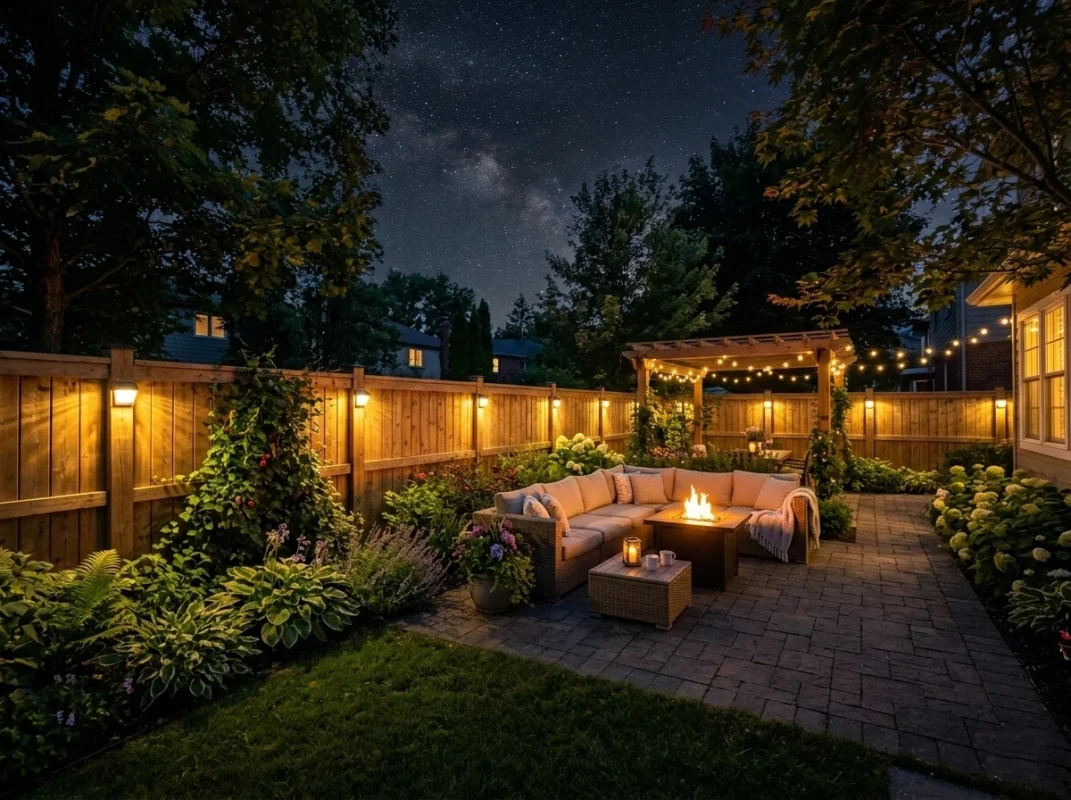
Many homeowners combine multiple styles to create layered lighting. For instance, fence post solar lighting may provide ambient glow from above while solar wall lights for fence illuminate the panels below.
The key is balancing design and function so the lighting improves both visibility and the overall appearance of the outdoor space.
Installation Compatibility With Your Fence Type
Before buying solar wall lights for fence, it’s important to consider the material of your fence. Different surfaces require slightly different installation approaches.
Common fence materials include:
- Wood
- Vinyl
- Metal
- Composite panels
Wood fences are the easiest to work with because screws can be installed directly into the boards. Vinyl fences sometimes require anchors or specialized mounting clips to prevent cracking.
If you’re planning to install fence post solar lighting, make sure the post cap dimensions match your fence post size. This ensures a secure fit and proper light alignment.
Taking a few minutes to confirm compatibility will make installing solar wall lights for fence much smoother and help prevent unnecessary damage to the fence structure.
Balancing Aesthetics With Practical Performance
At the end of the day, the best solar wall lights for fence strike a balance between style and reliability. It’s tempting to focus entirely on appearance, but outdoor lighting should also solve real problems—improving visibility, guiding pathways, and increasing nighttime safety.
In many backyard setups, the most effective approach is to combine several lighting types. A mix of modern solar wall lanterns, solar garden wall lighting, and targeted solar security wall light fixtures can transform a dark fence line into a functional and inviting outdoor feature.
When chosen carefully, solar wall lights for fence don’t just add decoration. They create a safer, more welcoming outdoor environment while operating entirely on renewable solar energy.
Step-by-Step Installation Guide for Solar Wall Lights for Fence
Installing solar wall lights for fence is one of those outdoor projects that looks complicated at first but turns out to be surprisingly straightforward. Unlike traditional wired lighting, there’s no trenching, no running electrical cables, and no need for an electrician. Most homeowners can complete the entire setup in less than an afternoon.
That said, the difference between lights that look amazing and lights that barely glow often comes down to installation details. Placement, alignment, and sunlight exposure all affect how well solar wall lights for fence perform at night.
Below is a practical step-by-step approach based on real installation experience to help ensure your lights charge efficiently and illuminate your fence the way you expect.
Step 1: Plan the Lighting Layout Before You Start
Before picking up a drill, walk along your fence line and decide where the solar wall lights for fence should go. Planning the layout first prevents uneven spacing and helps you visualize how the lighting will look once installed.
A common guideline is to space solar wall lights for fence approximately 6 to 8 feet apart. This spacing creates a smooth, continuous glow without leaving dark gaps between lights.
When planning placement, also think about purpose. For example:
- Use decorative solar fence lights along visible sections of the yard for ambiance.
- Install a solar security wall light near gates, pathways, or darker corners where additional brightness is helpful.
- Consider an up and down solar wall light for areas where you want architectural lighting effects on the fence surface.
Taking a few minutes to map out the lighting pattern will make the final installation look much more intentional and professional.
Step 2: Check Sunlight Exposure on the Fence
Solar lighting depends entirely on daytime charging. If the solar panel doesn’t receive enough sunlight, even high-quality solar wall lights for fence may dim early or turn off before midnight.
Before installing, observe how sunlight hits the fence during the day. Ideally, each light should receive at least six hours of direct or partial sunlight.
Here are a few practical tips:
- Avoid mounting lights under roof overhangs or heavy tree branches.
- Place solar garden wall lighting where the panel faces open sky.
- If a section of fence receives less sunlight, choose a brighter solar security wall light or lights with larger panels.
Even a small adjustment—moving a light a few inches higher or lower—can significantly improve solar charging efficiency.
Step 3: Measure and Mark the Mounting Points
Once you’ve decided where the lights should go, measure the exact positions along the fence. Consistent alignment is what makes solar wall lights for fence look clean and professional.
Use a measuring tape and mark each mounting point lightly with a pencil. If the fence boards vary in height or spacing, take extra time to ensure each mark lines up horizontally.
Many installers also use a small level to keep solar wall lights for fence straight during installation. Crooked lights might seem like a minor issue, but at night uneven alignment becomes very noticeable.
For installations that combine fence post solar lighting with wall-mounted fixtures, make sure the wall lights align visually with the post caps for a balanced appearance.
Step 4: Prepare the Fence Surface
Different fence materials require slightly different preparation before mounting solar wall lights for fence.
For wood fences, installation is usually simple. Screws can go directly into the boards without additional hardware.
For vinyl or composite fences, drilling small pilot holes first helps prevent cracking. In some cases, wall anchors or specialized mounting brackets may be needed for extra stability.
Before drilling, double-check that the solar panel on each fixture faces the correct direction. For solar sconce outdoor light or modern solar wall lanterns, panel orientation plays a big role in charging efficiency.
Taking the time to prepare the surface properly ensures the lights remain secure through wind, rain, and seasonal weather changes.
Step 5: Mount the Solar Wall Lights Securely
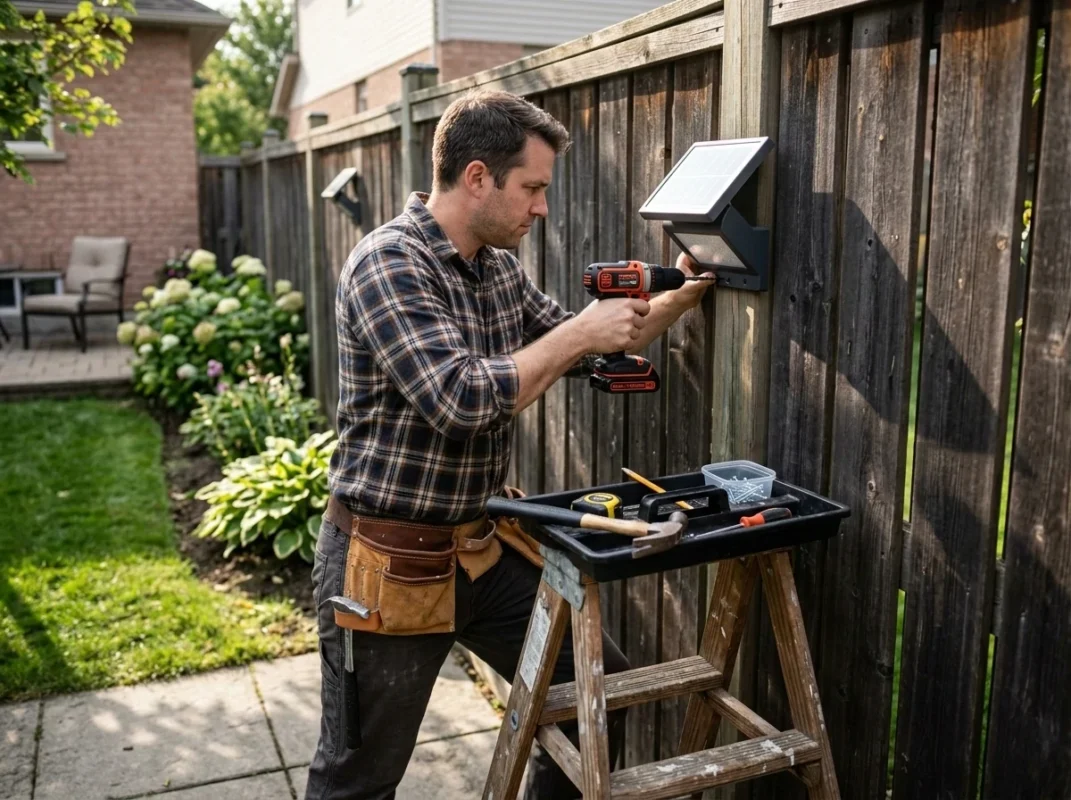
With the mounting points ready, attach the solar wall lights for fence using outdoor-rated screws. Tighten the screws firmly, but avoid over-tightening, especially on vinyl or composite materials.
After securing each fixture, step back and check alignment before moving to the next light. This quick visual check helps maintain consistent spacing and positioning along the entire fence.
During this stage, it’s also helpful to verify that each solar wall lights for fence unit sits flush against the fence surface. A loose or tilted fixture can affect how the light spreads across the fence.
For installations that include up and down solar wall light designs, make sure both beams point evenly along the fence panel for the best visual effect.
Step 6: Activate the Lights and Test the Setup
Many solar wall lights for fence include a small switch that activates the lighting system. This switch usually needs to be turned on before installation, but it’s easy to overlook.
Once the lights are mounted:
- Confirm the power switch is turned on.
- Allow the lights to charge for a full day.
- Check the lighting performance after sunset.
Some solar security wall light fixtures also have motion detection settings or brightness modes. Testing these features ensures the lights respond properly when movement occurs.
If one light appears dimmer than the others, it may simply need additional charging time or slightly better sun exposure.
Step 7: Make Final Adjustments for the Best Lighting Effect
After the first night, walk along the fence and observe how the solar wall lights for fence illuminate the area. This is the best time to make small adjustments.
For example:
- Reposition lights that appear uneven or misaligned.
- Adjust the angle of fixtures if they allow directional lighting.
- Ensure the solar panels remain unobstructed by nearby objects.
Sometimes homeowners realize they want stronger lighting near a pathway or gate. Adding a brighter solar security wall light in those spots can dramatically improve visibility without installing additional wiring.
Real-World Mistakes People Make With Solar Fence Lighting
On paper, installing solar wall lights for fence seems almost foolproof. There’s no wiring, no electrical permits, and the fixtures usually come with only a few screws and a mounting bracket. But after seeing dozens of backyard lighting setups—and helping homeowners troubleshoot why their lights stopped working after a few weeks—it’s clear that many installations run into the same avoidable problems.
The good news is that most of these issues aren’t caused by poor products. They usually come down to small installation decisions that affect how well solar wall lights for fence charge, illuminate, and last over time. Understanding these common mistakes can save you time, money, and a lot of nighttime frustration.
Installing Lights Too Close Together
One of the most common mistakes people make with solar wall lights for fence is placing them too close to each other. At first glance, it seems logical—more lights should mean more brightness. In reality, crowded lighting often creates uneven glare instead of smooth illumination.
When solar wall lights for fence are spaced too tightly, several problems can happen:
- Light beams overlap and create harsh bright spots
- Shadows appear between fixtures
- The fence line looks cluttered rather than balanced
In most residential setups, spacing lights 6 to 8 feet apart produces a more natural lighting pattern. This distance allows each fixture—whether it’s decorative solar fence lights or a solar sconce outdoor light—to spread light evenly along the fence surface.
Professional landscape lighting designers often refer to this as “layered illumination.” Instead of packing fixtures together, they create rhythm and consistency along the fence line.
Choosing Decorative Lights When Security Lighting Is Needed
Another mistake happens when homeowners choose lighting based only on appearance. Decorative solar fence lights and modern solar wall lanterns can look beautiful during the day, but many of them produce relatively soft light at night.
If the goal is purely aesthetic—highlighting a fence texture or creating backyard ambiance—these lights work perfectly. But when lighting is meant to improve visibility near a gate, walkway, or dark corner, a brighter fixture is usually necessary.
That’s where a solar security wall light becomes a better option. These lights typically include higher lumen output and motion detection, allowing them to illuminate large sections of a fence line when movement occurs.
A practical approach many homeowners use is combining styles. For example:
- Solar garden wall lighting along the main fence area
- A brighter solar security wall light near entrances
- Accent up and down solar wall light fixtures for visual impact
Matching the lighting style to the actual purpose of the space makes solar wall lights for fence far more effective.
Ignoring Sunlight Exposure
Solar lighting depends entirely on the sun, yet many installations ignore how much sunlight the fence actually receives. This often leads to lights that dim quickly or stop working before the night is over.
For reliable performance, solar wall lights for fence generally need at least six hours of sunlight per day. When lights are placed under heavy shade from trees, roof overhangs, or nearby buildings, charging becomes inconsistent.
This issue is especially common with fences that face north or sit along narrow side yards where sunlight is limited.
If sunlight is restricted, a few adjustments can improve performance:
- Install solar wall lights for fence slightly higher on the panel where sunlight exposure increases
- Choose fixtures with larger solar panels
- Use lights designed for efficiency, such as solar sconce outdoor light models with exposed panels
Even moving a fixture a few inches away from shade can dramatically improve charging efficiency.
Mounting Lights Too Low on the Fence
Height matters more than many people expect. When solar wall lights for fence are mounted too low—often around knee height—the light tends to illuminate only the ground directly beneath the fixture.
This creates small bright circles instead of spreading light across the fence and surrounding area.
Most installers recommend placing solar wall lights for fence around 5 to 6 feet above ground level. At this height, the light can travel farther and provide a more balanced glow along the fence.
This is particularly important for styles like up and down solar wall light, which are designed to project light vertically across the fence surface.
Mounting lights at the proper height also helps keep solar panels clear of plants, furniture, and other obstacles that could block sunlight.
Forgetting to Activate the Lights Before Installation
It sounds simple, but this mistake happens surprisingly often. Many solar wall lights for fence include a small switch that activates the internal battery and light sensor.
If that switch isn’t turned on before installation, the lights will never illuminate at night—even after a full day of charging.
Homeowners sometimes assume the lights are defective when the real issue is simply that the power switch was never activated.
Before mounting each fixture, it’s a good idea to:
- Turn the switch on
- Cover the solar panel briefly to test the light sensor
- Confirm the LEDs illuminate properly
Taking a moment to test the lights beforehand prevents unnecessary troubleshooting later.
Overlooking Maintenance After Installation
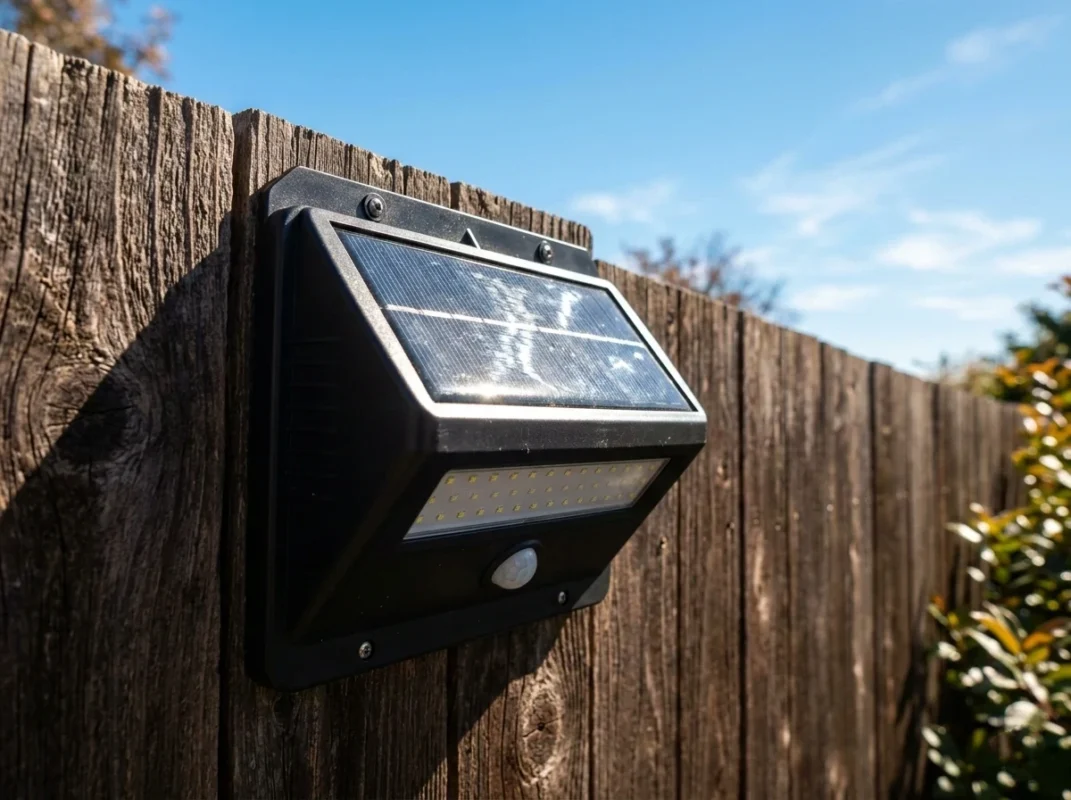
Another common misconception is that solar wall lights for fence require no maintenance at all. While they are extremely low maintenance compared to wired lighting, they still benefit from occasional care.
Dust, pollen, and debris can accumulate on solar panels over time. Even a thin layer of dirt can reduce charging efficiency, especially for solar garden wall lighting installed near plants or trees.
A quick cleaning routine can make a noticeable difference:
- Wipe the solar panels with a soft cloth every few weeks
- Check that screws remain tight after strong winds
- Replace rechargeable batteries every few years if brightness declines
Regular maintenance ensures solar wall lights for fence continue performing reliably for many seasons.
Expecting Solar Lights to Perform Like Wired Floodlights
Finally, one of the biggest misconceptions is expecting solar wall lights for fence to produce the same brightness as large wired floodlights.
Solar lighting technology has improved significantly, but it still operates within the limits of stored solar energy. While a solar security wall light can produce impressive brightness, most solar fixtures focus on efficient illumination rather than extremely high output.
The key is setting realistic expectations. When used properly, solar wall lights for fence provide excellent visibility, safety, and atmosphere without increasing electricity costs or requiring complicated installation.
Understanding these limitations allows homeowners to choose the right fixtures and enjoy the benefits of solar lighting without disappointment.
Maintenance Tips to Keep Solar Wall Lights Performing Well
Solar lighting requires very little maintenance, but a few simple habits make a big difference.
Clean Solar Panels Monthly
Dust blocks sunlight.
Wipe panels with a soft cloth every few weeks.
Replace Batteries Every Few Years
Rechargeable batteries typically last 2–4 years.
Replacing them restores brightness.
Check Mounting Stability
Wind and weather can loosen screws over time.
A quick inspection keeps solar wall lights for fence secure.
Final Thoughts: Are Solar Wall Lights for Fence Worth It?
If you want a backyard upgrade that’s affordable, easy to install, and visually dramatic, solar wall lights for fence are hard to beat.
They deliver:
- improved safety
- better nighttime visibility
- enhanced outdoor atmosphere
Whether you choose decorative solar fence lights, a solar sconce outdoor light, modern up and down solar wall light fixtures, or powerful solar security wall light options, the key is thoughtful placement and realistic expectations.
Do that—and your fence won’t just mark your property line.
It’ll become one of the best-looking features in your yard.
FAQs About Solar Wall Lights for Fence
How high should fence lights be placed?
Most installers recommend mounting solar wall lights for fence about 5 to 6 feet above the ground. This height allows the light to spread evenly across the fence and surrounding yard while avoiding glare at eye level. Mounting lights too low usually limits the illumination area and can make the lighting look uneven along the fence line.
Are solar wall lights bright enough?
Yes, modern solar wall lights for fence can be surprisingly bright. Decorative models often produce 10–100 lumens, which is enough for ambient lighting. For stronger visibility or safety near gates and pathways, a solar security wall light can produce several hundred lumens and illuminate a wider area.
Do they work on a north-facing fence?
They can work on a north-facing fence, but sunlight exposure becomes more important. Solar wall lights for fence generally need at least 5–6 hours of daylight to charge properly. If the fence receives limited sun, choosing lights with larger solar panels or efficient solar garden wall lighting designs can improve performance.
How do you attach solar lights to vinyl?
For vinyl fences, solar wall lights for fence are usually attached using screws with plastic anchors or specialized mounting clips designed for vinyl panels. Pre-drilling a small pilot hole helps prevent cracking and keeps the fixture secure.
Do solar wall lights stay on all night?
Most quality solar wall lights for fence operate 8 to 12 hours after a full charge. Decorative lights often stay on continuously at a lower brightness, while a solar security wall light may use motion sensors to conserve energy and stay bright when movement is detected.
Are solar fence lights weather resistant?
Yes. Outdoor solar wall lights for fence are typically built with weather-resistant materials and sealed housings. Many fixtures are rated IP65 or higher, which means they can withstand rain, dust, and temperature changes throughout the year.
How many lights do I need for a 50ft fence?
For balanced illumination, solar wall lights for fence are usually spaced 6 to 8 feet apart. On a 50-foot fence, that typically means installing 6 to 8 lights depending on how bright you want the area to be.
Can you turn off solar wall lights manually?
Many solar wall lights for fence include a manual power switch or lighting modes. These allow users to turn the light off completely or switch between brightness settings. This feature can be helpful during maintenance or when storing the lights for seasonal use.