

Table of Contents
Imagine walking down your driveway at dusk and being greeted by a warm, inviting glow from a row of elegant solar lanterns on posts. No wires, no high energy bills—just the quiet efficiency of sunlight turning into soft illumination. That’s the magic of the modern solar lantern on post, a smart, eco-friendly lighting solution that’s changing how homeowners brighten their outdoor spaces.
In recent years, these solar lanterns have become one of the most popular outdoor lighting upgrades for homeowners. From a driveway solar lamp post guiding your car safely at night to a solar yard lamp post creating ambience along garden paths, these lights serve both functional and decorative roles. They combine timeless design with cutting-edge solar technology, giving you reliable lighting without touching your electricity grid.
This guide dives deep into everything you need to know—from how a solar powered lamp post light works to how long solar lights last, what features to look for, how to install and maintain them, and whether they’re truly worth the investment. Whether you’re outfitting a new property or upgrading old wired lamps, you’ll find everything here to make an informed, lasting decision.
How Solar Post Lanterns Work
Components of a Solar Lamp Post
At its heart, a solar lantern on post is a simple but ingenious device. It turns free sunlight into usable light at night—no cords, no electricity bills. The system typically consists of several integrated parts:
- Solar Panel: This is the flat or slightly angled surface on top of the fixture that collects sunlight during the day. The energy from the sun is converted into electrical current. Higher-quality models often use monocrystalline panels for better efficiency, while entry-level models use polycrystalline ones.
- Rechargeable Battery: During the day, the battery stores the electricity generated by the solar panel. At night, this battery powers the LEDs. Common types include NiMH, Li-ion, or advanced lithium iron phosphate batteries that provide longer life and stable performance.
- LED Bulb: Modern solar post lamps outdoor use energy-efficient LEDs instead of traditional bulbs. LEDs produce bright, clear light with minimal power draw and can last tens of thousands of hours.
- Control Sensor: A light or motion sensor automatically switches the lamp on at dusk and off at dawn. Some advanced units also include timers or dimming settings.
- Fixture Housing & Post: The structure—often made of weatherproof metal or durable resin—supports the solar head and protects internal components from rain, dust, and heat.
When daylight hits the solar panel, photons excite electrons in the semiconductor cells, producing direct current (DC) electricity. That current charges the internal battery. At night, a photosensor detects the drop in ambient light and automatically activates the LED bulb, drawing on the stored power. It’s an elegantly simple, self-sustaining cycle.
Types of Installations
There are a few common variations of solar lantern on post setups:
- Driveway Solar Lamp Post: These are taller fixtures (typically 6–10 feet) installed along driveways or entryways to improve visibility and curb appeal.
- Solar Yard Lamp Post: Shorter posts (4–6 feet) designed for gardens, patios, and walkways where softer, decorative lighting is desired.
- Solar Post Caps: Smaller lights mounted on top of existing fence or deck posts—great for subtle perimeter lighting without replacing your structure.
Some homeowners even mix all three types—tall posts at entrances, mid-height lanterns in the yard, and post caps on fences—to create layered outdoor illumination.
Key Metrics to Consider
When evaluating solar post lights, keep an eye on these specs:
- Brightness (lumens): A yard lamp may need only 100–300 lumens for ambience, whereas a driveway solar lamp post might need 400–1000 lumens for safety.
- Run Time: Ideally, a fully charged light should run 8–12 hours.
- Charging Time: Usually 6–8 hours of direct sunlight.
- IP Rating: Indicates weather resistance (IP65 or higher recommended).
- Battery Capacity: Higher mAh ratings store more energy for longer night operation.
Together, these features determine how well your solar powered lamp post light performs through the seasons.
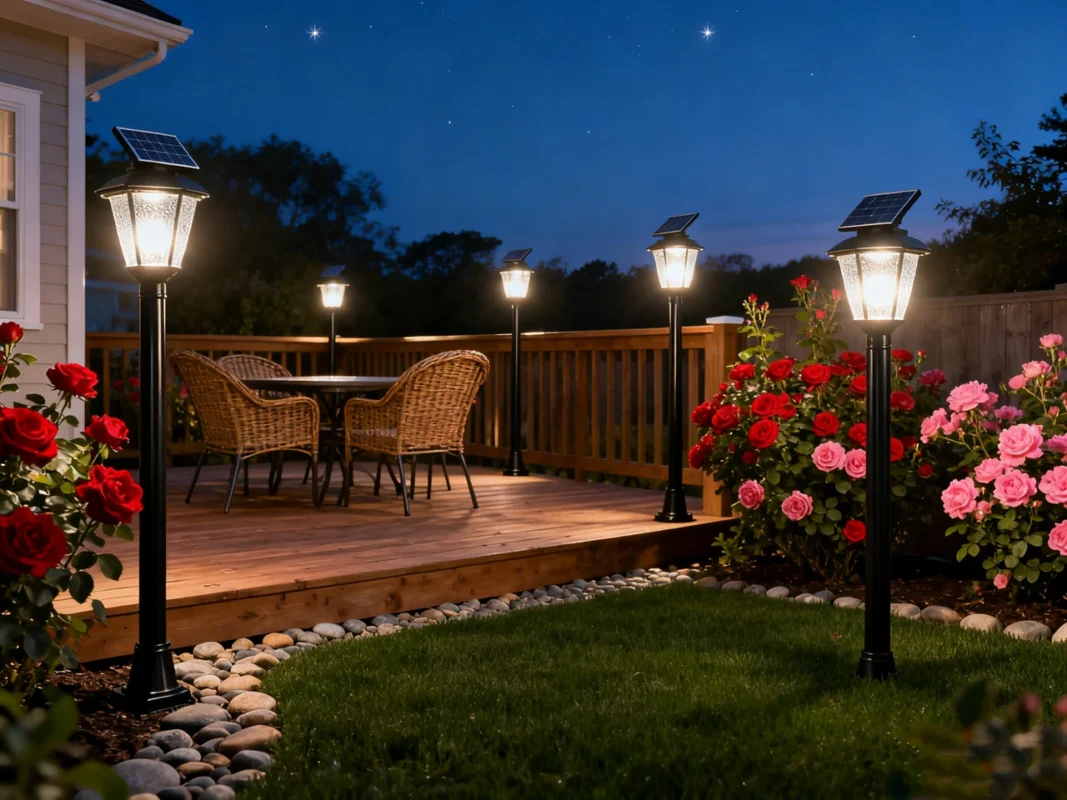
Benefits & Limitations of Solar Post Lamps
Why Homeowners Love Them
Solar lanterns on posts aren’t just trendy—they’re practical. Here’s why they’ve become so popular:
- No Wiring Hassles: Installation is as simple as placing the post in the ground or mounting it to a base. You don’t need an electrician or buried cables.
- Energy Independence: Solar power means no added cost to your energy bill and less strain on the grid.
- Eco-Friendly: By harnessing renewable energy, you reduce carbon emissions and reliance on fossil fuels.
- Aesthetic Appeal: A solar yard lamp post adds instant charm to gardens, driveways, or patios. Many mimic classic lantern designs or sleek modern styles.
- Low Maintenance: Once installed, you mostly just clean the solar panel occasionally.
- Automatic Operation: Most models feature dusk-to-dawn sensors for hands-off convenience.
In short, these lights are perfect for people who want dependable outdoor lighting without the complexity or cost of wired systems.
Limitations and Realistic Expectations
However, even the best solar post lamps outdoor have their limits:
- Dependent on Sunlight: A heavily shaded or cloudy location will reduce performance.
- Battery Degradation: Rechargeable batteries gradually lose capacity, usually requiring replacement after a few years.
- Brightness Variation: Solar lights may not be as bright as wired options, particularly in winter or cloudy seasons.
- Initial Investment: High-quality fixtures can cost more upfront, though they pay for themselves over time.
- Environmental Wear: Constant exposure to moisture, snow, or extreme heat can shorten component life.
Still, when properly installed in sun-rich locations, their performance rivals that of wired fixtures—with none of the operating costs.
How Long Do Solar Lamp Posts Last?
You’ve probably wondered, “How long do solar lights last?” It’s one of the most common questions people ask when considering solar lighting.
Typical Lifespan Breakdown
The overall lifespan of a solar lantern on post depends on its components:
- Solar Panel: Quality panels can last 15–25 years before efficiency drops noticeably.
- Battery: Most rechargeable batteries last 2–5 years, depending on usage cycles and climate. Higher-end lithium batteries may reach 8–10 years.
- LED Light Source: LEDs can burn for 25,000–50,000 hours, equivalent to roughly 5–10 years of regular nighttime use.
- Fixture Housing: With sturdy materials and good maintenance, the post and body can easily last a decade or longer.
Realistically, you can expect your solar powered lamp post light to deliver good performance for 3–10 years, depending on quality and care. Replacing the battery midway through that period often restores its full brightness and run time.
Factors Affecting Longevity
Several factors determine how long solar lights last:
- Sunlight Exposure: Direct, unshaded sunlight for at least six hours per day is critical for a full charge.
- Component Quality: Cheap units often use inferior panels or batteries, leading to premature failure.
- Weather Conditions: Extreme cold or heat, humidity, and storms can degrade materials faster.
- Maintenance Habits: Dirty panels or corroded terminals reduce charging efficiency.
- Usage Patterns: Continuous nighttime operation wears batteries faster than motion-activated systems.
Extending the Life of Your Solar Lantern on Post
With proper care, you can stretch your light’s lifespan significantly:
- Clean the Panel Regularly: Dust, pollen, or bird droppings block sunlight.
- Check Battery Health Annually: Replace if you notice shorter run times.
- Install in a Sunny Spot: Avoid shade from trees, fences, or buildings.
- Inspect Seals and Casings: Ensure water-resistant integrity after storms.
- Seasonal Adjustments: In winter, clear snow off panels or tilt them toward the sun.
These small habits can add years to your solar post lamps outdoor, keeping them bright and dependable through changing seasons.
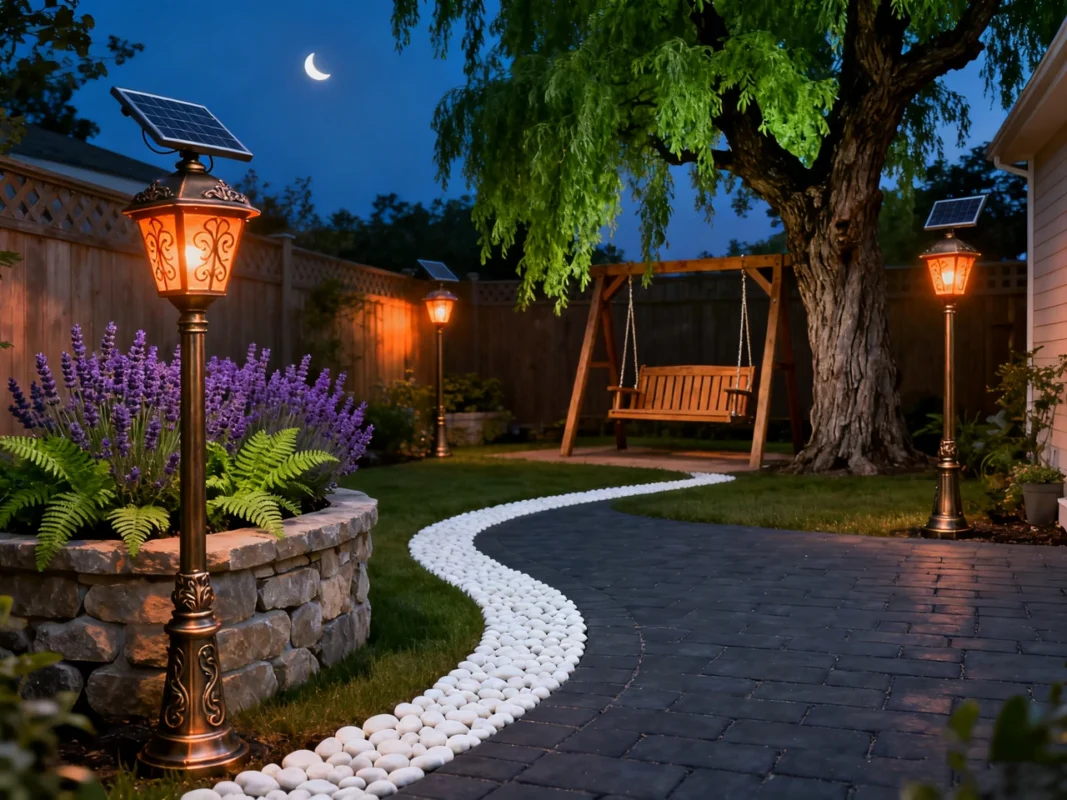
Choosing the Right Solar Post Lantern for Your Driveway or Yard
Selecting the perfect solar lantern on post involves more than picking the first pretty fixture you see online. To make your investment worthwhile, focus on matching your lighting goals with the right specifications.
What to Look For in a Quality Fixture
- Brightness: A driveway solar lamp post typically needs 400–1000 lumens for safe visibility. Softer lighting (100–300 lumens) works beautifully for gardens or patios.
- Battery Capacity: Higher capacity (mAh) means longer light duration overnight. Lithium batteries usually outperform NiMH options.
- Panel Efficiency: Monocrystalline panels are more efficient than polycrystalline ones, charging faster even under partial cloud cover.
- Material and Durability: Look for rust-resistant aluminum, stainless steel, or high-grade ABS plastic with an IP65 or higher rating. This ensures the solar yard lamp post withstands rain and UV exposure.
- Design and Aesthetics: Match the style to your home’s architecture—Victorian, rustic, minimalist, or contemporary. The goal is to make the lights look intentional, not an afterthought.
- Warranty and Replaceability: A good manufacturer will offer at least a one-year warranty and make it easy to replace the battery when needed.
- Extra Features: Motion sensors, dimming options, or color-temperature controls add value, especially for driveways and pathways.
Driveway vs Yard vs Post Cap Lights
Not all solar post lamps outdoor serve the same purpose:
- Driveway Solar Lamp Post: Prioritize height and brightness for visibility and safety. These typically feature broader light spread and taller poles.
- Solar Yard Lamp Post: Used for ambience, accenting plants, or lighting garden paths. Slightly shorter posts with softer light create a welcoming mood.
- Solar Post Caps: Ideal if you already have deck or fence posts. They’re subtle, energy-efficient, and add a decorative glow without rewiring anything.
By mixing these different types, you can create layered lighting that enhances both functionality and atmosphere.
Installation Tips
Installing a solar powered lamp post light is simple, but placement matters:
- Choose a location with maximum sunlight throughout the day.
- Avoid tall trees or buildings casting shade.
- Ensure the base or post is stable and level.
- Point the panel southward (in the northern hemisphere) for optimal exposure.
- Clean the panel before use and fully charge the battery on the first day.
For driveways, position lights symmetrically along both sides to guide vehicles safely. In gardens, space them evenly to highlight features and pathways.
Installation Height & Placement: How Tall Should a Driveway Lamp Post Be?
The height of your solar lantern on post can make the difference between a perfectly lit driveway and one that leaves dark patches. Height influences how far and how evenly the light spreads.
Typical Height Ranges
For a driveway solar lamp post, the sweet spot is usually 6 to 10 feet (1.8 – 3 m). This height ensures that the beam reaches across a standard driveway without blinding drivers or pedestrians. A solar yard lamp post, designed for pathways and patios, can be slightly shorter—around 4 to 6 feet—providing gentle, diffused illumination that creates mood without glare. Solar post caps, mounted on fences or decks, follow the existing post height but must still receive direct sunlight to charge efficiently.
Choosing the Right Height for Your Space
The right height depends on several practical considerations:
- Driveway Width: Wider driveways demand taller posts for adequate coverage.
- Purpose: For safety and navigation, go taller; for ambience, lower posts create intimacy.
- Surroundings: Trees, shrubs, or walls can block light or shade panels—adjust placement accordingly.
- Eye Comfort: Avoid placing the light at direct eye level; aim for a soft downward spread.
A general rule: the lamp head should be about twice the height of nearby hedges or ground features. This ensures a balanced, professional look and functional illumination.
Placement Best Practices
Installing a solar powered lamp post light isn’t about guesswork—it’s about precision:
- Map Sunlight Exposure: Observe where sunlight hits throughout the day. A spot that receives six to eight hours of unobstructed sun is ideal.
- Spacing: Place posts 10–15 feet apart along driveways for consistent coverage.
- Orientation: Tilt or angle the solar panel toward true south (northern hemisphere) to maximize energy absorption.
- Stability: Secure posts deeply in the ground or use weighted bases to prevent tipping during windstorms.
- Drainage: Avoid low-lying areas where water pools; standing water can shorten the fixture’s life.
Strategic placement turns your solar post lamps outdoor from mere decor into a practical, long-lasting lighting system that enhances curb appeal and safety.
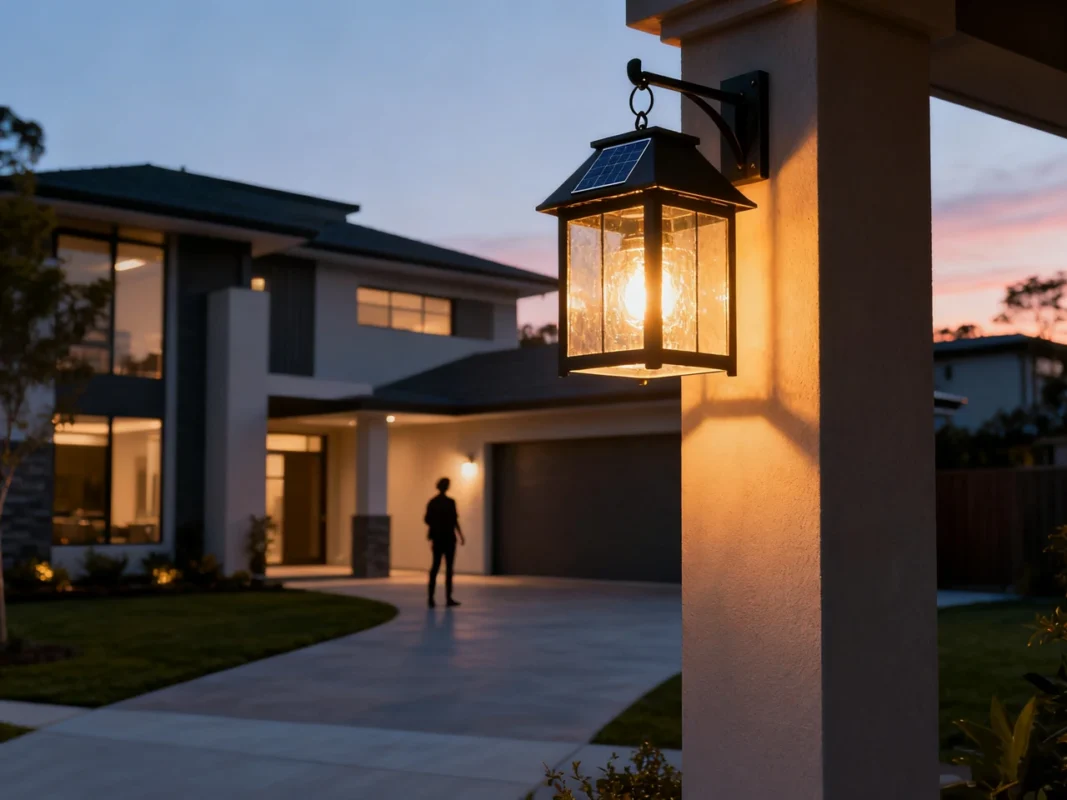
Solar vs Wired Lamp Posts: Which Is Right for You?
Homeowners often debate whether to choose solar or wired lighting. Each has advantages, but understanding how a solar lantern on post compares helps you make a smarter investment.
Why Solar Wins for Most Homeowners
A solar powered lamp post light offers unmatched flexibility:
- No Electrical Wiring: Perfect for DIY installation—no trenching or conduit required.
- Cost Savings: Once installed, sunlight is free; you’ll never see an extra cent on your energy bill.
- Eco-Friendly: Solar reduces dependence on fossil fuels and minimizes carbon output.
- Safe & Reliable: No risk of electrical shock or short circuits in wet weather.
- Portable: Move or rearrange them easily as your landscaping changes.
In sunny climates, solar power delivers consistent results while freeing you from ongoing electricity costs.
When Wired Lighting Might Be Better
There are a few situations where a wired fixture can outperform even the best solar yard lamp post:
- Shaded or Northern Locations: If your yard receives minimal sunlight, solar lights may struggle to recharge.
- High-Brightness Needs: Security or commercial areas requiring powerful flood lighting may exceed solar output limits.
- Existing Electrical Infrastructure: If you already have wiring in place, replacing a fixture with another wired unit may be simpler.
Still, modern solar technology continues to improve. For most residential use—driveways, patios, gardens—a solar lantern on post delivers more than enough illumination.
Hybrid and Retrofit Options
A growing trend is the hybrid lamp post: a wired post that integrates a solar head. This design allows solar power to handle most of the work while the grid provides backup during cloudy weeks. Alternatively, you can retrofit old posts with solar post caps to give them new life without rewiring.
Maintenance & Troubleshooting for Solar Post Lamps Outdoor
The beauty of solar post lamps outdoor is that they require little upkeep. Still, a few simple habits can dramatically extend their lifespan and brightness.
Routine Maintenance Checklist
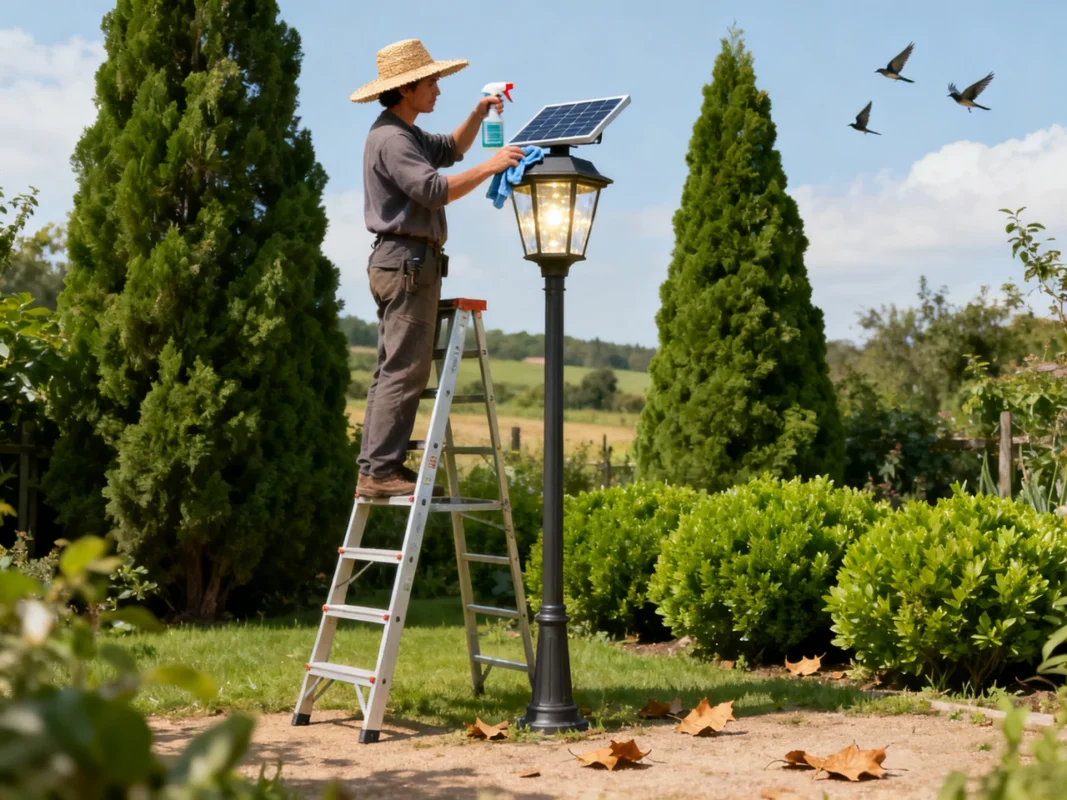
- Clean the Solar Panel: Wipe panels every 1–2 months with a soft cloth and mild soap to remove dirt, pollen, or debris.
- Inspect Fixtures: Check for cracks, loose screws, or corrosion, especially after storms.
- Monitor Battery Health: If run time drops below 6 hours, the battery likely needs replacement.
- Check for Obstructions: Trim back plants or tree branches casting shade.
- Winter Care: Brush off snow or ice, and tilt panels toward the low winter sun for better performance.
Simple maintenance once per season keeps your solar lantern on post operating at peak efficiency.
Common Problems and Quick Fixes
- Light Doesn’t Turn On at Night: Check that the power switch is on, the sensor isn’t blocked, and the panel received enough sunlight. Try resetting by covering the sensor and uncovering it.
- Flickering or Dim Light: Likely a weak battery—recharge fully or replace. Also check for cloudy panels or corrosion on terminals.
- Short Run Time: Relocate to a sunnier area, clean the panel, or upgrade to a higher-capacity battery.
- Water Inside Fixture: Inspect the rubber gaskets or seals; re-seal with weatherproof silicone if needed.
When to Replace vs Repair
If only the battery or bulb has failed, replacement is easy and affordable. But if the housing is cracked, panel delaminated, or electronics corroded, replacing the entire fixture is usually more cost-effective.
Fortunately, even quality replacements are affordable—and you can often reuse the same post base.
Cost, Value & ROI of Solar Post Lamps
Up-Front vs Long-Term Cost
A premium solar lantern on post might cost more initially than a simple wired fixture. However, installation is nearly free—no trenching, cabling, or professional electrician required. Over time, the savings compound: zero electricity bills, minimal maintenance, and no wiring repairs.
Return on Investment
ROI depends on a few core factors:
- Energy Savings: Each fixture can offset dozens of kilowatt-hours annually.
- Installation Costs: DIY setup saves hundreds compared with wired systems.
- Durability: A high-quality solar powered lamp post light can operate for up to a decade, spreading its cost thinly over years of use.
- Aesthetic Value: Improved nighttime visibility boosts curb appeal and property value.
When you factor these elements together, most homeowners see payback within 2–3 years.
Are Solar Lamp Posts Any Good?
Yes—when thoughtfully chosen and maintained, solar lanterns on posts are more than “good”; they’re one of the smartest lighting investments you can make. They deliver reliable performance, lower bills, and a greener footprint. The key is realistic expectations: they shine best in sun-exposed spaces with periodic cleaning and battery care. Under those conditions, they rival wired lights for beauty and function.
Conclusion
A solar lantern on post blends old-world charm with modern sustainability. It lights your property using clean, free sunlight—no cables, no bills, no guilt. Whether you install a driveway solar lamp post for visibility or a solar yard lamp post for ambience, these fixtures transform outdoor spaces into warm, welcoming areas after dark.
Remember these key takeaways:
- Choose quality: durable housing, efficient panels, lithium batteries.
- Place smartly: full sun exposure for six hours or more daily.
- Maintain lightly: keep panels clean and replace batteries as needed.
Do that, and your solar powered lamp post light will serve you faithfully for many years, outshining cheaper alternatives in both performance and elegance. In an age where sustainability and beauty go hand in hand, the humble solar lantern on post stands tall—literally and figuratively—as a symbol of smarter, greener living.
Frequently Asked Questions
Are solar lamp posts any good?
Yes — a solar lantern on post is an excellent investment for homeowners who want dependable, eco-friendly lighting without electricity costs. These lights convert sunlight into power, operate automatically from dusk to dawn, and require minimal maintenance. When properly installed in a sunny location, they deliver reliable illumination for years while adding classic charm to driveways and yards.
Are solar post caps worth it?
They are, especially for existing decks or fences. Solar post caps offer a cost-effective way to add light and style without wiring. They emit a gentle glow that enhances safety and ambiance along railings or perimeter areas. While not as bright as a full solar powered lamp post light, they are perfect for subtle accent lighting and energy efficiency.
How long do solar lamp posts last?
The lifespan of a solar lantern on post depends on its components. Solar panels can last up to 20 years, LEDs around 50,000 hours, and rechargeable batteries typically 2–5 years before replacement. With basic maintenance—like cleaning panels and changing batteries—most solar lamp posts last 3 to 10 years or more, offering excellent long-term value.
Can you leave solar lanterns out in the rain?
Yes. Most solar post lamps outdoor are weather-resistant and built to handle rain, humidity, and seasonal changes. Choose fixtures with an IP65 or higher waterproof rating for best performance. Although rain won’t harm them, it’s wise to ensure proper drainage around the base and to avoid submerging the post in standing water.
How tall should a driveway lamp post be?
A driveway solar lamp post should generally be 6 to 10 feet tall. This height allows the light to spread evenly across driveways and pathways without causing glare. Taller posts are better for wide or sloped driveways, while shorter ones work well for smaller entryways or decorative borders.
Do solar driveway lights work?
Yes, solar driveway lights work effectively when placed in areas that receive at least six hours of direct sunlight each day. They automatically charge during the day and illuminate at night, providing visibility and safety without wiring. For optimal performance, use higher-lumen models and space them evenly along the driveway edges.
How long do solar driveway lights last?
Most driveway solar lamp posts or ground lights last between 3 and 5 years before the batteries need replacing. The LED bulbs and solar panels can last much longer. Regular cleaning, good sunlight exposure, and timely battery replacement can extend their life significantly.
What maintenance do solar post lamps need?
Maintenance is simple but essential. Clean the solar panels monthly to remove dust and leaves, check that sensors aren’t blocked, and inspect the batteries once or twice a year. Replace worn batteries when the light output drops. Following these steps keeps your solar lantern on post shining brightly through every season.
How much sunlight do solar lamp posts need?
To operate efficiently, a solar powered lamp post light needs about 6–8 hours of direct sunlight per day. Panels placed in shaded or partially covered areas will charge less, resulting in shorter illumination times. Positioning the light in an open, south-facing location ensures maximum energy absorption and full-night brightness.
Can you replace the battery in a solar lamp post?
Yes. Most solar lanterns on posts use replaceable rechargeable batteries that can be accessed through a small compartment. Replacing the battery every few years restores full performance, preventing dimming and short run times. Always choose the same battery type and capacity recommended by the manufacturer for best results.