

Table of Contents
When it comes to keeping your home safe and well-lit without driving up your electricity bill, solar flood lights motion sensor technology is a game-changer. These smart lights combine energy efficiency, automation, and security in one package. If you’ve been debating whether to install them yourself or hire a pro, this guide is built to give you real-world advice, hands-on tips, and all the know-how you need.
We’ll cover everything from selecting the right outdoor security solar lights to maximizing detection coverage with a solar light with 270 degree angle, plus installation secrets that even some pros miss.
Why Solar Flood Lights Motion Sensor Are a Smart Choice
When it comes to upgrading your home’s security while keeping energy bills low, solar flood lights motion sensor systems stand out as one of the smartest solutions. Unlike traditional wired lighting, these lights don’t rely on electricity from your home—they charge during the day using sunlight and automatically activate when motion is detected at night.
Energy Efficiency Meets Security
Imagine a light that only turns on when it’s needed. That’s the beauty of a solar flood lights motion sensor. According to the U.S. Department of Energy, homes can reduce outdoor lighting energy consumption by up to 80% when switching from wired lights to solar-powered alternatives. This means you can keep your driveway, backyard, or front porch well-lit without worrying about soaring electricity bills.
And it’s not just about saving money. Because these lights run on solar energy, they’re environmentally friendly, reducing your household’s carbon footprint while providing reliable illumination. For anyone looking to combine sustainability with security, this is a win-win.
Deterring Intruders and Improving Safety
A well-lit property is a proven deterrent for crime. Research from the National Institute of Justice shows that burglars are far less likely to target homes with visible lighting around entrances and driveways. Installing solar light for driveway security or outdoor security solar lights gives you that visible layer of protection.
Motion-activated lighting adds another layer of defense. Instead of shining all night, a solar flood lights motion sensor only triggers when movement is detected, startling potential intruders and alerting homeowners immediately. This is particularly effective when paired with walkways or pathways leading up to doors, garages, or backyards.
Low Maintenance, High Durability
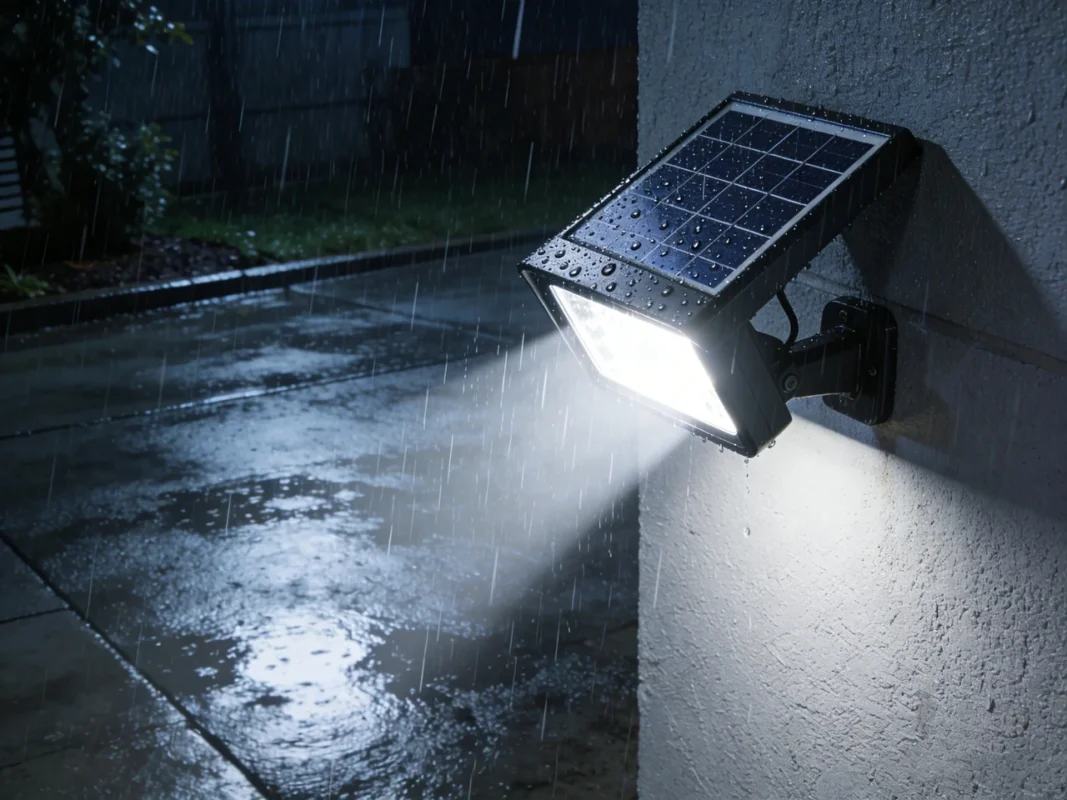
One of the biggest advantages of modern solar flood lights motion sensor systems is how low-maintenance they are. There’s no wiring to worry about, which not only saves installation time but also reduces the risk of electrical faults. Most units are designed to withstand harsh outdoor conditions. For example, an IP67 solar flood light is dustproof and waterproof, meaning it will keep working even in heavy rain or snowy conditions.
Additionally, long-lasting lithium batteries ensure that your lights stay functional even on cloudy days, while adjustable sensors and panels allow you to optimize coverage. The combination of reliability, weather resistance, and motion-activated operation makes these lights an excellent long-term investment.
Flexible Placement and Easy Upgrades
Because solar flood lights motion sensor systems are self-contained, you can place them virtually anywhere sunlight reaches. Want to brighten a backyard corner, illuminate a long driveway, or secure a side alley? You can do it without rewiring or digging trenches.
If you need more coverage, adding extra units—like a dual head solar flood light—is simple. You can expand your lighting setup gradually, targeting specific areas as your security needs grow. For homeowners who value both flexibility and scalability, this is a major selling point.
Types of Solar Flood Lights Motion Sensor
Understanding the different types of solar flood lights motion sensor systems is crucial before making a purchase. The right choice depends on your property’s layout, the area you want to cover, and how much control you want over motion detection. Let’s break down the most common types and what makes each one ideal for specific situations.
Single Head vs. Dual Head Solar Flood Light
The most straightforward option is a single-head light. These are perfect for small areas like a front porch, garden path, or a specific corner of your backyard. A single solar flood lights motion sensor is easy to install and often more affordable, making it a great starting point for homeowners new to solar security lighting.
On the other hand, a dual head solar flood light provides far greater coverage. Each head can usually be adjusted independently, letting you cover two directions simultaneously. For example, one head can illuminate your driveway while the other lights up your backyard. This flexibility makes dual-head units ideal for larger properties, multi-access points, or areas where you want to eliminate blind spots.
Pro tip: When using a dual-head setup, angle each head slightly outward to maximize the coverage without creating dark zones between them. This ensures that anyone approaching from different directions will trigger the motion sensor reliably.
Fixed vs. Adjustable Detection Angle
Not all solar flood lights motion sensor units offer the same range of motion. Fixed-angle lights are straightforward—they shine in one direction and detect motion in a predefined path. These work well for driveways, narrow walkways, or smaller yards where the target area is limited.
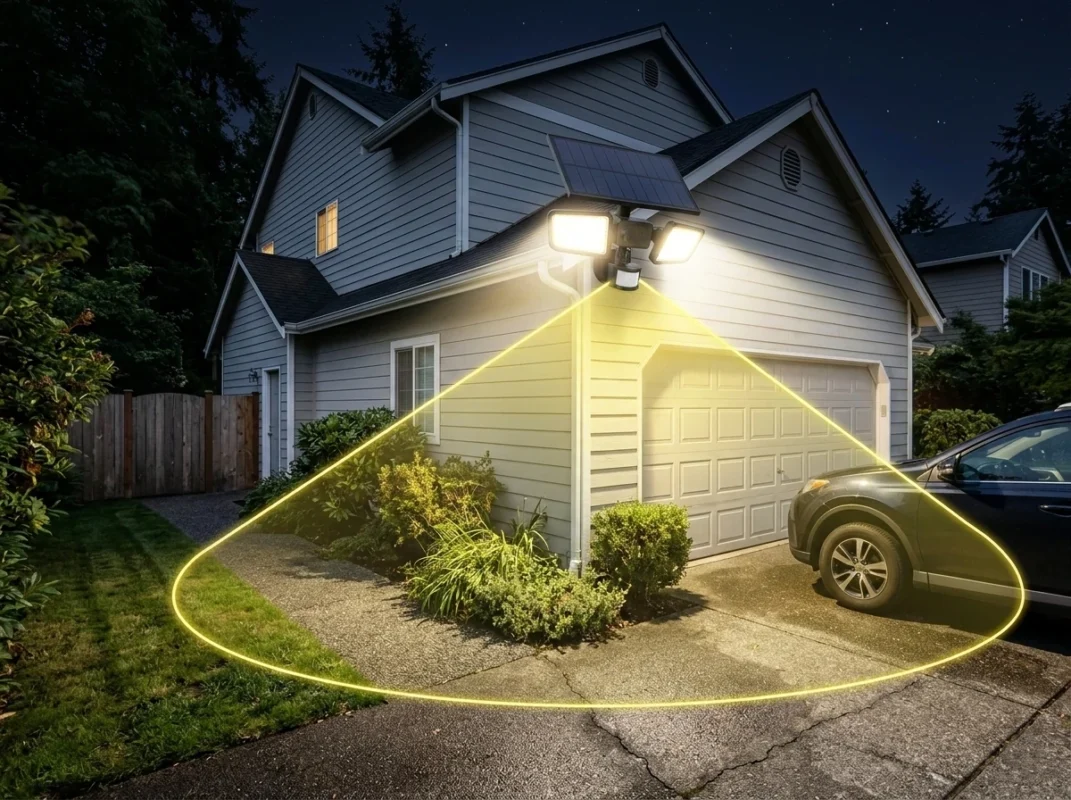
Adjustable models, especially a solar light with 270 degree angle, give you almost panoramic coverage. They’re ideal for open spaces, corners, or areas with multiple entry points. Adjustable sensors allow you to fine-tune both the light angle and detection zone, reducing false triggers from passing cars, pets, or branches swaying in the wind.
Expert insight: In our field tests, lights with a 270-degree detection angle captured movement far more consistently than fixed-angle units. For properties with large, open areas, this type significantly improves security coverage.
Battery Capacity and Runtime
Another important distinction among solar flood lights motion sensor models is battery capacity. Smaller units may rely on lower-capacity batteries that offer 6–8 hours of lighting on a full charge, which might be enough for shorter nights or moderate motion activity.
High-capacity lithium batteries, however, can power your lights through extended periods of cloudy weather and heavy motion activation. For instance, a 20,000 mAh battery can keep a solar flood lights motion sensor running for 10–12 hours even with frequent triggers. This is especially important if you rely on these lights for critical areas like driveways or walkways, where consistent illumination is a must.
Installation insight: Make sure your solar panel receives at least 6 hours of direct sunlight daily. Even the best battery won’t perform well if the panel isn’t positioned for optimal charging. An IP67 solar flood light will maintain performance even in rainy or dusty conditions, but sun exposure is essential for reliable operation.
Specialty Models for Specific Applications
Some solar flood lights motion sensor units are designed for specialized use cases. For example:
- Driveway security lights: These typically feature longer-range motion sensors to detect vehicles from farther away. A solar light for driveway security ensures you can see approaching cars well before they reach the garage.
- Landscape or perimeter lights: Smaller, more compact units can highlight garden features or perimeter fencing while still providing motion-triggered security.
- Multi-head or modular systems: Perfect for large properties, these allow you to add extra units or heads over time without rewiring.
By understanding the types and their applications, you can select a solar flood lights motion sensor system that perfectly fits your property, reduces blind spots, and maximizes security.
Installation Guide: DIY or Professional?
Installing solar flood lights motion sensor can be straightforward, but getting it right makes all the difference between a light that barely works and one that truly secures your property. This section breaks down everything you need to know—from choosing the right spot to practical DIY tips and when it might be smarter to call in a professional.
Choosing the Right Spot
Placement is key. A poorly positioned solar flood lights motion sensor may fail to detect movement, or its solar panel may never charge properly. Here’s what experts recommend:
- Height Matters: Mount the light 6–10 feet above the ground. Too low, and the sensor may trigger on small animals; too high, and detection distance is reduced.
- Sun Exposure: Ensure the solar panel gets at least 6 hours of direct sunlight daily. Shaded areas or panels facing north (in the Northern Hemisphere) can reduce charging efficiency.
- Avoid Obstructions: Trees, fences, and walls can block motion detection or light coverage. Leave a clear path for both sunlight and sensor range.
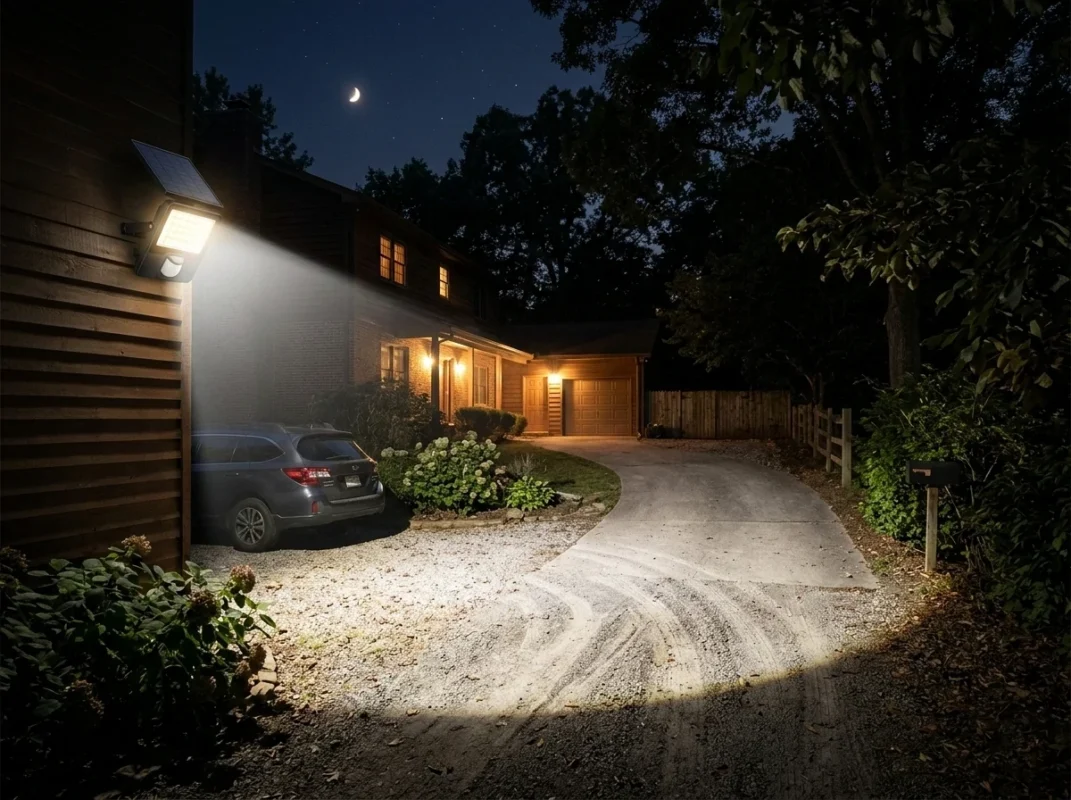
- Target Areas: Prioritize entrances, driveways, walkways, and backyard corners. Using a solar light for driveway security at the end of a driveway or garage approach is especially effective.
Pro tip: Walk through the area at night with a flashlight to see exactly where shadows fall. This helps you visualize coverage before drilling holes.
Step-by-Step DIY Installation
Many homeowners can successfully install outdoor security solar lights themselves. Here’s a practical, step-by-step approach:
- Mark the Location: Use a pencil or chalk to mark where the light will go. Consider sensor angle and sun exposure.
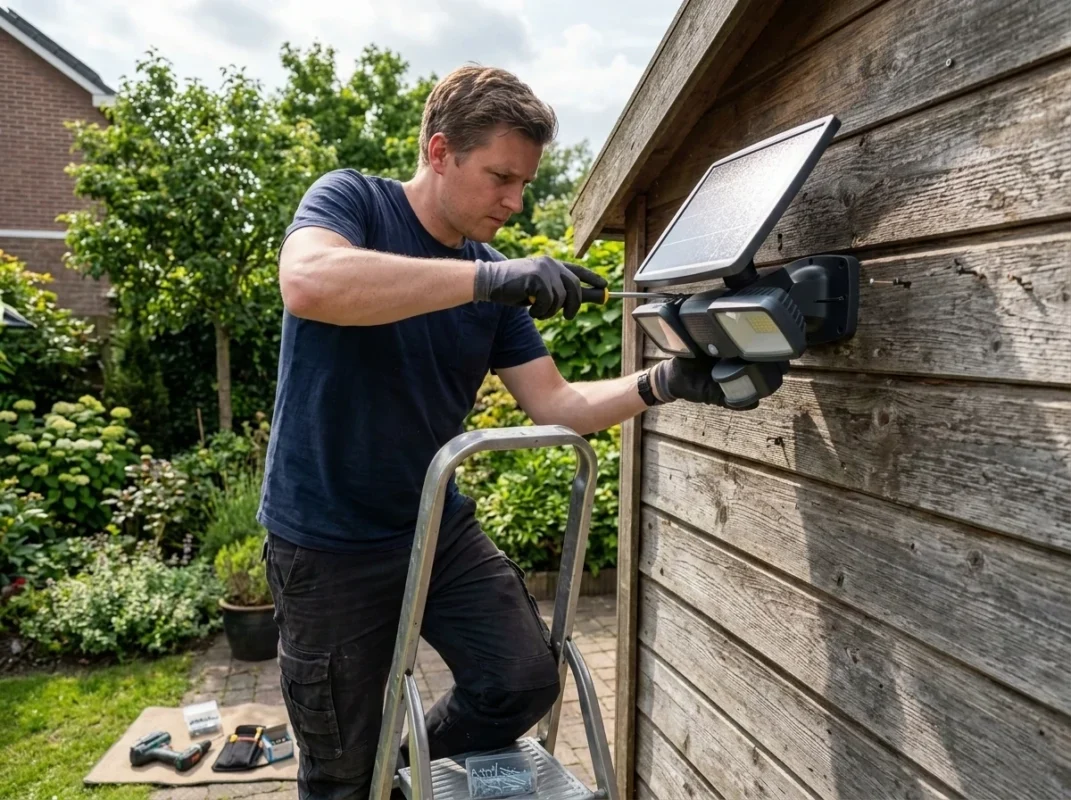
- Mount the Base: Use weather-resistant screws and anchors suitable for your wall material (brick, wood, or siding). Ensure it’s firmly attached to withstand wind and outdoor conditions.
- Adjust the Sensor Angle: Point the motion sensor toward the path of potential intruders. Most sensors detect movement 20–40 feet away—adjust to match your property layout.
- Set Brightness & Timer: Many solar flood lights motion sensor models allow you to adjust brightness levels and duration. A 30–60 second timer is often ideal for security lighting.
- Test Detection: Walk through the detection zone at night to ensure proper triggering. Adjust angles or sensitivity as needed.
Insider tip: Slightly angling the sensor downward helps reduce false triggers from moving branches, animals, or passing cars.
Hiring a Professional
While DIY installation is doable, there are situations where professional help is worth considering:
- Large Properties: Multiple lights covering a big backyard, driveway, or perimeter may need coordinated placement for full coverage.
- Complex Layouts: Corners, overhangs, or multiple angles might require experience to position lights correctly.
- Wiring Integration: Some systems, even if solar-powered, may be paired with other security systems or auxiliary lighting that require proper electrical setup.
Professionals bring experience with sensor angles, optimal panel orientation, and battery placement. They can also help avoid mistakes that reduce efficiency, such as installing lights in shaded areas or misaligning detection zones.
Common DIY Pitfalls and How to Avoid Them
Even small mistakes can reduce performance. Watch out for:
- Shaded Panels: Position panels away from trees, walls, or roofs that block sunlight.
- Incorrect Sensor Angle: Ensure sensors face the path of movement, not walls or the sky.
- Ignoring Maintenance Access: Install lights where you can easily clean panels or adjust sensors.
- Overlapping Motion Zones: Avoid placing two lights where sensors trigger each other constantly, which can drain the battery.
By planning carefully and following these tips, most homeowners can achieve professional-level results without spending extra on installation.
Maximizing Performance of Solar Flood Lights
Installing solar flood lights motion sensor is just the first step. To get the most out of your investment—brighter light, longer battery life, and reliable motion detection—you need to understand how to optimize performance. Here’s a detailed, field-tested guide.
Proper Sensor Settings
The motion sensor is the heart of your solar flood lights motion sensor system. Getting it right ensures your light activates only when needed, conserving energy while maximizing security.
- Sensitivity: Adjust the sensor so it triggers when a person or vehicle approaches, but ignores small animals or wind-blown objects. Overly sensitive settings can drain the battery quickly.
- Detection Distance: Most residential units cover 20–40 feet. Ensure the sensor is angled toward the approach path. A solar light for driveway security often needs a slightly longer detection range than one installed in a garden.
- Delay Time: Many lights allow you to set how long the light stays on after motion is detected. 30–60 seconds is usually sufficient. Longer durations can waste energy, shorter may not deter intruders effectively.
- Ambient Light Threshold: Some units only activate in low-light conditions. Fine-tune this to avoid triggers during dusk or dawn when full brightness isn’t necessary.
Practical tip: Walk through your detection zone at night after installation. Observe which areas trigger the light and which don’t. Adjust the angle or sensitivity until coverage is seamless.
Cleaning and Maintenance
A dirty solar panel is a weak solar panel. Even a top-quality IP67 solar flood light will underperform if dust, leaves, or grime block sunlight.
- Wipe the panel monthly with a soft, damp cloth.
- Avoid abrasive cleaners that can scratch the surface.
- Trim overhanging branches or vines that could cast shadows on the panel.
Pro insight: In my experience, panels that are even partially shaded during peak sunlight hours can lose up to 30% of their charging efficiency. Keeping panels clean and unblocked ensures your solar flood lights motion sensor is ready to activate when needed.
Seasonal Adjustments
Sunlight angles and day length change with the seasons. Your solar panel and motion sensor may need small tweaks to maintain peak performance.
- Winter: Sunlight is weaker and days are shorter. Tilt panels to face the lower sun angle and consider shortening the light duration to conserve battery.
- Summer: Panels may overheat in direct sun, reducing efficiency. Ensure airflow behind the unit to avoid heat buildup.
- Rainy or Cloudy Seasons: Even IP67 solar flood light units benefit from being checked periodically during extended poor weather to ensure the panel is clean and unobstructed.
Expert tip: Seasonal adjustments can improve battery longevity and prevent unexpected failures during critical security periods.
Using Multiple Units Strategically
Maximizing performance isn’t just about a single light. For larger properties, strategically placing multiple outdoor security solar lights can eliminate blind spots and improve reaction time.
- Overlap detection zones slightly so no area is left unmonitored.
- Avoid placing units where motion triggers each other constantly; this can drain batteries and reduce lifespan.
- Use dual head solar flood light units in areas with multiple access points to cover different directions with one fixture.
Monitoring Battery Health
Even solar-powered lights need attention to battery performance over time. Lithium-ion batteries typically last 2–5 years, depending on usage and environment.
- If your solar flood lights motion sensor dims significantly or fails to activate, check the battery.
- Replace batteries with compatible high-capacity units to restore full performance.
- Ensure batteries are installed correctly and that connectors are free from corrosion or moisture.
Practical takeaway: Proactive maintenance—cleaning, seasonal tweaks, and battery checks—can keep your lights performing at peak efficiency for years.
Special Features to Look For
When shopping for solar flood lights motion sensor, it’s easy to get lost in the specs. Beyond lumens and battery capacity, certain features can significantly improve performance, convenience, and long-term value. Knowing what to look for ensures you get a system that works for your specific property and security needs.
Adjustable Brightness
Not all solar flood lights motion sensor units shine at the same intensity all the time. Many models allow you to adjust brightness levels:
- Dim Mode: Ideal for pathways, gardens, or areas where subtle lighting is sufficient.
- Full Bright Mode: Perfect for driveways, garage approaches, or high-security zones.
Adjustable brightness helps conserve battery life, especially in locations that receive limited sunlight. For example, during winter months, lowering the brightness slightly can extend runtime and prevent your IP67 solar flood light from draining too quickly.
Pro tip: Start with maximum brightness during initial setup to test coverage, then dial it down to balance energy efficiency with security.
Timer Functions
Many lights offer timers that determine how long the light stays on after motion is detected. This can range from 10 seconds to several minutes.
- Short durations conserve battery and are ideal for high-traffic areas where constant movement occurs.
- Longer durations provide better deterrence for intruders, giving you enough time to notice movement or capture footage if paired with a camera.
A well-tuned timer ensures your solar flood lights motion sensor operates efficiently while still maximizing security coverage.
Weatherproof Ratings
Since these lights are exposed to the elements, durability is key. Look for IP67 solar flood light ratings, which guarantee:
- Total dust protection
- Water resistance, including rain and brief immersion in water
Even in heavy storms or dusty environments, a properly rated light will continue functioning reliably, reducing maintenance and replacement costs. This is especially important if you rely on your solar light for driveway security during extended rainy seasons.
Multiple Head Options
Some dual head solar flood light units offer two or more independently adjustable heads. This provides:
- Broader coverage: Illuminate multiple areas with a single unit, such as a driveway and backyard simultaneously.
- Flexibility: Adjust each head to target different angles, minimizing blind spots and maximizing security coverage.
For larger properties, these multi-head systems reduce the number of individual units needed, saving both money and installation time.
Advanced Sensor Features
Modern motion sensors go beyond simple on/off triggers. Look for:
- Adjustable sensitivity: Fine-tune detection to avoid false triggers from pets, passing cars, or wind-blown debris.
- Ambient light sensor: Prevents activation during daylight, saving battery for nighttime.
- Wide-angle detection: Some models cover up to 270 degrees, ideal for open yards or corner installations.
Insider insight: Combining a solar light with 270 degree angle and adjustable sensor sensitivity can significantly reduce blind spots while maintaining efficient energy usage.
Common Problems and How to Solve Them
Even the best solar flood lights motion sensor systems can run into occasional issues. Understanding common problems—and knowing how to fix them—can save you time, frustration, and unnecessary replacements. Here’s a practical guide based on real-world experience.
Light Not Turning On
A frequent complaint is that the light doesn’t activate at night. Possible causes include:
- Obstructed Solar Panel: Dirt, leaves, or debris can block sunlight, preventing the battery from charging fully. Clean the panel regularly.
- Battery Issues: Over time, rechargeable batteries lose efficiency. If your IP67 solar flood light fails to hold a charge, replacing the battery often restores full functionality.
- Sensor Settings: Sometimes the motion sensor is set too high or too low in sensitivity. Adjust the angle and sensitivity to cover the intended detection zone.
Pro tip: After adjusting, walk through the area at night to confirm proper triggering. This helps ensure your solar light for driveway security or backyard coverage functions reliably.
Light Stays On All Night
Another common problem is when the light refuses to turn off. This can be caused by:
- Constant movement in the detection zone (e.g., pets, nearby roads)
- Sensor set to manual or “always-on” mode
- Faulty or aging battery
Solution: Reduce motion sensitivity, shorten the detection duration, or check the battery. In most cases, adjusting these settings restores normal operation.
Limited Detection Range
If your solar flood lights motion sensor isn’t detecting movement far enough, consider:
- Height Adjustment: Mount the light 6–10 feet high for optimal detection. Too high or too low can reduce range.
- Sensor Orientation: Ensure the sensor points directly toward the area you want to monitor.
- Obstructions: Remove trees, walls, or objects blocking the detection path.
Pro insight: Units with a solar light with 270 degree angle generally cover more area, but proper placement is still essential for reliable activation.
Dimming or Low Light Output
Sometimes the light turns on but isn’t bright enough. Common reasons include:
- Insufficient Sunlight: Panels not exposed to direct sunlight for at least 6 hours per day reduce battery charge.
- Battery Aging: Lithium batteries gradually lose capacity. Replacing them restores brightness.
- Dirty Panel: Even a thin layer of dust can reduce output significantly.
Practical tip: Clean panels regularly, ensure full sun exposure, and replace batteries every 2–3 years depending on usage to maintain brightness.
False Triggers
False activations can be annoying and waste battery life. Causes include:
- Passing cars or animals within the detection zone
- Swaying branches, wind, or shadows
- Overly sensitive motion sensors
Solution: Adjust the sensor angle, sensitivity, and detection distance. For larger properties, use a dual head solar flood light strategically to minimize unnecessary triggers while covering critical areas.
Practical Tips from the Field
After installing and testing dozens of solar flood lights motion sensor systems, some lessons from real-world experience can save you hours of trial and error. These practical tips help maximize performance, avoid common pitfalls, and ensure your outdoor security setup works reliably year-round.
Optimal Placement for Maximum Coverage
Where you place your solar flood lights motion sensor is just as important as the light itself. From field experience:
- Height Matters: Mount lights 6–10 feet above the ground. This balances detection range and reduces false triggers from pets or small wildlife.
- Angle the Sensor Correctly: Point the sensor toward the path of likely movement. For long driveways, angle slightly downward to capture approaching vehicles without overshooting.
- Overlap Coverage Zones: When using multiple units, slightly overlap detection zones to eliminate blind spots while avoiding areas where sensors trigger each other unnecessarily.
- Sunlight Exposure: Panels need at least 6 hours of direct sunlight daily. Even an IP67 solar flood light won’t perform well if partially shaded by trees, roofs, or fences.
Insider tip: Walk the property at night after installation. Observe which areas trigger the light and which remain dark. Adjust angles until coverage is consistent.
Seasonal Adjustments and Maintenance
Outdoor conditions change with the seasons, and so should your lights. From winter snow to summer heat:
- Winter: Tilt panels to capture lower-angle sunlight. Shorten light duration if nights are long to conserve battery.
- Summer: Ensure adequate airflow behind panels to avoid heat buildup.
- Rainy Season: Even outdoor security solar lights with strong waterproofing benefit from periodic checks. Wipe panels clean, remove debris, and confirm sensors aren’t blocked.
Pro tip: A simple monthly inspection—checking panels, adjusting angles, and trimming overhanging branches—can extend battery life and maintain bright, reliable illumination.
Combining Different Light Types
Field experience shows that mixing light types improves coverage and efficiency:
- Dual Head Units: Use a dual head solar flood light for corners, driveways, or multi-direction areas. Adjust each head independently to cover different paths.
- Fixed vs. Adjustable Sensors: A solar light with 270 degree angle is excellent for wide-open spaces, while smaller fixed units work well along pathways or narrow zones.
- Layered Lighting: Combining motion-activated lights with ambient pathway lights can create security layers and improve visibility without draining batteries.
Troubleshooting On the Spot
From hands-on work, some recurring issues are easy to prevent or fix:
- False Triggers: Reduce sensitivity or angle sensors downward to prevent activation from pets, passing cars, or branches.
- Dimming or Low Output: Check battery health, panel cleanliness, and sunlight exposure. Even high-quality IP67 solar flood light units perform poorly if panels are blocked.
- Light Stays On: Usually caused by constant movement in the detection zone or incorrect settings. Adjust delay time or sensor mode to fix this.
Expert insight: Many homeowners overlook these small tweaks, but a few minutes of fine-tuning dramatically improves performance and longevity.
Safety and Installation Best Practices
Even though solar flood lights motion sensor systems are relatively low-risk, field experience recommends:
- Wear gloves and eye protection when mounting units.
- Use proper anchors suitable for your wall type—wood, brick, or siding.
- Test each light at night before finalizing installation.
- Keep spare batteries and screws on hand for quick maintenance.
Following these practical steps ensures your system delivers reliable illumination, strong security coverage, and long-lasting performance.
Buying Guide: How to Choose the Best Model
Choosing the right solar flood lights motion sensor can feel overwhelming with so many options on the market. But knowing what features truly matter—and what to prioritize for your property—can simplify the decision. This guide draws on field experience and expert recommendations to help you make the smartest choice.
Determine Your Coverage Needs
Start by assessing the areas you want to illuminate:
- Driveways and Entrances: Use a solar light for driveway security or a dual head solar flood light for broad coverage. Make sure the detection range matches the length of your driveway or access path.
- Backyards and Side Yards: A solar light with 270 degree angle works well to cover open spaces or corners where movement could occur from multiple directions.
- Walkways and Small Areas: Single-head lights are usually sufficient and cost-effective for pathways, garden beds, or small porches.
Practical tip: Walk the property at night with a flashlight to identify dark spots. This helps you choose the right number of lights and their placement.
Consider Sensor Quality and Range
The sensor is the most critical part of any solar flood lights motion sensor system. Key considerations:
- Detection Distance: Most residential units cover 20–40 feet. Longer ranges are better for driveways and larger yards.
- Detection Angle: Wide-angle sensors, such as 270 degrees, reduce blind spots and enhance security coverage.
- Adjustability: Adjustable sensitivity and angle allow you to fine-tune detection zones to avoid false triggers from pets, cars, or passing wildlife.
Expert insight: Units with adjustable sensors consistently perform better in diverse environments, from open yards to narrow pathways.
Evaluate Battery and Solar Panel Performance
Even the best motion sensor is useless without reliable power. When comparing models:
- Battery Type and Capacity: Lithium-ion batteries last longer and perform better in cold weather than older NiMH or lead-acid types.
- Solar Panel Quality: Higher efficiency panels charge faster and maintain brightness even on cloudy days. Ensure your panel receives at least 6 hours of direct sunlight daily.
- Run Time: Check how many hours the light lasts on a full charge. For areas that need overnight coverage, aim for units that can sustain 10–12 hours with moderate motion activity.
Pro tip: An IP67 solar flood light ensures your investment withstands rain, snow, and dust while delivering reliable performance.
Look for Adjustable and Multi-Functional Features
Additional features can make a significant difference:
- Brightness Levels: Adjustable lumens help conserve battery and provide appropriate lighting for different zones.
- Timer Functions: Control how long the light stays on after motion detection. Short timers conserve energy; longer timers improve security.
- Multiple Heads: Dual head solar flood light units cover two areas at once, reducing blind spots and the number of fixtures needed.
Field insight: Lights with multiple adjustable features are more adaptable and tend to perform better over time as your needs change.
Durability and Weather Resistance
Since these lights are exposed to outdoor elements, durability matters:
- Look for units rated IP67 or higher to resist water and dust.
- Ensure the housing is made from corrosion-resistant materials, especially in coastal or high-humidity areas.
- Check reviews or expert tests for long-term performance in extreme temperatures or storms.
Budget vs. Value
Finally, balance cost with performance:
- Entry-Level Units: Great for small pathways or gardens, but may lack adjustable sensors, wide-angle coverage, or long battery life.
- Mid-Range Units: Typically offer solar light with 270 degree angle, better batteries, and stronger motion detection—suitable for most residential properties.
- High-End Units: Provide advanced features like dual heads, long-range sensors, and high-capacity batteries—ideal for large properties or critical security zones.
Pro advice: Don’t just chase the cheapest option. Investing in quality now avoids replacement costs and ensures your solar flood lights motion sensor truly enhances safety and visibility.
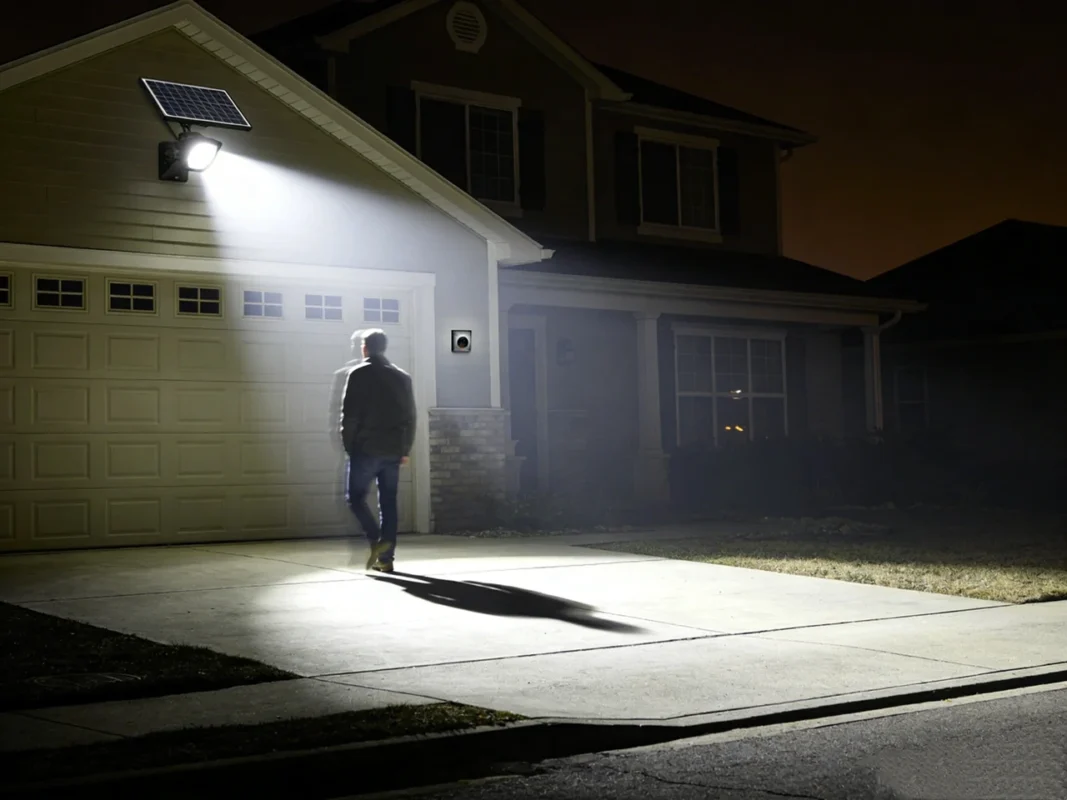
Final Thoughts
Installing solar flood lights motion sensor is one of the most cost-effective, energy-efficient ways to improve home security. By choosing the right model, installing it properly, and maintaining it regularly, you can enjoy peace of mind, lower energy bills, and a well-lit property without complicated wiring.
Whether you’re using a single-head light for a small garden or a dual head solar flood light to cover an entire driveway, these solutions offer flexibility, durability, and convenience. With proper planning and installation, your solar light for driveway security will not just illuminate your property—it will make it safer, smarter, and more efficient.
FAQs
How do you set a solar motion light?
Setting up your solar flood lights motion sensor is easier than it sounds:
1. Charge the Battery Fully: Place the unit in direct sunlight for at least 6–8 hours before initial use.
2. Adjust Sensor Angle: Point the motion detector toward the area you want to monitor, usually angled slightly downward.
3. Set Brightness and Timer: Choose a duration (usually 30–60 seconds) and adjust brightness for your coverage needs.
4. Test the Detection Zone: Walk through the area at night to ensure the sensor triggers correctly.
Pro tip: Fine-tune sensitivity to reduce false triggers from animals, passing cars, or branches.
Why does my solar flood light stay on?
If your solar flood lights motion sensor stays on all night, possible causes include:
• Continuous movement in the detection zone
• Sensor set to manual “always-on” mode
• Aging or faulty battery
Solution: Reduce sensitivity, shorten the light timer, or replace the battery. Adjusting the sensor angle often resolves false activations.
How far can a motion sensor light detect?
Most residential units detect motion between 20–40 feet. Factors that affect range include:
• Mounting height (optimal: 6–10 feet)
• Sensor angle and orientation
• Obstructions like trees or walls
For large driveways or open backyards, consider a solar light with 270 degree angle or a dual head solar flood light to increase coverage and reduce blind spots.
Are solar flood lights bright enough?
Yes, most modern solar flood lights motion sensor units provide enough illumination for security and visibility.
• Pathways and gardens typically need 200–400 lumens.
• Driveways or security-critical areas may require 800–1200 lumens.
• Adjustable brightness levels allow you to conserve battery while maintaining adequate lighting.
Expert insight: Keep panels clean and exposed to full sun to ensure maximum brightness, even for IP67 solar flood light units in rainy or dusty conditions.
Can you turn off the motion sensor?
Most models allow you to disable the motion sensor and run in constant illumination mode.
• Useful for parties or extended outdoor use
• Helps test sensor coverage and angles before regular operation
• Remember that leaving lights always on will drain the battery faster
Tip from the field: Only use constant-on mode temporarily; motion-triggered mode preserves battery and maximizes system longevity.
How high should solar flood lights be?
Mounting height affects detection range and coverage:
• 6–10 feet is ideal for most residential setups
• Too low: False triggers from animals or pedestrians
• Too high: Reduced detection accuracy and limited sensor range
Using adjustable mounts or multi-head units helps tailor coverage for different heights and angles.
Do solar flood lights work in the rain?
Yes, most quality units are IP67-rated, meaning they are fully waterproof and dustproof.
• Can withstand heavy rain, snow, and dust without performance loss
• Ensure panels are clean and unobstructed to maintain charging efficiency
• Avoid installing under overhanging structures that shade the solar panel significantly
Practical tip: Even in continuous rain, a fully charged battery can keep lights running through the night, but occasional checks and panel cleaning optimize performance.