

Table of Contents
When it comes to illuminating your flag, whether at home, a business, or a public space, nothing beats a solar flagpole light. It’s eco-friendly, cost-effective, and surprisingly powerful. But if you’re like most flag enthusiasts or facility managers, you’ve probably wondered: Which solar flagpole light is right for my pole? How bright is bright enough? And can it really withstand the weather?
This guide is designed to answer all of that and more. We’ll dive deep into how solar flagpole lights work, what features matter most, and how to install one on poles ranging from standard yard sizes to towering 20-25ft commercial poles. By the end, you’ll know whether you can DIY or if you need professional help—and you’ll have the confidence to pick the best lighting solution.
Why Choose a Solar Flagpole Light?
Gone are the days when illuminating a flag meant running complicated electrical lines. A solar flagpole light takes care of itself, powered by the sun and automatically turning on at dusk. Here’s why they’re the go-to choice for modern flag installations:
Eco-Friendly and Cost-Saving
Unlike traditional electric lights, solar flagpole lights rely entirely on solar energy. Once installed, you’re essentially harvesting sunlight to keep your flag shining bright, without adding to your energy bill. According to a report from the U.S. Department of Energy, solar outdoor lighting can reduce electricity consumption by up to 60% compared to wired solutions.
Low Maintenance and Longevity
Most commercial grade flagpole lights are built to last. High-quality units come with durable housings and weatherproof designs that resist rain, snow, and wind. This means fewer trips to replace bulbs or repair wiring—a huge advantage for tall poles.
Instant Illumination and Smart Features
Many brightest solar flagpole lights include sensors that turn the light on automatically at dusk and off at dawn. Some models even offer adjustable beam angles, so you can perfectly illuminate your flag without blinding your neighbors.
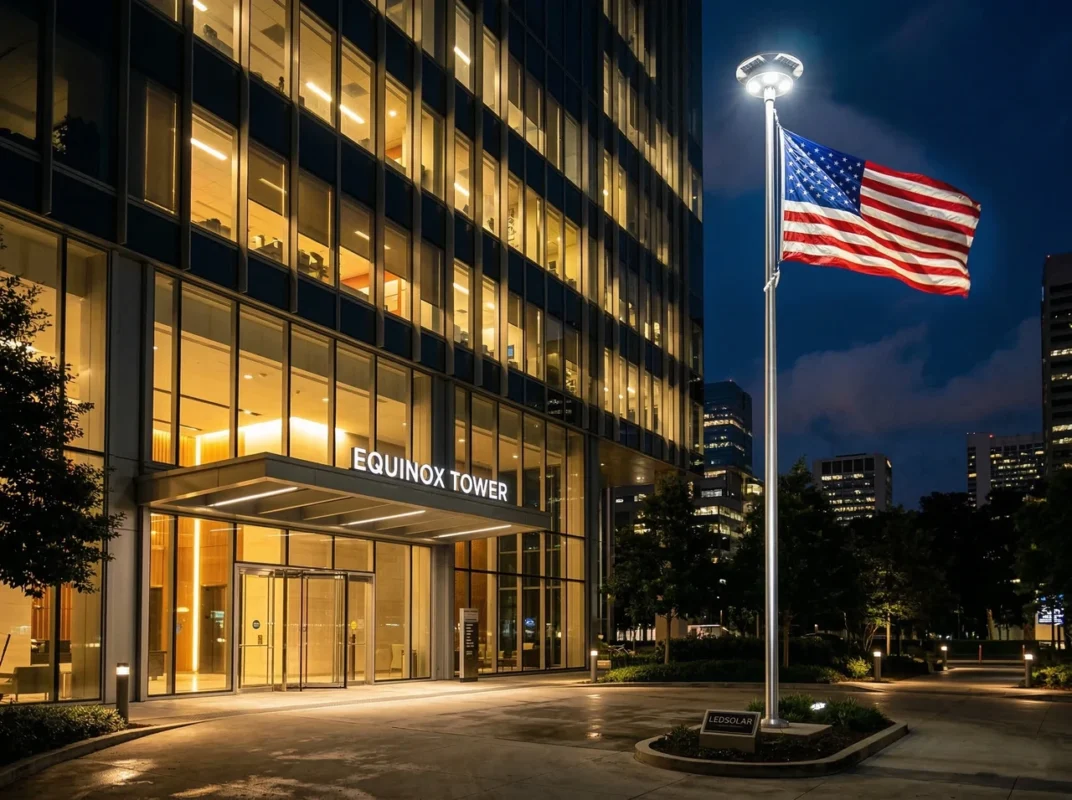
Understanding Lumens and Brightness
If you’ve ever shopped for solar lights for 20-25ft poles, you know that brightness matters. But how do you know what’s bright enough?
How Many Lumens for a Flagpole Light?
Flagpole lighting experts recommend anywhere from 800 to 2000 lumens for typical residential poles. For high lumen flagpole lights on commercial poles, 3000 lumens or more may be necessary to achieve uniform illumination at night.
Beam Spread and Angle
Lumens tell part of the story, but beam angle is crucial. A narrow beam can create hotspots and shadows, while a wider beam distributes light evenly across the flag. For taller poles—especially 20-25ft—look for lights with adjustable angles or multiple LEDs.
Choosing the Right Solar Flagpole Light
Picking the right solar flagpole light isn’t just about grabbing the brightest model on the market. There are several key factors to consider to ensure your flag looks its best at night, your installation lasts for years, and the system performs reliably without constant maintenance. Over the years of working with both residential and commercial installations, I’ve seen firsthand how choosing the wrong unit can lead to dim lighting, frequent repairs, or frustration during bad weather. Here’s a breakdown of what really matters.
Consider Pole Height and Flag Size
One of the first things you need to think about is the height of your pole and the size of your flag. If you have a standard residential pole of 15-20ft, a unit delivering around 1000-1500 lumens usually works perfectly. But if you’re lighting a larger flag on a solar light for 20-25ft pole, you’ll want something much stronger—ideally in the range of 2000-3000 lumens—to make sure the flag is evenly illuminated without hotspots or shadows. For commercial installations, a high lumen flagpole light ensures the flag is visible from a distance and can withstand scrutiny from clients, visitors, or regulatory bodies.
Brightness vs. Beam Angle
Brightness alone doesn’t tell the whole story. Two lights with the same lumen rating can perform very differently depending on the beam spread. A narrow beam can make the center of the flag bright while leaving edges in shadow, while a wider beam distributes light evenly. Adjustable beam angles are a real lifesaver—they let you fine-tune illumination based on pole height and flag size. For larger poles, a brightest solar flagpole light with multiple LEDs or a wider beam is often the safest bet.
Weather Resistance
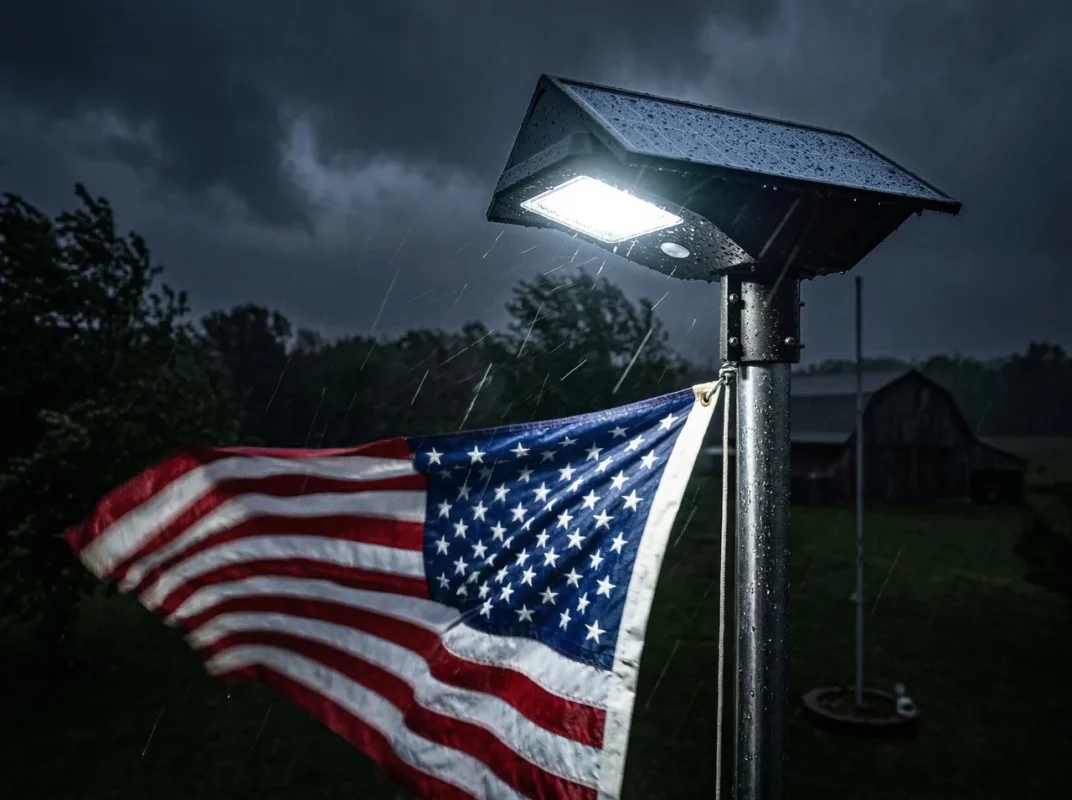
Your light is going to face rain, snow, wind, and sun, so durability is non-negotiable. Look for a waterproof flagpole light solar rated at least IP65, which means it can withstand heavy rain and even dust intrusion. For windy locations, make sure the housing is robust and the mounting hardware is secure. High winds are the number one reason I’ve seen solar lights fail prematurely, so investing in a unit that’s built for commercial grade flagpole light performance is worth every penny.
Solar Panel Efficiency and Battery Life
A well-performing solar light depends on more than just LEDs. The solar panel must capture sufficient sunlight throughout the day, even in less-than-perfect conditions. Panels positioned for full southern exposure (in the Northern Hemisphere) tend to charge batteries more efficiently. Lithium-ion batteries are generally more reliable than older NiMH types, and many high-end models offer 8-12 hours of illumination per full charge. Keep in mind that if your pole is in a shaded area or your region has long winters, battery performance can drop, so factoring in panel size and battery capacity is essential.
Ease of Installation and Maintenance
Even the most powerful solar flagpole light is useless if it’s too difficult to install or maintain. Adjustable brackets, lightweight LED assemblies, and clear instructions can make a world of difference. During my installations, I always recommend positioning the solar panel for easy access—this makes cleaning and occasional battery checks simple. Dust, bird droppings, or snow can cut efficiency by up to 30%, so choose a unit that allows quick maintenance without taking down the entire system.
Installation Guide: Step by Step
Installing a solar flagpole light might seem intimidating at first, especially if your pole is tall or you’ve never worked with outdoor lighting before. But with a clear step-by-step approach, it’s actually very doable—and you don’t need to be an electrician.
Tools and Materials You’ll Need
Before you start, gather the right tools. Here’s a checklist that covers most installations:
- A ladder tall enough for your pole (for solar light for 20-25ft pole, consider a sturdy extension ladder).
- Adjustable mounting bracket or clamp.
- Screwdrivers or wrenches, depending on the light’s hardware.
- Safety harness, especially for poles above 20ft.
- Optional: a level to ensure your panel is straight and pointing at the sun.
Having everything ready before you climb the ladder makes the process much smoother.
Positioning the Solar Panel
The solar panel is the heart of your solar flagpole light, and placement matters more than most people realize. Here’s what I recommend:
- Maximize sun exposure: In the Northern Hemisphere, position the panel facing south if possible. Avoid areas shaded by trees, buildings, or nearby structures. Even partial shade can drastically reduce battery efficiency.
- Angle for optimal charging: Tilt the panel slightly toward the sun’s path to capture maximum daylight. Some panels have adjustable brackets; use them to fine-tune the angle.
- Securely attach the panel: Make sure it’s tightly mounted to withstand wind gusts. A commercial grade flagpole light often comes with reinforced brackets for this reason.
Mounting the LED Light
Once the panel is positioned, it’s time to attach the LED unit. Here’s the process I follow for smooth installation:
- Attach the mounting bracket to the top of the pole or just below the flag, depending on design.
- Connect the LED assembly to the bracket. Ensure wires are routed neatly to prevent snagging or wear.
- Adjust the beam angle so the light evenly covers the flag. For taller poles, a high lumen flagpole light with an adjustable beam helps reduce hotspots.
- Tighten all screws and clamps. The last thing you want is the light shifting in high winds.
Testing and Fine-Tuning
Before calling it done, always test your solar flagpole light:
- Charge the battery fully during daylight.
- Wait until dusk to see the actual illumination.
- Adjust the beam or panel angle if needed for optimal coverage.
- Check for shadows or uneven lighting, which can often be corrected by minor tweaks.
Tips for Telescoping Poles
Many homeowners ask, “Does it work on a telescoping pole?” The answer is yes—but with some extra care:
- Ensure the bracket allows full extension without straining wires.
- Secure the panel in a position that doesn’t interfere with raising or lowering the pole.
- Periodically inspect the system for wear, since telescoping poles move more frequently than fixed poles.
Tips from the Field: Maximizing Performance
Installing a solar flagpole light is only half the battle. To get consistent, bright illumination year after year, you need to understand a few practical tips that most people overlook.
Position Your Solar Panel Strategically
The most common mistake I see is poor solar panel placement. Even a high lumen flagpole light won’t shine at full potential if the panel is shaded or angled incorrectly.
- South-facing panels in the Northern Hemisphere typically get the most sunlight throughout the day.
- Tilt the panel slightly to match the sun’s path, especially for taller poles. A small adjustment of 10-15 degrees can make a big difference in battery charging efficiency.
- Avoid obstructions like trees, vents, or buildings. Even partial shade can reduce battery life by 20-30%.
Regular Cleaning and Maintenance
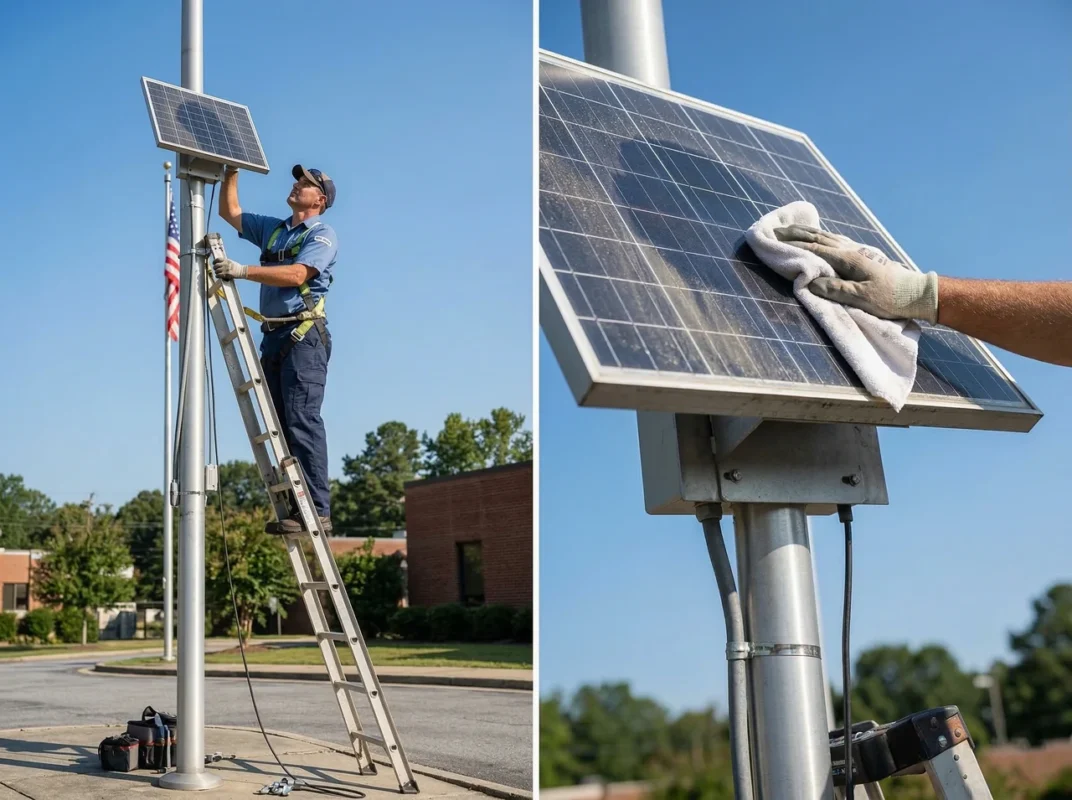
Dust, bird droppings, and debris can seriously impact your solar light. In field installations, I’ve found that a quick wipe of the solar panel every 2-3 months keeps performance near peak.
- Use a soft cloth and mild soap solution if needed; avoid harsh chemicals that could scratch the panel.
- Inspect wiring for frays or pinches, especially if your pole is a telescoping model, since movement can stress the cables.
- For waterproof flagpole light solar units, check seals to ensure water hasn’t entered the housing after heavy storms.
Fine-Tuning Beam Angles
Even if your light has a high lumen rating, poor beam positioning can create uneven lighting or hotspots. During installations, I always recommend:
- Adjusting the beam to cover the flag evenly from top to bottom.
- Rotating multi-LED units slightly if shadows appear.
- For taller poles or large flags, a solar light for 20-25ft pole with adjustable LEDs can make all the difference.
Optimize Battery Life
Battery management is crucial for long-term performance. Most commercial grade flagpole lights last 8-12 hours on a full charge, but there are ways to extend this:
- Ensure the panel receives direct sunlight every day. Even a cloudy day is enough to partially recharge, but repeated shade lowers total battery capacity.
- During winter months, consider temporarily lowering the pole (if telescoping) or cleaning snow off the panel to maintain consistent charging.
- If you notice shorter run times, check for battery degradation. Some lithium-ion units can be swapped easily without replacing the whole system.
Handling Extreme Weather
Strong winds, heavy rain, and snow are the biggest threats to solar flagpole lights over time. Tips from field experience include:
- Tighten all brackets and fasteners after installation. Even a waterproof flagpole light solar needs secure mounting to withstand gusts.
- Tilt the panel slightly downward if snow accumulation is a concern. This prevents weight from damaging the panel or shifting the LED unit.
- For coastal or high-wind areas, make sure your pole and mounting hardware are rated for extra durability—this is especially critical for high lumen flagpole lights in commercial setups.
Troubleshooting Common Issues
Even the best solar flagpole lights can encounter problems from time to time. The good news is that most issues are simple to diagnose and fix, especially if you understand how the system works and follow some field-tested troubleshooting tips.
Light Won’t Turn On
If your solar flagpole light doesn’t turn on at dusk, start with the basics:
- Check solar panel exposure: Even partial shade can prevent the battery from fully charging. Make sure the panel isn’t blocked by trees, vents, or nearby structures.
- Inspect battery connections: Loose or corroded connections are surprisingly common and easy to fix. Make sure all wires are securely connected.
- Verify the switch or sensor: Some units have an on/off switch or light sensor. Ensure it’s in the correct position.
In most cases, correcting panel placement or securing connections restores normal operation.
Dim or Uneven Illumination
A high lumen flagpole light should provide bright, even coverage. If the light appears dim or uneven:
- Clean the solar panel: Dust, bird droppings, or dirt can reduce charging efficiency by up to 30%. A quick wipe with a soft cloth often fixes the problem.
- Adjust the beam angle: Even minor tweaks to the LED orientation can eliminate hotspots and shadows.
- Check battery health: Over time, batteries lose capacity. If your solar light for 20-25ft pole has dimmed noticeably, it may be time to replace the battery.
Flickering or Intermittent Lighting
Flickering often indicates an intermittent power supply or connection issue:
- Ensure all wires are properly secured and free of corrosion.
- Make sure the panel receives consistent sunlight. Partial shading can cause the light to flicker.
- Some brightest solar flagpole lights need a few charging cycles to stabilize; new installations may flicker for the first few nights.
Water or Weather-Related Issues
Even waterproof flagpole light solar units can experience problems if seals fail or debris blocks drainage:
- Inspect seals after heavy rain or storms. Re-seat or replace gaskets if necessary.
- Remove accumulated snow or ice in winter to prevent stress on the panel or LED housing.
- Check the mounting bracket and screws after high winds to ensure the light hasn’t shifted.
Battery Not Lasting as Long
A common complaint for commercial grade flagpole lights is that the battery doesn’t last the full night:
- Verify that the panel receives full sunlight daily. Even a few cloudy days can reduce runtime.
- Avoid covering the panel with decorations, bird spikes, or nearby trees.
- In extreme cases, replace the battery with a compatible high-capacity unit to restore full performance.
Conclusion
A solar flagpole light is more than just a decorative feature—it’s a statement of pride, sustainability, and professionalism. With careful selection, proper installation, and routine maintenance, your flag can shine brightly every night without increasing your electricity bill. Whether you need the brightest solar flagpole light, a solar light for 20-25ft poles, or a robust waterproof flagpole light solar, the right setup makes all the difference.
Investing time upfront in choosing the right lumens, weatherproofing, and mounting will save headaches later. And remember: a properly illuminated flag is not only beautiful—it commands respect, draws attention, and lasts for years with minimal effort.
FAQs About Solar Flagpole Lights
How many lumens for a flagpole light?
For a standard residential pole, 800-1500 lumens is usually enough. For taller or commercial poles, especially a solar light for 20-25ft pole, 2000-3000 lumens ensures even illumination without shadows. A high lumen flagpole light is best for visibility from a distance.
How do you install it on a pole?
Mount the solar panel at the top of the pole or where it gets maximum sunlight. Secure the LED unit with a bracket, route wires carefully, and adjust the beam angle. Testing at dusk ensures the flag is evenly lit. For commercial grade flagpole lights, use reinforced brackets for stability.
Does it work on a telescoping pole?
Yes, most solar flagpole lights are compatible with telescoping poles. Make sure the mounting bracket allows full extension without straining the wires, and position the solar panel so it remains exposed to sunlight at all heights.
How long does the battery last?
Most units provide 8-12 hours of illumination per full charge. Proper panel positioning, regular cleaning, and avoiding shade help maintain battery life. For waterproof flagpole light solar setups in cloudy regions, consider a high-capacity battery or dual-panel system.
Can it withstand high winds?
Quality brightest solar flagpole lights and commercial grade flagpole lights are designed to handle strong winds. Secure mounting, reinforced brackets, and tight screws prevent shifting or damage during storms. Always check the wind rating if your area experiences frequent gusts.