

Table of Contents
Solar lighting has grown tremendously in popularity in recent years. People love the idea of setting up outdoor lights without wiring, plugging in, or running electricity — just let the sun do the work. But to keep a solarlight system working reliably over time, one detail often overlooked is the battery. These batteries gather and store solar energy during the day, then power the light at night. Without a well-functioning battery, even a perfectly good solar panel is useless.
That’s why understanding replacement batteries for solar lights is essential. Over time, the rechargeable battery inside a solar light will degrade, reducing runtime, brightness, or eventually failing completely. Swapping in fresh solar lights batteries rechargeable can restore performance and extend the life of your lights — often for a fraction of the cost of buying a whole new unit. In this guide, we’ll cover how batteries in solar lights work, how to choose and replace them, and how to maintain them for optimal performance.
Understanding Batteries in Solar Lights
When it comes to outdoor solar lighting, the battery plays a central role. While the solar panel captures sunlight and converts it into electricity, it’s the battery in solar lights that stores that energy and powers your fixture after dark. Without a reliable battery, even the most efficient solar panel can’t keep your garden, pathway, or patio illuminated. That’s why understanding the types of batteries used, how they function, and their limitations is essential for maintaining your solarlight system effectively.
What Types of Batteries Are Used in Solar Lights
Solar lights typically rely on rechargeable batteries designed for repeated charge and discharge cycles. Choosing the correct type of solar batteries for solar lights is critical for performance, longevity, and safety. The most common types include:
- Nickel-Metal Hydride (NiMH)
NiMH batteries are widely used in residential solar lighting because they offer a good balance between capacity, cost, and durability. They handle daily charging cycles well, making them ideal for solar light batteries rechargeable. NiMH cells are also environmentally friendlier than older chemistries like nickel-cadmium.
- Nickel-Cadmium (NiCd)
Although less common in modern outdoor lighting, NiCd batteries are robust and can tolerate higher temperatures. However, they have lower energy capacity than NiMH and suffer from the “memory effect,” which can reduce the effective runtime of your solar lamp rechargeable batteries if not fully discharged regularly.
- Lithium-Ion (Li-ion) and Lithium Iron Phosphate (LiFePO₄)
Newer or higher-end solar batteries for solar lights often use lithium-based chemistry. These batteries deliver higher energy density, longer cycle life, and better thermal stability — meaning they can perform consistently even in hot or cold climates. Li-ion batteries are more expensive than NiMH, but their performance makes them worth the investment, especially for high-output or decorative solar lights.
Each type of battery has trade-offs. NiMH batteries are cost-effective and reliable for most garden lights, while Li-ion batteries excel for long-lasting performance in more demanding outdoor setups. Understanding your light’s requirements ensures you choose the right replacement batteries for solar lights and avoid issues like dimming, short runtime, or battery leakage.
How Solar Lights Work With Batteries
To appreciate the importance of solar light batteries, it’s useful to understand the system workflow. During the day, sunlight hits the solar panel, which converts it into electrical energy. This energy flows into the battery in solar lights, where it is stored for use after sunset. Once darkness falls, the battery powers the LEDs, illuminating your outdoor space.
Over time, each charging and discharging cycle gradually reduces the battery’s capacity. Eventually, the battery can no longer hold enough energy to light the fixture for the full night. When this happens, it’s often time for replacement batteries for solar lights. Swapping in fresh solar lights batteries rechargeable can restore brightness and runtime, effectively renewing your solar lighting system without needing to replace the entire fixture.
Key Considerations for Battery Performance
Several factors affect how well your solar batteries for solar lights perform:
- Sunlight Exposure: Insufficient sunlight leads to incomplete charging, which can stress the battery and shorten its lifespan.
- Temperature Extremes: Batteries degrade faster in extremely hot or cold conditions. Lithium-based options handle temperature swings better than NiMH.
- Charging Cycles: Regularly depleting and recharging your batteries is normal, but improper use (like leaving a light in shade or over-discharging) can damage the cells.
- Maintenance: Keeping the solar panel clean and free of debris ensures maximum charging efficiency, which directly impacts battery health.
By choosing the right battery type, understanding its limitations, and maintaining optimal conditions, you can maximize the life of your solar light batteries and keep your outdoor spaces brightly lit night after night. Replacing worn-out batteries with compatible solar lamp rechargeable batteries is one of the most effective ways to ensure your solar lights continue performing reliably for years.

When to Replace Solar Light Batteries
Even the best solar light batteries rechargeable have a finite lifespan. Knowing when to replace them is essential to maintaining consistent performance, bright illumination, and long-term reliability. Replacing worn-out batteries is often far more cost-effective than buying a new solar light fixture, making this a key aspect of replacement batteries for solar lights maintenance.
Signs That Your Battery Needs Replacement
Several clear indicators suggest it’s time to swap out the battery in solar lights:
- Dimming Light Output
If your solar lights glow noticeably dimmer at night than when they were new, the battery is likely losing capacity. Dimming is often gradual, so pay attention to subtle changes in brightness. Replacing the battery with fresh solar lamp rechargeable batteries usually restores full luminosity.
- Shortened Runtime
A healthy battery should allow your solarlight to stay on through the night. If your lights are shutting off after only a few hours, even after sunny days, this is a sign the battery can no longer hold sufficient charge.
- Failure to Light Up
Sometimes, your solar light won’t turn on at all, despite ample sunlight exposure. This can indicate a completely worn-out battery that can no longer store or release energy efficiently. Replacing with high-quality solar lights batteries rechargeable is often the only solution.
- Battery Leakage or Corrosion
Physical signs such as swelling, leakage, or corrosion in the battery compartment are serious red flags. A compromised battery can damage the solar batteries for solar lights or the light’s internal circuitry. In such cases, immediate replacement is essential.
- Unusual Behavior After Charging
If the light behaves inconsistently — for instance, flickering, turning on only partially, or requiring excessive sunlight to charge — it often indicates the battery has reached the end of its life cycle.
Is It Worth Replacing Batteries in Solar Lights?
Many homeowners wonder: is it really worth the effort to replace the battery instead of buying a new solarlight? In most cases, the answer is yes. Consider the following:
- Cost-Effectiveness: High-quality replacement batteries for solar lights are typically much cheaper than a complete solar light fixture. A simple battery swap can restore full function without the higher expense.
- Environmental Impact: Replacing only the battery reduces waste, making it a more sustainable choice. Reusable solar light batteries rechargeable can be disposed of or recycled properly, unlike entire fixtures.
- Longevity: Installing fresh batteries can extend the life of your lights for several years, especially if the solar panel and LEDs remain in good condition.
By monitoring the performance of your solar lights and recognizing these warning signs, you can confidently decide when to replace the battery. Timely replacement ensures your outdoor spaces remain well-lit, safe, and inviting, without unnecessary expense.
How Often Should You Replace Solar Light Batteries?
While usage, climate, and battery type all affect lifespan, a general guideline is:
- NiMH Batteries: Typically last 1–3 years under normal outdoor use.
- Lithium-Ion Batteries: Can last 3–5 years or longer, depending on environmental conditions and maintenance.
- NiCd Batteries: Less common now, usually 2–3 years, but prone to the memory effect.
Factors such as extreme temperatures, heavy rainfall, or prolonged shade can shorten these lifespans. Regular checks, combined with recharge solar light batteries practices, can maximize performance and avoid premature replacement.
Choosing the Right Replacement Battery
Selecting the right replacement batteries for solar lights is crucial for maintaining performance, extending lifespan, and ensuring safe operation. Using the wrong battery can lead to dim lights, shortened runtime, or even damage to the solarlight circuitry. Fortunately, understanding the key factors — battery type, size, voltage, and quality — makes this process straightforward.
How to Know What Solar Battery You Need
Before purchasing a new battery, carefully evaluate your solar light’s specifications. Here are the main factors to consider:
- Battery Type
Most outdoor solar lights are designed for rechargeable batteries. Common chemistries include NiMH, NiCd, and Li-ion. Each has distinct characteristics:
- NiMH (Nickel-Metal Hydride): Ideal for standard garden lights, offering reliable capacity and good recharge cycles. These are the most common solar light batteries rechargeable and are widely available in AA or AAA sizes.
- NiCd (Nickel-Cadmium): Durable but less common today, with lower capacity and susceptibility to the memory effect.
- Li-ion (Lithium-Ion): High energy density and longer lifespan, making them suitable for higher-output or premium solar batteries for solar lights.
Using the correct chemistry ensures optimal charging and prevents over-discharge or heat-related issues.
- Voltage and Capacity
Check the voltage rating of your current battery. Most garden solar light batteries operate at 1.2V for NiMH or NiCd and higher for lithium-based cells. The capacity (measured in mAh) determines how long your solarlight can operate overnight. Installing a battery with insufficient voltage or capacity may reduce runtime, while excessive voltage can damage the light.
- Physical Size and Form Factor
Not all batteries are interchangeable. Make sure the replacement fits snugly in the battery compartment. Common sizes include AA and AAA, but some larger solar lights may require proprietary lithium cells. Matching the size ensures a secure connection and efficient energy transfer.
- Quality and Reliability
Not all rechargeable batteries are created equal. Choose high-quality solar lamp rechargeable batteries rated for outdoor solar use. Look for batteries that can withstand temperature extremes, repeated charging cycles, and moisture exposure. Quality batteries maximize the life of your replacement batteries for solar lights and maintain consistent illumination.
Recommended Batteries for Solar Lights
For most standard outdoor solar lights, NiMH rechargeable batteries in AA or AAA sizes are a reliable choice. They balance cost, capacity, and durability, and they are well-suited for daily charge and discharge cycles.
If you have a high-output or premium solar fixture, lithium-based batteries may be the best option. Their higher energy density allows longer runtime and better performance under varying weather conditions. Using compatible solar batteries for solar lights ensures your investment in the fixture continues to provide dependable lighting for years.
Avoiding Common Mistakes
When choosing replacement batteries for solar lights, avoid these common errors:
- Using Regular Alkaline Batteries: Alkaline batteries are not designed for repeated charging and can leak or damage the circuitry in your solarlight. Always use rechargeable options.
- Mixing Old and New Batteries: Combining batteries of different ages or capacities can lead to uneven charging, reduced runtime, or even failure. Always replace all batteries in a fixture at the same time.
- Ignoring Battery Specifications: Using a battery with the wrong voltage, size, or chemistry can reduce performance or damage the solar light. Always check the original battery label or manual.
By carefully selecting the correct type, size, and quality of solar light batteries, you ensure your lights maintain bright, reliable illumination. Replacing worn or incompatible batteries with the right solar lamp rechargeable batteries is a small investment that preserves your solarlight system and maximizes its lifespan.

How to Replace Batteries in Solar Lights
Replacing the battery in solar lights may sound intimidating if you’ve never done it before, but it’s actually a simple process that most homeowners can complete in just a few minutes. Doing it correctly ensures your solarlight continues to provide reliable illumination while maximizing the lifespan of your solar lights batteries rechargeable.
Step-by-Step Replacement Process
Here’s a practical guide to replacing replacement batteries for solar lights safely and effectively:
- Power Down the Light
Before opening the battery compartment, switch off the light or cover the solar panel to prevent accidental charging. This reduces the risk of short circuits and protects both you and the solar lamp rechargeable batteries.
- Access the Battery Compartment
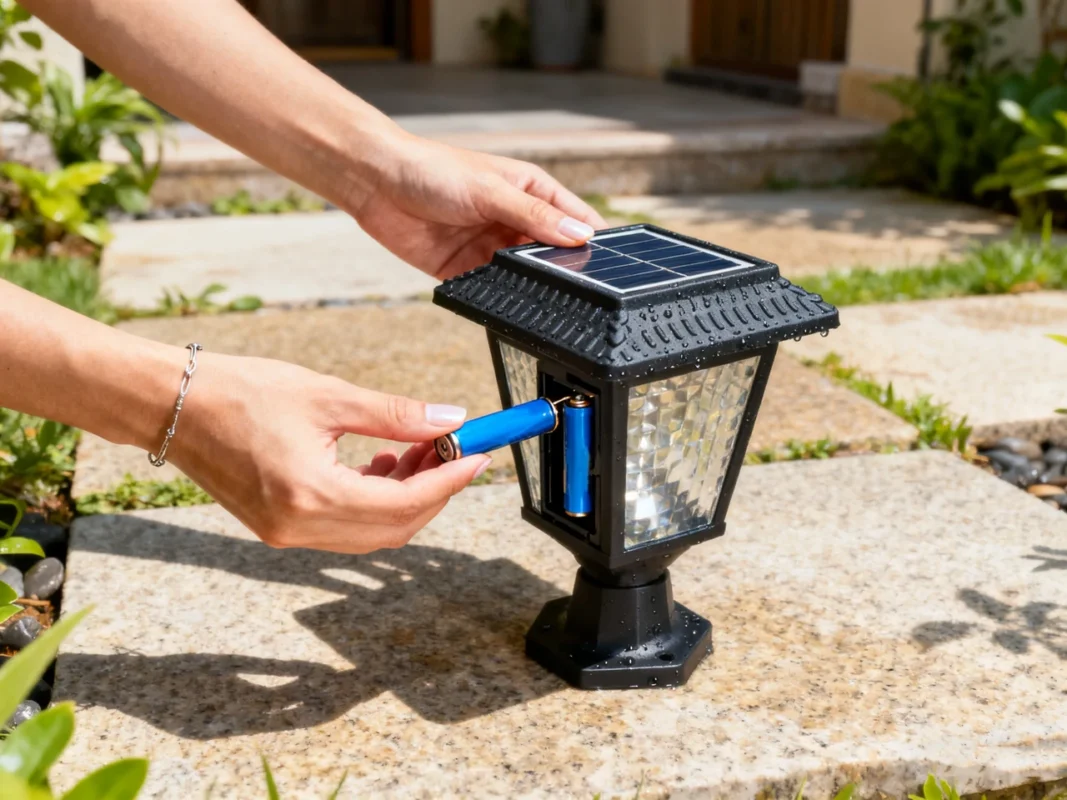
Most solar lights have a removable panel or cap at the base or back. Use a screwdriver if necessary to open the compartment. Take note of the current battery orientation, as installing the new battery incorrectly can damage the light.
- Remove the Old Batteries
Gently extract the worn-out solar light batteries. Inspect them for corrosion, leakage, or swelling. Properly dispose of any damaged batteries according to local recycling guidelines to protect the environment.
- Insert the New Batteries
Place the new solar batteries for solar lights in the compartment, ensuring correct polarity. For most garden lights, NiMH rechargeable AA or AAA batteries work best, but some high-output lights may require lithium-based cells. Double-check that the new batteries fit snugly and make solid contact with the terminals.
- Close the Compartment and Test
Securely fasten the compartment cover to maintain weather resistance. Turn the light back on or allow it to charge in sunlight for a full day. Observe its performance at night — the light should shine brightly for its expected runtime.
Maintaining Your Batteries for Longevity
Once you’ve replaced your replacement batteries for solar lights, a few simple habits can extend their life and improve performance:
- Regular Cleaning: Dirt or debris on the solar panel reduces charging efficiency, placing extra stress on the battery. Wipe panels periodically to maximize energy absorption.
- Proper Sunlight Exposure: Ensure your lights are positioned in areas that receive adequate sunlight for most of the day. Shaded locations prevent full charging, which can shorten battery life.
- Avoid Mixing Batteries: Never mix old and new batteries in the same solarlight. Differences in charge capacity can lead to uneven performance and early battery failure.
- Seasonal Storage: If storing lights for winter or extended periods, remove the batteries and store them in a cool, dry place with a partial charge. This prevents leakage and degradation.
Common Mistakes to Avoid
Even small errors can compromise battery performance:
- Using Non-Rechargeable Batteries: Alkaline batteries cannot handle repeated charging and can leak, corrode, or damage the solar light batteries rechargeable.
- Incorrect Orientation: Placing batteries upside down or backward prevents the light from functioning and can cause electrical issues.
- Ignoring Battery Specifications: Replacing the old battery with one of the wrong voltage, size, or chemistry can reduce brightness, shorten runtime, or damage the fixture.
Benefits of Proper Battery Replacement
Replacing replacement batteries for solar lights correctly provides immediate and long-term advantages:
- Restores full brightness and consistent illumination for your outdoor areas.
- Extends the life of your solarlight fixtures without expensive replacements.
- Promotes energy efficiency by ensuring the solar panel charges batteries effectively.
- Reduces environmental impact by reusing fixtures and recycling old batteries responsibly.

Charging and Recharging Solar Light Batteries
A solar light’s performance depends heavily on its ability to store and release energy efficiently. This is why understanding how to properly charge and maintain your solar light batteries rechargeable is crucial. Proper charging ensures your solarlight remains bright, reliable, and long-lasting, while careless practices can shorten battery life or even damage the fixture.
How to Recharge Solar Light Batteries
The beauty of solar lighting lies in its self-sufficiency: your battery in solar lights charges automatically during the day using sunlight. However, a few key practices can maximize efficiency:
- Optimal Sunlight Exposure
Place your lights where they receive at least 6–8 hours of direct sunlight daily. Shaded areas, overhanging trees, or rooflines can prevent full charging, leaving your solar lights batteries rechargeable undercharged and reducing runtime.
- Cleaning the Solar Panel
Dirt, dust, and debris on the solar panel reduce energy conversion efficiency. A clean panel ensures the solar batteries for solar lights receive the full amount of solar energy, helping them charge fully each day.
- Using the Right Battery Type
Only install batteries rated for rechargeability. High-quality solar lamp rechargeable batteries are designed to endure hundreds of charging cycles, while regular disposable batteries cannot be recharged and may leak or corrode.
- Full Charge Cycles
For NiMH or lithium-based solar light batteries, allowing full charging during sunny days ensures they deliver maximum nighttime illumination. Avoid placing lights in locations where sunlight is intermittent, as partial charges can reduce battery efficiency over time.
- External Recharging (If Necessary)
Occasionally, if a light has been unused for a long period or the battery is weak, you can remove the solar batteries for solar lights and charge them with a compatible external charger. This helps restore performance before reinstalling them in the light.
Common Mistakes When Charging Solar Batteries
Even minor errors in charging can harm your replacement batteries for solar lights:
- Using Non-Rechargeable Batteries: Alkaline or other disposable batteries cannot handle solar charging cycles, leading to leaks, corrosion, or permanent damage to the fixture.
- Mixing Old and New Batteries: Uneven charge levels between batteries can reduce performance and may stress the charging circuit. Always replace all batteries at once with the same type and age.
- Neglecting Temperature Effects: Extreme heat or cold can degrade the battery’s ability to hold charge. Placing lights in areas with moderate exposure helps maintain battery health.
- Ignoring Panel Maintenance: Even a small layer of dirt on the solar panel can reduce the energy reaching the solar light batteries rechargeable, causing dim or short-lived illumination.
Best Practices to Maximize Battery Lifespan
- Maintain Consistent Sunlight: Properly positioned lights allow the battery in solar lights to fully recharge every day, maximizing lifespan.
- Regular Panel Cleaning: Wipe solar panels periodically with a damp cloth to maintain peak charging efficiency.
- Avoid Deep Discharges: While it’s normal for batteries to discharge overnight, avoid leaving lights fully depleted for extended periods.
- Seasonal Care: If storing lights for months (e.g., winter), remove the solar light batteries and store them at a partial charge in a cool, dry environment.
By following these best practices, your solar lights batteries rechargeable can deliver consistent brightness and long runtime for many seasons. Properly charging and maintaining your batteries not only enhances performance but also reduces the frequency of replacements, making your solar lighting system more cost-effective and sustainable.
Pros and Cons of Replacing vs. Buying New Solar Lights
When your solar lights start showing signs of dimming, short runtime, or other performance issues, it’s natural to ask whether replacing the battery in solar lights is worth it or if purchasing entirely new fixtures is a better solution. Understanding the advantages and limitations of each approach can help you make an informed, cost-effective, and environmentally responsible decision.
Pros of Replacing Batteries
- Cost-Effectiveness
Replacing worn-out replacement batteries for solar lights is generally much less expensive than buying a whole new solar light. High-quality solar lamp rechargeable batteries can restore full performance for a fraction of the cost of a new fixture.
- Sustainability
By swapping only the batteries, you reduce waste and minimize environmental impact. Recycling old solar lights batteries rechargeable responsibly prevents harmful chemicals from entering landfills and supports a more eco-friendly approach to outdoor lighting.
- Extended Fixture Lifespan
Many solar lights are durable and built to last multiple seasons. A fresh set of batteries often restores brightness and runtime, allowing you to enjoy the same solarlight without the expense of replacement.
- Immediate Results
Installing new solar batteries for solar lights can restore functionality quickly. Unlike waiting for a new fixture to arrive, battery replacement offers instant improvement in brightness and nighttime coverage.
- Maintaining Familiar Design and Placement
Replacing batteries allows you to keep lights in the same spots, maintaining the design and layout you’ve already arranged in your garden, patio, or pathway.
Cons / Considerations
- Underlying Component Wear
If the solar panel, LED, or wiring is already degraded, replacing the battery alone may not fully restore performance. In such cases, partial improvement may be temporary, and a complete fixture replacement could be more practical in the long term.
- Battery Compatibility
Not all solar lights are compatible with readily available rechargeable batteries. Some may require specific sizes or chemistries, which can be slightly more expensive or harder to source. Choosing the correct solar light batteries rechargeable is essential to avoid poor performance or damage.
- Incremental Cost Over Time
If you repeatedly replace batteries over several years, costs can add up. For older lights nearing the end of their full lifespan, investing in new fixtures with fresh batteries and updated technology may be more cost-effective.
- Potential for Human Error
Incorrect installation, mixing old and new batteries, or using incompatible solar lamp rechargeable batteries can reduce efficiency and even damage the light. Proper knowledge and attention to detail are required for successful replacement.
When Buying New Solar Lights Makes Sense
- If the solar panel is cracked, the LED is burned out, or wiring is corroded, a full replacement may be more cost-effective than repeated battery swaps.
- New fixtures may feature improved technology, brighter LEDs, longer battery life, or more efficient solar panels, enhancing overall performance.
- If aesthetics have changed — for example, you want a different light style, height, or color temperature — new lights allow you to update your outdoor lighting design while solving functional issues.
Making the Decision
Deciding between replacement batteries for solar lights and purchasing new fixtures depends on:
- The age and condition of your current solarlight
- The type and quality of the battery required
- Cost considerations and environmental impact
- Desired brightness and runtime performance
For most homeowners, replacing the solar light batteries rechargeable is the most practical first step. It restores function, extends fixture lifespan, and saves money. Buying new lights is often a second step if the fixture itself is damaged or if upgraded features are desired.

Conclusion
If you own outdoor solar lights, chances are — at some point — the battery will be the weak link. But before you toss the entire light or buy a new one, consider investing in replacement batteries for solar lights. Using quality solar lamp rechargeable batteries, matched correctly to your light’s specifications, can restore brightness, improve runtime and significantly prolong the life of your fixtures.
By paying attention to proper battery type, voltage, and form factor — and by following simple maintenance practices (clean solar panels, ensure good sun exposure, replace batteries when performance drops) — you can enjoy reliable, eco‑friendly lighting for years to come. Recharging, replacing, and maintaining your solar light batteries is a small effort that goes a long way — and is often the most economical, sustainable, and practical choice.
Frequently Asked Questions
Is it worth replacing batteries in solar lights?
Yes. Replacing worn-out solar light batteries rechargeable is often more cost-effective than buying new fixtures. Fresh batteries restore brightness, extend runtime, and prolong the life of your solarlight. Additionally, this approach reduces environmental impact by avoiding unnecessary waste.
Can you replace the batteries in a solar light?
Absolutely. Most solar lights are designed with removable battery in solar lights. Replacing them with compatible solar lamp rechargeable batteries is straightforward and can significantly improve performance, brightness, and nighttime duration.
What batteries to put in solar lights?
Choose rechargeable batteries suited for solar lighting: NiMH, NiCd, or lithium-based chemistries. Ensure correct size (AA, AAA, or specific lithium cell), voltage, and capacity to match your light. Using the wrong battery can reduce runtime or damage your solar batteries for solar lights.
How do I know what solar battery I need?
Check your light’s manual, label, or the markings on the existing battery. Important specifications include battery type, voltage (typically 1.2V for NiMH), capacity (mAh), and physical size. Choosing the correct solar lights batteries rechargeable ensures safe operation and optimal performance.
Can I put regular AA batteries in my solar lights?
No. Regular alkaline batteries are not designed for repeated charge cycles. Using them can lead to leakage, corrosion, and poor performance. Always use solar lamp rechargeable batteries specifically intended for solar light batteries.
How long do rechargeable batteries for solar lights last?
The lifespan varies based on battery type, usage, and environmental conditions:
• NiMH Batteries: 1–3 years
• Lithium-Ion Batteries: 3–5 years or more Regular maintenance, such as keeping panels clean and avoiding shaded placement, helps maximize longevity.
Can you recharge solar light batteries?
Yes. Solar lights are designed to recharge their solar batteries for solar lights daily using sunlight. Proper placement, clean panels, and compatible solar lights batteries rechargeable ensure efficient charging and consistent illumination.
Why are my solar lights dim even after battery replacement?
Dim lights may indicate:
• Inadequate sunlight for full charging
• Dirty or obstructed solar panels
• Incorrect battery type or insufficient capacity
• Degraded LEDs or internal circuitry Ensuring proper battery selection and optimal panel exposure usually restores brightness.
Is it safe to mix old and new batteries in a solar light?
No. Mixing old and new solar light batteries can cause uneven charging, reduced runtime, and potential damage to the solar lamp rechargeable batteries. Always replace all batteries at the same time with the same type and age.
Do all solar lights use the same battery type?
No. Battery types vary depending on the fixture. Standard garden lights often use AA or AAA NiMH batteries, while high-output or premium lights may use lithium-based solar batteries for solar lights. Always check specifications before replacing.
Can extreme temperatures affect solar light batteries?
Yes. High heat can reduce battery life, while extreme cold can temporarily lower capacity. Choosing quality solar lights batteries rechargeable and placing your solarlight in a moderately exposed area helps maintain consistent performance.
How can I maximize the lifespan of my solar light batteries?
• Ensure full sunlight exposure daily
• Clean solar panels regularly
• Avoid leaving batteries fully discharged for extended periods
• Store removed batteries in a cool, dry place during seasonal storage These practices help your replacement batteries for solar lights last longer and maintain reliable illumination.