

Table of Contents
Lighting can make or break the ambiance of your dining room. If you’re considering a modern LED chandelier for dining room, you’re already thinking ahead—these fixtures combine sleek design with energy-efficient brilliance. Whether you’re hosting family dinners or romantic evenings, choosing the right chandelier transforms your dining space from ordinary to extraordinary. In this guide, we’ll walk you through styles, installation tips, dimming options, and expert advice to help you make an informed decision.
Why Choose a Modern LED Chandelier for Dining Room?
Energy Efficiency Meets Style
LED technology has revolutionized home lighting. A modern LED chandelier for dining room doesn’t just look elegant—it consumes far less electricity than traditional incandescent bulbs. According to the U.S. Department of Energy, LEDs use up to 75% less energy while providing the same brightness. Imagine hosting weekly dinner parties without worrying about skyrocketing energy bills.
Longevity You Can Count On
One of the biggest advantages of a modern LED chandelier for dining room is longevity. High-quality LEDs can last anywhere from 25,000 to 50,000 hours. That’s roughly 10-15 years of daily use! No more changing bulbs every few months—especially useful for chandeliers in high-ceiling dining areas.
Perfect for Every Style
Whether your dining room is minimalist, mid-century modern, or contemporary, there’s a fixture to match. A mid-century modern chandelier brings retro elegance, while a black linear chandelier adds dramatic contrast for modern interiors. Even minimalist LED pendant lights can create a stunning focal point without overwhelming the space.
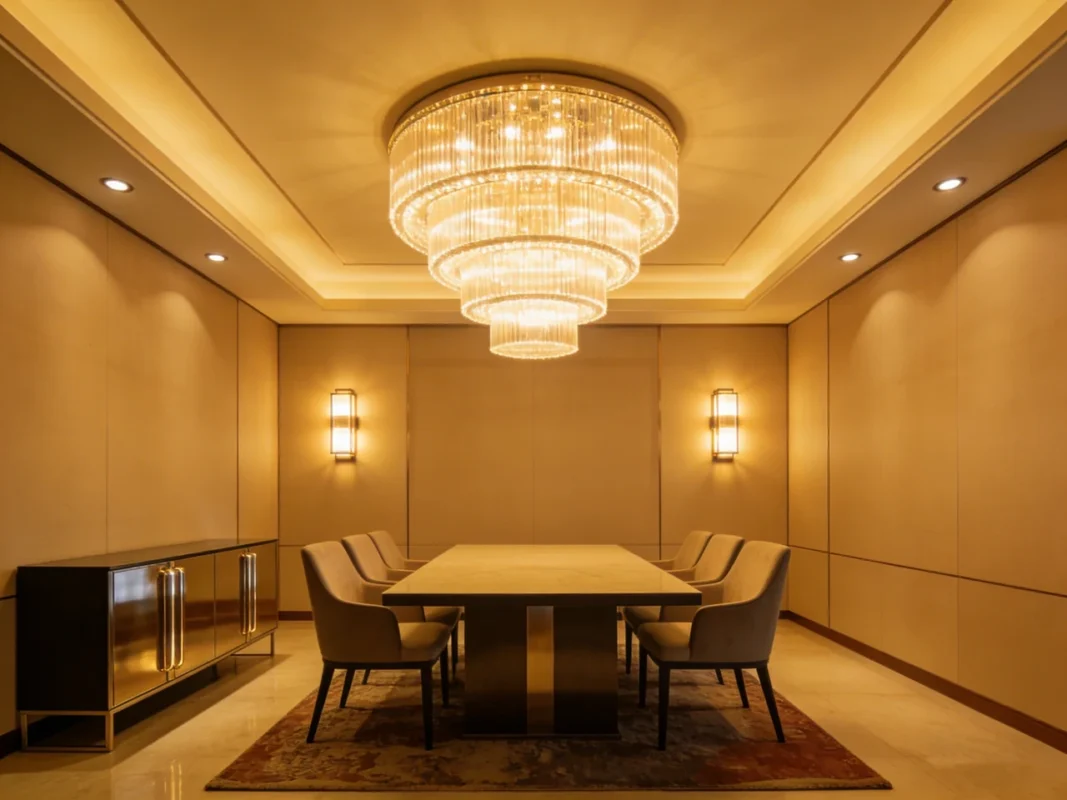
Choosing the Right Chandelier for Your Dining Room
Selecting the perfect modern LED chandelier for dining room isn’t just about picking a pretty fixture—it’s about balancing style, functionality, and your room’s unique characteristics. A well-chosen chandelier can enhance your dining experience, improve visibility, and even influence the mood of the space. Let’s break down the key factors you should consider.
Measure Your Space Carefully
Before falling in love with a design, you need to understand your dining room’s dimensions. The size of the chandelier should complement, not overwhelm, the room. A simple guideline is to add the room’s length and width in feet, then convert that number into inches to estimate the chandelier’s ideal width. For instance, a dining room measuring 12×14 feet totals 26 feet—so a chandelier roughly 26 inches wide would be proportionate.
Additionally, don’t forget ceiling height. A chandelier that’s too large for a low ceiling will make the room feel cramped, while a tiny fixture in a large space may look lost. For adjustable height chandeliers, this flexibility allows you to fine-tune the hanging position according to both the ceiling height and table size.
Determine the Ideal Hanging Height
One of the most common questions homeowners ask is: how low should a chandelier hang over a table? For most standard 8-foot ceilings, a modern LED chandelier for dining room should hang 30 to 36 inches above the table surface. This distance ensures your chandelier illuminates the table evenly without obstructing eye contact across the table.
For higher ceilings, add roughly 3 inches for every additional foot of ceiling height. If you’re using a black linear chandelier or a fixture with multiple light sources, maintaining proper clearance is especially important to avoid harsh shadows or glare.
Practical Tip: Use painter’s tape to mark the chandelier’s footprint on the ceiling before installation. This helps visualize scale and positioning without committing to hardware placement too early.
Consider Lighting Requirements and Lumens
Lighting quality is just as critical as style. A high lumen dining room light ensures that the table and surrounding area are well-lit for meals, reading, or work tasks. Experts recommend:
- Medium-sized dining rooms: 3000–4000 lumens
- Larger or open-concept dining spaces: 4000–5000 lumens
Choosing a fixture with dimmable dining room lighting capability adds versatility, allowing you to set a bright ambiance for family dinners or a soft glow for intimate gatherings. Minimalist LED pendant lights are often easy to dim and adjust, making them ideal for multi-purpose rooms.
Match Style with Room Design
Your chandelier should feel like a natural extension of the room’s décor. Some design considerations include:
- Contemporary dining room light: Clean lines, geometric shapes, and subtle finishes create a modern yet approachable look.
- Mid-century modern chandelier: Adds a retro flair while still maintaining modern energy-efficient functionality.
- Black linear chandelier: Perfect above rectangular tables, distributing light evenly while making a bold design statement.
- Minimalist LED pendant light: Ideal for smaller or open spaces where simplicity and function are priorities.
Think beyond aesthetics. Materials, finish, and proportions all influence how the chandelier interacts with furniture, flooring, and wall colors. A mismatched scale can make the fixture appear awkward even if the design itself is stunning.
Practical Tips for Decision-Making
- Photograph your dining room: This allows you to compare fixtures virtually or in-store.
- Test different heights: If possible, use adjustable chains or cords to experiment with placement.
- Layer with other lighting: Combine your chandelier with wall sconces or floor lamps to prevent shadows and enhance atmosphere.
- Plan for installation: Some heavier modern LED chandeliers for dining room may require additional support or professional installation.
By carefully measuring your space, choosing the right height, evaluating lumens, and matching the style with your décor, you ensure that your chandelier is both functional and visually impactful.
Styles of Modern LED Chandeliers
Contemporary Dining Room Light Options
If your décor leans toward current trends, a contemporary dining room light can tie your room together. Look for fixtures with clean lines, geometric shapes, and materials like brushed nickel, matte black, or glass. These designs complement most furniture while keeping the focus on the dining table.
Minimalist LED Pendant Light
Minimalist LED pendant lights are perfect for smaller dining rooms or kitchen islands. These fixtures emphasize form and function, providing ample illumination without excessive ornamentation. They often feature adjustable cords or rods for precise hanging heights.
Black Linear Chandeliers
A black linear chandelier works best above rectangular tables. The linear design ensures even light distribution across the table while creating a bold visual statement. These fixtures often include multiple LED sources, providing both high lumen output and energy efficiency.
Mid-Century Modern Chandeliers
For a more retro vibe, consider a mid-century modern chandelier. These fixtures often feature starburst or sputnik-inspired designs with LED technology integrated discreetly. They offer a timeless look that pairs well with wood, leather, and brass accents.
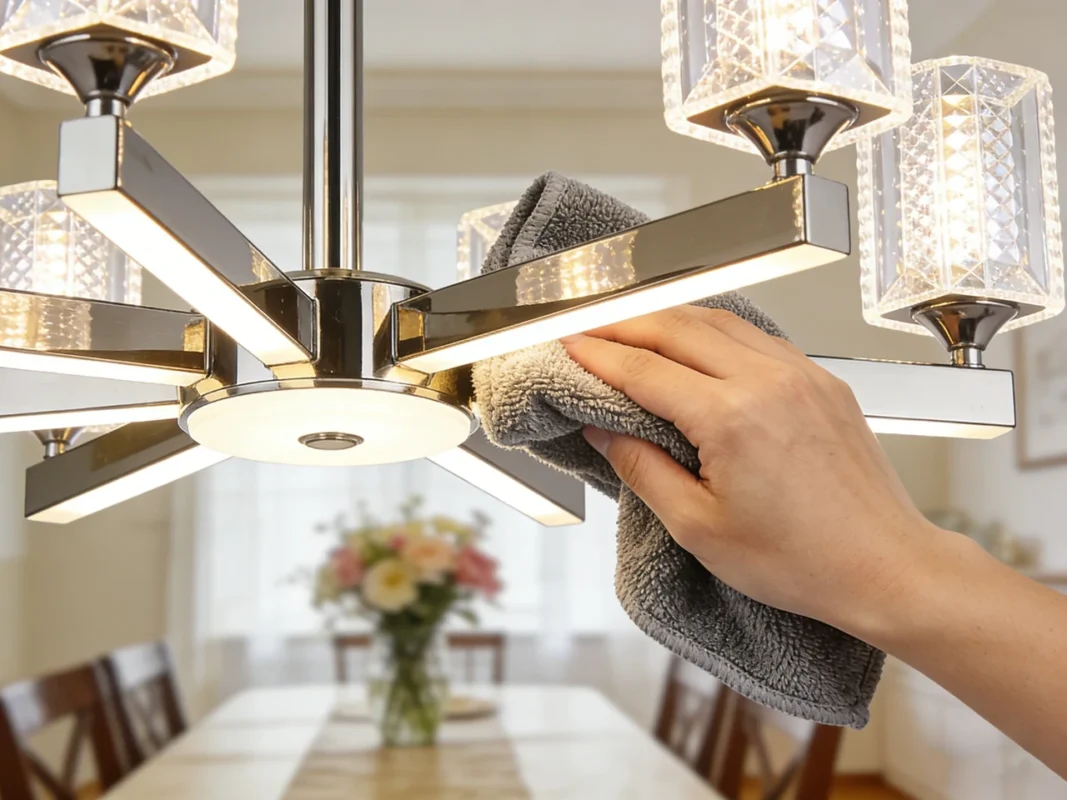
Installation Tips for Modern LED Chandeliers
Installing a modern LED chandelier for dining room may seem intimidating, but with the right preparation and guidance, it can be a manageable DIY project—or at least an informed conversation with a licensed electrician. Proper installation ensures safety, optimal lighting, and longevity for your fixture. Let’s go through the essential steps and tips for a smooth setup.
Can You Install It Yourself?
Many homeowners ask: “Can I install an LED chandelier myself?” The answer is: yes, in some cases—but it depends on your comfort level with electrical work and the complexity of the fixture. Here are some key considerations:
- Electrical Knowledge: You should know how to safely turn off the circuit breaker, connect wires properly, and secure fixtures to ceiling boxes.
- Weight of the Fixture: A lightweight minimalist LED pendant light is often easier for DIY, while a heavier black linear chandelier may require a second person or professional installation.
- Ceiling Box Support: Ensure the ceiling junction box can hold the chandelier’s weight. Most standard boxes support up to 50 pounds; anything heavier requires reinforced support or a fan-rated box.
- Tools and Safety Gear: You’ll need a ladder, voltage tester, screwdrivers, wire nuts, and a level. Safety glasses and gloves are recommended for handling metal parts.
Practical Tip: Even if you plan to DIY, having a friend or family member assist can make the installation safer and faster, especially for adjusting height and aligning the fixture.
Adjusting Height and Position
Getting the height right is critical for both function and aesthetics. An adjustable height chandelier gives you flexibility to hang the fixture at the perfect level. Here’s how to handle it:
- Measure Before You Hang: For a standard 8-foot ceiling, aim for 30–36 inches from the table surface to the bottom of the chandelier. Taller ceilings require adding about 3 inches per extra foot.
- Level the Fixture: Use a level to ensure your chandelier hangs straight. Even slight tilts can be noticeable, especially with linear or symmetrical designs.
- Mark the Placement: Painter’s tape on the ceiling can help visualize size and positioning before committing to drilling or mounting.
- Adjustable Cords or Rods: Most modern fixtures allow you to fine-tune height. Always double-check that cords or rods are secure before restoring power.
Pro Tip: Step back frequently during adjustment. What looks centered from the ladder may appear off when viewed from the dining area.
Wiring and Compatibility
Proper wiring ensures your modern LED chandelier for dining room works efficiently and safely. LEDs are energy-efficient but sometimes require specific considerations:
- Check Dimmer Compatibility: If you plan to use a dimmable dining room lighting feature, ensure your wall dimmer switch is LED-compatible. Using an incompatible dimmer can cause flickering or reduce bulb lifespan.
- Follow Polarity: Most LED fixtures are polarity-sensitive. Connect the positive and negative wires correctly, usually indicated by markings on the fixture.
- Drivers and Transformers: Some high lumen or integrated LED chandeliers include built-in drivers or external transformers. Confirm that the voltage and wattage match your home’s supply to avoid damage.
- Secure Connections: Use proper wire nuts and ensure all connections are tight. Loose wiring can cause flickering, shorts, or safety hazards.
Expert Insight: According to certified electricians, even small mistakes in LED wiring can reduce fixture lifespan by 30–50%. When in doubt, consulting a licensed professional guarantees both safety and optimal performance.
Extra Installation Considerations
- Multiple Light Sources: If your chandelier has multiple LEDs or pendants, check that each light is aligned and functional before finalizing installation.
- Layered Lighting: Consider how the chandelier interacts with existing recessed lights or wall sconces for even illumination.
- Maintenance Access: Make sure you can reach bulbs or panels for occasional cleaning without removing the entire fixture.
By carefully planning installation, adjusting height precisely, and ensuring wiring compatibility, your modern LED chandelier for dining room will not only look stunning but function flawlessly for years.
Maximizing Functionality and Ambiance
A modern LED chandelier for dining room does more than illuminate—it sets the mood, highlights your décor, and ensures every meal or gathering feels inviting. To maximize both function and ambiance, you need to consider brightness, color temperature, and layering with other light sources. Here’s how to get it right.
Choosing the Right Lumens
Brightness is key to making your dining room both functional and welcoming. A high lumen dining room light ensures that your table is well-lit for meals, work, or social activities without straining your eyes. As a general guideline:
- Medium-sized dining rooms (10–15 ft): Aim for 3,000–4,000 lumens.
- Larger or open-concept dining areas: 4,000–5,000 lumens for balanced illumination.
Remember, more lumens doesn’t always mean better. Too bright a chandelier can create glare or harsh shadows. For adjustable settings, a dimmable dining room lighting fixture allows you to fine-tune brightness according to occasion, from lively dinner parties to intimate family dinners.
Practical Tip: If your chandelier includes multiple pendants or LED modules, calculate total lumens by adding each source. This ensures even lighting across the entire table.
Color Temperature Considerations
The color of light has a major impact on how your dining room feels. LEDs offer flexibility in color temperature, measured in Kelvins (K). The right choice creates warmth without distorting food colors or interior tones:
- Warm White (2700–3000K): Soft, cozy ambiance perfect for dinners and social gatherings.
- Neutral White (3500–4000K): Balanced light that works well for multifunctional dining areas or open spaces.
- Cool White (>4000K): Bright and modern, suitable for work areas but less inviting for meals.
FAQ Example: Q: What is the best color temperature for dining? A: Warm white (2700K–3000K) is ideal for cozy, inviting dinners while maintaining visual comfort.
Expert Insight: Interior lighting specialists recommend warm white for dining spaces to make food appear more appealing and the room feel comfortable for long meals or conversations.
Layering Lighting
Even the best modern LED chandelier for dining room benefits from complementary lighting. Layering multiple light sources prevents harsh shadows, enhances depth, and creates a more versatile environment. Consider these strategies:
- Wall Sconces: Place on either side of a buffet or artwork to create soft, ambient illumination.
- Recessed Lighting: Provides overall room brightness without interfering with chandelier aesthetics.
- Accent Lighting: Use LED strips or under-cabinet lights in adjacent areas to highlight architectural features or table décor.
Practical Tip: When layering, keep the chandelier as the primary light source and adjust other fixtures to balance brightness. Combining contemporary dining room light with supplementary lighting creates a visually appealing, flexible space for both day and night activities.
Additional Insight: Layered lighting also supports functionality. For example, a bright chandelier for dinner, dimmed wall sconces for mood, and accent lighting for décor can coexist seamlessly without overpowering each other.
Summary
Maximizing functionality and ambiance in your dining room isn’t just about picking a beautiful modern LED chandelier for dining room—it’s about smart lighting decisions:
- Choose the right lumens to balance brightness and comfort.
- Select the ideal color temperature for meals and atmosphere.
- Layer lighting to enhance depth, reduce shadows, and add flexibility.
By considering these factors, you create a dining space that’s practical, stylish, and inviting—whether you’re hosting a family dinner, an elegant gathering, or a casual weekday meal.
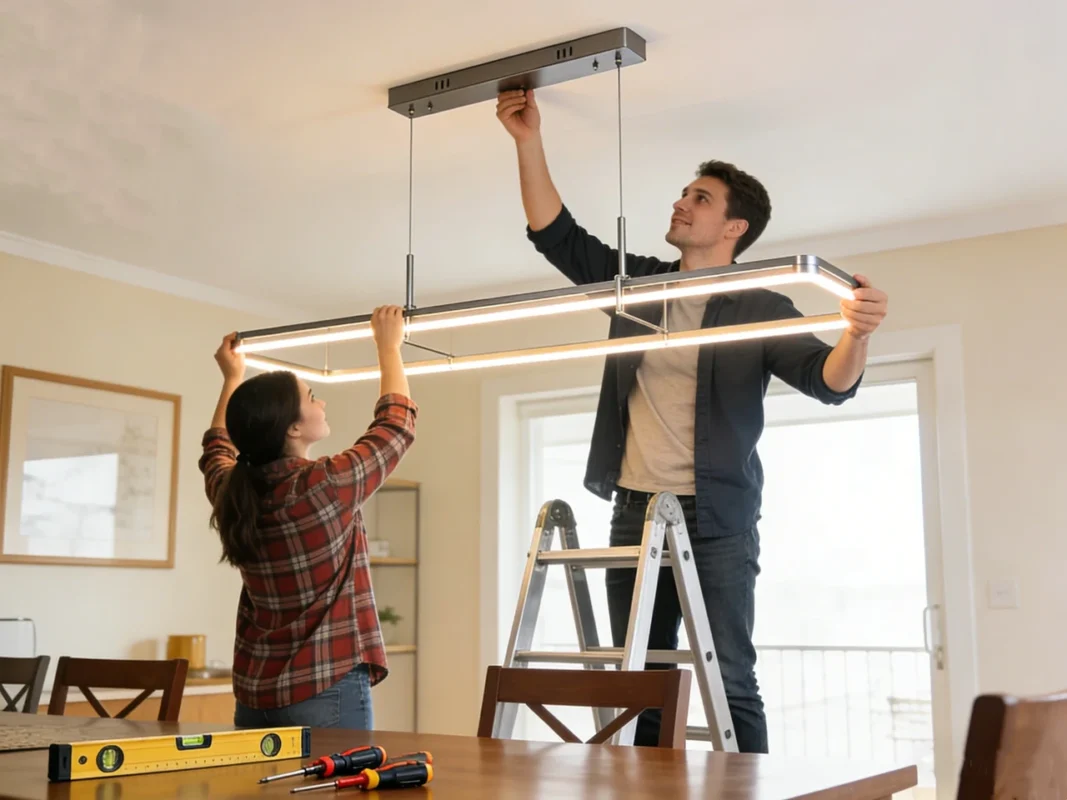
Maintenance and Cleaning
A modern LED chandelier for dining room is not just a design statement—it’s an investment. Keeping it clean and well-maintained ensures it continues to provide optimal light, enhances the room’s aesthetic, and prolongs its lifespan. Proper maintenance is easier than many homeowners think, and with a few practical strategies, your chandelier can remain a centerpiece for years.
Routine Dusting
Dust accumulation is one of the most common issues for chandeliers. Even a small layer of dust can dull the fixture’s finish and reduce the brightness of your high lumen dining room light. For routine cleaning:
- Use a soft microfiber cloth or feather duster to gently remove dust from arms, pendants, and bulbs.
- Dust at least once every two weeks if the dining room is used daily.
- For fixtures with multiple pendants or complex designs, consider cleaning one section at a time to ensure every piece is dust-free.
Practical Tip: Dusting before turning on the light prevents dust from scattering due to heat and airflow.
Deep Cleaning
For fixtures that require a more thorough cleaning:
- Turn Off Power: Always switch off the circuit breaker before cleaning. Safety first.
- Mild Cleaning Solution: Mix a few drops of gentle dish soap with warm water. Lightly dampen a microfiber cloth—never soak it.
- Clean Glass and Metal Surfaces: Wipe each element carefully. Avoid harsh chemicals, abrasive pads, or sprays that could damage the LED components or finish.
- Dry Immediately: Moisture can damage wiring or cause corrosion, so dry every piece thoroughly with a clean, soft cloth.
Expert Insight: Many interior lighting specialists recommend deep cleaning LED chandeliers at least twice a year, especially if located in areas prone to cooking fumes or smoke.
Maintaining LED Performance
Unlike traditional bulbs, LEDs require minimal maintenance, but there are a few key points to ensure longevity:
- Check Connections Periodically: Ensure that wire nuts and mounting hardware remain tight. Loose connections can cause flickering or reduced light output.
- Avoid Excessive Heat: LEDs are sensitive to heat buildup. Make sure your fixture has adequate ventilation and that other lighting nearby does not create excessive heat.
- Replace Components When Needed: If individual LED modules fail, many modern chandeliers allow for module replacement rather than changing the entire fixture, preserving cost-efficiency and reducing waste.
Tips for Longevity
- Avoid Direct Moisture: Never spray cleaning products directly onto LEDs or wiring.
- Handle with Care: For multi-pendant fixtures, support each pendant while cleaning to avoid bending or detaching.
- Regular Inspection: Periodically check for discoloration, loose pendants, or dimming LEDs—early attention prevents bigger issues later.
By incorporating these simple maintenance habits, your modern LED chandelier for dining room will continue to provide brilliant, even light while maintaining its aesthetic appeal. Proper care also maximizes the lifespan of integrated LEDs, ensuring years of energy-efficient performance.
Trends and Design Inspiration
Are Modern Chandeliers Out of Style?
Absolutely not. Modern LED chandeliers for dining room remain a top choice for contemporary and mid-century interiors. They combine form, function, and energy efficiency, making them relevant for years to come.
Mixing Styles
Don’t be afraid to mix styles. Pair a mid-century modern chandelier with minimalist dining chairs or complement a black linear chandelier with rustic wood tables. This creates a curated, intentional look that impresses guests.
High-Tech Features
Some modern LED chandeliers come with smart controls, remote dimming, and color adjustment. While not necessary for everyone, these features provide ultimate convenience and flexibility.
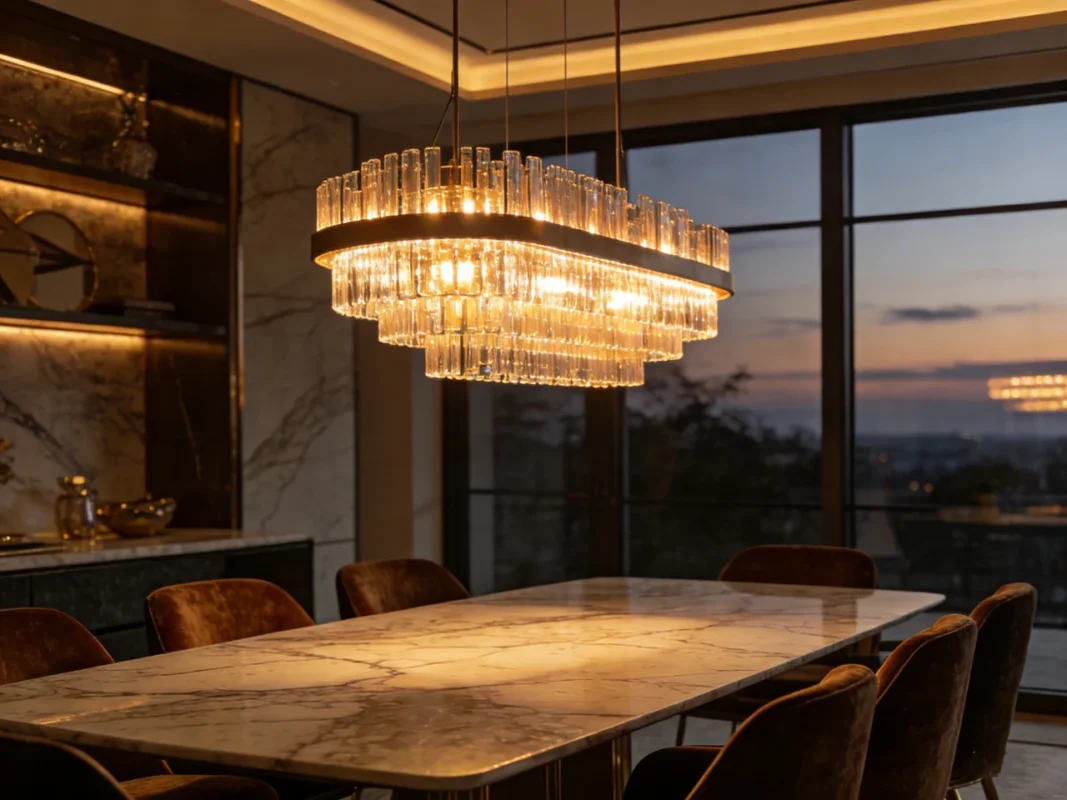
Conclusion
A modern LED chandelier for dining room is more than just a light source—it’s a design statement, a practical tool, and a long-term investment. From minimalist LED pendant lights to black linear chandeliers and mid-century modern chandeliers, there’s a style to suit every taste. Remember to consider height, lumens, dimming options, and installation requirements to create a dining space that’s functional, beautiful, and inviting.
With the right chandelier, your dining room can go from ordinary to extraordinary, offering the perfect backdrop for memorable meals, family gatherings, and cozy evenings.
FAQs
How low should a chandelier hang over a table?
For most standard 8-foot ceilings, your modern LED chandelier for dining room should hang 30 to 36 inches above the table. This height ensures the fixture illuminates the table evenly without obstructing sightlines across the table. For taller ceilings, add roughly 3 inches for each additional foot of height.
Pro Tip: Adjustable chandeliers allow fine-tuning to find the perfect balance between style and function.
Are LED chandeliers dimmable?
Yes. Most modern LED chandeliers for dining room are compatible with dimmers. Using a dimmable dining room lighting fixture gives you the flexibility to adjust brightness for various occasions—from bright family dinners to intimate gatherings.
Expert Insight: Always use a dimmer that is LED-compatible to avoid flickering or reducing the LED’s lifespan.
How many lumens for a dining room?
The ideal lumen output depends on your room size and lighting goals:
• Medium-sized dining rooms: 3,000–4,000 lumens
• Larger or open-concept spaces: 4,000–5,000 lumens
High lumen output ensures that your high lumen dining room light provides sufficient brightness without glare or shadows. For multi-pendant or linear fixtures, calculate the total lumens across all sources.
What is the best color temperature for dining?
Warm white light (2700–3000K) is recommended for dining rooms. It creates a cozy, inviting atmosphere, making food look appealing and encouraging relaxed, social interactions. Neutral white (3500–4000K) works for multifunctional spaces where dining and work may overlap.
Pro Tip: Avoid cool white light (>4000K) for dining areas, as it can feel harsh and uninviting.
Can I install an LED chandelier myself?
Yes, if you have basic electrical knowledge and follow safety precautions. Make sure to:
• Turn off the circuit breaker before starting
• Check that your ceiling box can support the fixture’s weight
• Use proper mounting hardware and wire connections
• Consider getting a second person to help with larger or heavier fixtures, like a black linear chandelier
Expert Tip: For very large, heavy, or complex fixtures, hiring a licensed electrician ensures safety and proper installation.
How long do built-in LED chandeliers last?
Most built-in LEDs in modern chandeliers last between 25,000–50,000 hours, which translates to roughly 10–15 years of regular use. This is significantly longer than traditional incandescent bulbs, reducing replacement costs and effort.
Pro Tip: Proper cleaning and avoiding excessive heat will maximize the lifespan of your LEDs.
Are modern chandeliers out of style?
Not at all. Modern LED chandeliers for dining room remain highly popular due to their sleek design, energy efficiency, and versatility. Whether your style is contemporary, mid-century modern, or minimalist, there’s a fixture to match, making it a long-lasting investment in both style and function.
How do you clean a modern LED chandelier?
Routine maintenance keeps your chandelier bright and beautiful. Use a microfiber cloth for dusting and a mild soap solution for deeper cleaning. Always turn off the power and dry every surface immediately. Avoid harsh chemicals or sprays, which can damage LED components or finishes.
Pro Tip: For multi-pendant or intricate designs, clean section by section to ensure thorough coverage without damaging the fixture.