

Table of Contents
There’s nothing quite like the warm glow of a well-lit home during the holiday season. If you’re planning to deck the halls (or rooflines, windows, trees) with festive illumination, this guide to lighting LED Christmas lights will walk you through everything you need—how to set them up safely, how to spot and fix issues, how to replace bulbs, and how to keep your lights shining bright for many seasons to come.
Whether you’re dealing with a strand that’s suddenly gone dark, or you’re about to string up fresh lights for the first time in months, this article aims to be your one-stop reference for making LED holiday lights work — and stay working.
Why Choose LED Christmas Lights
Energy Efficiency and Longevity
One of the biggest draws of lighting LED Christmas lights is energy efficiency. Compared with older incandescent Christmas lights, LED light strings draw far less electricity while producing a bright, consistent glow — meaning you can enjoy long hours of festive ambience without spiking your electricity bill. Also, LED holiday lights tend to last much longer, giving you more seasons of use before needing replacement.
Because LED bulbs use semiconductors instead of fragile filaments, many are more resilient to jostling, minor shocks, or long-term use, making them ideal for repeated holiday displays.
Cooler Operation and Safety Advantages Over Incandescent Lights
Another perk is that LEDs run cooler. Traditional incandescent bulbs can become hot to the touch, posing risk if placed near flammable materials (e.g. dried Christmas tree branches, paper ornaments, fabric). LEDs, on the other hand, generate considerably less heat — reducing fire risk, enabling safer indoor or outdoor use, and giving you more flexibility in placement (wrap around tree branches, drape over furniture, hang along gutters).
That’s why many people now prefer LED string lights whenever they think about christmas light strings or led icicle lights — whether for a cozy indoor Christmas tree or a rooftop holiday display.
Popular Types — LED String Lights, LED Icicle Lights, Replacement LED Christmas Bulbs
When you shop for festive lighting, you’ll often come across several types: classic LED string lights (for trees, shrubs, or railings), icicle-style lights (great for rooflines and eaves), and sets designed for bulb replacement (with spare bulbs included). Investing in high quality led xmas light replacement bulbs, along with durable strings, ensures that your holiday setup stays reliable year after year.
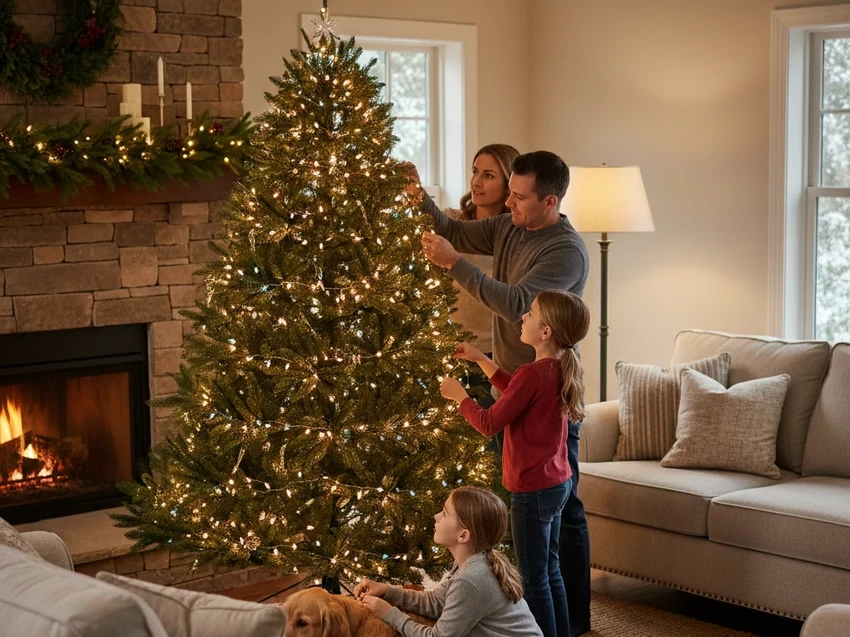
Preparing and Stringing Your Christmas Lights
Inspecting Lights Before Use — Check Bulbs, Wires, Plug & Fuse
Before you begin any holiday decorating, take a few minutes to inspect each set of LED lights. Even before plugging them in, unravel the string, inspect the wires for frays or kinks, check the plug housing for damage, and ensure any built-in fuse compartments are intact. This simple check can help you avoid frustrating failures — or worse, electrical hazards — once the lights are up.
Also, if your lights come with replacement LED Christmas bulbs, locate them before installing so you have them ready if you need to swap a bad bulb quickly.
How to String Christmas Lights Properly (on Wall, Tree, Roof, etc.)
Planning the layout and measuring needed length
First, decide where you want to hang or string the lights — along a roofline, wrapped around a tree, draped on a fence, or outlining a window. Measure the length to make sure your string lights will cover the entire area without being overstretched or overlapping dangerously.
Working from the power source outward
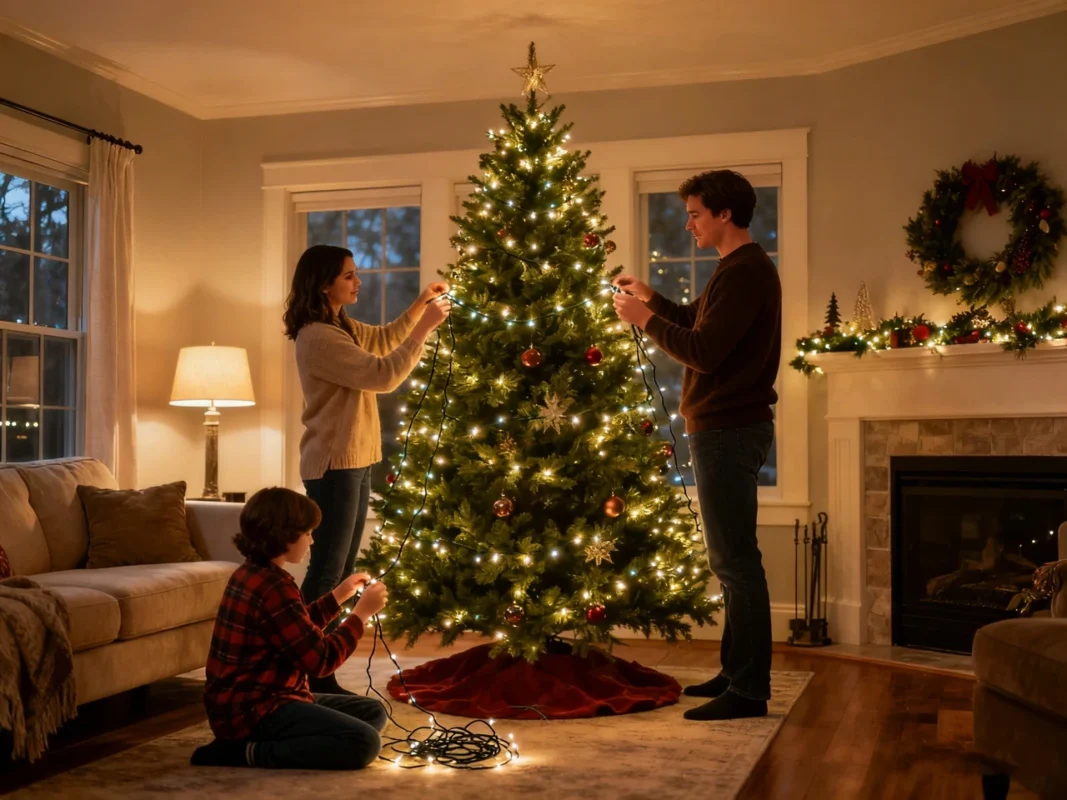
Start at the power source (outlet or extension cord), and unravel your lights as you go. This approach helps to avoid tangles, confusion, and wasted cord length — and it ensures that the plug end reaches the outlet safely.
Avoiding overstretching, sharp bends, or pinching wires
Make gentle bends, avoid sharp kinks, and don’t pull too tightly. Overstretching or sharply bending wires can weaken insulation or even break internal wiring, leading to flickering or dark sections. Be especially cautious when using christmas light strings outdoors — secure them with proper clips or hooks (never staples or nails), and avoid placing them where they might be pinched or crushed.
Tips for Icicle Lights and Light Strings — Spacing, Securing, Avoiding Damage
If you’re using led icicle lights along gutters or roof edges, space them evenly for a balanced look. Secure them with clips designed for holiday lights, avoiding sharp metal staples or tacks. Also, make sure the plug and wiring are positioned so rain or snow can’t pool — having water close to electrical connectors is an easy way to cause shorts or corrosion.
Finally, avoid trailing cords across walkways or doorways where they can be tripped over or stepped on. Proper setup now prevents many common problems later.
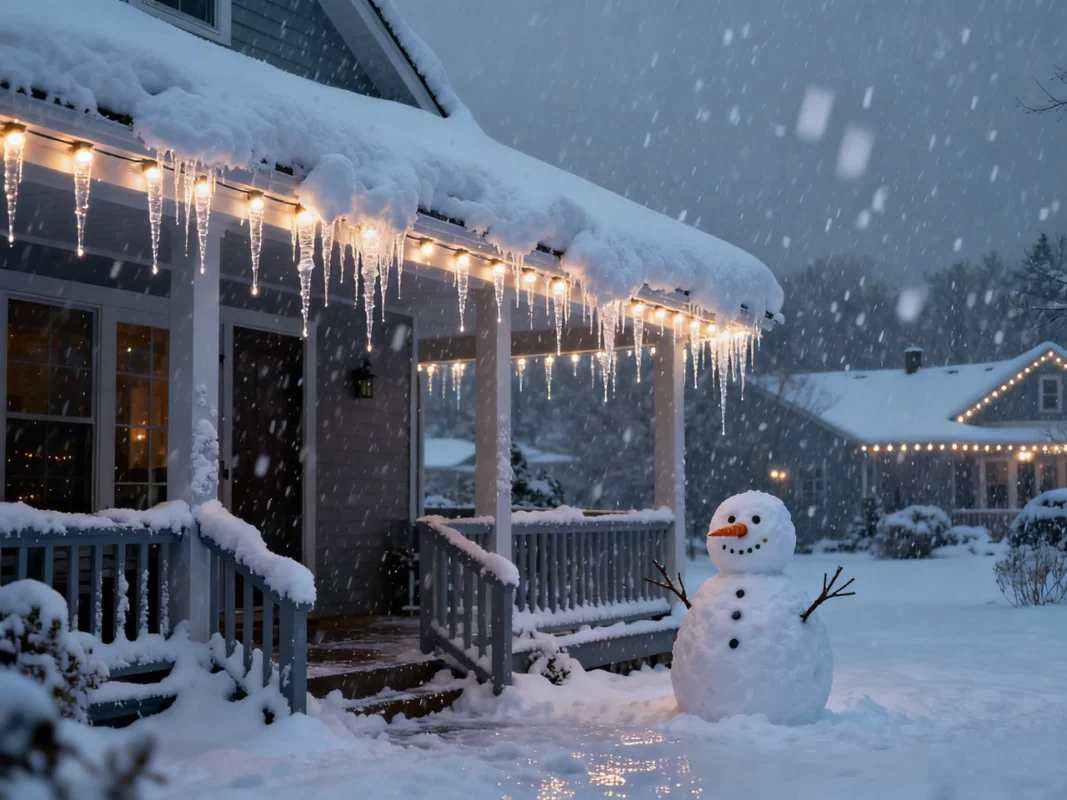
Common Problems with LED Christmas Lights
Even though lighting LED Christmas lights is far more reliable than working with old incandescent strands, problems still happen. LED technology lasts longer, runs cooler, and generally performs better—but it is not immune to faults caused by wiring issues, moisture, storage habits, or simple wear and tear. Understanding the most common issues can save you hours of frustration during the busiest decorating season. Whether you’re using classic christmas light strings, intricate led icicle lights, or strands designed for led xmas light replacement bulbs, the following problems tend to show up most often.
Loose or Faulty Connections / Improperly Seated Bulbs
One of the most frequent causes of partial failure in lighting LED Christmas lights is a bulb that isn’t fully seated in its socket. This often happens after months of storage, when cords get twisted or compressed. A single misaligned connector can interrupt the flow of electricity and darken an entire section of the strand.
Even strands with fixed LEDs can suffer from loose internal contacts, especially if the lights have been bent sharply or wrapped too tightly. Gently pressing each bulb to confirm it is secure can restore power to a whole section. It’s a surprisingly simple fix, and one many people overlook.
Blown Fuse or Integrated Circuit Protection Failure
Another common cause of failure happens inside the plug itself. Many LED holiday light strands include small fuses or internal protective components to prevent overload. When too many strings are connected end-to-end, or if there’s a surge from the outlet, this small fuse can blow—instantly cutting power to part or all of the strand.
If half of your lights are out while the rest still glow, a fuse issue might be the culprit. Unlike incandescent strings that simply dim or flicker, LED circuitry often shuts down more definitively when a fuse or internal protector fails. Replacing the fuse usually restores full function, but continuing to overload your circuit can cause repeat failures.
Burnt-Out or Failed Bulbs—Yes, Even LEDs Can Die
People often assume LEDs never burn out, but that’s a misconception. LEDs are durable, but extreme temperature swings, internal component failure, accidental impacts, and manufacturing inconsistencies can all cause a bulb to fail. When one LED dies—especially on a strand that uses series wiring—an entire section may go dark.
If your lights allow bulb replacement, keep a set of replacement LED Christmas bulbs or led xmas light replacement bulbs on hand. Swapping out questionable bulbs one at a time often brings a stubborn, half-lit strand back to life. If your string uses non-replaceable LEDs, however, a single failed diode may require replacing the entire strand.
Damaged Wiring—Frays, Bends, or Internal Breaks
Over time, even the toughest christmas light strings can suffer from stressed or damaged wiring. This often happens when lights are wrapped tightly around storage reels, shoved into boxes, or pinned down with sharp objects during installation. A kink or pinch can break internal copper strands, leading to intermittent flickering or complete loss of power in one section.
Damage may not always be visible. Sometimes internal breaks occur inside the insulation, especially where the strand bends repeatedly. Holding the lights gently and running your fingers along the cord can help detect trouble—if the lights flicker when moved, there’s likely a wiring issue. When in doubt, replace the strand instead of risking a hazardous repair.
Corroded Socket Contacts or Moisture Intrusion
Moisture is one of the leading causes of failure in outdoor led icicle lights and other holiday displays. Rain, snow, condensation, and even humidity can seep into sockets or connectors, causing corrosion. Over time, corroded contacts break the electrical path and prevent current from reaching the LEDs.
This is especially common with older lights or strands used year-round outdoors. Even a small amount of corrosion can create high resistance, dimming part of the strand or knocking out entire sections. If you see rust-colored deposits, white oxidation, or greenish residue around sockets or connectors, corrosion is likely to blame.
Drying the strand completely, cleaning contacts gently, and using protective outdoor-rated covers can sometimes revive the lights—but in many cases, moisture-damaged strands are better replaced for safety and reliability.
How to Troubleshoot and Fix LED Christmas Lights
Troubleshooting lighting LED Christmas lights doesn’t have to feel like a holiday headache. With LED technology, many issues come from predictable causes—loose connections, blown fuses, failed bulbs, or wiring fatigue. Once you understand how these strands are designed, you can restore them quickly without guessing in the dark. Whether you’re working with christmas light strings, led icicle lights, or strands that accept replacement LED Christmas bulbs, the following step-by-step methods will help you track down the problem and bring your decorations back to life.
Step 1 — Inspect the Strand for Visible Damage
Start with a simple visual scan of your lighting LED Christmas lights. Lay the strand on a flat surface and slowly run your fingers along the cord. Look for:
- Cracked insulation
- Exposed copper wiring
- Melted or warped plastic near sockets
- Deep bends or twists that could signal an internal break
- Discolored or loose bulbs
Even a seemingly small defect can interrupt current. If a light flickers when you gently wiggle the wire, that’s a strong sign the issue lies in that section. For severe damage—especially if wiring is exposed—it’s safest to retire the strand rather than attempt a risky repair.
Step 2 — Test the Outlet and Power Source
Before diving deeper, confirm you’re connected to a working outlet. LED strands are sensitive to unstable current, and a faulty plug or extension cord can mimic bulb failure. Try plugging your christmas light strings into a different outlet, ideally one on a separate circuit. If the entire strand stays dark, move on to checking the built-in fuses.
Step 3 — Check and Replace Fuses in the Plug
Most modern strands of lighting LED Christmas lights include tiny fuses inside the plug. These act as protection against power surges or overloaded connections. If half or all of the lights are out, open the small sliding door on the plug and inspect the fuses.
If a fuse looks cloudy, dark, or has a broken filament, it’s blown. Replace it with one of the same rating. A fresh fuse often restores full power immediately, especially when several strands have been linked end-to-end.
If your strand repeatedly blows fuses, reduce the number of connected strings or shorten your run of led icicle lights or decorative displays. Overloading is a common and preventable cause of failure.
Step 4 — Look for Burned-Out or Loose Bulbs
Even though LEDs last far longer than incandescent bulbs, individual LEDs can fail over time. When one LED burns out—especially in series-wired strands—it can darken part of the string. Inspect each bulb carefully for:
- Cloudy or blackened diodes
- Loose bases
- Bent pins
- Flickering when touched
If your strand uses led xmas light replacement bulbs, swap in a working bulb to test whether that socket is the problem. If the strand lights up, you’ve found your culprit.
With sealed LEDs that cannot be removed, tap each bulb gently while the lights are plugged in. A slight flicker may indicate a failing diode that’s interrupting the circuit.
Step 5 — Use a Manual Testing Method if You Don’t Have a Tester
If you don’t own a dedicated bulb tester, you can still diagnose problems manually. Start by dividing the strand in half. Check which half lights up. Continue splitting the darkened section until you narrow it down to a small portion.
This “binary search” saves time compared with testing bulbs one by one. When you locate the section that fails consistently, inspect each socket within it closely. Often the bad LED, corroded connector, or weak junction will reveal itself with a bit of gentle wiggling or tapping.
This method works well on christmas light strings, led icicle lights, and even more complex decorative displays.
Step 6 — Clean Corroded Contacts
Outdoor lights are especially prone to moisture buildup. If you suspect corrosion, unplug the strand and inspect the sockets. Rust-colored residue, white oxidation, or a dull metal surface often means moisture has intruded.
To clean contacts:
- Remove the bulb (if possible).
- Gently wipe the inside of the socket with a dry cotton swab.
- Allow the strand to dry completely—preferably for several hours.
Once dry, reinstall the bulb or replace it with one of your replacement LED Christmas bulbs if you suspect any internal damage. Re-test the strand to confirm the issue is resolved.
Step 7 — Determine Whether the Strand Is Repairable
Some budget-friendly lighting LED Christmas lights are built with permanently attached LEDs. If one diode fails, the entire section might shut down with no practical way to repair it. After isolating the fault, ask:
- Does the strand use replaceable bulbs?
- Are multiple sockets damaged?
- Is the cord showing signs of internal breakage?
If the answer to one or more of these questions is “yes,” replacement may be the safest option. A strand that fails repeatedly often costs more time and stress than simply installing a new one.
Step 8 — Prevent Future Failures with Proper Storage and Setup
Once your lights are functioning again, avoid future problems by caring for them properly:
- Coil christmas light strings loosely instead of wrapping them tightly.
- Avoid sharp bends, which can weaken internal wiring.
- Store your led icicle lights in a cool, dry place.
- Use outdoor-rated extension cords for exterior displays.
- Do not exceed recommended connection limits.
Thoughtful storage and setup extend the lifespan of your lights dramatically and reduce troubleshooting time in the future.
Special Considerations for LED Xmas Light Replacement Bulbs & Icicle Lights
While the fundamentals of troubleshooting apply to most strands, LED xmas light replacement bulbs and led icicle lights bring their own set of quirks. These decorative styles often include more complex wiring, multiple drop strands, and mixed circuits that behave differently from standard christmas light strings. When working specifically with these types of lights, understanding the structural differences will save you time and prevent unnecessary replacements. Whether you’re repairing your décor or installing new lighting LED Christmas lights for the season, the following considerations can help you maintain a safe, bright, and reliable display.
Understanding Voltage and Compatibility for Replacement Bulbs
When dealing with led xmas light replacement bulbs, compatibility is critical. LED strands frequently use different voltages, resistor configurations, and base sizes. Even two bulbs that look identical may behave differently or damage your strand if they aren’t designed for the same electrical load.
Here’s what to confirm before installing replacement LED Christmas bulbs:
- Voltage rating — Mismatch can cause dimness, flickering, or overheating.
- Base type — Ensure the bulb’s pins match your socket style.
- Wiring style — Some strands run in series, others in parallel. Series-wired strands are particularly sensitive to incorrect bulbs.
- Color temperature — Warm white, cool white, and specialty colors vary widely in LED form.
Using an incompatible bulb may cause a full section to go dark or trigger protective fuses. When in doubt, compare a known working bulb from your own strand or consult measurements from the socket itself. For reliable, even illumination in your lighting LED Christmas lights décor, consistency matters.
How Drop-Style Wiring in Icicle Lights Affects Troubleshooting
Unlike straight-line christmas light strings, led icicle lights contain vertical “drop” segments. Each drop typically has its own mini-circuit, meaning failures may occur in different patterns:
- Entire drops going dark
- Alternating flickers
- Only the longest drops losing power
- Irregular brightness between segments
This design makes icicle lights beautiful but slightly more challenging to diagnose. You may need to examine each drop individually rather than the whole strand at once. A failed LED in one drop often affects only that vertical segment, not the entire strand, making them more forgiving—but also more time-consuming to inspect.
When repairing icicle lights within a larger display of lighting LED Christmas lights, isolate the problematic drop and inspect its sockets and wiring. The issue often lies in a single cracked LED or a frayed junction where the drop meets the main horizontal cord.
Moisture and Outdoor Challenges for Icicle Light Installations
Icicle lights are almost always installed outdoors, where they’re exposed to wind, moisture, freezing temperatures, and UV exposure. These conditions introduce challenges that are less common with indoor christmas light strings.
Common outdoor concerns include:
- Condensation inside sockets
- Corrosion on vertical drops
- Wind damage causing loose connectors
- UV-degraded insulation
- Ice buildup stressing the wiring
Because icicle lights hang vertically, water naturally travels downward, sometimes pooling inside sockets. If you spot inconsistent brightness or sections that flicker when touched, moisture intrusion is likely. Allowing the lights to dry fully—sometimes overnight—can restore normal function. For recurring issues, consider adding weather-resistant covers to protect connectors.
Replacing Bulbs in Tightly Spaced or Delicate Strands
Some decorative LED styles pack bulbs closely together to create a dense, sparkling effect. That’s lovely for holiday displays but makes repairs more delicate. When working with replacement LED Christmas bulbs, take extra care around:
- Thin wires running between drops
- Soldered junction points
- Decorative coverings such as plastic icicles or snowflakes
- Inflexible bulb housings
Applying too much force when removing a failed LED may break the socket or separate the drop from the main wire. If a bulb feels stuck, wiggle it gently rather than pulling straight out. Many LED sockets include small lock tabs or alignment notches that must be disengaged before removal.
Managing Mixed-Length or Multi-Function Icicle Lights
Some led icicle lights feature multiple lengths of drops or built-in effects such as shimmer, chasing patterns, or sequential illumination. These multi-function strands often include additional control circuits. If one effect fails, the entire mode can shut down even though the LEDs themselves are fine.
Troubleshooting tips include:
- Switching the strand to a static mode to isolate LED-level problems
- Testing each segment with a known-good power source
- Inspecting the control box for bent pins or loose wires
- Avoiding overloading circuits with too many connected decorative features
These more complex strands require patience, but the same principles of assessing voltage, connection integrity, and bulb condition apply.
Preventing Future Failures with Replacement Bulbs and Icicle Strands
To keep your lighting LED Christmas lights glowing throughout the season, a few preventive measures make a big difference:
- Store icicle lights loosely to avoid stressing drop wires.
- Keep an organized stash of led xmas light replacement bulbs in the same voltage and style as your strand.
- Label each storage bag with the type of bulb used to avoid confusion next year.
- Dry outdoor lights thoroughly before storing them to prevent corrosion.
- Avoid hanging icicle lights where ice or heavy snow may accumulate on the drops.
By treating your lights carefully and understanding the unique behavior of each style, you’ll enjoy a bright, consistent holiday display with fewer mid-season repairs.
Preventive Maintenance & Best Practices
Maintaining lighting LED Christmas lights isn’t difficult, but a little attention throughout the season—and especially during storage—can dramatically extend their lifespan. Preventive care reduces the chances of flickering, half-lit strands, damaged wiring, or moisture-related failures. Whether you use classic christmas light strings, shimmering led icicle lights, or strands designed for replacement LED Christmas bulbs, consistent maintenance helps keep your décor bright and reliable year after year.
Below are practical tips used by electricians, decorators, and long-time holiday enthusiasts to keep LED lights shining at their best.
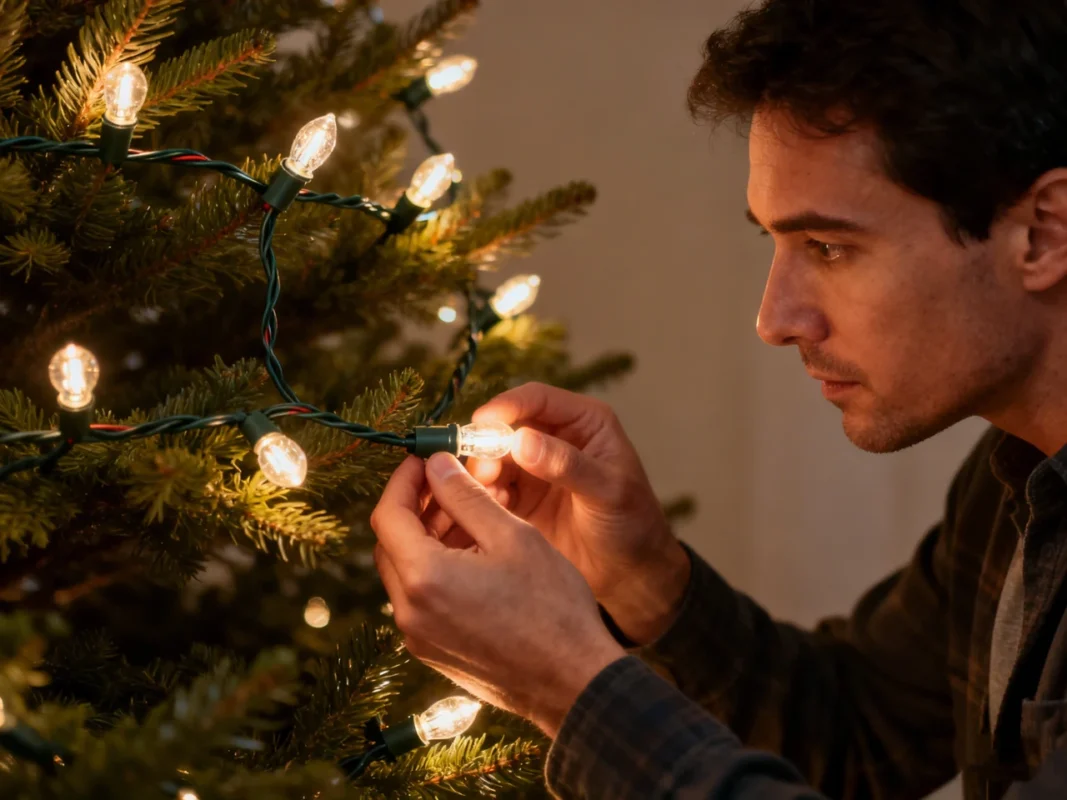
Handle Strands Gently to Protect Wiring and Connectors
LED wiring may be durable, but it’s not indestructible. Many failures in lighting LED Christmas lights begin with tension, bending, or twisting that slowly damages the internal copper strands.
Best handling practices include:
- Avoid pulling lights from storage boxes by the cord.
- Lift strands by the socket area rather than tugging on wire alone.
- Prevent sharp bends, especially near plugs and bulb bases.
- Keep an eye on corners or edges that may pinch wiring during installation.
Even a small internal break can cause intermittent outages that are difficult to diagnose later, so treating wiring carefully saves significant troubleshooting time.
Keep Moisture Exposure to a Minimum
Moisture is one of the leading causes of electrical failure, especially for outdoor led icicle lights and long vertical drops. Water can sneak into connectors, travel along wiring, or condense inside sockets during cold nights.
To reduce moisture-related issues:
- Shake off accumulated snow or ice from outdoor displays.
- Avoid placing plugs directly on the ground or in low areas that collect water.
- Allow lights to dry fully before testing or storing them.
- Seal outdoor connections whenever possible.
Even moisture-resistant strands benefit from proper care. Keeping sockets dry helps prevent corrosion that can shorten the lifespan of both LEDs and the metal contacts they rely on.
Store Lights Thoughtfully to Prevent Damage
Electrical issues often originate not from use, but from the months lights spend tucked away. Well-organized storage keeps christmas light strings and icicle strands neat and functional.
Effective storage habits include:
- Loosely coiling strands instead of wrapping them tightly.
- Laying each bundle flat rather than forcing them into overpacked bins.
- Using soft ties or loops instead of sharp twist wires that can cut insulation.
- Keeping delicate styles, such as led icicle lights, separated so drop wires don’t tangle or stretch.
Adding a simple label to each bundle—like “warm white LEDs” or “multi-color with replaceable bulbs”—makes installation the following year much easier.
Replace Failing Bulbs Before the Whole Strand Suffers
When one LED begins to dim, flicker, or behave inconsistently, it may signal a deeper electrical issue. Replacing it promptly with compatible led xmas light replacement bulbs prevents strain on the remaining LEDs.
A good rule of thumb:
- Keep a small bag of replacement LED Christmas bulbs with your holiday supplies.
- Check for uniform brightness at the start of each season.
- Replace dim or damaged bulbs immediately, rather than waiting for more to fail.
Addressing minor issues early helps maintain even illumination across the entire strand and prevents voltage imbalances that can shorten the lifespan of other LEDs.
Avoid Overloading Your Circuits
Although LED strands consume far less electricity than older incandescent lights, it’s still important not to overload a single outlet or circuit. Overloading may cause fuses to blow inside the plug or reduce the brightness of your lighting LED Christmas lights.
To prevent overload:
- Count the number of connected strands and stay within recommended limits.
- Spread multiple displays across different circuits when possible.
- Use heavy-duty, outdoor-rated extension cords for outdoor lighting.
Even with low-wattage LEDs, proper load management ensures a safe, stable holiday installation.
Give Outdoor Lights a Mid-Season Check
Wind, temperature changes, and weather extremes can loosen connectors or shift your lights out of position. A quick mid-season inspection can catch issues early.
During your check:
- Look for sagging sections of led icicle lights.
- Confirm that plugs remain firmly seated.
- Watch for flickering that may indicate moisture or a failing LED.
- Remove debris such as leaves or ice from the wiring.
This simple habit reduces the likelihood of unexpected outages halfway through the holiday season.
Keep Installation Surfaces Clean and Stable
Where and how you attach your lights affects their longevity. Mounting lights on rough, unstable, or dirty surfaces can wear down insulation or pull sockets apart over time.
The best installation practices include:
- Avoiding overly tight hooks or clips that pinch wires.
- Keeping surfaces dry before installation.
- Ensuring gutters, railings, or siding are free of sharp edges.
- Preventing wires from rubbing against metal corners where friction can wear through insulation.
Good installation conditions help your lighting LED Christmas lights shine more consistently and reduce the risk of accidental damage.
Perform End-of-Season Tests Before Storage
Before packing up your holiday décor, plug in each strand for a final test. This lets you identify issues while you still remember which strand belongs where.
Look for:
- Uneven brightness
- Missing sections
- Loose bulbs
- Flickering drops in led icicle lights
If you catch a problem now, you can repair or replace bulbs before the next season starts—preventing that all-too-familiar moment of frustration when you unpack your lights only to discover a hidden failure.
Label and Organize Bulbs and Accessories
If you work with led xmas light replacement bulbs, labeling your extras can make next year’s maintenance far smoother. LED bulbs can vary in voltage, pin spacing, and color temperature, so keeping them sorted is essential for safe, effective repairs.
Store spare bulbs by:
- Voltage
- Color and shade (warm white, cool white, multi-color)
- Bulb type and shape
- Series or parallel system
Clear labeling prevents accidental mismatches and ensures consistent brightness across your lighting LED Christmas lights setup.
Follow Safe Power Practices
As a final measure, always prioritize safety. Even energy-efficient LEDs require responsible handling.
Core safe‐power habits include:
- Inspecting extension cords for damage
- Keeping plugs off wet surfaces
- Unplugging lights before replacing bulbs
- Using timers to avoid running lights unnecessarily
These habits not only protect your display but extend the life of your holiday lighting investment.
Conclusion & Final Tips
Bringing holiday cheer into your home or yard doesn’t have to be a headache. With the right approach to lighting LED Christmas lights, proper maintenance, and a little troubleshooting know-how, you can enjoy a dazzling display without fuss.
Start with good-quality lights, store them properly, inspect before use, and don’t hesitate to replace faulty bulbs or retire a damaged string — especially if safety is at risk. When you take the time to care for your decorations, they’ll reward you with dependable glow year after year.
Remember: holiday lights are about joy, warmth, and celebration — but also about safety and reliability. A few minutes of inspection, proper bulb replacement, and careful storage can make the difference between a magical display and a disappointing (or hazardous) dark string.
Happy decorating — and may your holidays always be bright!
Frequently Asked Questions
How to tell what LED bulb is out on Christmas lights?
To find the failed LED, start by gently pressing each bulb to ensure it’s seated properly. A loose connection is one of the most common reasons a section goes dark. Look closely for bulbs that appear cloudy, cracked, or dimmer than the rest. If your lights use led xmas light replacement bulbs, try swapping a known-working bulb into suspicious sockets. For sealed LED strands, lightly tap each bulb; flickering often indicates the faulty one. Working methodically across the strand usually leads you to the defective bulb.
How to fix Christmas LED lights when half are out?
First, check the plug for blown fuses—many LED strands include tiny fuses that protect against overload. Replace any damaged fuse with one of the same rating. Next, inspect the dark section for loose, damaged, or burnt-out bulbs. With lighting LED Christmas lights, a single failed diode in a series circuit can shut down half the strand. Press each bulb firmly into its socket, look for corrosion, and test suspicious bulbs with replacements when possible. If wiring damage is visible or the strand remains unresponsive, it may be safer to replace it.
How to find the bad LED bulb on Christmas lights without a tester?
If you don’t have a tester, use a simple manual method: divide the dark section in half and test each half independently. Continue dividing until you narrow down the failing area. This “half-splitting” method is surprisingly effective for christmas light strings and led icicle lights alike. Examine each socket within the final section for discoloration, looseness, or flickering when touched. If your strand accepts replacement LED Christmas bulbs, swap in a working one to confirm which bulb is the culprit.
Can you replace bulbs on LED Christmas lights?
Yes—if your strand is designed for replaceable bulbs. Many older and higher-end strands use removable LEDs, allowing you to insert led xmas light replacement bulbs with matching voltage, base type, and color temperature. However, some strands use sealed or integrated LEDs that cannot be removed. For these, individual repairs are not possible, and the entire section or strand must be replaced. Always confirm compatibility before inserting any replacement LED Christmas bulbs to avoid damaging the circuit.
What to do when LED Christmas lights burn out?
When an LED fails, first determine whether your strand allows individual bulb replacement. If so, remove the burnt bulb and install a matching replacement. Look for signs of heat damage, discoloration, or broken internal components. For sealed LEDs, a failed diode often means that part or all of the strand will stay dark. In such cases, check the fuses and wiring, but be prepared to replace the entire strand if it’s not repairable. Regular inspection of lighting LED Christmas lights helps catch early failures before they cascade into larger outages.
How to string Christmas lights?
Start by plugging the lights in briefly to ensure they work before installation. For a tree, begin at the base and wrap the lights upward in a gentle spiral, weaving strands slightly inside the branches for depth. With outdoor displays or led icicle lights, attach the main cord securely before allowing the drop strands to hang freely. Avoid tightening the strand too much; tension can damage wiring. Keep your christmas light strings evenly spaced, check for secure connections, and use timers to manage daily lighting cycles for safety and longevity.
Why do LED Christmas lights flicker?
Flickering in lighting LED Christmas lights typically comes from loose connections, unstable voltage in the circuit, or partially failing LEDs. Start by checking the plug, the outlet, and the first few bulbs in the strand. Flickering in led icicle lights may indicate moisture in the drop wiring. If the flicker occurs only when you move the strand, it may signal an internal wiring break. Replacing the affected bulb or securely reseating connectors usually solves the issue.
Why do only some sections of my LED lights work?
Many LED strands use multiple internal circuits. Each circuit powers a different section, which means one part can fail while the rest stays lit. A blown fuse, a failed LED in a series circuit, or damaged wiring between segments can all cause partial outages. Inspect the transition points between lit and unlit sections, look for loose bulbs, and test for a damaged diode. For multi-drop led icicle lights, isolate the failing drop to find the issue more easily.
Are LED lights safer than older holiday lights?
Yes. LEDs generate far less heat than incandescent bulbs, lowering the risk of burns or fire. Their low energy draw also reduces the chance of overloading your circuit. That said, safe handling is still essential. Check cords for wear, avoid placing plugs near moisture, and keep christmas light strings away from flammable decorations. With proper care and installation, LED lighting offers a safer, more efficient holiday experience.
How long do LED Christmas lights typically last?
Quality LEDs can last tens of thousands of hours, which often translates into many holiday seasons. Their longevity depends on storage habits, environmental exposure, and the overall quality of the wiring and components. Indoor lights typically last longer than outdoor led icicle lights due to reduced exposure to moisture and temperature swings. Storing your lights carefully, avoiding sharp bends, and replacing failing bulbs promptly all help extend the life of your lighting LED Christmas lights.