

Table of Contents
If you’ve ever walked down a dark hallway at night, fumbled for a closet switch with your hands full, or wished your cabinets lit up automatically, indoor motion sensor lights might be one of the easiest upgrades you can make to your home.
I’ve installed indoor motion sensor lights in everything from tiny apartments to multi-story houses, and I can tell you this: once you start using them, it’s hard to go back to traditional switches.
They’re simple, affordable, and incredibly useful. Whether you’re looking for motion sensor lights for hallway, closet motion sensor led setups, or subtle under cabinet sensor lighting, the right setup can improve convenience, safety, and energy efficiency all at once.
In this expert guide, we’ll walk through:
- How indoor motion sensor lights actually work
- Where they make the biggest difference in real homes
- Which types perform best for closets, hallways, and cabinets
- Installation tips from hands-on experience
- Common mistakes homeowners make
By the end, you’ll know whether indoor motion sensor lights are worth installing in your home—and how to choose the right type.
Why Indoor Motion Sensor Lights Are Becoming a Must-Have
Ten years ago, indoor motion sensor lights were mostly used in commercial buildings. Now they’re everywhere in homes.
Why? Because modern lighting technology—especially LED and battery operated indoor sensor systems—has made them easy to install without wiring.
Hands-Free Convenience
Imagine carrying laundry through a dark hallway.
Instead of flipping switches, indoor motion sensor lights detect movement and turn on instantly. No fumbling. No stumbling in the dark.
That’s why motion sensor lights for hallway have become one of the most popular upgrades in modern homes.
Energy Savings
LED technology combined with motion detection means lights only turn on when needed.
According to energy efficiency studies from residential lighting research groups, motion-activated lighting can reduce lighting energy usage by 30–60% in low-traffic areas.
Because indoor motion sensor lights shut off automatically, they eliminate one of the biggest sources of wasted electricity: forgotten lights.
Safety for Kids and Seniors
Another reason many homeowners install indoor motion sensor lights is nighttime safety.
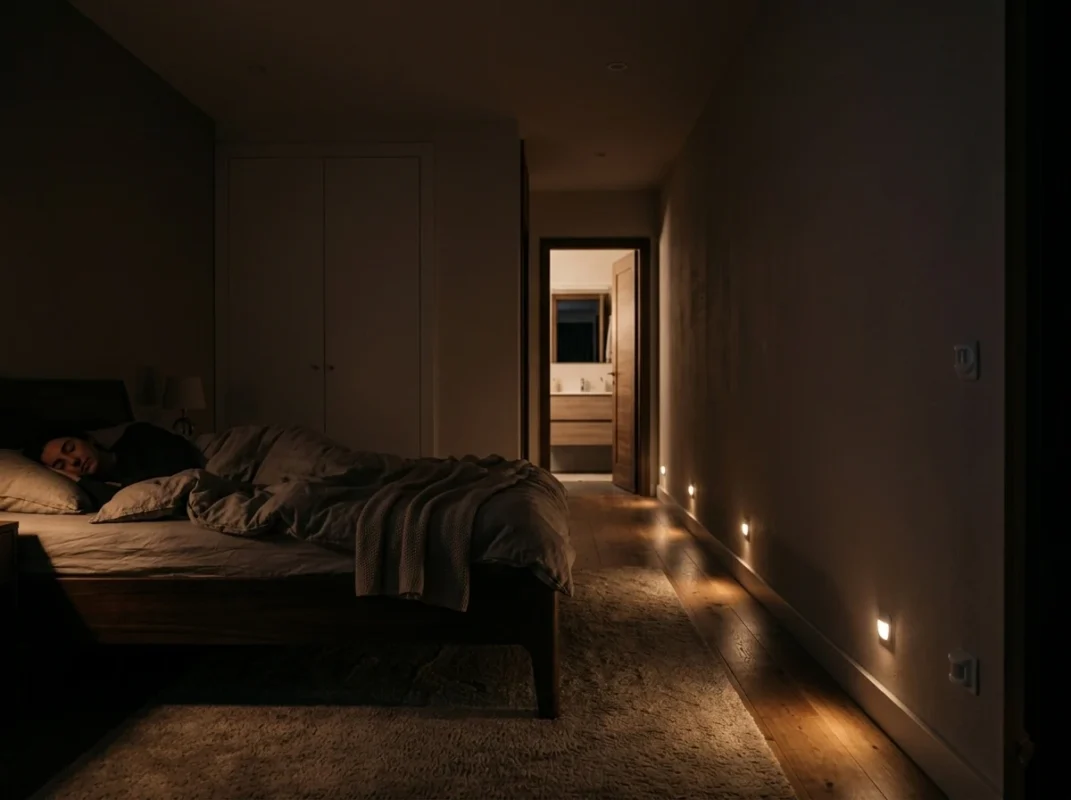
A night light with motion sensor can illuminate the path from bedroom to bathroom without blinding brightness.
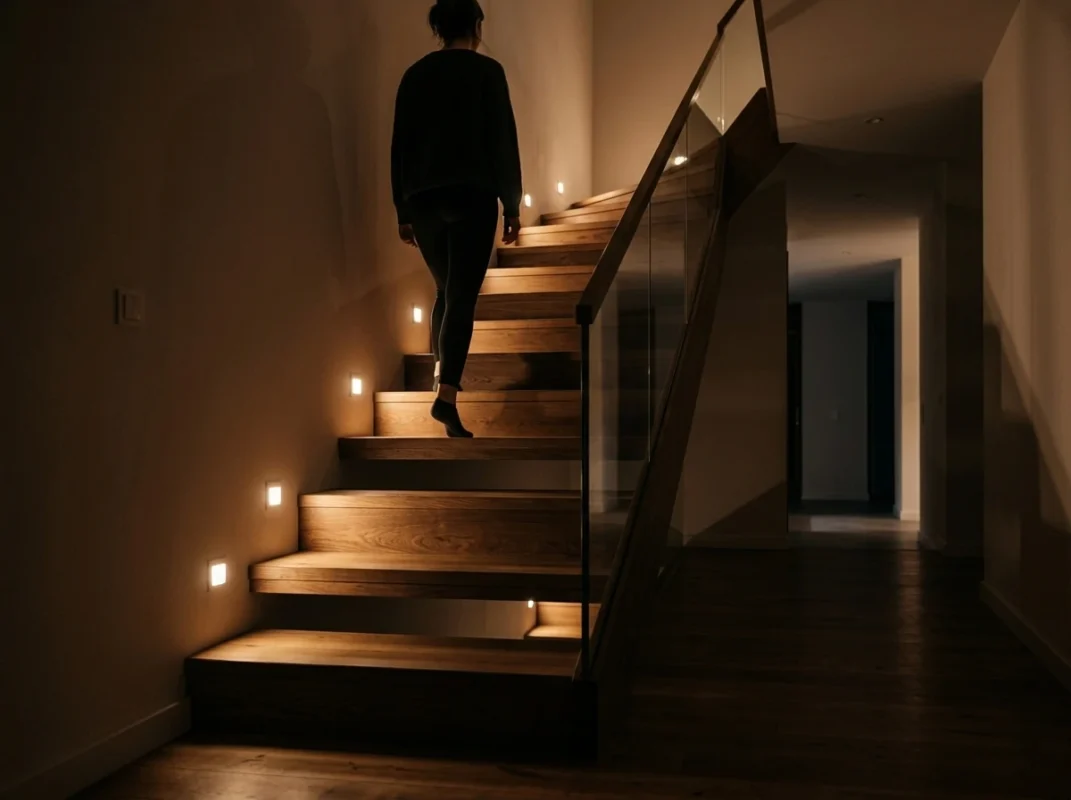
For elderly family members, indoor motion sensor lights dramatically reduce fall risks in hallways and staircases.
How Indoor Motion Sensor Lights Actually Work
To really get the most out of indoor motion sensor lights, it helps to understand what’s happening behind the scenes. A lot of people assume these lights use a camera or some kind of complicated detection system, but the reality is much simpler—and actually more reliable.
Most indoor motion sensor lights rely on proven sensor technologies that detect movement, changes in heat, or both. When someone enters the detection zone, the sensor instantly signals the light to turn on. When motion stops, the system waits for a short delay and then shuts the light off automatically.
From a homeowner’s perspective, it feels effortless. But under the hood, several components work together to make indoor motion sensor lights responsive, efficient, and accurate.
Passive Infrared Sensors (PIR) – The Most Common Technology
The majority of indoor motion sensor lights use Passive Infrared (PIR) sensors. This technology has been used in security systems and automated lighting for decades because it’s reliable and energy efficient.
A PIR sensor doesn’t actually detect “motion” in the traditional sense. Instead, it detects changes in infrared radiation, which is essentially heat energy emitted by living bodies.
Here’s what happens in practical terms:
- The sensor monitors the surrounding environment.
- It establishes a baseline temperature pattern.
- When a warm object—like a person—moves across the detection zone, the sensor notices the temperature change.
- The light activates immediately.
Because humans naturally emit body heat, indoor motion sensor lights using PIR sensors can detect movement even in complete darkness. This is why they’re commonly used for closets, hallways, and nighttime pathways.
For example, a closet motion sensor led system typically uses a PIR sensor that reacts the moment you open the door and step inside.
Detection Range and Coverage Angle
Another key part of how indoor motion sensor lights work is the detection field. Every motion sensor has a defined range and viewing angle that determines how much space it can monitor.
Typical indoor sensors offer:
- Detection range: 10–20 feet
- Sensor coverage angle: 90°–120°
- Response time: less than one second
For smaller areas like closets or cabinets, the detection zone is intentionally narrower. That’s why compact stick-on motion sensor light models are perfect for enclosed spaces where movement happens close to the fixture.
In contrast, motion sensor lights for hallway usually use wider-angle sensors so they can detect someone walking down the corridor before the person reaches the light.
Proper placement makes a huge difference. If indoor motion sensor lights are aimed directly at the path people walk through, they respond much faster and more consistently.
Built-In Light Sensors (Day/Night Detection)
Most modern indoor motion sensor lights include a second sensor called a photocell. This component detects ambient light levels and prevents the fixture from turning on during the daytime.
Here’s why that matters.
Without a photocell, indoor motion sensor lights would activate every time someone walks by—even in a brightly lit room. That would waste battery power and reduce efficiency.
Instead, the light only activates when two conditions are met:
- Motion is detected
- The surrounding environment is dark enough
This is especially useful for spaces like hallways or bathrooms where natural light may change throughout the day. A night light with motion sensor relies heavily on this feature so the light only activates at night.
The Motion Timer and Auto Shut-Off
Once motion triggers indoor motion sensor lights, the system doesn’t turn off immediately when you stop moving. Instead, it uses a built-in delay timer.
Most lights offer preset shut-off intervals such as:
- 15 seconds
- 30 seconds
- 60 seconds
- 120 seconds
Some advanced rechargeable indoor sensor light models allow users to adjust the delay to match their habits.
For example:
- Closets usually work best with 20–30 seconds
- Hallways benefit from 60 seconds
- Kitchens with under cabinet sensor lighting may need 90 seconds or more
This timer ensures that indoor motion sensor lights stay on long enough to complete tasks but still shut off automatically when the space is empty.
Power Systems and Energy Efficiency
Another important part of how indoor motion sensor lights work involves the power source.
Many modern systems use extremely efficient LED technology combined with motion detection. Because the lights only operate when needed, overall energy consumption remains very low.
Common power configurations include:
- Battery operated indoor sensor lights
- Rechargeable indoor sensor light models
- Plug-in wall units
Battery-powered versions are popular because they require no wiring. A battery operated indoor sensor light can be installed in closets, cabinets, or hallways within minutes.
Rechargeable versions often use lithium batteries that can last weeks or even months per charge, depending on how frequently the sensor is triggered.
Because indoor motion sensor lights remain off most of the time, even small batteries can power them for surprisingly long periods.
Why Sensor Placement Matters More Than Technology
In real-world installations, the biggest factor affecting performance isn’t the sensor itself—it’s placement.
Even the most advanced indoor motion sensor lights won’t perform well if the sensor is blocked or pointed in the wrong direction.
From practical experience, the best results usually come from:
- Mounting sensors 5–7 feet above the floor
- Positioning them facing movement paths
- Avoiding obstacles like shelves or doors
- Keeping them away from heating vents
For example, when installing under cabinet sensor lighting, placing the sensor slightly toward the front edge of the cabinet helps detect movement sooner.
Similarly, motion sensor lights for hallway work best when the sensor faces the direction people typically approach from.
Why Indoor Motion Sensor Lights Work So Reliably
One reason indoor motion sensor lights have become so popular is their reliability. Unlike smart lighting systems that depend on Wi-Fi connections or apps, motion sensors operate locally and instantly.
That means:
- No network delay
- No app configuration
- No complicated setup
As soon as motion occurs, indoor motion sensor lights respond within fractions of a second.
This simple design is exactly why they remain one of the most practical lighting upgrades for homes. Whether used as closet motion sensor led fixtures, night light with motion sensor units, or under cabinet sensor lighting, the core technology is straightforward, dependable, and built for everyday convenience.
Best Places to Install Indoor Motion Sensor Lights
Choosing the right location is just as important as choosing the light itself. In real-world home setups, indoor motion sensor lights perform best in areas where people frequently move through but rarely want to stop and flip a switch. From years of practical installations, a few locations consistently deliver the biggest improvement in convenience, safety, and energy efficiency.
Hallways and Entry Paths
Hallways are one of the most effective places for indoor motion sensor lights. These areas are often narrow, windowless, and used multiple times throughout the day and night. Installing motion sensor lights for hallway means the lights turn on automatically as someone walks through and shut off once the space is empty.
For best results, place indoor motion sensor lights about 6–7 feet above the floor and angle the sensor toward the direction people normally approach from. This ensures the light activates before someone reaches the darker part of the corridor.
Closets and Wardrobes
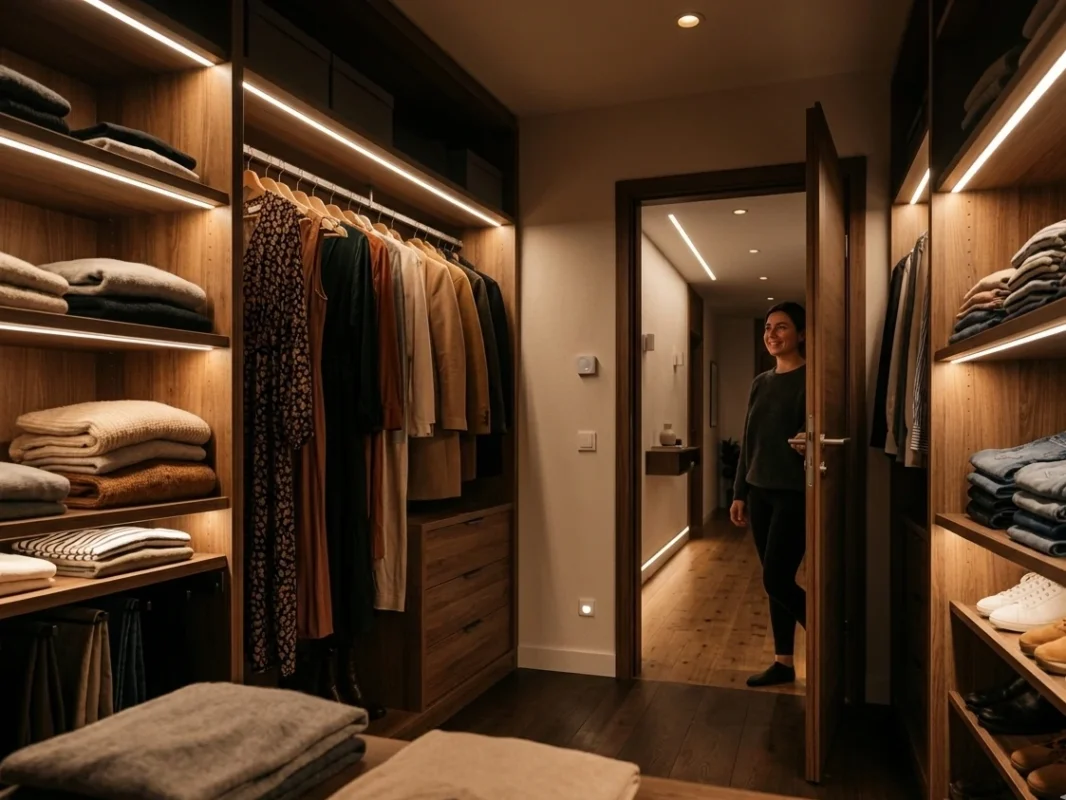
Closets are another perfect environment for indoor motion sensor lights. Traditional closet lights are often forgotten after the door closes, wasting energy. A closet motion sensor led fixture solves that problem by turning on immediately when someone opens the door and steps inside.
Compact lights with built-in sensors work especially well here. Many homeowners choose a stick-on motion sensor light because it installs in seconds without wiring and can easily be repositioned if needed.
Kitchen Cabinets and Counter Areas
Kitchens often have shadowed workspaces, especially under cabinets. Installing under cabinet sensor lighting allows countertops to illuminate automatically when someone approaches the work area.
In practice, slim indoor motion sensor lights placed under the cabinet edge provide targeted lighting exactly where it’s needed for food prep, late-night snacks, or quick tasks without turning on the entire kitchen.
Bedrooms, Bathrooms, and Night Pathways
At night, bright overhead lighting can feel harsh. A soft night light with motion sensor placed along the path between bedroom and bathroom provides gentle illumination without disturbing sleep.
In these situations, indoor motion sensor lights should be mounted low on the wall or near the floor so they guide movement without producing glare. This setup is especially helpful for families with children or older adults who may need safe navigation during nighttime hours.
Battery Operated Indoor Sensor Lights vs Wired Models
When choosing indoor motion sensor lights, one of the first decisions homeowners face is the power source. Some lights run on replaceable or rechargeable batteries, while others connect directly to a home’s electrical system. Both options can work well, but the right choice depends on where the light will be installed and how permanent the setup needs to be.
From a practical standpoint, indoor motion sensor lights powered by batteries are often the easiest solution for small spaces, while wired models are better suited for areas where long-term, high-output lighting is needed.
Battery Operated Indoor Sensor Lights – Fast and Flexible Installation
For most homeowners, a battery operated indoor sensor light is the simplest way to start using indoor motion sensor lights. These lights don’t require electrical work, which means they can be installed almost anywhere in the house within minutes.
Typical installation methods include:
- Adhesive pads
- Magnetic mounts
- Simple screw brackets
Because of this flexibility, battery operated indoor sensor lights are widely used for closets, cabinets, stairways, and small hallways. In many cases, a compact stick-on motion sensor light is all that’s needed to illuminate a dark corner or storage space.
Another advantage is portability. If the layout of the room changes or the light needs to be repositioned, indoor motion sensor lights powered by batteries can easily be moved without leaving permanent marks on the wall.
Rechargeable Indoor Sensor Light Options
A growing number of homeowners prefer a rechargeable indoor sensor light instead of traditional disposable batteries. These models use built-in lithium batteries that can be charged through a USB cable.
In real-world use, a rechargeable indoor sensor light often runs for several weeks before needing another charge, depending on how frequently the sensor activates. For high-traffic areas like hallways, charging might be needed more often, while closets may go much longer between charges.
This makes rechargeable models particularly practical for indoor motion sensor lights installed in places such as:
- kitchen cabinets
- bedroom closets
- pantry shelves
- hallway baseboards
Because LED technology consumes very little power, even compact indoor motion sensor lights can maintain strong brightness while remaining energy efficient.
Wired Indoor Motion Sensor Lights for Permanent Installations
While battery-powered options are convenient, wired indoor motion sensor lights are still common in larger rooms or permanent installations.
These lights connect directly to the home’s electrical wiring and often replace traditional wall or ceiling fixtures. Because they have a continuous power supply, wired models can support brighter outputs and longer operating times.
For example, motion sensor lights for hallway installed in ceilings or wall sconces often use wired connections to ensure consistent lighting throughout the night. This approach works well for homes where the lighting system is part of a broader renovation or new construction project.
Another benefit is reduced maintenance. Unlike battery-powered units, wired indoor motion sensor lights don’t require battery replacement or periodic charging.
Which Option Works Best for Most Homes?
In practice, many homes use a combination of both systems. Battery-powered indoor motion sensor lights handle small spaces and temporary setups, while wired fixtures provide strong illumination in main circulation areas.
A battery operated indoor sensor unit is usually the best choice for quick upgrades, especially when adding closet motion sensor led fixtures or installing under cabinet sensor lighting in existing kitchens. Meanwhile, wired indoor motion sensor lights are better suited for large hallways, staircases, and entryways where permanent lighting is required.
The key is matching the power source to the space. When chosen carefully, both types of indoor motion sensor lights can deliver reliable, hands-free lighting that improves safety, convenience, and energy efficiency throughout the home.
Night Light with Motion Sensor for Bedrooms and Bathrooms
Nighttime lighting inside the home requires a different approach than daytime lighting. Bright ceiling fixtures can be uncomfortable when your eyes are adjusted to darkness, especially when waking up in the middle of the night. That’s where indoor motion sensor lights designed as a night light with motion sensor become extremely useful.
Instead of forcing you to reach for a switch, these lights activate automatically when movement is detected. In bedrooms and bathrooms, this small upgrade can make nighttime navigation safer and far more comfortable.
Why Motion-Activated Night Lighting Works Better at Night
Traditional night lights stay on all night, which wastes energy and can create unnecessary glare. A night light with motion sensor, however, activates only when movement occurs.
This makes indoor motion sensor lights ideal for nighttime pathways. When someone steps out of bed or walks toward the bathroom, the sensor detects motion and provides gentle illumination. Once the person leaves the area, the light shuts off automatically.
In real homes, this feature helps prevent two common nighttime problems: bumping into furniture and waking up fully due to harsh lighting. With properly placed indoor motion sensor lights, the lighting level stays subtle and comfortable.
Best Placement for Bedroom Night Motion Lighting
Placement plays a major role in how effective indoor motion sensor lights are at night. In bedrooms, the goal is to guide movement without shining directly into the eyes.
Experienced installers usually recommend placing a night light with motion sensor in locations such as:
- along the baseboard beside the bed
- near the bedroom doorway
- along the path leading to the bathroom
Mounting indoor motion sensor lights lower on the wall or closer to the floor helps create a soft guiding light rather than a bright overhead beam.
This setup works especially well when the goal is to illuminate walking paths without disturbing someone who is still sleeping.
Bathroom Entry Lighting for Safer Night Movement
Bathrooms are one of the most common places people visit at night, which makes them another ideal location for indoor motion sensor lights.
A night light with motion sensor placed near the bathroom entrance provides just enough brightness to see clearly without turning on the main lights. This is particularly helpful for children, older adults, or anyone who prefers minimal light during nighttime routines.
In practical installations, many homeowners position indoor motion sensor lights outside the bathroom door or just inside the entrance. This allows the light to activate before someone fully enters the room, reducing the chance of stepping into a dark space.
Choosing the Right Brightness for Night Lighting
Brightness matters more than people realize when installing indoor motion sensor lights for bedrooms and bathrooms. Lighting that is too bright can feel uncomfortable and disrupt sleep patterns.
For nighttime use, softer LED lighting generally works best. A night light with motion sensor should provide enough illumination to see obstacles and walk safely, but not so much that it feels like daylight.
Many modern indoor motion sensor lights designed for night use also include automatic light detection, meaning they only activate when the surrounding environment is dark. This prevents the light from turning on unnecessarily during the daytime.
When used correctly, these subtle indoor motion sensor lights create a safer nighttime environment while maintaining a calm, sleep-friendly atmosphere throughout the home.
Stick-On Motion Sensor Light: The Easiest Installation
For homeowners who want a quick upgrade without tools, drilling, or wiring, a stick-on motion sensor light is often the simplest way to start using indoor motion sensor lights. These compact fixtures are designed for fast installation and flexible placement, making them ideal for closets, cabinets, hallways, and other small spaces where traditional lighting may be inconvenient.
From practical experience, many people begin with one stick-on motion sensor light and quickly realize how useful indoor motion sensor lights can be throughout the home. Because these lights require almost no setup time, they’re perfect for renters, DIY beginners, or anyone who wants an easy lighting improvement.
How Stick-On Motion Sensor Lights Work
A stick-on motion sensor light combines a compact LED light, a motion detection sensor, and a simple mounting system. Most models use passive infrared sensing, which means they detect body heat and movement rather than relying on cameras or complicated electronics.
When someone enters the detection range, the sensor triggers the light instantly. After movement stops, the light remains on for a short preset time before shutting off automatically. This same basic principle powers most indoor motion sensor lights, but the stick-on design focuses on convenience and portability.
Because these lights are usually lightweight and energy-efficient, they are often paired with a battery operated indoor sensor power system or a rechargeable indoor sensor light battery pack.
Simple Installation in Just Minutes
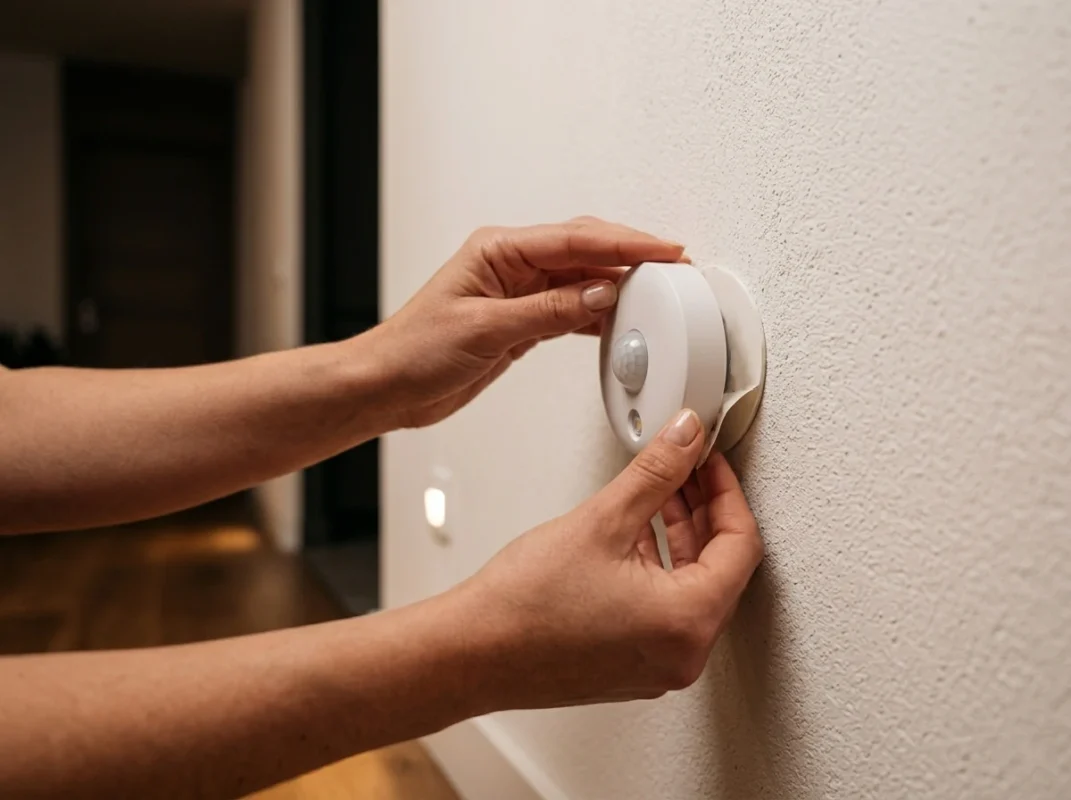
One reason homeowners prefer a stick-on motion sensor light is how quickly it can be installed. In many cases, the entire process takes less than a minute.
Typical installation steps include:
- Clean the mounting surface so the adhesive sticks properly.
- Remove the protective backing from the adhesive pad or magnetic plate.
- Press the light firmly onto the wall, cabinet, or shelf.
- Test the sensor by walking within the detection area.
Once installed, the indoor motion sensor lights will automatically activate when movement occurs.
This simple process makes a stick-on motion sensor light ideal for areas where running electrical wiring would be impractical.
Best Locations for Stick-On Motion Sensor Lights
While indoor motion sensor lights can be installed almost anywhere, stick-on models work particularly well in small or enclosed spaces.
Common installation locations include:
- closets and wardrobes using closet motion sensor led fixtures
- kitchen cabinets with under cabinet sensor lighting
- hallway corners for motion sensor lights for hallway
- pantry shelves and storage rooms
Because these lights are compact and lightweight, they can also be mounted inside drawers, behind doors, or along narrow walls where traditional fixtures would not fit.
Practical Tips for Better Sensor Performance
Although installing a stick-on motion sensor light is easy, a few placement tips can improve how well indoor motion sensor lights perform.
First, avoid pointing the sensor directly at large reflective surfaces or heating vents. Sudden temperature changes can affect motion detection. Second, position the light so the sensor faces the direction people typically approach from.
For example, when installing under cabinet sensor lighting, placing the sensor slightly toward the front edge of the cabinet allows it to detect hand movement or body motion sooner.
Finally, test the detection angle before fixing the light permanently. Even small adjustments can significantly improve how quickly indoor motion sensor lights respond.
With proper placement, a stick-on motion sensor light can deliver reliable, hands-free illumination that makes everyday tasks easier without requiring complicated installation.
Expert Tips for Choosing Indoor Motion Sensor Lights
Not all indoor motion sensor lights perform the same. While many products look similar at first glance, the differences in sensor quality, lighting performance, and installation design can significantly affect how well they work in everyday use.
After testing and installing indoor motion sensor lights in hallways, closets, cabinets, and bedrooms, a few selection criteria consistently separate reliable lighting from frustrating setups. Choosing the right features from the beginning can save time, reduce maintenance, and ensure the lights respond exactly when you need them.
Choose the Right Sensor Detection Range
One of the most important features in indoor motion sensor lights is the detection range. If the sensor range is too short, the light may activate too late. If it’s too wide, it may trigger unnecessarily when someone moves in a nearby room.
For most indoor applications, an effective detection range is usually between 10 and 20 feet. This works well for spaces like motion sensor lights for hallway, where the light should activate before someone reaches the center of the corridor.
Smaller spaces such as closets or storage areas benefit from shorter detection ranges. In those cases, compact closet motion sensor led units or a small stick-on motion sensor light will usually provide more precise activation without unnecessary triggers.
Look for Adjustable Sensor Sensitivity
Good indoor motion sensor lights allow users to adjust the sensitivity of the motion detector. This feature helps prevent the light from activating too frequently due to minor environmental changes.
For example, in a hallway with pets or nearby airflow from ventilation systems, a fixed sensor may turn on more often than expected. Adjustable sensitivity allows homeowners to fine-tune the response so the light activates mainly when a person walks through the space.
This is particularly helpful in areas like kitchens or cabinets where under cabinet sensor lighting should respond to nearby movement but not activate constantly due to background motion.
Select the Appropriate Brightness Level
Brightness plays a major role in how comfortable indoor motion sensor lights feel in different parts of the home. A hallway or storage room may require stronger illumination, while nighttime environments benefit from softer light.
For example, a night light with motion sensor near a bedroom should provide enough light to guide movement without causing glare. In contrast, task areas like kitchens may require brighter under cabinet sensor lighting so countertops are clearly visible.
Matching brightness levels to the intended space helps ensure indoor motion sensor lights improve visibility without creating uncomfortable lighting conditions.
Consider Battery Life or Rechargeable Options
Power source is another key factor when selecting indoor motion sensor lights. Many homeowners prefer a battery operated indoor sensor because it allows installation without electrical work.
However, long-term convenience often depends on battery life. Some lights require frequent battery replacement, while others use efficient LED technology that lasts significantly longer.
A rechargeable indoor sensor light can reduce maintenance even further. These models typically use built-in batteries that recharge through a cable and can operate for several weeks before needing another charge. For areas like closets, cabinets, or stairways, this option often provides the best balance between convenience and reliability.
Choose Mounting Options That Match the Space
Installation design can make a big difference in how easy it is to position indoor motion sensor lights correctly. Some lights require screws or brackets, while others rely on adhesive or magnetic mounting.
For quick installations, a stick-on motion sensor light is often the most practical choice. These lights can be attached to walls, shelves, or cabinet interiors within seconds and removed later if adjustments are needed.
Meanwhile, larger motion sensor lights for hallway may benefit from more secure mounting to keep the sensor aligned with the walking path.
Selecting the right mounting style ensures indoor motion sensor lights stay properly positioned and maintain reliable motion detection over time.
Common Mistakes People Make With Indoor Motion Sensor Lights
While indoor motion sensor lights are generally easy to install and use, small mistakes during setup can lead to poor performance. In many homes, the issue isn’t the light itself but how and where it’s installed.
After working with different types of indoor motion sensor lights in closets, kitchens, hallways, and bedrooms, several common installation mistakes show up again and again. Avoiding these problems can dramatically improve how reliably the lights respond to movement.
Installing the Sensor Too High or Too Low
Sensor height plays a big role in how well indoor motion sensor lights detect movement. If the light is installed too high on the wall or ceiling, the detection zone may pass above a person’s movement path. If it’s placed too low, the sensor may have a limited field of view.
In most indoor situations, indoor motion sensor lights perform best when mounted about 5 to 7 feet above the floor. This height allows the sensor to capture natural body movement as people walk through the space.
For compact spaces like closets, a closet motion sensor led fixture can be mounted slightly lower since the movement area is smaller.
Pointing the Sensor in the Wrong Direction
Another frequent mistake is aiming indoor motion sensor lights directly toward walls instead of toward the direction people approach from.
Motion sensors are typically more sensitive to side-to-side movement than movement directly toward the sensor. That means lights placed at the end of a hallway may not activate until someone is very close.
For better performance, motion sensor lights for hallway should face the direction people walk from so movement crosses the sensor’s detection zone. This positioning helps indoor motion sensor lights activate faster and more reliably.
Blocking the Sensor With Furniture or Doors
Motion sensors require a clear line of sight. If something blocks the sensor, the light may fail to detect movement.
This often happens with indoor motion sensor lights installed inside closets or cabinets where shelves, clothing, or door frames interfere with the sensor’s view.
For example, when installing under cabinet sensor lighting, the sensor should be positioned near the front edge of the cabinet so it can detect motion in the kitchen workspace. Similarly, a stick-on motion sensor light inside a closet should be placed where clothing or storage boxes won’t block the sensor.
Choosing the Wrong Brightness for the Space
Brightness mismatches are another common problem with indoor motion sensor lights. A light that is too dim may not provide enough visibility, while a light that is too bright can feel harsh—especially at night.
For example, a night light with motion sensor in a bedroom or bathroom should provide gentle illumination that helps guide movement without waking someone fully. On the other hand, work areas like kitchens may require brighter under cabinet sensor lighting so tasks can be completed safely.
Matching brightness to the intended environment ensures indoor motion sensor lights improve usability rather than becoming uncomfortable.
Ignoring Battery Maintenance
Battery management is often overlooked when installing indoor motion sensor lights. Many homeowners install a battery operated indoor sensor light and forget that the batteries eventually need replacement.
If batteries become weak, the sensor may stop responding quickly or the light may appear dim. In high-traffic areas like hallways, this can happen sooner than expected.
Choosing a rechargeable indoor sensor light can reduce maintenance, especially for lights that activate frequently. Regularly checking battery levels ensures indoor motion sensor lights continue operating reliably without unexpected interruptions.
By avoiding these common setup mistakes, homeowners can ensure their indoor motion sensor lights perform consistently and provide the hands-free convenience they were designed for.
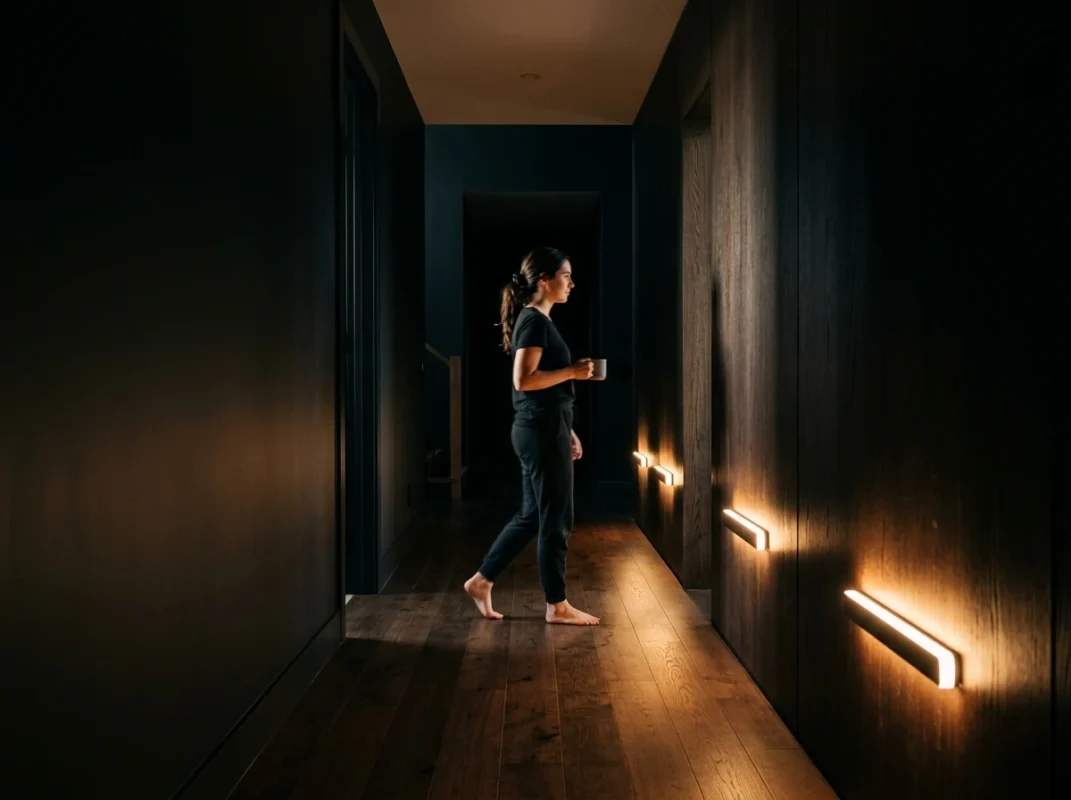
Final Thoughts: Are Indoor Motion Sensor Lights Worth It?
After years of installing and testing them, I can say confidently that indoor motion sensor lights are one of the simplest upgrades with the biggest impact.
They make homes safer at night, eliminate wasted electricity, and remove the daily annoyance of light switches.
Whether you choose motion sensor lights for hallway, closet motion sensor led, under cabinet sensor lighting, or a simple night light with motion sensor, the right setup can transform how your home feels and functions.
And with modern rechargeable indoor sensor light options and easy stick-on motion sensor light designs, installing indoor motion sensor lights has never been easier.
Once you add a few indoor motion sensor lights around the house, you’ll probably wonder how you lived without them.
Frequently Asked Questions
How long does the light stay on?
Most indoor motion sensor lights remain on for 15 seconds to 2 minutes after motion stops. Many models allow users to adjust the delay time so the light stays on longer in areas like hallways or kitchens.
Can you adjust the sensor sensitivity?
Yes. Many modern indoor motion sensor lights include adjustable sensitivity settings. This allows the sensor to respond to larger movements while ignoring minor triggers such as airflow or distant activity.
Are they battery or plug-in?
Both options exist. Some indoor motion sensor lights operate as a battery operated indoor sensor, while others plug directly into an electrical outlet. Rechargeable versions are also common and combine portability with longer-term convenience.
How do I mount them to a wall?
Most indoor motion sensor lights can be mounted using screws, adhesive pads, or magnetic brackets. A stick-on motion sensor light is often the easiest option for closets, cabinets, and small hallways because it requires no drilling.
Are they pet-friendly (dog/cat triggers)?
Standard indoor motion sensor lights may activate when pets walk through the detection zone. However, adjusting the sensor angle or sensitivity can help reduce unnecessary triggers in homes with dogs or cats.
Can you set them to “Always On”?
Some indoor motion sensor lights include a manual mode that allows the light to stay on continuously. This feature is useful when extra lighting is needed for tasks or extended activity.
How long do the batteries last?
Battery life depends on usage frequency and light brightness. A typical battery operated indoor sensor light can last one to three months before needing new batteries, while a rechargeable indoor sensor light may operate for several weeks per charge.
Do they work in total darkness?
Yes. In fact, indoor motion sensor lights are designed to work especially well in dark environments. Many models also include a built-in light sensor so the light only activates when the surrounding space is dim or completely dark.