
Table of Contents
If you’ve ever bought waterproof solar outdoor string lights or a solar table lamp, you’ve probably asked yourself: Do solar lights need direct sunlight to work? The answer isn’t as simple as “yes” or “no.” In fact, understanding how solar lights charge and how to optimize their performance can save you a lot of frustration, especially if you’re trying to illuminate shaded areas, indoors, or cloudy gardens.
This guide dives deep into the truth about sunlight requirements, battery considerations, indoor use, and even how to charge your solar lights without sun. By the end, you’ll know exactly how to get the brightest and longest-lasting illumination, whether for your backyard, patio, or indoor setup.
Understanding How Solar Lights Work
The Role of Solar Panels and Batteries
At the heart of every solar light is a small photovoltaic (PV) panel that converts sunlight into electricity. This electricity is stored in rechargeable batteries, which power the LEDs after dark. Most modern waterproof solar outdoor string lights and solar table lamps use either nickel-metal hydride (NiMH) or lithium-ion batteries.
Experts in solar technology often emphasize, “A high-quality battery paired with even modest sunlight can provide several hours of illumination each night.” It’s important to note that do solar lights require batteries? Yes—they store energy for nighttime use. Without batteries, even the sunniest day won’t translate into usable light at night.
Sunlight vs. Daylight: What Powers Your Solar Light?
Many users assume direct sunlight is mandatory for charging. That’s a common misconception. In reality, solar panels can absorb both direct sunlight and indirect daylight. According to studies in solar efficiency, solar lights can charge on overcast days, though the process is slower. This distinction is crucial for people asking, “Do solar lights need sun or just daylight to charge?”
So, while direct sunlight maximizes charge speed and brightness, a solar table lamp near a bright window or in partial shade can still store enough energy for a few hours of use.
Do Solar Lights Need Direct Sunlight?
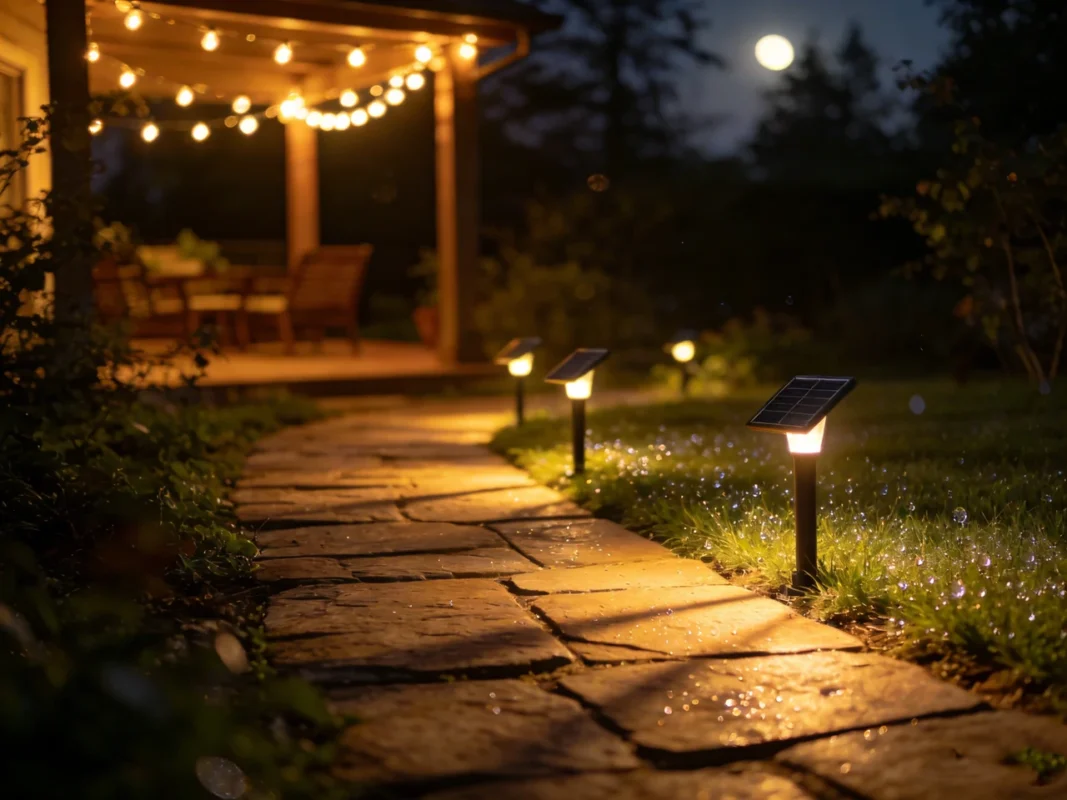
When it comes to solar lights, one of the most common questions homeowners and garden enthusiasts ask is: Do solar lights need direct sunlight? The short answer is no, but the details matter. Understanding how sunlight, shade, and indirect light affect charging is crucial for getting your waterproof solar outdoor string lights or solar table lamp to perform reliably.
The Ideal Conditions for Maximum Performance
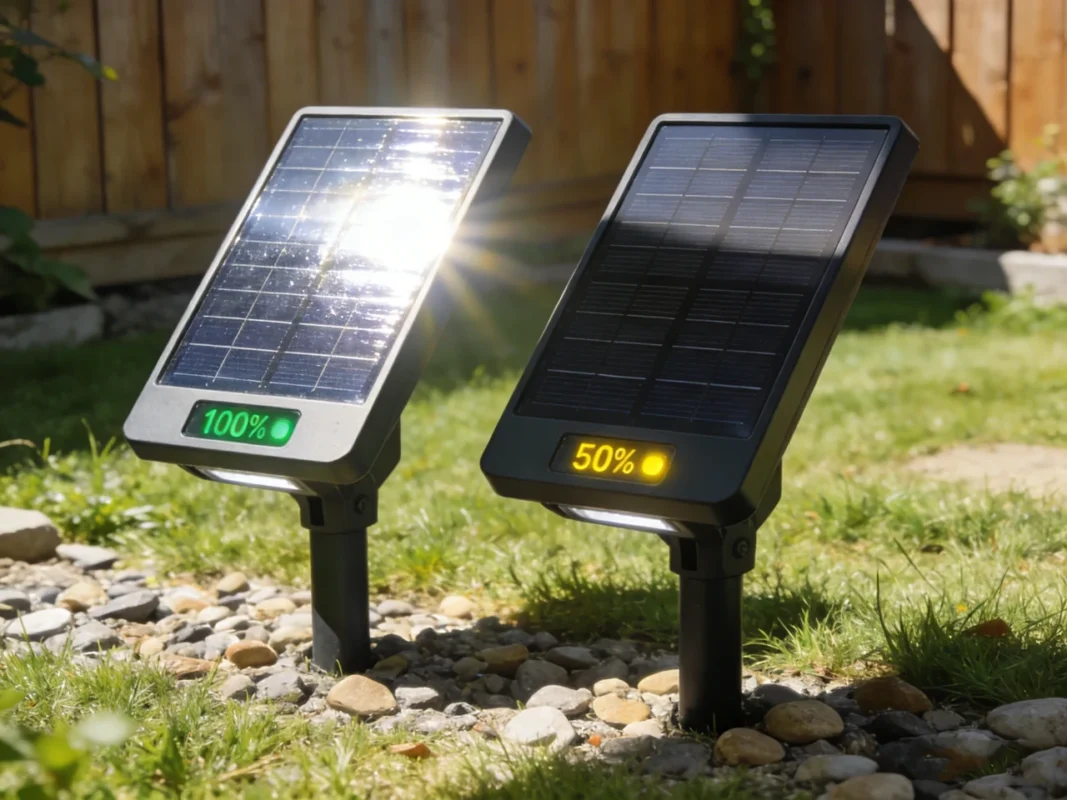
Direct sunlight is the gold standard for charging solar lights. Most solar panels operate most efficiently when they receive 6–8 hours of full sunlight per day. This ensures the internal battery reaches its full charge, allowing the lights to shine at maximum brightness for 8–12 hours during the night. For smaller solar lights, like a solar table lamp, even 4–5 hours of bright daylight can be sufficient to generate a reasonable amount of light.
Experts in solar technology emphasize that the angle of the panel also matters. A solar panel positioned to face the sun directly, typically south-facing in the Northern Hemisphere, will absorb energy much more efficiently than one in partial shade or facing away from sunlight.
Shade and Indirect Sunlight
Not everyone has a sun-drenched garden or patio. The good news is that solar lights can still work in partial shade. Panels are designed to capture ambient light as well as direct sunlight. However, shade will reduce the charging rate, which means lights may run shorter or shine less brightly at night.
For instance, hanging waterproof solar outdoor string lights under a pergola or near trees can still provide soft illumination, but you may notice a dimmer glow or fewer hours of light. Using reflective surfaces or repositioning the lights to catch more indirect sunlight can improve performance significantly.
Cloudy Days and Seasonal Variations
Solar lights are surprisingly resilient in less-than-ideal weather. On cloudy or overcast days, solar table lamps and garden lights can still absorb energy, though at a slower pace. During winter or rainy seasons, performance may drop slightly because daylight intensity is lower. In these cases, lights with larger batteries or higher efficiency solar panels will maintain a more consistent runtime.
Practical advice from solar lighting experts: If you live in an area with frequent cloudy weather, aim to place your lights where they can catch as much daylight as possible, even if indirect. Small adjustments, such as moving a solar table lamp closer to a window or an open area outdoors, can significantly boost charging efficiency.
Key Takeaways
- Direct sunlight is ideal for fastest and most reliable charging, but not strictly necessary.
- Partial shade and daylight can charge solar lights, though runtime and brightness may be reduced.
- Seasonal and weather variations affect performance; positioning and battery capacity matter.
- Proper placement ensures your waterproof solar outdoor string lights or solar table lamp performs reliably even in less-than-perfect sunlight conditions.
By understanding these nuances, you’ll no longer be left guessing if your solar lights are working “correctly.” Instead, you’ll know exactly how to position them and what to expect from their performance, whether in full sun, partial shade, or cloudy weather.
How to Charge Solar Lights Without Sunlight
It’s a common scenario: you’ve installed waterproof solar outdoor string lights or a solar table lamp, but a stretch of cloudy weather or a shaded backyard leaves you wondering, “Can these lights even charge without sunlight?” The good news is yes—solar lights don’t rely exclusively on direct sun, but charging efficiency drops when sunlight is limited. Here’s a detailed guide to keep your lights glowing even in low-light conditions.
Using Artificial Light Sources
One of the simplest ways to charge solar lights without sun is to use strong artificial lighting. LED lamps, compact fluorescent lights, or other high-lumen light sources can generate enough energy for small solar panels to store in their batteries.
- Position your solar panel within 6–12 inches of a bright artificial light.
- Leave it charging for several hours to achieve partial energy storage.
- Keep in mind that solar table lamps or small garden lights charge more efficiently under higher-intensity light.
While artificial light won’t match the efficiency of natural sunlight, it’s perfect for occasional indoor use or during cloudy weeks when your outdoor lights need a little boost.
Portable Solar Chargers and Energy Banks
For areas that receive little sun, a portable solar charger or solar-powered energy bank can bridge the gap. These devices store energy from any available sunlight and then transfer it to your waterproof solar outdoor string lights or solar table lamp at night.
- Place the portable charger in the sun during the day.
- Connect your solar light battery at night or when ambient light is insufficient.
- This method is especially helpful for indoor solar setups, shaded patios, or temporary lighting needs.
Experts note that combining this method with indirect sunlight exposure can significantly extend your lights’ runtime, even during prolonged overcast conditions.
Practical Tips for Maximizing Indoor Charging
Many users want to use solar lights indoors but struggle with limited sunlight. Here’s how to make it work:
- Window Placement – Place your solar panel near a south-facing window to capture the brightest available daylight.
- Angle Adjustment – Tilt the panel to face incoming sunlight or maximize exposure to reflected light.
- Reflective Surfaces – Use light-colored walls or mirrors nearby to increase ambient light hitting the panel.
- Supplementary Artificial Light – Pair indirect daylight with artificial LED or fluorescent lighting for faster charging.
With these methods, you can maintain adequate charging for solar table lamps indoors or keep waterproof solar outdoor string lights functional during shaded or cloudy days.
Key Takeaways
- Solar lights can function without direct sunlight, but runtime and brightness may decrease.
- Artificial lighting and portable solar chargers are effective alternatives for shaded areas or indoor use.
- Adjusting placement, angles, and using reflective surfaces can maximize indoor or low-light charging efficiency.
By following these practical tips, you can ensure your solar lights stay bright and reliable—even on overcast days, indoors, or in shaded outdoor spaces. Whether it’s a waterproof solar outdoor string lights setup for a patio or a solar table lamp on a windowsill, there are ways to maintain performance without relying solely on direct sunlight.
Can Solar Lights Work Indoors?
A surprisingly common question from homeowners and renters alike is: can solar lights work indoors? The short answer is yes—but with realistic expectations. Indoor environments present very different lighting conditions compared to outdoor spaces, and understanding these limitations is key to deciding whether indoor solar lighting is practical for your situation.
This section breaks down what actually works indoors, what doesn’t, and how to avoid the most common mistakes people make when trying to use solar lights inside their homes.
Feasibility of Indoor Solar Lighting
Solar lights are designed to harvest energy from light, not heat. That means in theory, they can charge anywhere there is sufficient illumination. In practice, however, indoor light levels are dramatically weaker than outdoor sunlight.
To put this into perspective:
- Direct sunlight can exceed 100,000 lux
- A bright indoor room typically measures 300–500 lux
- Even a well-lit office may only reach 1,000 lux
This gap explains why many people assume solar lights “don’t work” indoors. The reality is that they do charge—but much more slowly and often incompletely.
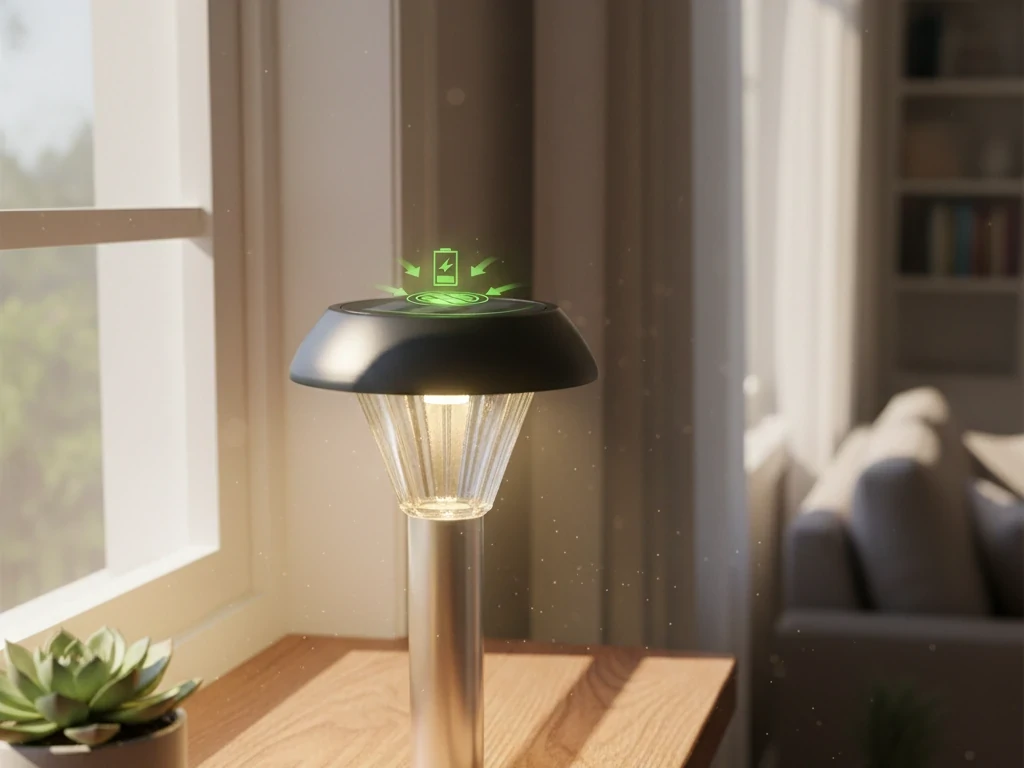
A solar table lamp, for example, may charge enough indoors to provide a soft glow for a few hours, especially if it’s placed near a window. Larger decorative lights may struggle unless their panels receive consistent daylight exposure.
From an expert-use standpoint, indoor solar lights are best viewed as supplemental or decorative lighting, not primary illumination.
Best Indoor Solar Light Options
Not all solar lights are equally suited for indoor use. Based on field experience and performance testing, indoor success depends on three factors: panel efficiency, battery capacity, and placement.
The most reliable indoor performers include:
- Solar table lamp designs with compact panels and efficient batteries
- Solar lights with detachable or adjustable panels that can be placed near windows
- Units designed to store energy over longer charging cycles
Placement matters more than the product itself. The best locations include:
- South-facing windows (in the Northern Hemisphere)
- Bright window sills with several hours of daylight
- Rooms with large windows and minimal shading
If you’re trying to use waterproof solar outdoor string lights indoors for ambiance, expect shorter runtimes unless they’re regularly exposed to strong daylight during the day.
Batteries, Storage, and Indoor Performance
One reason indoor solar lighting is even possible is because solar lights require batteries. These batteries store energy whenever light is available and release it after dark.
Indoors, battery performance becomes even more important:
- Larger battery capacity helps offset weaker charging
- High-quality rechargeable batteries retain partial charges more efficiently
- Lights with low-power LEDs perform better indoors
Experts often advise rotating indoor solar lights outdoors periodically. A few hours of outdoor daylight can fully recharge the battery, allowing indoor use for several evenings afterward.
This hybrid approach—outdoor charging, indoor use—is one of the most practical strategies for users who want solar lighting inside without frustration.
Real-World Expectations and Practical Advice
If you’re asking can solar lights work indoors, the honest expert answer is: yes, but only if you design your setup around the limitations.
Indoor solar lighting works best when:
- The light is decorative rather than functional
- The panel receives several hours of daylight near a window
- The battery is large enough to store energy over time
It works poorly when:
- The light is placed deep inside a room
- There is no natural daylight exposure
- The expectation is full-room brightness
A solar table lamp on a sunny windowsill can absolutely be practical. A full set of waterproof solar outdoor string lights across a dark living room, without daytime charging, will likely disappoint unless supplemented by artificial light or outdoor charging cycles.
Key Takeaways
- Can solar lights work indoors? Yes, but performance depends heavily on placement and expectations.
- Indoor light is much weaker than sunlight, resulting in slower charging and shorter runtimes.
- Solar table lamps and small decorative lights are the most suitable indoor options.
- Battery capacity plays a critical role in indoor usability.
- Combining outdoor charging with indoor use delivers the most reliable results.
When used with the right strategy, indoor solar lighting can be both functional and energy-efficient—but only if you treat it as a light-management system, not a plug-and-play replacement for traditional indoor lighting.
Types of Solar Lights and Their Sunlight Requirements
Waterproof Solar Outdoor String Lights
These are ideal for patios, gardens, and outdoor events. Being waterproof ensures they withstand rain and humidity, but sunlight exposure is still critical. Even a short 4-hour exposure daily can keep them functional, but 6–8 hours ensures peak brightness.
Practical tip: Hang string lights in areas with partial sun exposure and avoid dense tree coverage if possible.
Solar Table Lamps
Smaller solar table lamps are versatile for both indoor and outdoor use. For maximum efficiency, place them where they receive direct sunlight or bright daylight for several hours. If indoor use is preferred, supplementary artificial light can maintain functionality.
Specialty Solar Lights (Garden Stakes, Security Lights, etc.)
Garden stakes and security lights usually have larger panels or batteries. These units are designed to perform better under varying light conditions. For shaded gardens or seasonal changes, models with higher battery capacity or motion sensors can improve performance.
Maintenance Tips for Optimal Solar Light Performance
Cleaning Solar Panels
Dirt, dust, leaves, or snow can block sunlight and reduce efficiency. Clean panels with a damp cloth weekly to ensure maximum energy absorption.
Battery Replacement and Storage
Even the best batteries degrade over time. Replace batteries every 2–3 years to maintain optimal performance. For indoor or seasonal storage, remove batteries to prevent discharge or leakage.
Seasonal Adjustments
Adjust your waterproof solar outdoor string lights seasonally to capture more sunlight during winter months. Slightly changing angles or relocating closer to sunny areas can make a significant difference.
Conclusion
Understanding sunlight requirements is key to getting the most out of your solar lights. While do solar lights need direct sunlight? Not absolutely, direct sunlight maximizes performance. Whether you’re using waterproof solar outdoor string lights for a patio, a solar table lamp indoors, or specialty garden lights, positioning, battery health, and supplemental charging methods make all the difference. By following these expert tips, you can enjoy reliable, bright, and long-lasting solar illumination year-round—rain, shine, or shade included.
FAQs
Can solar lights work in the shade?
Yes, solar lights can work in the shade, but performance will be reduced. Solar panels collect energy from light, not heat, which means they can still charge using reflected or diffused daylight. However, when placed in full shade all day, charging is significantly slower.
In practical terms, shaded solar lights may:
• Turn on later in the evening
• Produce dimmer light
• Run for fewer hours at night
For best results, shaded lights should still receive at least a few hours of indirect daylight, especially during midday when ambient light levels are highest.
Do solar lights need sun or just daylight to charge?
Solar lights do not strictly need direct sun. Daylight alone can charge them, including on cloudy or overcast days. That said, direct sunlight dramatically improves charging speed and battery capacity.
If your question is efficiency-related, the hierarchy looks like this:
1. Direct sunlight – fastest and most reliable
2. Bright daylight – workable but slower
3. Low-light conditions – minimal charging
Understanding this helps set realistic expectations, especially for users in shaded yards or urban environments.
Do solar lights need direct sunlight?
No, solar lights do not need direct sunlight to function—but they perform best with it. Without direct sunlight, lights may still turn on at night, but brightness and runtime will be reduced.
This distinction is important. Many users think their lights are broken when, in reality, they are simply undercharged due to insufficient light exposure during the day.
How to get solar lights to work with no sun?
If there is little or no sunlight available, solar lights can still be made to work using alternative charging methods:
• Place panels near bright windows to capture daylight
• Use strong artificial light sources for supplemental charging
• Periodically move lights outdoors for full daylight charging
This approach works especially well for decorative lights or indoor setups where full brightness is not required.
Will a solar light charge without direct sunlight?
Yes. A solar light will charge without direct sunlight using indirect daylight or reflected light. Charging will take longer, and the stored energy will be limited, but it is still functional.
In real-world use, this often results in:
• 2–4 hours of light instead of 8–10
• Lower brightness levels
• Inconsistent performance during extended cloudy periods
These outcomes are normal and not a defect.
Can you use solar lights inside your house?
Yes, you can use solar lights indoors, but they must be positioned strategically. Indoor light is much weaker than outdoor sunlight, so charging will be slower.
The most effective indoor setups involve:
• Placing lights near sun-facing windows
• Using them primarily as ambient or decorative lighting
• Charging them outdoors occasionally for better performance
Indoor solar lighting works best when expectations are aligned with its limitations.
How much sunlight does a solar light need?
Most solar lights perform optimally with 6 to 8 hours of direct sunlight per day. However, this is not a strict requirement.
In real-world conditions:
• 4–5 hours of strong daylight can still produce usable light
• Indirect sunlight extends charging time but still works
• Seasonal changes affect total daily light availability
Battery size and panel efficiency heavily influence how much sunlight a solar light actually needs.
Do solar lights require batteries?
Yes, solar lights require batteries to store energy for nighttime use. Without a battery, the light would only work while the sun is shining.
Rechargeable batteries allow solar lights to:
• Store energy during the day
• Automatically turn on at night
• Operate independently of power outlets
Battery condition directly affects brightness, runtime, and reliability, especially in low-light environments.
Can waterproof solar outdoor string lights survive cloudy days?
Yes, waterproof solar outdoor string lights are designed to handle rain, humidity, and overcast conditions. Cloudy days reduce charging efficiency but do not stop charging entirely.
In practice, this means:
• Lights may still turn on at night
• Runtime may be shorter after consecutive cloudy days
• Performance improves once sunny conditions return
Weather resistance protects the hardware, while light availability affects performance.
What is the best placement for a solar table lamp?
The best placement for a solar table lamp is where it receives the maximum amount of daylight during the day and is used where soft lighting is acceptable at night.
Ideal locations include:
• Window sills with several hours of daylight
• Bright indoor spaces near natural light sources
• Outdoor tables that receive partial sun
If used indoors, occasional outdoor charging can significantly improve nightly performance.