

Table of Contents
When you’re living with a ceiling fan on low ceiling in your home, you want comfort, style, and efficiency without sacrificing safety. Whether you’re renovating an older home, outfitting a cozy bedroom, or improving airflow in compact spaces, this comprehensive guide will walk you through everything you need to know about ceiling fans for low ceilings — including how to pick the perfect model, what installation tips to follow, and how to make the most of ceiling fans for low ceilings with light. By the end of this article, you’ll be confident making smart choices that enhance both comfort and energy savings.
Why You Should Install a Ceiling Fan on Low Ceiling
Benefits of Ceiling Fans in Low‑Ceiling Rooms
Installing a ceiling fan on low ceiling can transform the feel of any room. Even if your ceilings are under eight feet, the right fan can cool your space effectively while adding a touch of design. Let’s start with the basics.
One of the biggest perks is improved air circulation. In many low‑ceiling spaces, air tends to stagnate, especially in summer months. A fan helps push warm air up and cool air down, creating a natural breeze that keeps you comfortable without overworking your air conditioning.
Another advantage is energy savings. Running a ceiling fan on low ceiling allows you to raise your thermostat a few degrees without feeling warmer. This can lead to noticeable reductions in electricity bills — a win for both your wallet and the environment.
If you choose ceiling fans for low ceilings with light, you get dual functionality. These integrated solutions provide both airflow and illumination, eliminating the need for separate fixtures and helping keep low ceilings from feeling cluttered.
Common Challenges of Installing Ceiling Fans on Low Ceilings
Despite the benefits, installing a ceiling fan for low ceiling comes with unique challenges. The biggest concern is safety: head clearance must be enough that walking underneath the fan is safe. Standard ceiling fans with long downrods aren’t ideal in low spaces because they hang too far down, creating potential hazards and reducing useful headroom.
Another issue is airflow performance. If the fan sits too close to the ceiling without proper design, it may struggle to move air efficiently. That’s why selecting the right style — such as flush mount or hugger fans — makes all the difference.
There’s also the question of aesthetics. In rooms with low ceilings, too bulky a fan can overwhelm the space visually. Careful selection ensures the fan enhances rather than dominates the room’s design.
Understanding Ceiling Heights and Fan Compatibility
What Is Considered a Low Ceiling?
When we talk about ceiling fans for low ceilings, it’s helpful to define what “low” means. Traditionally, ceilings under 8 feet are considered low. Many homes built before the 1980s feature lower ceiling heights, and even some modern designs opt for cozy, compact proportions.
A room with a ceiling below eight feet isn’t automatically disqualified from having a ceiling fan, but it does require thoughtful selection. A ceiling fan on low ceiling needs to maximize airflow without sacrificing safety or headroom.
Can You Put a Ceiling Fan on a Low Ceiling?
Yes — and that’s the good news. You absolutely can install a ceiling fan on low ceiling. The key is choosing the right type of fan. Models designed specifically for low ceilings — usually labeled as ceiling fans for low ceilings or low‑profile fans — are engineered to sit flush against the ceiling. That means they don’t require the long downrods typical of standard ceiling fans.
These fans reduce the distance between the blades and the ceiling, keeping the overall profile tight and safe. Whether your goal is to improve comfort or add ceiling fans for low ceilings with light, there are options to fit nearly any space.
Are My Ceilings Too Low for a Fan?
A common concern homeowners face is whether their ceilings are too low to install a fan at all. The general rule of thumb is that the blades should hang at least 7 feet above the floor. So if your ceiling is right around eight feet, you’ll need a low‑profile fan that maintains that clearance.
If you measure your space and find that any fan you’re considering would hang below that 7‑foot mark, it’s time to explore ceiling fans for low ceilings designed with flush mounts. These models are specifically constructed so that even in low spaces, headroom stays safe, and airflow remains strong.
Choosing the Right Ceiling Fan for Low Ceilings
Selecting the right fan for a ceiling fan on low ceiling situation is crucial to balance airflow, safety, and aesthetics. Low ceilings present unique challenges — if the fan hangs too low, it can feel cramped, look awkward, or even create a safety hazard. Fortunately, there are several types of fans designed specifically for these spaces, allowing you to enjoy comfort without compromising room design.
Flush Mount / Hugger Ceiling Fans Explained
For rooms with low ceilings, flush mount or hugger fans are typically the best choice. Unlike standard ceiling fans that hang from a downrod, flush mount fans attach directly to the ceiling, minimizing the distance from the ceiling to the fan blades. This keeps the fan out of the way while still circulating air efficiently.
Hugger fans are especially popular in bedrooms, small living rooms, and offices with ceilings under eight feet. They allow you to install a ceiling fan for low ceiling safely while maintaining a sleek profile. When shopping for these fans, look for models with well-designed blades that optimize airflow even in compact spaces.
Ceiling Fans for Low Ceilings with Light (Fan Lights)
Many homeowners want both cooling and lighting solutions in one fixture, which is where ceiling fans for low ceilings with light come into play. These fans integrate fan lights directly into the fixture, providing illumination without needing additional light sources.
Choosing the right lighting is important, especially in a low-ceiling room. Built-in LED fan lights or diffused covers soften the light and prevent glare, making the room feel more open. A ceiling fan on low ceiling with integrated lighting ensures that you don’t sacrifice clearance for functionality.
Fan Size and Room Size Compatibility
Another critical factor is sizing. For a ceiling fan on low ceiling, the fan must be proportionate to the room:
- Small rooms (up to 75 sq ft): Blade spans of 29–42 inches usually work well.
- Medium rooms (76–144 sq ft): Blade spans of 44–52 inches provide optimal airflow.
Choosing the right size ensures that your fan moves air effectively without feeling bulky or overwhelming. Remember, a well-sized ceiling fan for low ceiling also reduces wobble and noise, which is essential in smaller, cozier spaces.
When considering ceiling fans for low ceilings with light, factor in the light kit’s height. Even a well-sized fan can feel cramped if the light fixture extends too far downward. Low-profile designs maintain both comfort and style, allowing you to enjoy efficient airflow and adequate lighting simultaneously.
Blade Design and Efficiency
Not all fans perform equally in low-ceiling rooms. Blades that are too short or flat may not move air efficiently, while overly large blades can create turbulence. Look for fans with carefully angled blades, designed to maximize airflow while maintaining quiet operation.
Efficient blade design also contributes to energy savings. A properly chosen ceiling fan for low ceiling can allow you to raise your thermostat slightly without sacrificing comfort, reducing energy costs over time. Pairing this with LED fan lights further enhances the energy efficiency of your space.
Installation Guide for Ceiling Fans on Low Ceilings
Installing a ceiling fan on low ceiling requires careful planning to ensure safety, maximize airflow, and maintain room aesthetics. Low ceilings present unique challenges compared to standard-height spaces, so following the right steps can make all the difference. Whether you are installing a new ceiling fan for low ceiling or upgrading to ceiling fans for low ceilings with light, understanding proper mounting, height requirements, and placement is key.
Mounting Types
When it comes to ceiling fans for low ceilings, there are primarily two mounting options:
- Flush Mount (Hugger) Fans – This type of fan is attached directly to the ceiling without a downrod. Flush mount fans are ideal for rooms with ceilings under eight feet because they maintain maximum headroom while still providing effective airflow. They also reduce wobble and noise since the fan is securely anchored.
- Short Downrod Fans – Sometimes, if your ceiling is slightly higher (around 8 to 9 feet), a short downrod may be used. This allows the fan blades to operate at their optimal height for air circulation without compromising safety. Even a few inches can significantly improve airflow in medium-sized rooms.
Choosing the correct mounting type is critical. A poorly mounted fan can wobble, create noise, or reduce airflow efficiency. For ceiling fans for low ceilings with light, flush mount options are usually preferred to prevent the light kit from hanging too close to head level.
Minimum Height Recommendations
Safety is the most important consideration when installing a ceiling fan on low ceiling. A general rule is that the bottom of the fan blades should be at least 7 feet above the floor. This ensures adequate clearance for walking and furniture placement, and reduces the risk of injury.
In rooms where ceilings are right around eight feet, using a ceiling fan for low ceiling with a flush mount design is often the best choice. This approach maintains safety while allowing full functionality, including optional fan lights for illumination.
Failing to follow proper height guidelines can lead to discomfort and potential hazards. Always measure the total distance from floor to the bottom of the fan blades, including any light fixtures attached to the fan.
Placement Tips
Proper placement of a ceiling fan on low ceiling is just as important as height. Here are some best practices:
- Center the Fan in the Room: Positioning the fan in the center ensures even air circulation throughout the space. For irregularly shaped rooms, consider multiple fans to cover the entire area.
- Maintain Clearance from Walls and Obstacles: Keep the fan blades at least 18 inches away from walls, cabinets, or furniture to prevent airflow obstruction and minimize noise caused by turbulence.
- Avoid Low Furniture Hazards: If installing over beds or seating areas, double-check that the fan provides sufficient head clearance. A ceiling fan for low ceiling with an integrated fan lights kit should not hang too far below the blades.
By following these placement guidelines, you’ll achieve optimal airflow while maintaining a comfortable, visually pleasing environment.
Wiring and Safety Considerations
Even if your ceiling fan for low ceiling comes with clear instructions, safety should never be compromised. Here are critical tips:
- Turn Off Power: Always shut off electricity at the breaker before beginning installation.
- Use Proper Mounting Hardware: Low ceilings can create vibration issues if the fan isn’t firmly anchored. Ensure that the bracket and screws are rated for the fan’s weight.
- Check Electrical Compatibility: For fans with fan lights, make sure the wiring supports the fixture’s voltage and current. Use wire nuts and connectors that meet code requirements.
- Hire a Licensed Electrician if Needed: If you’re unsure about any part of the installation, professional help can prevent hazards and ensure compliance with local codes.
Proper installation improves not only safety but also the fan’s longevity. A well-mounted ceiling fan on low ceiling will operate quietly, move air efficiently, and last for many years without mechanical issues.
Testing and Adjustment
Once your ceiling fan for low ceiling is installed, take time to test it:
- Check Blade Level: Use a level to ensure blades are even. Uneven blades can cause wobbling and noise.
- Test Fan Speeds: Run the fan at different speeds to verify airflow and stability.
- Adjust Lighting: If your fan includes fan lights, make sure the light fixture is secure and properly aligned. Consider using dimmers or LED bulbs to soften illumination if needed.
Performing these adjustments ensures that your fan is both functional and comfortable to use in a low-ceiling room.
Safety, Efficiency & Code Considerations
When installing a ceiling fan on low ceiling, paying attention to safety, energy efficiency, and building codes is just as important as choosing the right fan. Low ceilings present unique challenges, and following these guidelines ensures your fan performs well, lasts longer, and keeps everyone in your home safe.
Safety Tips for Low-Ceiling Fans
Safety is the top priority when adding a ceiling fan for low ceiling. Here are the most important considerations:
- Maintain Adequate Headroom: Even with low ceilings, the bottom of the fan blades should be at least 7 feet above the floor. This prevents accidental contact and ensures walking under the fan is safe.
- Secure Mounting: Use strong, ceiling-rated brackets and screws to fasten ceiling fans for low ceilings. Loose mounting can lead to wobbling, noise, or even falling hazards.
- Proper Electrical Connection: Fans, especially those with fan lights, require stable wiring. Make sure all connections are secure, use wire nuts or connectors rated for your fan, and double-check that the electrical box can support the fan’s weight.
- Avoid Overcrowding: Keep fan blades at least 18 inches from walls or furniture. Low ceilings can exaggerate the risk of collision, so spacing matters for both safety and airflow.
- Professional Installation When Needed: If you’re unfamiliar with electrical work, hiring a licensed electrician is the safest approach. This ensures your ceiling fan on low ceiling is up to code and operates reliably.
Energy Efficiency Considerations
A well-chosen ceiling fan for low ceiling can significantly improve comfort while lowering energy costs:
- Airflow Optimization: Properly sized fans circulate air effectively, reducing reliance on air conditioning. Even in a low-ceiling room, ceiling fans for low ceilings can create a cooling effect that allows you to raise your thermostat by a few degrees.
- LED Fan Lights: Many ceiling fans for low ceilings with light include energy-efficient LED fan lights, which consume less electricity than traditional bulbs. These LEDs also produce less heat, further enhancing cooling efficiency.
- Reverse Rotation Feature: Fans with reversible motors allow you to change the direction of airflow. In summer, a downward breeze cools the room; in winter, upward airflow can help distribute warm air evenly. This feature maximizes energy savings throughout the year.
- Smart Controls and Dimmers: If your ceiling fan on low ceiling comes with dimmable or remote-controlled fan lights, you can adjust lighting and fan speed to match occupancy and natural light, cutting unnecessary energy use.
Code and Regulatory Compliance
Compliance with local building codes is essential for any ceiling fan on low ceiling installation:
- Electrical Codes: Ensure that wiring and switches meet the requirements set by local electrical codes. Using an electrical box rated for ceiling fans is critical, especially when the fan has integrated fan lights.
- Height Regulations: While most codes recommend a minimum of 7 feet from floor to fan blades, some regions may have stricter standards. Always verify before installation.
- Building Permits: In some jurisdictions, installing a new ceiling fan — particularly with wiring changes or ceiling modifications — may require a permit. Checking with your local authority ensures compliance and prevents issues during inspections.
- Energy and Safety Certifications: Look for fans that comply with energy efficiency and safety standards, even if they are low-profile ceiling fans for low ceilings. This provides assurance of performance and longevity.
Maintenance Tips for Ceiling Fans on Low Ceilings
Proper maintenance is essential for ensuring that a ceiling fan on low ceiling operates efficiently, remains safe, and lasts for many years. Low ceilings create tighter spaces where dust and debris can accumulate more quickly, and integrated fan lights may require special attention. By following these practical tips, you can keep your ceiling fans for low ceilings running smoothly and looking their best.
Cleaning and Dusting
Dust buildup can reduce airflow efficiency and make your ceiling fan for low ceiling less effective. Here are some strategies for keeping your fan clean:
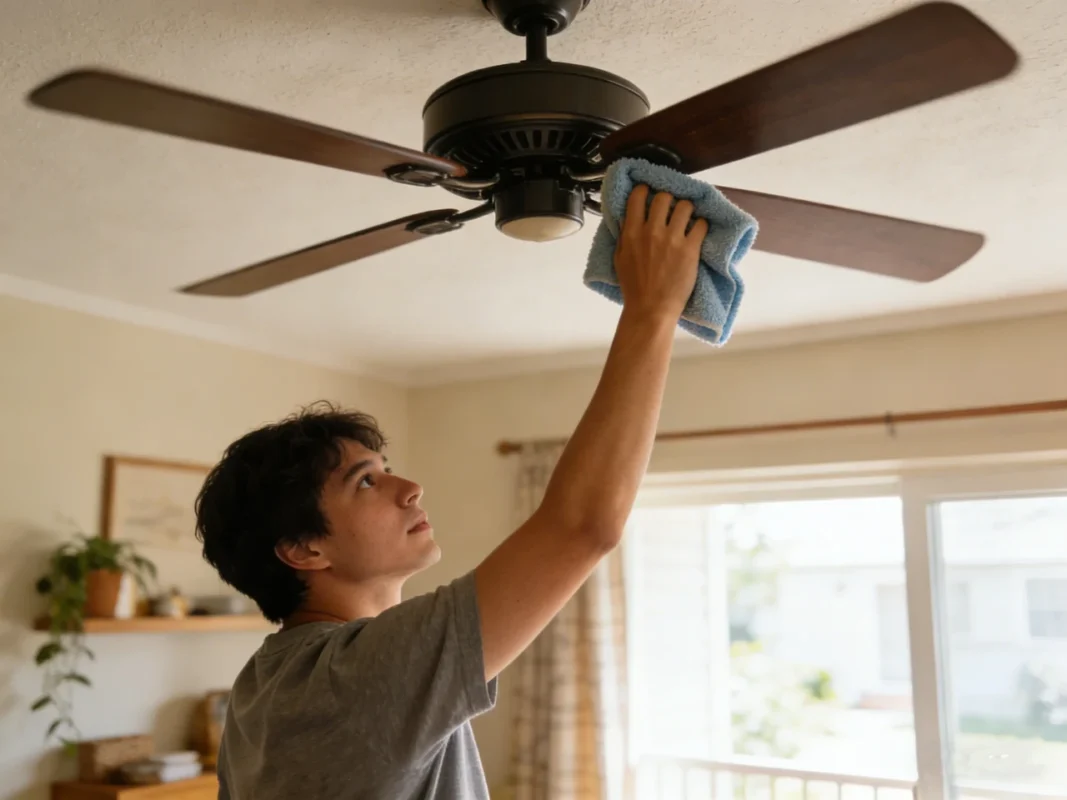
- Regular Dusting: Use a microfiber cloth or a vacuum with a brush attachment to clean the blades. For ceiling fans for low ceilings with light, make sure to gently dust the light covers as well to maintain brightness.
- Monthly Checks: In kitchens or rooms with high dust accumulation, consider cleaning the fan blades every few weeks to prevent grime from affecting performance.
- Avoid Harsh Chemicals: Mild soap and water are usually sufficient for sticky residue. Avoid harsh cleaners that could damage the fan finish or the fan lights.
Proper cleaning not only improves efficiency but also keeps the fan looking visually appealing in small spaces where a bulky or dirty fan can overwhelm the room.
Blade Inspection and Balancing
A ceiling fan on low ceiling that wobbles or vibrates can be noisy and unsafe. Routine inspection helps prevent problems before they worsen:
- Check Blade Alignment: Blades should be level and evenly spaced. Uneven blades can cause wobbling and reduce airflow.
- Tighten Screws and Brackets: Over time, screws on the mounting bracket or blade arms can loosen. Make sure everything is securely fastened.
- Use a Blade Balancing Kit if Needed: If the fan still wobbles after tightening, a balancing kit can help restore smooth operation. This is particularly important for ceiling fans for low ceilings, where wobbling is more noticeable in compact rooms.
Fan Lights Maintenance
For ceiling fans for low ceilings with light, the lighting component requires its own maintenance routine:
- Check Bulb Type and Wattage: Ensure that bulbs in fan lights are compatible with the fixture. LED bulbs are often preferred for energy efficiency and longevity.
- Clean Light Covers: Dust and dirt can accumulate on diffusers, reducing light output. Carefully wipe covers with a soft cloth or mild cleaning solution.
- Inspect Wiring: Occasionally, check that wiring connections are secure, especially if the fan has dimmable or remote-controlled lights. Loose connections can lead to flickering or safety hazards.
Lubrication and Motor Care
Most modern ceiling fans for low ceilings have sealed motors that do not require lubrication, but older fans or certain models may benefit from periodic maintenance:
- Listen for Unusual Noises: Squeaks, hums, or grinding sounds may indicate the motor or bearings need attention.
- Apply Lubricant if Recommended: Only use lubricants specified by the fan’s manufacturer for ceiling fans. This keeps the motor running smoothly and prolongs its lifespan.
Maintaining the motor ensures that your ceiling fan on low ceiling continues to circulate air effectively, even in smaller or low-ceiling rooms.
Seasonal Adjustments
Ceiling fans can be optimized seasonally for both comfort and energy efficiency:
- Summer Mode: Set the fan to rotate counterclockwise to create a downward breeze that cools the room.
- Winter Mode: Reverse the blades to clockwise rotation at a low speed to push warm air down from the ceiling, improving heating efficiency.
- Fan Lights Usage: Adjust fan lights based on natural daylight and room use to reduce unnecessary energy consumption.
These seasonal adjustments help you get the most out of your ceiling fans for low ceilings while saving on heating and cooling costs.
Final Thoughts
Choosing and installing a ceiling fan on low ceiling doesn’t have to be complicated. With the right information and thoughtful planning, you can bring enhanced airflow, stylish lighting, and energy efficiency into even the most compact rooms. Whether you’re looking for ceiling fans for low ceilings with light or just need a reliable ceiling fan for low ceiling, there’s a solution that fits your space and budget.
Take the time to evaluate your room’s size, choose a fan with the right profile, and follow safety and installation best practices. Before long, you’ll enjoy the comfort and efficiency that a well‑selected fan brings — all without compromising headroom or style.
FAQs
Can you put a ceiling fan on a low ceiling?
Yes, you can install a ceiling fan on low ceiling. The key is selecting the right type of fan, such as flush mount or hugger models. These fans attach directly to the ceiling without a long downrod, maintaining sufficient headroom while still providing effective airflow.
Are my ceilings too low for a fan?
Your ceilings are not necessarily too low. For ceiling fans for low ceilings, the important guideline is that the bottom of the fan blades should be at least 7 feet above the floor. If your ceilings are under eight feet, choose a low-profile ceiling fan for low ceiling to ensure safety and optimal performance.
What is the lowest ceiling height for a ceiling fan?
The recommended minimum ceiling height for a ceiling fan on low ceiling is about 7 feet from floor to the bottom of the blades. Anything lower could compromise safety. Low-profile fans are specifically designed to meet this requirement while still circulating air efficiently.
How to make ceiling fan lights less harsh?
If the fan lights on your ceiling fan for low ceiling feel too bright or harsh, there are several options:
• Use warmer or lower-lumen bulbs.
• Add a diffuser or light cover to soften glare.
• Consider a dimmable LED option, which allows adjustable brightness depending on room use.
Will a low-profile ceiling fan move as much air as a downrod fan?
Yes. Modern ceiling fans for low ceilings are engineered to provide effective airflow even without a long downrod. Blade design and motor efficiency ensure that your fan keeps the room comfortable while staying close to the ceiling.
Can you install a ceiling fan with light on a low ceiling?
Absolutely. Many ceiling fans for low ceilings with light are designed specifically for low spaces. Integrated fan lights provide illumination without reducing headroom, making them ideal for bedrooms, offices, or living areas with low ceilings.
Do low ceilings make ceiling fans less effective?
Not necessarily. While airflow dynamics differ slightly in low-ceiling rooms, choosing a properly sized ceiling fan for low ceiling ensures efficient circulation. Flush mount fans with well-designed blades can move air just as effectively as higher-mounted fans.
How far should a low-ceiling fan be from walls or furniture?
For optimal performance and safety, blades should be at least 18 inches away from walls, cabinets, or furniture. This spacing prevents turbulence, reduces noise, and ensures the fan operates quietly and efficiently.
Are flush mount fans better for low ceilings?
Yes. Flush mount or hugger designs are ideal for ceiling fans on low ceiling. They keep the fan close to the ceiling while providing sufficient airflow and clearance, making them safer and more visually appealing in small or compact rooms.
Do ceiling fans with lights save electricity?
Yes, especially when using energy-efficient LED fan lights. A ceiling fan on low ceiling allows you to raise the thermostat slightly in summer while maintaining comfort, reducing air-conditioning energy use. Combined with efficient lighting, you save on both cooling and electricity costs.
Is professional installation recommended for low-ceiling fans?
For safety and code compliance, professional installation is highly recommended. A licensed electrician ensures your ceiling fan on low ceiling is securely mounted, balanced, and wired correctly, especially if the fan includes integrated fan lights.
How do you maintain a ceiling fan on low ceiling?
Regular maintenance is key. Dust the blades and fan lights, check that screws and brackets are tight, and ensure the motor runs smoothly. Seasonal adjustments, such as reversing blade direction, can improve comfort and efficiency year-round.