

Table of Contents
Adding a ceiling fan is one of those smart home upgrades that feels luxurious, improves comfort, enhances airflow, and can even help you save money on energy bills. But before you pull the trigger on ceiling fans installation, the big question most homeowners ask is: “What’s the ceiling fan installation cost going to be?”
In this comprehensive guide, we’ll break down real costs, offer clear explanations of what drives price differences, and answer all the questions you’ve been searching for — like how much to install a ceiling fan, average cost to install ceiling fan, cost to replace ceiling fan, and whether ceiling fans installation can add value to your home.
What Is Ceiling Fan Installation?
Installing a ceiling fan may sound straightforward, but it involves more than just hanging a fixture from the ceiling. Ceiling fan installation refers to the process of securely mounting a fan to a ceiling and connecting it safely to the home’s electrical system so that it operates efficiently. Proper installation ensures that the fan is balanced, stable, and able to circulate air effectively — making it a valuable addition to any room.
A professionally installed ceiling fan improves air movement, enhances comfort, and can even help lower energy costs by reducing the need for air conditioning during warmer months. Whether you are adding a fan to a new space or replacing an older model, understanding the installation process and its cost implications is essential for planning your project.
Ceiling Fans Installation — Making Your Home More Comfortable
The main purpose of ceiling fans installation is to enhance the comfort of your living space. Ceiling fans create a gentle airflow that keeps rooms cooler in the summer and helps circulate warm air during the winter when reversed. This can improve indoor air quality and even reduce the strain on your HVAC system.
From a practical standpoint, a well-installed ceiling fan can transform the experience of a room. Living rooms, bedrooms, and even home offices benefit from a consistent breeze that keeps the air fresh and evenly distributed. Proper installation ensures the fan operates quietly and efficiently, preventing wobbling or uneven airflow.
Additionally, ceiling fans installation is often a cost-effective upgrade compared with larger remodeling projects. Even a single ceiling fan can provide noticeable comfort improvements, making it a small investment with a potentially large impact on daily living.
Do Ceiling Fans with Lights Add Complexity?
Adding fan lights to a ceiling fan introduces additional complexity to the installation. Unlike basic fans, models with integrated lights require extra wiring and sometimes separate wall controls for the fan and the light. This means that the installation may take longer, require additional electrical materials, and often demands more precise work to comply with safety standards.
The complexity increases further when installing fans in rooms with high or vaulted ceilings. Longer downrods or specialized mounting brackets may be necessary to secure both the fan and the lights properly. While ceiling fans with lights offer enhanced functionality and style, homeowners should anticipate slightly higher labor costs and installation time compared with a standard fan.
By understanding these factors before beginning the project, you can plan your budget and ensure a smooth, safe, and efficient installation that maximizes both comfort and usability in your home.
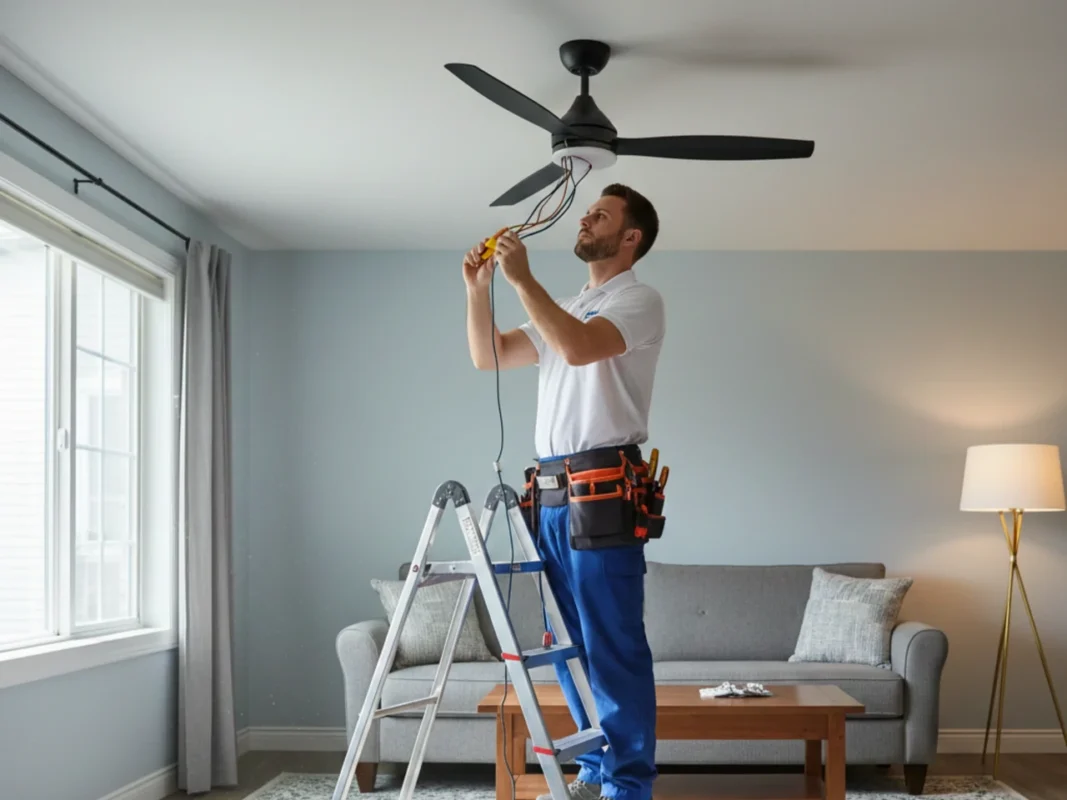
Average Cost to Install a Ceiling Fan — What Should You Expect to Pay?
One of the most common searches homeowners make is how much to install a ceiling fan, and the best data comes from both industry sources and real installer experiences.
According to national averages, the average cost to install a ceiling fan typically falls into these ranges:
- Simple installation with existing wiring: $100 – $300+
- New wiring or support box required: $250 – $500+
- Vaulted or tricky ceiling installation: $300 – $600+
- High‑end or smart fan installations: $400 – $800+
- Outdoor or moisture‑rated fan installations: Can go even higher, depending on weatherproofing needs.
These figures include both labor and basic materials — and they reflect what many homeowners pay when hiring a licensed professional electrician.
In contrast, many DIY installations (when possible) can trim just about the labor cost — but doing electrical work on your own isn’t always safe or advisable. We’ll cover that next.
What Factors Affect the Ceiling Fan Installation Cost?
Understanding the variables that influence ceiling fan installation cost is essential for homeowners planning a project. While the price may seem straightforward at first glance, several key factors determine how much you will ultimately pay. Knowing these can help you budget realistically and avoid unexpected expenses.
- Existing Electrical Setup
One of the most significant contributors to the total cost is the room’s existing electrical infrastructure. If your ceiling already has a fan-rated junction box installed, the installation is relatively simple, requiring only a secure mounting and connection to the existing wires. In this case, the average cost to install ceiling fan tends to be lower.
However, many older homes have boxes designed for standard light fixtures rather than ceiling fans. Upgrading the electrical box to support a fan — or adding new wiring — increases both labor and material costs. In some situations, the installer may need to run additional circuits or install a dedicated breaker, further raising the price.
- Ceiling Height and Accessibility
The height and accessibility of the ceiling also play a major role in installation cost. Standard 8- to 10-foot ceilings are typically easy to work with, resulting in a quicker and more affordable installation.
By contrast, vaulted ceilings, high ceilings, or hard-to-reach locations require longer downrods, special mounting brackets, and often additional safety equipment for the installer. These factors increase the labor required, which directly impacts the ceiling fan installation cost. Even simple tasks, like stabilizing the fan while wiring, can take longer in these challenging settings.
- Fan Type and Features
The type of fan you choose significantly affects the cost. Basic ceiling fans are usually less expensive and easier to install. Adding features such as fan lights, remotes, dimmers, or smart-home integration introduces additional wiring and setup time. Larger fans or those with heavier blades may also require reinforced mounting hardware, increasing both materials and labor expenses.
Homeowners should consider the balance between functionality and cost when selecting a fan. While features like fan lights enhance usability and aesthetics, they inevitably raise the ceiling fan installation cost.
- Additional Wiring or Switches
If you want separate wall switches for the fan and lights, or if the fan is being installed in a room with no pre-existing electrical outlet, additional wiring may be necessary. This extra work increases both labor and materials. Even a single new switch or extended wiring can add $50–$150 to the project, depending on the complexity.
Planning for these extras in advance helps avoid last-minute surprises and ensures your budget accounts for the full scope of the project.
- Labor Rates in Your Area
Finally, local labor rates can influence the ceiling fan installation cost more than most homeowners anticipate. Electricians and licensed installers set their fees based on regional wage standards, licensing requirements, and demand for services. Urban areas or regions with a high cost of living typically have higher hourly rates, while rural areas may offer more affordable labor.
Comparing multiple quotes from qualified electricians ensures you get a fair price and helps avoid overpaying for basic installations.
DIY vs. Professional Ceiling Fan Installation — What’s Best?
When it comes to ceiling fan installation, homeowners often face a choice: tackle the project themselves or hire a professional electrician. Each approach has its advantages and challenges, and understanding the differences can help you make the right decision for both your budget and safety.
DIY Installation — When It Makes Sense
Installing a ceiling fan yourself can save money, especially if your room already has the necessary wiring and a fan-rated electrical box. For a standard installation — where you are replacing an existing light fixture or fan — the process can often be completed in one to two hours.
Pros of DIY installation:
- Cost Savings: Labor is typically the largest portion of ceiling fan installation cost. Doing it yourself can save $100–$300 or more, depending on your location and the complexity of the fan.
- Flexible Scheduling: You can work on your own timetable, avoiding the need to coordinate with a professional.
- Learning Experience: Installing a ceiling fan yourself can improve your understanding of home electrical systems.
Cons of DIY installation:
- Safety Risks: Working with electrical wiring carries inherent risks. Incorrect installation can lead to electrical shorts, fire hazards, or unstable mounting.
- Complex Fans: Fans with fan lights, remote controls, or smart-home features require additional wiring knowledge, which may be challenging for a novice.
- Time Commitment: Even seemingly simple installations can take longer if complications arise, such as hard-to-reach ceilings or unbalanced fan blades.
DIY installation is usually best for those with some electrical experience, the right tools, and confidence in following instructions carefully.
Professional Installation — Why It’s Often Worth It
Hiring a licensed electrician ensures that your ceiling fans installation is completed safely, efficiently, and in compliance with local building codes. Professionals are trained to handle any complications that may arise, such as outdated wiring, high ceilings, or multiple features like fan lights and separate switches.
Advantages of professional installation:
- Safety and Compliance: Electricians ensure the fan is securely mounted and the wiring meets electrical codes, reducing risks of fire or malfunction.
- Efficiency: A professional can typically complete a basic installation in one to two hours, and more complex setups in two to four hours, saving you time and frustration.
- Reliable Performance: Proper mounting and balance prevent wobbling, reduce noise, and extend the life of your fan.
- Peace of Mind: Knowing the installation meets all safety standards can give homeowners confidence, especially for high ceilings or rooms that are difficult to access.
Even though hiring a professional may increase the ceiling fan installation cost compared to DIY, the investment often pays off in terms of safety, long-term reliability, and convenience.
When to Choose DIY vs. Professional
Consider the following factors when deciding:
- Existing Wiring: If the fan location already has a fan-rated box and simple wiring, DIY may be reasonable.
- Fan Complexity: Fans with fan lights, remote control, or integrated smart features are best handled by a professional.
- Ceiling Type: Vaulted, angled, or very high ceilings increase installation difficulty and are generally safer with professional help.
- Your Skill Level: Only attempt DIY installation if you are comfortable with electrical work and have the appropriate tools.
Ultimately, the decision balances cost, safety, and convenience. For simple installations in standard rooms, DIY can be an effective option. For more complex situations, professional installation ensures the job is done correctly the first time, avoiding costly mistakes later.
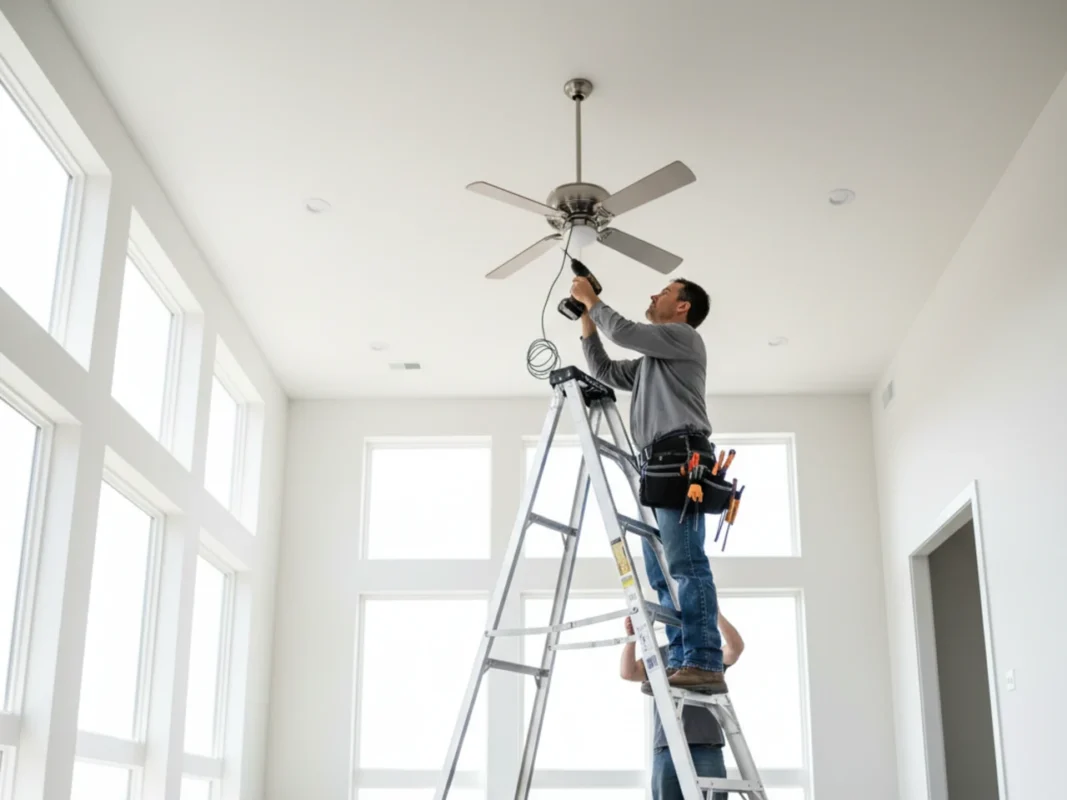
Ceiling Fan Cost Components — Breaking Down the Price
Understanding the ceiling fan installation cost requires breaking down what you are actually paying for. While many homeowners think the price is just about the fan itself, the total cost typically includes multiple components: the fan unit, labor, materials, and any additional features. Knowing these factors helps you budget accurately and avoid surprises.
- The Fan Unit
The cost of the fan itself varies widely depending on size, style, and features. Basic ceiling fans without lights or advanced functions tend to be the most affordable, while models with fan lights, remote controls, or smart features carry higher price tags.
Even though the fan is a one-time purchase, it directly influences the overall ceiling fan installation cost. Larger or heavier fans may also require reinforced mounting hardware, which can add to both labor and material costs.
- Labor & Electrician Fees
Labor is often the largest portion of the total cost. Electricians charge based on the complexity of the installation, which includes factors such as ceiling height, fan size, and whether new wiring is required.
For a basic installation with existing wiring, labor can range from $100 to $250. For more complex installations — such as installing fans with fan lights, in vaulted ceilings, or in rooms requiring new circuits — labor can easily reach $300 to $500 or more.
Hiring a licensed professional ensures that the fan is mounted securely, the wiring is code-compliant, and the fan operates safely and efficiently. Even though this may increase the ceiling fan installation cost, it often saves money and frustration in the long run by preventing installation errors.
- Materials and Accessories
Besides the fan and labor, additional materials can affect the total cost. These may include:
- Fan-rated electrical boxes for safe mounting
- Downrods for high or vaulted ceilings
- Switches or dimmers for controlling the fan and lights
- Wiring and connectors for safe electrical connections
Even small items like mounting brackets or screws can add up, particularly when installing multiple fans or fans with integrated fan lights. Planning for these materials in advance can help you estimate the average cost to install ceiling fan more accurately.
- Additional Features
Extra features, such as fan lights, remote control operation, or smart home integration, typically increase both material and labor costs. Fan lights often require separate wiring for the light and the fan, which can take additional time for proper installation.
Other features, like multi-speed remote controls or reversible motor functions, may require additional expertise to set up correctly. While these features enhance convenience and functionality, they also contribute to a higher ceiling fan installation cost.

Do Ceiling Fans Increase Home Value?
For many homeowners, upgrading a space with a ceiling fan isn’t just about comfort — it’s also about improving the overall appeal and value of the home. But the question remains: do ceiling fans increase home value?
The short answer is yes, though the impact is often indirect. Ceiling fans provide tangible benefits that homebuyers notice, which can make a property more attractive compared to similar homes without fans.
Enhancing Comfort and Energy Efficiency
A well-installed ceiling fan improves air circulation, keeping rooms cooler in the summer and helping distribute warm air in the winter. This can reduce reliance on air conditioning and heating systems, which homeowners recognize as a practical, energy-saving feature.
Energy efficiency is a major consideration for buyers today. A home with multiple, strategically placed ceiling fans demonstrates thoughtful planning and a commitment to reducing energy costs — both of which contribute positively to perceived home value.
Low-Cost Upgrade with High Appeal
Compared to major remodeling projects, ceiling fans installation is a relatively low-cost improvement. Despite the modest investment, fans have a high perceived value because they enhance both comfort and functionality in everyday living spaces.
This makes ceiling fans a smart upgrade for sellers who want to make their home more marketable. Buyers often view fans as a bonus feature that doesn’t require immediate additional work, unlike other renovations such as kitchen or bathroom updates.
Aesthetic and Functional Impact
Beyond comfort and energy savings, ceiling fans contribute to a room’s visual appeal. Modern fans come in a variety of designs, sizes, and finishes, allowing homeowners to match them with existing décor. Fans with fan lights add even more functionality, providing both airflow and illumination in one fixture.
Well-designed fans, installed correctly, give a finished look to a room and signal attention to detail — a subtle but powerful factor in influencing buyer perception.
Practical Considerations for Home Value
While ceiling fans alone won’t dramatically increase a home’s resale price, they contribute to a positive impression and can complement other upgrades. Homes with multiple functional improvements, including ceiling fans, tend to be more attractive to buyers who are evaluating comfort, practicality, and energy efficiency.
In short, ceiling fans installation is a cost-effective enhancement that makes your home feel more comfortable, efficient, and thoughtfully maintained — all factors that support home value in a competitive market.
DIY Safety Tips (If You Choose to Go That Route)
Before attempting ceiling fans installation yourself:
- Always turn off power at the breaker before working with wires.
- Use a fan‑rated electrical box, not a regular light fixture box.
- Ensure the fan blades are balanced and securely attached.
- Follow the manufacturer’s instructions carefully.
If any electrical aspect feels uncertain, it’s almost always safer (and often more cost‑effective long‑term) to call a professional.
Conclusion: A Smart Investment for Comfort and Savings
Understanding ceiling fan installation cost ahead of time helps you budget wisely and choose the best installation strategy for your home. Whether you’re replacing an old unit, adding fan lights, or installing a fan in every room, knowing the options and cost factors lets you make informed decisions.
Ceiling fans remain one of the most cost‑effective upgrades you can make — bringing comfort, improved airflow, reduced energy use, and even potential appeal for future buyers.
If you ever feel unsure about DIYing your installation, remember that a professional electrician not only reduces risk but ensures your fan works safely and efficiently for years to come — which makes all the difference in your home’s comfort and value.
FAQs
How much do electricians charge to install a ceiling fan?
Electrician fees vary based on experience, location, and job complexity. On average, professional installation ranges from $100 to $500 per fan. Simple installations with existing wiring are at the lower end, while vaulted ceilings, fans with lights, or new wiring needs increase labor costs. Proper installation ensures safety, stability, and compliance with electrical codes, which is crucial for long-term performance.
How much should it cost to install a new ceiling fan?
The total ceiling fan installation cost depends on the fan model, labor, and materials. Homeowners can expect $150 to $800 or more, depending on whether new wiring is required, the fan includes fan lights, or additional switches are installed. Planning ahead for these factors helps avoid unexpected expenses.
Do ceiling fans increase home value?
Yes, ceiling fans can enhance a home’s value indirectly. They improve comfort, enhance airflow, and support energy efficiency, which are features buyers notice. While the monetary return may be modest, ceiling fans are a low-cost upgrade that contributes positively to a home’s overall appeal and marketability.
How long should it take an electrician to install a ceiling fan?
A professional can usually complete a standard installation in 1–2 hours. More complex installations — such as vaulted ceilings, multiple fans, or fan lights with separate controls — can take 2–4 hours or more. Proper planning ensures the installation is efficient and meets safety standards.
What is the average cost to install ceiling fan with fan lights?
Adding fan lights increases both labor and materials. The wiring is more complex because lights and fan motors may require separate circuits or switches. Typically, fans with lights cost $50–$150 more than a standard fan installation.
What does it cost to replace ceiling fan versus installing a new one?
Replacing an existing fan is usually cheaper because the mounting and wiring are already in place. A replacement typically costs $100–$300, whereas installing a fan in a new location with no existing wiring can range $250–$600+, depending on ceiling height and complexity.
Does installing a fan require a permit?
In most regions, replacing an existing ceiling fan does not require a permit. However, if new circuits or electrical modifications are needed, local codes may require an inspection or permit. Always check your local regulations before starting the project.
What factors influence ceiling fan installation cost the most?
The largest cost drivers are:
• Electrical work (new wiring, junction boxes)
• Ceiling height and accessibility
• Fan size and additional features (fan lights, remotes)
• Labor rates in your area
Understanding these factors helps you plan your budget accurately.
Is it safe to install a ceiling fan yourself?
DIY installation is possible for experienced homeowners with basic electrical knowledge. However, incorrect wiring or improper mounting can cause fire hazards, fan wobble, or noise. For fans with fan lights or complex features, hiring a professional is recommended to ensure safety and code compliance.
Can I install a ceiling fan in a vaulted ceiling?
Yes, but it requires longer downrods, reinforced mounting brackets, and careful alignment. Vaulted ceiling installations are more labor-intensive, which increases the ceiling fan installation cost. Professional installation is usually the safest and most efficient option for these situations.