

Table of Contents
Lighting can make or break the functionality of a workspace, whether it’s a home garage, professional workshop, or commercial facility. That’s where 8 ft LED shop lights come in—long, energy-efficient fixtures designed to flood your area with bright, even illumination while keeping electricity costs low. Unlike older fluorescent systems, these fixtures offer longer lifespans, reduced maintenance, and improved light quality, making them an increasingly popular choice for anyone looking to upgrade their workspace lighting. In this guide, we’ll explore everything from eight foot LED lights and led 8 shop lights to circuit planning, brightness considerations, and conversion options, ensuring you have all the information needed to make a smart, informed lighting decision.
Introduction to 8 ft LED Shop Lights
When it comes to creating a well-lit, functional workspace, the right lighting can make all the difference. 8 ft LED shop lights have emerged as one of the most effective solutions for garages, workshops, warehouses, and other large areas. These long fixtures are designed to provide bright, even illumination across wide spaces while consuming far less energy than traditional lighting systems. With advancements in LED technology, today’s eight foot LED lights offer longer lifespans, lower maintenance needs, and more consistent performance, making them an ideal choice for both home and commercial settings. Whether you’re upgrading an old setup or planning a new installation, understanding the benefits and characteristics of 8 ft LED shop lights is key to optimizing your workspace lighting.
What Are 8 ft LED Shop Lights?
8 ft LED shop lights are linear lighting fixtures or tube replacements designed to span eight feet, delivering high levels of illumination while remaining energy-efficient. They can come as complete fixtures, often referred to as 8 foot LED shop light fixtures, or as retrofittable tubes, sometimes called 8 ft LED bulbs, which can replace traditional fluorescent tubes. These lights are engineered to provide bright, even light coverage across large areas, reducing shadows and enhancing visibility for tasks such as woodworking, mechanical work, or detailed crafts. Unlike older fluorescent systems, led 8 shop lights do not rely on ballasts, which reduces flicker, maintenance, and energy waste. Choosing the right length, lumen output, and color temperature ensures that your workspace receives efficient, high-quality light tailored to your needs.
Why Choose LED Over Fluorescent Lights?
Switching from fluorescent to 8 ft LED shop lights offers significant advantages. LED technology consumes far less power while providing equal or higher brightness, which translates to noticeable energy savings and reduced electricity bills. For example, an 8 ft LED bulb may draw less than half the wattage of a comparable fluorescent tube while producing the same light output, meaning your light bulb circuit can safely handle more fixtures without overloading. LEDs also have longer lifespans—often tens of thousands of hours—so you’ll replace bulbs far less frequently, reducing maintenance efforts and costs. Additionally, LEDs produce less heat, operate instantly without flicker, and come in a variety of color temperatures, such as 5000K or 6000K, which improves visual clarity and comfort. Overall, choosing eight foot LED lights over fluorescent alternatives enhances efficiency, safety, and performance in any workspace.
Types of 8 ft LED Shop Lights
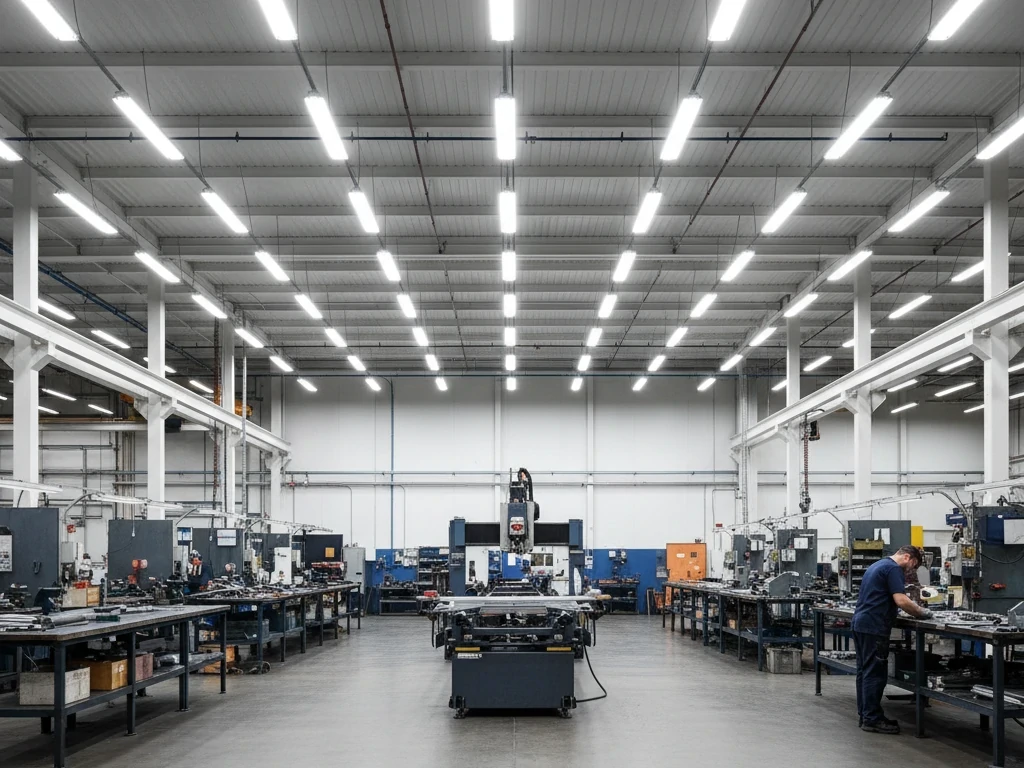
When selecting 8 ft LED shop lights, understanding the different types available is crucial to making the right choice for your workspace. These lights can be divided mainly into complete LED fixtures and retrofit LED tubes. Each type has unique advantages depending on your existing setup, budget, and lighting needs. By evaluating factors such as installation complexity, energy efficiency, and longevity, you can determine which option will provide the best illumination and value. Whether you’re looking to upgrade a commercial workshop or a home garage, choosing the right eight foot LED lights ensures optimal brightness and performance.
Integrated LED Fixtures vs. LED Tube Retrofits
There are two primary options when it comes to 8 ft LED shop lights: fully integrated LED fixtures and LED tube retrofits.
- Integrated LED Fixtures: These are new, purpose-built fixtures designed for LED technology. They offer optimized heat management, consistent light distribution, and often enhanced features like linkable mounting, motion sensors, or dimming capability. Installing a complete fixture ensures long-term reliability and maximum performance. They are commonly referred to as 8 foot LED shop light fixtures.
- LED Tube Retrofits: This option allows you to replace fluorescent tubes in your existing fixture with 8 ft LED bulbs. Some retrofits are direct replacements, while others may require bypassing the ballast. Led 8 shop lights in retrofit form are a cost-effective way to upgrade lighting without replacing the entire fixture. However, the fixture’s age and condition, ballast compatibility, and wiring must be considered before installation.
Both types deliver the bright, energy-efficient light associated with modern LED technology, but your choice depends on whether you prioritize ease of installation, fixture longevity, or initial cost.
Common Color Temperatures: 5000 K vs. 6000 K
Color temperature is a key factor in selecting 8 ft LED shop lights or eight foot LED lights, affecting how your workspace feels and functions.
- 5000 K (Cool White/Daylight): Produces a bright, neutral white light that closely resembles natural daylight. This temperature is comfortable for general-purpose workspaces, offering good visual clarity without being overly harsh. It is ideal for garages, workshops, and areas where you want a balance of brightness and comfort.
- 6000 K (Cooler White): Emits a sharper, slightly bluish-white light that enhances contrast and makes details more visible. This can be beneficial in environments requiring precision, such as mechanical work, inspection, or detailed crafting. However, the cooler hue may feel less warm or natural for casual areas.
Choosing between 5000 K and 6000 K depends on the type of work you perform and your preference for light quality. Correct selection ensures your 8 ft LED bulbs provide not only adequate brightness but also visual comfort for extended periods.
Converting Fluorescent Lights to LED
Many workshops, garages, and commercial spaces still rely on fluorescent lighting, which can be inefficient, prone to flicker, and costly to maintain. Upgrading to 8 ft LED shop lights not only improves illumination but also reduces energy consumption and long-term maintenance. Understanding the options for conversion versus full replacement is essential to make an informed choice. By considering factors such as fixture compatibility, circuit load, and installation requirements, you can maximize the benefits of eight foot LED lights while ensuring a safe and effective setup.
Can You Convert 8 ft Fluorescent to LED?
Yes, it is possible to convert 8 ft fluorescent fixtures to 8 ft LED shop lights, and it has become a common upgrade in both residential and commercial spaces. There are two main approaches:
- Retrofit with LED Tubes: You replace the fluorescent tubes with 8 ft LED bulbs, either by using direct replacements compatible with the existing ballast or by bypassing the ballast entirely. This allows you to keep your current fixture housing while gaining the efficiency and longevity of LED technology.
- Full Fixture Replacement: Alternatively, you can remove the old fluorescent fixture entirely and install a new 8 foot LED shop light fixture. This ensures optimal performance since the fixture is designed specifically for LED, with improved heat dissipation, light distribution, and sometimes additional features like linkable mounting or dimming.
When converting, it’s critical to check your light bulb circuit to ensure it can safely handle the new LED load, even though LEDs generally draw fewer amps than fluorescent tubes. Proper planning and safe installation help avoid electrical issues and maximize the performance of your new led 8 shop lights.
Pros and Cons of Conversion vs. Full Replacement
When deciding between converting existing fluorescent fixtures and installing new 8 ft LED shop lights, consider the following advantages and disadvantages:
Conversion (Retrofit) Pros:
- Lower initial cost since existing fixtures are reused.
- Less installation time compared to removing old fixtures.
- Reduces waste by keeping the existing fixture housing.
Conversion (Retrofit) Cons:
- Old fixtures may be in poor condition or incompatible with some LED tubes.
- Ballast removal or bypass may require electrical knowledge or professional help.
- Performance may not match that of purpose-built LED fixtures in terms of brightness uniformity or thermal management.
Full Replacement Pros:
- Optimized for LED performance with better heat dissipation and light output.
- Longer-lasting solution with fewer maintenance concerns.
- Often includes modern features such as dimming, linkable mounting, and better overall design.
Full Replacement Cons:
- Higher upfront cost per fixture.
- More labor-intensive installation, especially if removing multiple old fixtures.
Ultimately, the choice between conversion and full replacement depends on your budget, the condition of your current fixtures, and your long-term lighting goals. For anyone looking for maximum efficiency and performance, installing new eight foot LED lights is often the more reliable and future-proof option.
Electrical Considerations for 8 ft LED Shop Lights
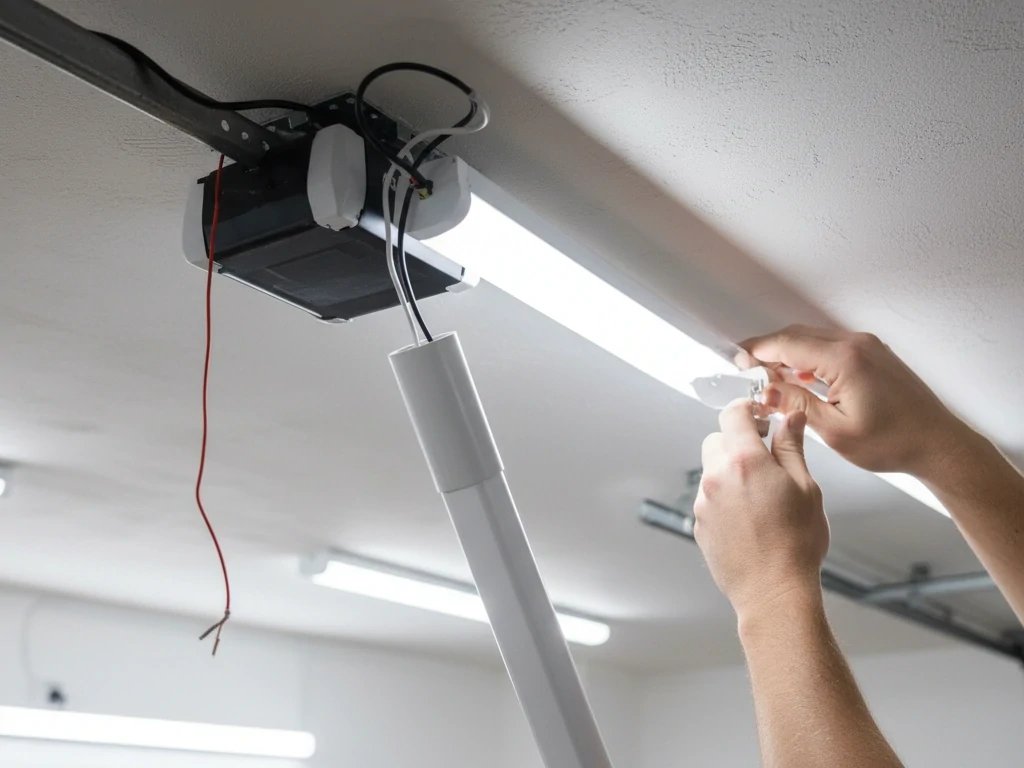
Proper electrical planning is critical when installing 8 ft LED shop lights, especially if you are adding multiple fixtures or upgrading an existing fluorescent setup. While LEDs are more energy-efficient and draw less power than traditional lighting, understanding the current requirements, wiring, and circuit limitations ensures safe operation and optimal performance. Knowing how to calculate load and plan your light bulb circuit will help you avoid overloading breakers and ensure your eight foot LED lights operate reliably for years.
Understanding LED Current Draw
One common question when planning LED lighting upgrades is: how many amps does an LED light draw? For 8 ft LED shop lights, the current draw depends on the fixture’s wattage and the voltage of your circuit.
- Example Calculation: If a single 8 ft LED bulb is rated at 100 watts and connected to a 120‑volt circuit, the current draw is approximately 0.83 amps (Amps = Watts ÷ Volts). A lower-wattage fixture of 80 watts would draw around 0.67 amps.
- Because LED fixtures are more efficient than fluorescent tubes, you can safely place more led 8 shop lights on a single circuit without exceeding the breaker limit.
- Understanding the current draw is essential not only for safety but also for energy planning and optimizing your workspace lighting layout.
Knowing the amps per fixture helps in designing the overall system, particularly when combining multiple 8 ft LED shop lights on a single light bulb circuit.
Wiring and Circuit Requirements
Planning wiring and circuits correctly is key for safe and efficient operation of eight foot LED lights. Here are the main considerations:
- Circuit Voltage: Determine whether your workspace uses standard 120 V circuits or higher-voltage lines. Residential garages typically use 120 V, while commercial facilities may use 240 V or 277 V.
- Fixture Wattage and Total Load: Add up the wattage of all 8 ft LED shop lights you plan to install. Divide the total by the circuit voltage to estimate total amps. Always leave a safety margin—ideally, circuits should not operate at more than 80% of their rated capacity.
- Circuit Breaker and Wire Gauge: Match your wiring and breaker size to the total load. For instance, a 20‑amp breaker on a 120 V circuit can safely support multiple 100 W 8 ft LED bulbs, but proper planning ensures no overload occurs.
- Future Expansion: Consider any additional lighting or electrical devices you may add later. Proper planning now avoids costly rewiring later.
- Dimming and Sensors: If you plan to include dimming or motion sensors, ensure the selected 8 foot LED shop light fixtures are compatible with those controls.
By calculating the amps per fixture, verifying your light bulb circuit, and following proper wiring practices, you can safely install multiple 8 ft LED shop lights while achieving consistent, bright illumination across your workspace. Proper electrical design not only ensures safety but also maximizes the efficiency and lifespan of your LED lighting system.
Brightness and Lumens for Optimal Shop Lighting
What Is the Ideal Lumen Output?
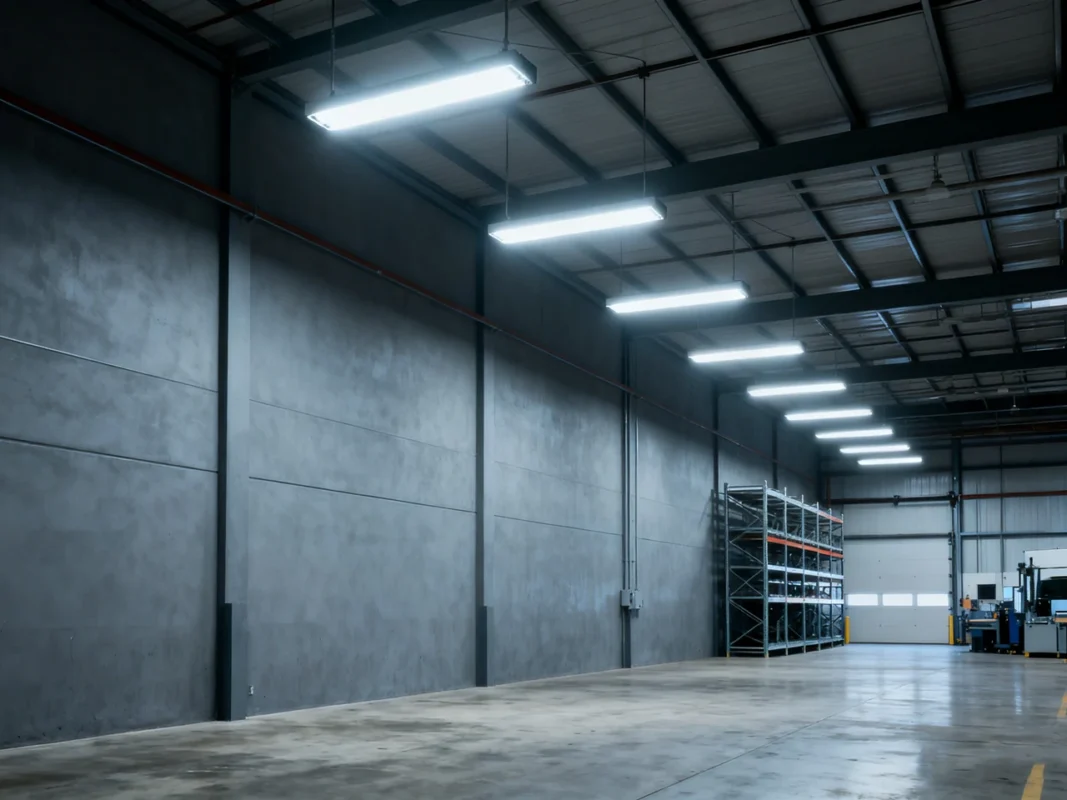
When installing 8 ft LED shop lights, one big question is: how many lumens are good for a shop light? How bright should your workspace be? General guidelines suggest for workshop or garage lighting you might aim for around 50‑100 lumens per square foot depending on task intensity. If you have a 12×20 ft garage (240 sq ft), you might aim for 12,000‑24,000 lumens total. Splitting that across several 8‑foot fixtures, each fixture might output 8,000‑12,000 lumens or more. Some product specs show 8 ft LED fixtures delivering 11,000+ lumens. (While I’m not naming specific brands, fixture numbers can reach this range). And to answer a common question: Is 10,000 lumens too bright for a garage? Not necessarily—if your garage is large, and you are doing detail work or have high ceilings, 10,000 lumens from a single fixture might be appropriate. For more casual usage, you might opt for less. Ensuring the right lumen output per fixture, fixture spacing, beam angle, and mounting height all contribute to good uniform lighting.
Factors Affecting Brightness Perception
Brightness isn’t just lumens—how you perceive light depends on several factors:
- Color Temperature – as discussed above, 5000 K vs 6000 K changes how light feels even at the same lumens.
- Beam angle and fixture design – narrow beams focus light, wide beams spread it; mounting height affects effective illumination.
- Room size, surface reflectivity and layout – a clean white ceiling and light‐colored walls bounce more light; in a dark workshop with black walls you’ll need more lumens to get the same effect.
- Fixture placement and spacing – avoid dark zones, overlapping shadows, or hot spots. So when selecting 8 ft LED shop lights, you’re not simply choosing a fixture with “X lumens” but integrating that into your workspace design, accounting for how many, where they mount, what color temperature you choose, and how they integrate with the light bulb circuit.
Advantages and Disadvantages of 8 ft LED Shop Lights
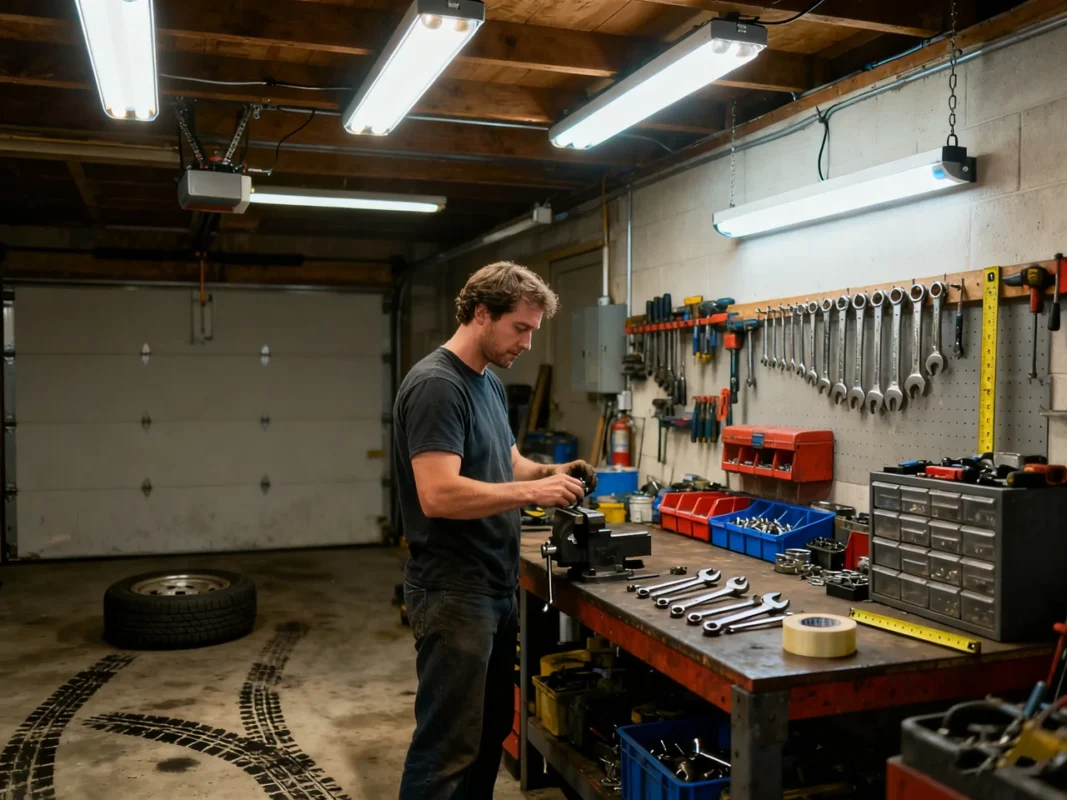
Choosing the right lighting solution requires understanding both the benefits and potential limitations of your options. 8 ft LED shop lights have transformed workspace lighting by providing energy-efficient, long-lasting illumination. However, like any technology, they come with considerations that should be evaluated before installation. Knowing the key advantages and possible drawbacks helps you make an informed decision and ensures your workspace gets optimal lighting performance.
Key Benefits
8 ft LED shop lights offer several compelling advantages for garages, workshops, and commercial spaces:
- Energy Efficiency: LED technology consumes significantly less power than traditional fluorescent or incandescent lighting while producing equal or higher brightness. This reduces electricity costs and allows more fixtures to run safely on the same light bulb circuit.
- Lower Amperage Draw: Because LEDs require fewer watts for the same lumen output, the current draw per fixture is lower, which is particularly important when planning multiple led 8 shop lights on a single circuit.
- Long Lifespan: Many 8 ft LED bulbs last tens of thousands of hours, far exceeding the life of fluorescent tubes, which reduces maintenance frequency and replacement costs.
- Improved Light Quality: LED fixtures offer consistent brightness, better color rendering, and a choice of color temperatures such as 5000 K or 6000 K, allowing you to optimize the visual environment for specific tasks.
- Reduced Heat Output: LEDs generate far less heat than traditional lighting, creating a more comfortable workspace and reducing strain on HVAC systems.
- Environmental Benefits: Lower energy use, longer lifespan, and the absence of hazardous materials like mercury make eight foot LED lights a more environmentally friendly choice.
- Quick Start and No Flicker: LEDs turn on instantly and maintain consistent illumination without flickering, improving both comfort and safety.
Potential Drawbacks
Despite their many advantages, 8 ft LED shop lights have some potential limitations that should be considered:
- Higher Upfront Cost: LED fixtures or tubes are more expensive initially than traditional fluorescent lighting, though the investment is typically offset by energy savings and reduced maintenance.
- Retrofit Compatibility Issues: When replacing existing fluorescent tubes, old fixtures may not be compatible with all LED tubes, requiring ballast bypassing or rewiring.
- Color Temperature Preferences: Some users may find 5000 K or 6000 K too cool or bluish, which can feel stark in certain environments. Choosing the wrong color temperature may affect comfort and perception of the workspace.
- Over-illumination Risk: High-lumen fixtures mounted in low-ceiling spaces can create glare or discomfort, so it’s important to balance brightness with room size.
- Circuit Planning Requirements: While LEDs draw less current, proper planning of the light bulb circuit is still essential to avoid overloading breakers, especially when installing multiple 8 ft LED shop light fixtures.
By understanding these benefits and drawbacks, you can make a well-informed decision about whether 8 ft LED shop lights are the right solution for your workspace, ensuring both efficiency and safety.
Maintenance and Longevity of LED Shop Lights
One of the major advantages of 8 ft LED shop lights is their long lifespan and low maintenance compared to traditional fluorescent fixtures. However, proper care and periodic inspection can help you maximize performance and extend the life of your lighting system. Understanding maintenance requirements ensures your eight foot LED lights continue to provide bright, even illumination while minimizing downtime and replacement costs.
Cleaning and Care Tips
Even though LEDs are low-maintenance, simple cleaning and care can make a noticeable difference in performance:
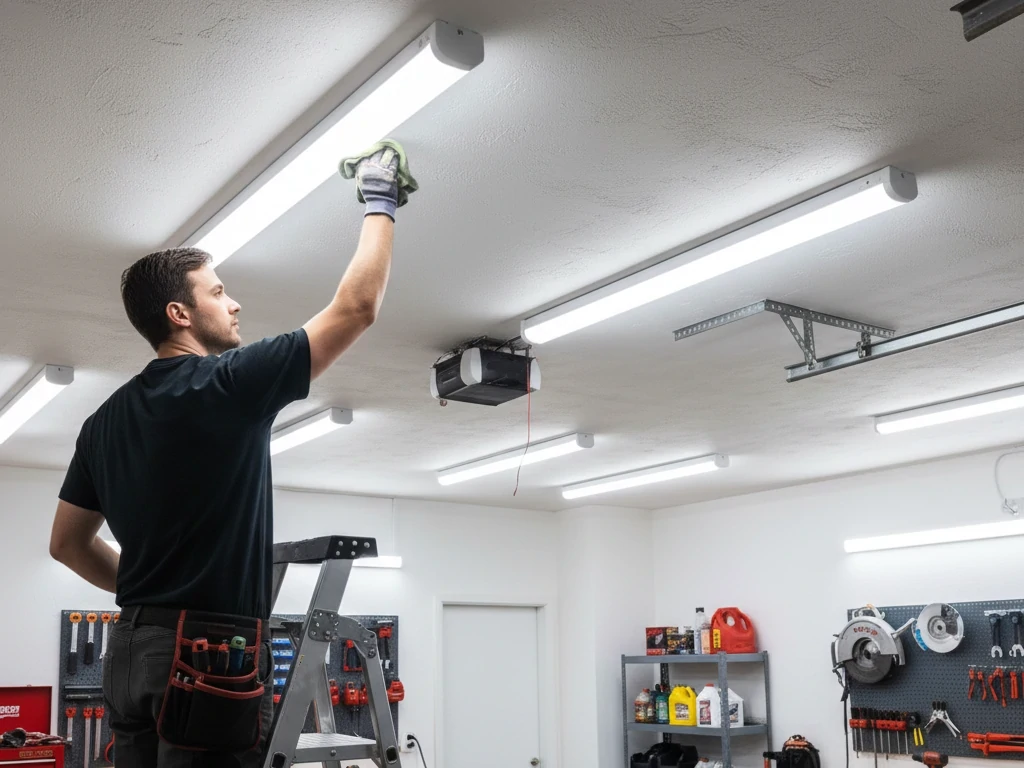
- Regular Dusting: Dust and debris can accumulate on 8 ft LED bulbs or fixtures, reducing light output. Wipe the fixture lens or diffuser periodically with a soft cloth.
- Check Mounting and Wiring: Ensure that all screws, brackets, and suspension hardware are secure. Inspect the light bulb circuit for any signs of wear, loose connections, or corrosion.
- Sensor and Control Maintenance: If your led 8 shop lights are equipped with motion sensors or dimming controls, clean sensor lenses and test functionality periodically to maintain performance.
- Avoid Moisture and Contaminants: While many 8 foot LED shop light fixtures are rated for damp environments, excessive moisture, oil, or chemicals can shorten lifespan. Ensure the installation environment is suitable for the fixture rating.
By following these care tips, your 8 ft LED shop lights will continue to deliver consistent, high-quality illumination for years.
Troubleshooting Common Issues
While LED fixtures are highly reliable, occasional issues may arise. Here’s how to address them:
- Flickering or Dimming: This may indicate a driver issue, loose wiring, or ballast conflict in retrofit installations. Check wiring connections and ensure any retrofitted 8 ft LED bulbs are compatible with your fixture type.
- Uneven Illumination or Shadows: Verify that fixtures are properly spaced, mounted at the correct height, and that surfaces in the workspace reflect light effectively.
- Overheating or Driver Buzzing: LED drivers are designed to operate cool. Overheating may result from blocked ventilation or using a fixture beyond its rated load. Ensure your light bulb circuit is not overloaded.
- Circuit Breaker Trips: Even though LEDs draw fewer amps, installing multiple 8 ft LED shop light fixtures on the same circuit requires careful calculation of total load. Recalculate amps (Amps = Watts ÷ Volts) to ensure safe operation.
Proactive maintenance and understanding of potential issues help you keep your eight foot LED lights running efficiently while minimizing downtime and repair costs.
Conclusion
Installing 8 ft LED shop lights (or eight foot LED lights) is a smart move for any workshop, garage, or large utility space. You’ll benefit from energy savings, lower maintenance, better performance, and modern lighting quality.
But the key to getting the best result lies in proper planning: understanding your space size, selecting the right lumen output, picking an appropriate color temperature (5000 K or 6000 K), ensuring your light bulb circuit can handle the load (i.e., checking how many amps does an LED light draw), and choosing whether to retrofit existing fixtures or install new 8 foot LED shop light fixtures.
By following the structure we’ve laid out here, you’re well on your way to achieving bright, comfortable, efficient lighting in your space—one that performs well, lasts long, and produces great value.
If you want to buy lamps you can check out AuroLamp’s solar lights, indoor lights, fan lights and pool lights. These are well-designed products.
FAQs About 8 ft LED Shop Lights
Can you convert 8 ft fluorescent to LED?
Yes, you can convert 8 ft fluorescent fixtures to LED in two main ways: by installing 8 ft LED bulbs as a retrofit or by replacing the entire fixture with an 8 foot LED shop light fixture. Retrofit LED tubes may require bypassing the ballast or selecting compatible direct-replacement tubes. Conversion saves money upfront, while full fixture replacement provides optimized performance and longevity.
What is the difference between 5000 K and 6000 K LED shop lights?
5000 K produces a bright, neutral daylight-like illumination, ideal for general-purpose workspaces. 6000 K emits a cooler, bluish-white light that enhances contrast and detail visibility, which is useful for precision tasks. Both options are available in eight foot LED lights, and your choice depends on your workspace needs and personal preference.
How many lumens are good for a shop light?
For most garages and workshops, 8 ft LED shop lights with 4,000–10,000 lumens provide adequate brightness. Smaller work areas may require fewer lumens, while large commercial spaces may benefit from higher output fixtures. Proper lumen selection ensures efficient, evenly distributed light without creating glare.
Is 10,000 lumens too bright for a garage?
10,000 lumens is considered high for a standard home garage. It may produce glare if mounted too low. However, in larger or high-ceiling spaces, led 8 shop lights at this output can provide uniform illumination without shadows, ideal for detailed projects.
What is the disadvantage of LED light bulbs?
While 8 ft LED shop lights are highly efficient, potential drawbacks include higher upfront cost, compatibility issues with old fluorescent fixtures, and overly cool color temperatures that some users may find harsh. Additionally, improper installation or circuit planning can lead to flickering or reduced lifespan.
How many amps does an 8 foot LED shop light draw?
The current draw depends on wattage and circuit voltage. For example, a 100 W 8 ft LED bulb on a 120 V circuit draws roughly 0.83 amps (Amps = Watts ÷ Volts). Because LEDs are efficient, multiple fixtures can be installed on a single light bulb circuit without overloading, but always calculate total amps before installation.
Are 8 ft LED shop lights compatible with dimmers?
Many 8 foot LED shop light fixtures support dimming, but compatibility depends on the driver and control system. Always verify that both the LED fixture and dimmer are rated for LED use to prevent flickering or damage.
How long do 8 ft LED bulbs last?
High-quality eight foot LED lights typically last 50,000 hours or more, far exceeding fluorescent tubes. Proper installation and regular cleaning help maintain brightness and extend lifespan.
Can LED shop lights be linked together?
Yes, many 8 ft LED shop lights are designed for linkable mounting, allowing multiple fixtures to be connected in a row. This creates continuous, uniform illumination across large workspaces.
Do 8 ft LED shop lights get hot?
LEDs generate far less heat than fluorescent or incandescent lighting. 8 ft LED bulbs may feel slightly warm to the touch, but proper fixture design and ventilation prevent overheating, ensuring safe operation and long-lasting performance.