

Table of Contents
When it comes to keeping your home cool, comfortable, and energy-efficient, choosing the right blade fan can make all the difference. From quiet bedrooms to open living spaces, the number of blades on your ceiling fan impacts airflow, noise, and even your energy bills. Homeowners often wonder: should I go for a 3 blade fan for maximum airflow, or a 5 blade ceiling fan for a gentler, quieter breeze? In this guide, we’ll explore the difference between 3 blade and 5 blade ceiling fans, discuss the advantages of each, and show how features like fan lights can influence your choice. Whether you’re upgrading an existing fan or selecting one for a new room, this guide will help you make an informed, practical decision that combines style, comfort, and efficiency.
Introduction to Blade Fans
A blade fan is one of the simplest yet most effective tools for circulating air in your home or workspace. It relies on blades rotating around a motor to push air across a room, providing comfort, ventilation, and sometimes even energy savings. Whether installed on a ceiling, standing on a pedestal, or built into a compact tower, a blade fan remains a versatile and practical solution for improving indoor airflow. Understanding the basics of blade fans is the first step toward choosing the right model for your needs, whether you are debating 3 blade vs 5 blade ceiling fan designs or considering additional features like fan lights.
What is a Blade Fan?
A blade fan is any fan that moves air using one or more blades attached to a rotating hub. While the term might sound generic, it specifically refers to fans designed to circulate air efficiently in indoor spaces. The blades are engineered to create airflow patterns that can cool a room, improve ventilation, or help distribute heat in colder seasons when used in reverse.
The key characteristic that sets a blade fan apart from other types of fans is its reliance on rotating blades rather than air-pushing mechanisms like impellers in HVAC units or bladeless fans. Understanding what a blade fan does — and how its design affects performance — is crucial when comparing 3 blade fans and 5 blade ceiling fans, as the number of blades can influence airflow strength, energy consumption, and noise levels.
Types of Blade Fans: Ceiling, Pedestal, and Tower Fans
Blade fans come in a variety of forms, each suited to different spaces and purposes:
- Ceiling Fans – Mounted overhead, ceiling blade fans are ideal for circulating air throughout an entire room. They are often the preferred choice when considering 3 blade vs 5 blade ceiling fan options, as blade count, blade pitch, and motor strength collectively determine how well the fan cools the space. Ceiling fans can also include fan lights, combining airflow with illumination.
- Pedestal Fans – These stand on a base and are usually adjustable in height. Pedestal blade fans are portable and perfect for targeted cooling, such as directing airflow to a specific area in a living room or office. Like ceiling fans, they can have 3 or 5 blades, and the number affects both the strength and smoothness of the breeze.
- Tower Fans – Slim and often oscillating, tower blade fans use a vertical design to save space while still moving air efficiently. While they tend to circulate air differently from ceiling fans, they are still considered blade fans because they rely on blades inside the housing to push air forward.
Each type of blade fan has its advantages and trade-offs, but all share the common goal: to create airflow that improves comfort, efficiency, and room ventilation.
Why Blade Count Matters: Airflow, Efficiency, and Noise
One of the most important decisions when choosing a blade fan is the number of blades. The difference between 3 blade and 5 blade ceiling fans can significantly affect performance:
- Airflow – Fewer blades usually generate faster, more concentrated airflow because there is less drag on the motor. This is why 3 blade fans are often preferred for large rooms where strong circulation is needed. Meanwhile, 5 blade ceiling fans tend to produce smoother, more evenly distributed airflow, making them ideal for spaces where gentle air movement is desired.
- Energy Efficiency – With fewer blades, the motor works less to maintain high speeds, potentially reducing energy consumption. A 3-blade fan can often achieve the same cooling effect as a 5-blade fan while using less electricity, though this depends on motor quality and blade design.
- Noise Levels – Blade count also influences sound. More blades generally produce quieter operation, while fewer blades may generate a stronger breeze but a louder hum. This balance is essential when selecting between 3 blade fans and 5 blade ceiling fans for bedrooms, living rooms, or workspaces.
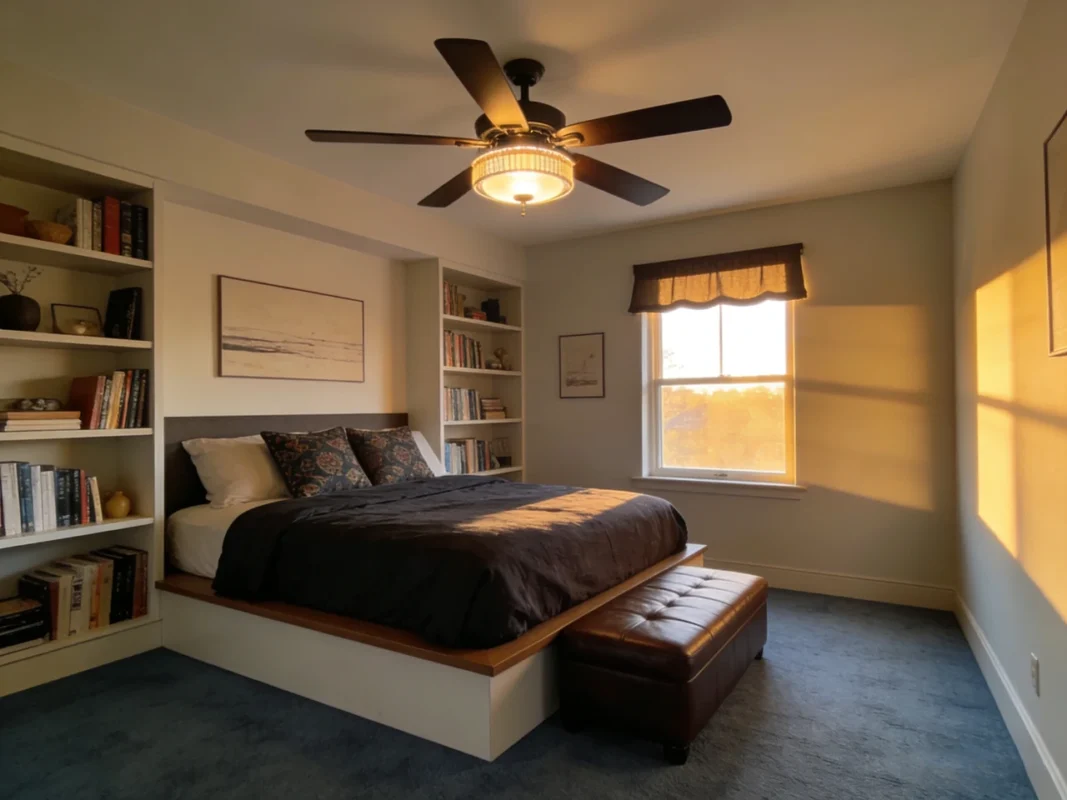
3 Blade Fans vs 5 Blade Ceiling Fans
When it comes to choosing a blade fan, one of the most common debates is 3 blade vs 5 blade ceiling fan. The number of blades affects airflow, noise, energy efficiency, and even the overall aesthetic of your room. Understanding these differences can help you select the right fan for your specific needs, whether you are cooling a large living area or a cozy bedroom.
Design and Aesthetic Differences
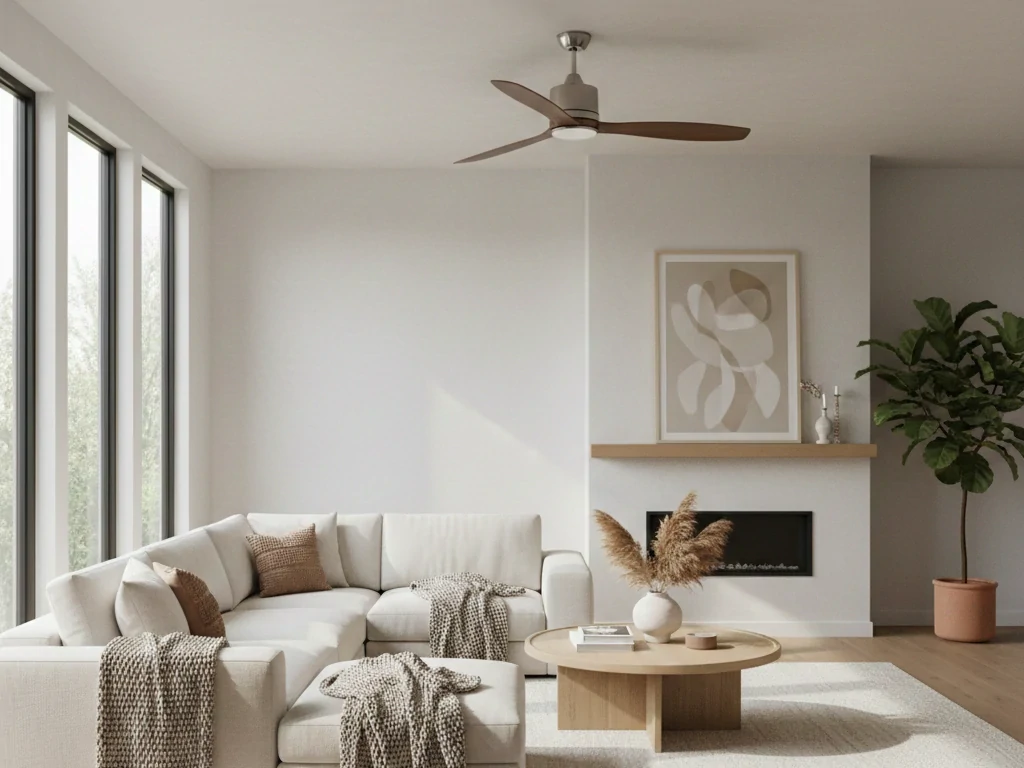
One of the first noticeable differences between 3 blade fans and 5 blade ceiling fans is visual. A 3-blade fan tends to look sleek, modern, and minimalistic, making it ideal for contemporary spaces where simplicity and clean lines matter. Its lighter appearance can make a room feel more open and less cluttered, which is often why designers recommend 3-blade models for modern homes.
On the other hand, 5 blade ceiling fans create a fuller, more traditional look. The additional blades give the fan a sense of symmetry and balance, which can complement classic or transitional interiors. For rooms with fan lights, a 5-blade fan often pairs aesthetically with the fixture, helping the airflow remain stable even with added weight.
Airflow Performance Comparison
Airflow is a key factor when deciding between 3-blade and 5-blade designs. 3 blade fans typically generate stronger, more concentrated airflow. With fewer blades, there is less drag on the motor, allowing it to spin faster and push more air directly into the room. This makes 3-blade fans especially effective in larger spaces or open-plan layouts where quick air circulation is desired.
In contrast, 5 blade ceiling fans produce smoother, more evenly distributed airflow. The multiple blades share the load, reducing turbulence and providing a gentle, consistent breeze. While the airflow may be slightly slower compared to a 3-blade fan, the experience is often quieter and more comfortable, which makes 5-blade fans a popular choice for bedrooms and dining rooms.
Energy Efficiency Considerations
Energy efficiency is another crucial factor. Fewer blades generally mean less resistance for the motor, which allows 3 blade fans to operate efficiently at higher speeds while consuming less electricity. This efficiency makes them a strong choice for homeowners looking to reduce energy bills without sacrificing performance.
5 blade ceiling fans, while slightly less efficient due to higher drag, offer smoother operation and can be more effective in rooms where quiet, ambient airflow is preferred. The efficiency difference is often marginal but can become significant over long periods of continuous use.
Noise Levels and Operational Comfort
Noise is an important consideration when choosing a blade fan. Because 3 blade fans rotate faster to deliver stronger airflow, they can produce a more pronounced hum or “whooshing” sound. While this may be desirable for active areas where airflow is the priority, it could be distracting in quiet spaces.
5 blade ceiling fans operate more quietly due to the additional blades reducing turbulence and distributing airflow more evenly. This makes them better suited for bedrooms, offices, or areas where a gentle, background breeze is preferred.
Cost and Maintenance Differences
From a cost perspective, 3 blade fans tend to be more affordable. Fewer blades mean less material and simpler construction, which also makes installation easier and maintenance less demanding. Cleaning fewer blades is quicker, and there are fewer components to check for balance or wear over time.
5 blade ceiling fans, while often more expensive, provide a balanced, quieter airflow and may better accommodate fan lights. However, they can require stronger mounting hardware, careful balancing, and slightly more maintenance due to the additional blades.
Advantages of 3 Blade Ceiling Fans
3 blade fans have become a popular choice for homeowners and designers alike, offering a combination of performance, efficiency, and modern aesthetics. Understanding their advantages can help you decide whether a 3-blade ceiling fan is the right solution for your space.
Enhanced Air Movement and Cooling Efficiency
One of the most notable benefits of 3 blade fans is their ability to move air efficiently. With fewer blades, the motor encounters less drag, allowing the fan to spin faster and generate a stronger, more concentrated airflow. This makes 3 blade fans particularly effective in larger rooms, open-concept living spaces, or areas that require quick cooling.
For example, in a spacious living room or family area, a 3-blade ceiling fan can create a noticeable breeze across the entire room, lowering the perceived temperature and improving comfort without the need for additional fans or air conditioning. This efficiency is often highlighted when comparing 3 blade vs 5 blade ceiling fan performance, where 3-blade models typically deliver faster, more direct airflow.
Modern and Minimalist Design Appeal
Beyond performance, 3 blade fans are often praised for their sleek, contemporary appearance. The reduced number of blades creates a lighter, less obtrusive silhouette, making them ideal for modern or minimalist interiors. Unlike some 5-blade ceiling fans, which can appear bulkier or more traditional, a 3-blade fan blends seamlessly with open ceilings, loft spaces, and clean-lined furniture arrangements.
This modern aesthetic is not just about looks; it also contributes to a feeling of openness in the room. A well-designed 3-blade fan can act as a functional centerpiece without overwhelming other elements of your interior design, which is especially important when planning spaces with fan lights that add both utility and visual interest.
Cost-Effectiveness and Lower Energy Use
Another advantage of 3 blade fans is cost-effectiveness. Fewer blades mean lower manufacturing costs, which often translates into a more affordable purchase price and easier installation. In addition, the reduced drag on the motor allows for lower energy consumption, making 3-blade ceiling fans more efficient in long-term use.
Energy efficiency is a key consideration for homeowners who run their fans for extended periods, such as during hot summer months. By choosing a 3 blade fan, you can achieve strong airflow while keeping electricity bills in check. Moreover, fewer blades also mean simpler maintenance — less surface area to clean and fewer parts to monitor for balance, ensuring that the fan continues to operate quietly and efficiently over time.
Summary of Advantages
To summarize, the main advantages of 3 blade fans include:
- Stronger, more concentrated airflow for efficient room cooling.
- Sleek, modern, and minimalistic design that complements contemporary interiors.
- Lower energy consumption and reduced operating costs.
- Easier installation and maintenance compared to multi-blade models.
- Ideal performance in large or open spaces where fast air circulation is desired.
Whether you are upgrading an existing ceiling fan or installing a new one, 3 blade fans offer a balanced combination of performance, style, and efficiency. They are particularly effective when the goal is to maximize airflow while maintaining a modern look and energy-conscious operation.
Advantages of 5 Blade Ceiling Fans
While 3 blade fans are known for strong, concentrated airflow, 5 blade ceiling fans offer a different set of advantages that appeal to homeowners seeking quiet, smooth, and balanced air circulation. Understanding these benefits can help you determine whether a 5-blade model is the right choice for your space.
Quieter Operation and Smooth Airflow
One of the primary advantages of 5 blade ceiling fans is their ability to provide quieter operation. With more blades, the fan distributes the workload more evenly, which reduces turbulence and minimizes the “whooshing” sound that can occur with fewer blades. This makes 5 blade fans ideal for bedrooms, offices, and other spaces where a gentle, unobtrusive breeze is preferred.
The airflow produced by a 5-blade fan is often more uniform and smoother than that of a 3-blade fan. While it may not create as intense a breeze, the distributed airflow can improve overall comfort in the room, especially for everyday living. This quality also makes 5 blade ceiling fans particularly suitable in areas where fan lights are installed, as the fan can operate quietly without disturbing ambient lighting or creating uneven air movement around the fixture.
Traditional Design and Aesthetic Balance
In addition to performance benefits, 5 blade ceiling fans are often chosen for their aesthetic appeal. The additional blades create a fuller, more balanced appearance, which can complement classic, transitional, or traditionally styled interiors. Unlike a 3-blade fan, which emphasizes minimalism, a 5-blade fan adds visual weight and symmetry to a room, making it feel complete and harmonious.
For spaces where design cohesion is important, a 5-blade fan can act as both a functional device and a decorative element, blending airflow performance with interior style. This is especially important in rooms where fan lights are incorporated, as the added blades help maintain balance and ensure even air distribution around the light fixture.
Effective Comfort for Residential Spaces
5 blade ceiling fans are particularly effective in residential settings where comfort and quiet operation are priorities. Their smooth airflow is gentle enough for bedrooms, dining areas, and living rooms, reducing drafts and creating a consistent ambient temperature without overpowering the occupants.
While a 3-blade fan may be preferable for large or open areas that require strong airflow, a 5-blade fan is ideal for spaces where subtlety, comfort, and noise reduction matter most. Many homeowners find that the combination of quiet operation and steady airflow makes 5-blade fans a long-term, practical solution for daily comfort.
Better Compatibility with Fan Lights
If your ceiling fan includes fan lights, a 5-blade fan often provides better stability and balance. The extra blades help offset the added weight of a light kit and maintain smooth rotation, reducing wobble and ensuring consistent airflow throughout the room. This makes 5-blade ceiling fans particularly attractive for living rooms, dining areas, and bedrooms where lighting and airflow are both important considerations.
Summary of Advantages
To summarize, the main advantages of 5 blade ceiling fans include:
- Quieter and smoother airflow for increased comfort.
- Balanced, symmetrical design suitable for traditional or transitional interiors.
- Gentle air circulation ideal for bedrooms and living spaces.
- Enhanced stability when paired with fan lights.
- Reduced turbulence for more consistent airflow across the room.
Overall, 5 blade ceiling fans offer a combination of quiet performance, aesthetic appeal, and comfort that makes them a strong choice for spaces where subtle, even air circulation is preferred over raw airflow strength.
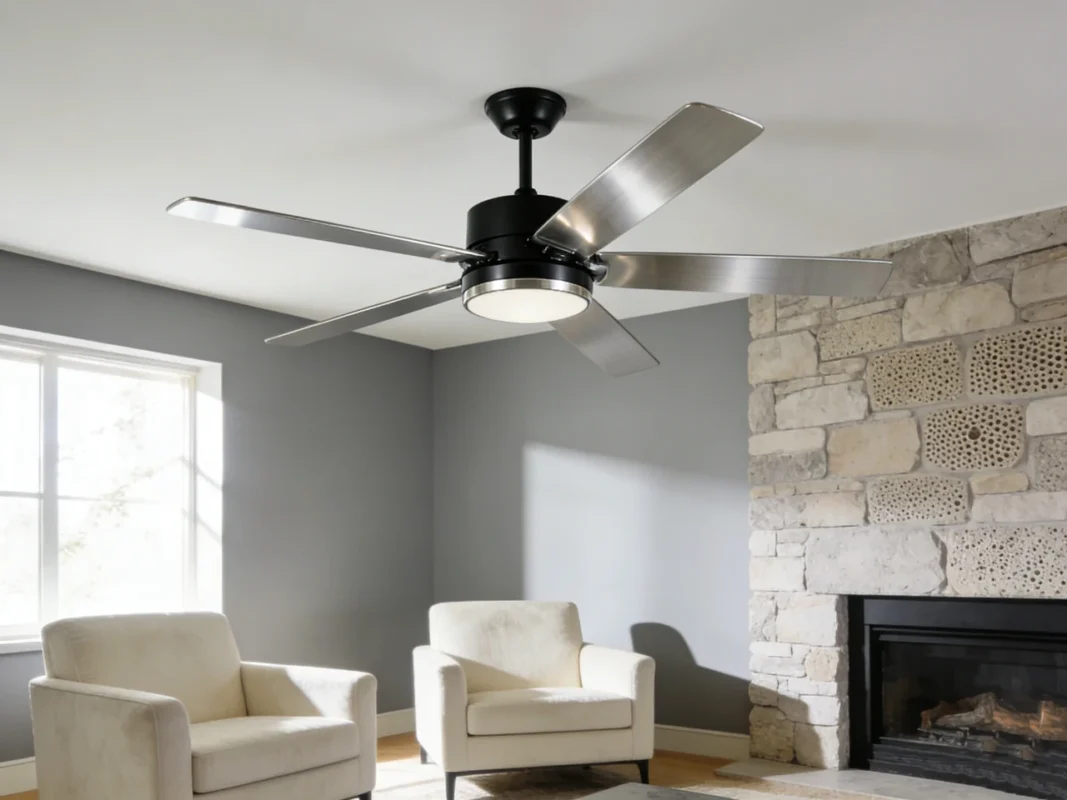
How Many Blades Are Optimal for Your Room?
Choosing the right blade fan for your room goes beyond simply picking between 3-blade and 5-blade designs. The optimal number of blades depends on factors like room size, ceiling height, airflow needs, and even your lifestyle preferences. Understanding these considerations ensures that your fan provides effective cooling, comfort, and energy efficiency.
Room Size and Ceiling Height Considerations
The size and shape of your room play a critical role in deciding how many blades your ceiling fan should have.
- Large rooms or open floor plans: A 3 blade fan is often ideal because it delivers strong, concentrated airflow capable of circulating air efficiently across a wide area. This is especially important in living rooms, family rooms, or open-concept layouts.
- Medium or smaller rooms: A 5 blade ceiling fan can provide smoother, more evenly distributed airflow that enhances comfort without creating a strong, direct breeze. Bedrooms, dining rooms, and smaller living spaces often benefit from the gentler airflow of a 5-blade fan.
- Ceiling height: For low ceilings, a lighter, more minimalistic 3-blade fan may help maintain a sense of openness. In contrast, higher ceilings can accommodate a 5-blade fan that adds visual balance and fuller aesthetics without feeling intrusive.
Fan Speed and Blade Pitch Impact on Air Circulation
While blade count matters, it is not the only factor affecting airflow. Blade pitch — the angle at which each blade cuts through the air — and fan motor strength play a critical role.
- A steeper blade pitch increases the volume of air moved per rotation, which can allow a 3 blade fan to match or even exceed the airflow of a 5-blade model in some cases.
- A powerful motor with a properly pitched blade can make either a 3-blade or 5-blade fan effective, depending on the room and intended use.
This is why experts emphasize that the difference between 3 blade and 5 blade ceiling fans is not absolute — performance is determined by a combination of blade count, blade pitch, motor power, and overall design.
Matching Fan Type to Your Climate and Lifestyle
Your climate, daily habits, and room usage also influence the optimal blade number:
- In hot or humid climates where fans run for extended periods, a 3 blade fan may be preferable due to its energy efficiency and strong airflow.
- In spaces where quiet, consistent circulation is desired — such as bedrooms or offices — a 5 blade ceiling fan provides a smoother breeze without excessive noise.
- For rooms with fan lights, a 5-blade design can offer better balance and stability while maintaining even airflow.
Ultimately, the “best” number of blades is determined by a combination of practical considerations and personal preferences. Evaluating room size, ceiling height, airflow needs, and lifestyle will help you select a blade fan that delivers comfort, efficiency, and aesthetic harmony.
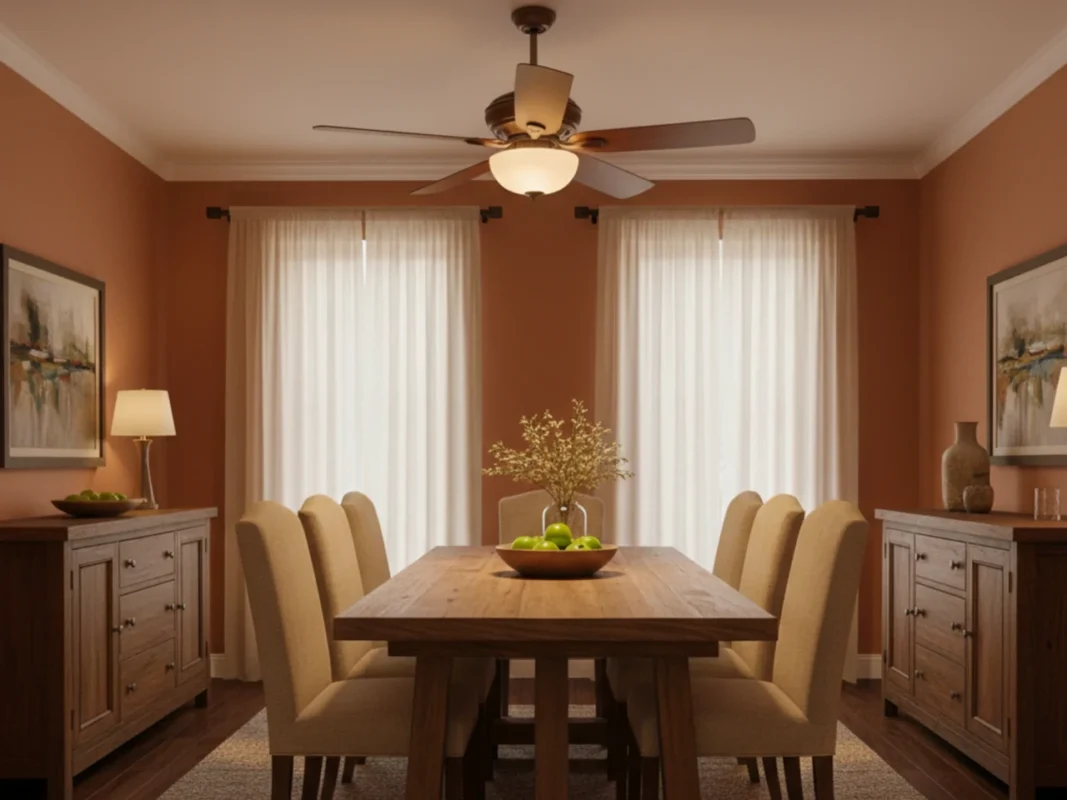
Blade Fans vs Other Fan Types
When selecting a cooling solution for your home, it’s important to understand how blade fans compare to other fan types such as tower fans, pedestal fans, and bladeless fans. Each has unique advantages and limitations, and knowing the differences can help you make an informed choice.
Blade Fans: Ceiling, Pedestal, and Tower Options
Blade fans are defined by their rotating blades, which move air efficiently across a room. They come in three main forms:
- Ceiling blade fans provide broad, overhead airflow and are ideal for consistent room-wide cooling. They are often paired with fan lights, combining illumination with airflow.
- Pedestal fans are portable and height-adjustable, allowing you to direct strong, targeted airflow where it’s needed most.
- Tower blade fans are space-saving vertical designs that rely on internal blades to circulate air efficiently.
Blade fans, in general, provide strong, tangible airflow and are available in various configurations to suit room size, ceiling height, and aesthetic preferences.
Comparison with Other Fan Types
Tower Fans – These fans are typically quieter and slimmer than traditional blade fans. While they save floor space and look modern, their airflow is generally less concentrated, making them less effective for large rooms compared to a 3 blade fan or a 5 blade ceiling fan.
Pedestal Fans – Like tower fans, pedestal fans provide directional airflow and are portable. A 3-blade pedestal fan can deliver a strong, focused breeze, while a 5-blade model may offer smoother, quieter airflow. However, they do not circulate air across an entire room as efficiently as ceiling blade fans.
Bladeless Fans – These innovative fans use air-multiplying technology instead of visible blades. They are extremely quiet and safe for children, but they typically produce less direct airflow than a well-designed blade fan. For rooms requiring fast, strong cooling, blade fans often outperform bladeless models.
Advantages of Blade Fans Over Other Types
- Stronger Airflow – A 3 blade fan can circulate air more efficiently than tower or bladeless fans, making it ideal for cooling large rooms.
- Versatility – Ceiling, pedestal, and tower blade fans offer multiple installation and placement options.
- Aesthetic Integration – Ceiling blade fans with fan lights can complement room design while providing functionality.
- Energy Efficiency – High-quality blade fans, especially 3-blade models, provide strong airflow without excessive energy consumption.
- Customizable Performance – Blade count, blade pitch, and motor speed can be selected to match room size, noise preference, and cooling needs.
When to Choose a Blade Fan
Blade fans are typically the best choice when you want consistent, strong airflow throughout a room, combined with energy efficiency and aesthetic flexibility. While other fan types may excel in portability, quiet operation, or space-saving design, nothing quite matches a ceiling blade fan’s ability to balance airflow, style, and practical comfort.
In summary, choosing between a blade fan and other fan types depends on your specific needs, room size, and desired airflow. For most residential spaces, a well-chosen 3 blade fan or 5 blade ceiling fan will provide superior performance and comfort compared to alternative fan designs.
Installation and Maintenance Tips
Ceiling Fan Installation Guidelines
When installing a ceiling blade fan (whether 3‑blade or 5‑blade), it’s important to ensure proper mounting and balance. Because 5 blade fans are heavier and may have larger total blade surface area, they might require stronger mounting hardware, and more careful balancing to avoid wobble or noise.
For both blade counts, make sure the fan is level, blades are uniform, and the mounting bracket is secure. Ensure adequate clearance between blade tips and walls or furniture, and verify that ceiling height is sufficient for safe, efficient air circulation.
If you plan to add fan lights, check that the electrical supply and wiring are compatible, and that the fan motor is rated for the extra load.
Cleaning and Maintaining Blade Fans for Longevity
Regular cleaning keeps a blade fan operating smoothly. Dust accumulation on blades reduces aerodynamic efficiency — which means less airflow and more strain on the motor. Wiping down blades every few weeks helps maintain performance.
Also, periodically check bolts and screws for tightness (especially after long operation hours), and ensure that the fan is still balanced; an unbalanced fan can wobble, produce noise, or wear the motor prematurely.
For fans with fan lights, also check wiring and light housing for dust, moisture, or damage to avoid electrical hazards.
Safety Tips for Homes with Fan Lights
If you use fan lights, ensure that the fixture is correctly installed and wired, with no exposed wires. Use appropriate wattage bulbs to avoid overheating. Avoid overloading the fan’s motor with heavy lights or attachments not rated for the unit.
Ensure that blades are distant enough from curtains, hanging objects, or other obstacles — and that the fan is turned off before cleaning or changing light bulbs. Regular maintenance helps ensure your blade fan stays safe and efficient for years.
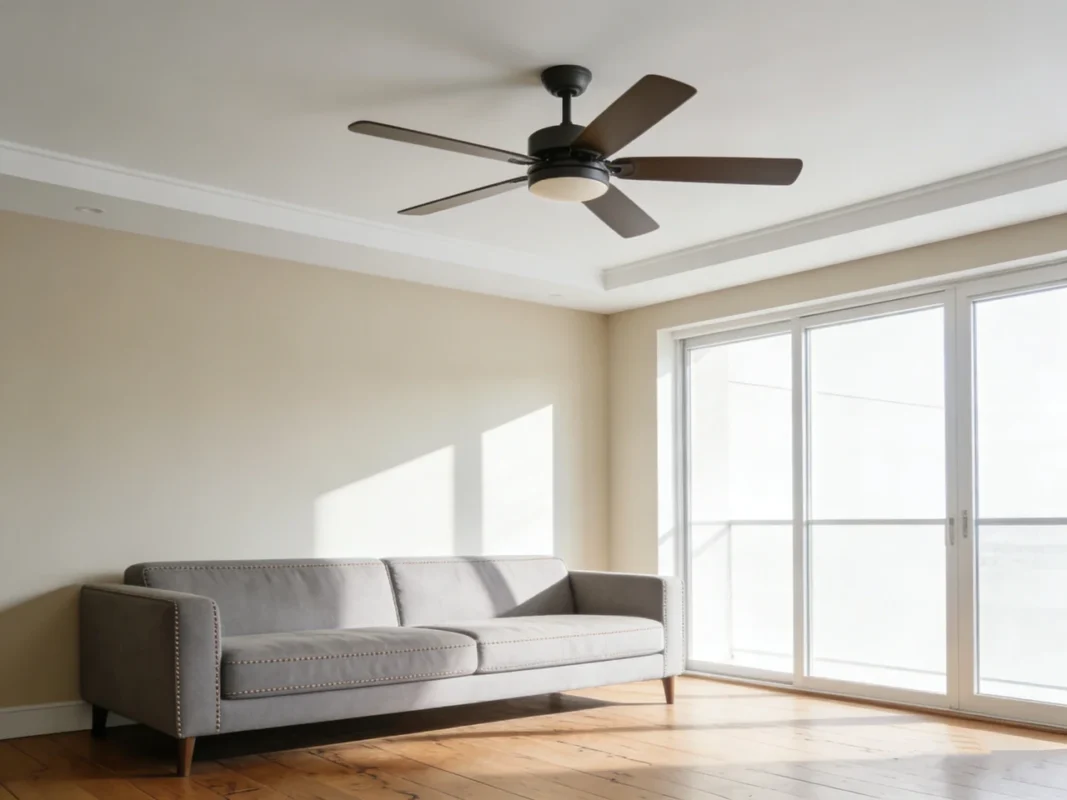
Conclusion
In the 3 blade vs 5 blade ceiling fan debate — or more broadly, when you’re considering any blade fan — there is no absolute “winner.” Instead, the right choice depends on your room size, airflow needs, design preferences, noise tolerance, and lifestyle (how often and how long you run the fan).
A good decision comes from balancing practical needs (airflow, energy efficiency) with lifestyle preferences (noise level, aesthetics, light integration). A 3 blade fan might give you power and efficiency; a 5 blade fan might give you comfort and quiet. A fan with fan lights and the right blade count can combine utility and ambiance.
FAQs
Is a tower or blade fan better?
Both tower fans and blade fans have advantages, but the choice depends on your needs. Tower fans are space-saving and quieter, making them ideal for bedrooms or offices. Blade fans, particularly ceiling or pedestal models, provide stronger, more consistent airflow, which is better for cooling larger spaces. If your goal is broad room circulation, a 3 blade fan or 5 blade ceiling fan will generally outperform tower fans.
Do 5 blade fans move more air?
Not necessarily. While 5 blade ceiling fans offer smoother, quieter airflow, fewer blades—like in a 3 blade fan—often move air faster because the motor faces less drag. The difference between 3 blade and 5 blade ceiling fans lies in airflow distribution: 3-blade models produce stronger, more direct airflow, while 5-blade fans provide gentler, evenly distributed air.
What fan is best for cooling a room?
The best fan depends on room size and ceiling height. For large or open spaces, a 3 blade fan is ideal due to its concentrated airflow. For bedrooms or smaller rooms, a 5 blade ceiling fan provides quieter, more comfortable circulation. Ceiling blade fans with fan lights also enhance functionality by combining airflow with illumination.
What is a blade fan?
A blade fan is any fan that circulates air using rotating blades attached to a motor. It can be a ceiling fan, pedestal fan, or tower fan. Blade fans are effective for improving airflow, cooling rooms, and distributing air evenly, with options ranging from 3 blades to 5 blades or more depending on design and performance needs.
Is a 3-blade or 5-blade fan better?
Neither is universally “better”; it depends on your goals. 3 blade fans generate stronger, more concentrated airflow and are energy-efficient, making them ideal for large spaces. 5 blade ceiling fans operate quieter, create smoother airflow, and complement traditional aesthetics. Choosing the right model depends on room size, desired airflow, noise preference, and whether fan lights are included.
What is the advantage of a 3-blade ceiling fan?
The main advantages of 3 blade fans are:
• Strong, concentrated airflow for faster cooling
• Sleek, modern design that fits contemporary interiors
• Lower energy use and simpler maintenance They excel in large rooms or open layouts where rapid air circulation is needed.
How many blades on a fan is best?
The “best” number of blades depends on room size, ceiling height, and airflow preference. For strong airflow in large rooms, 3 blades are typically ideal. For quiet, gentle air in smaller or medium rooms, 5 blades are often preferable. Other factors, like blade pitch, motor strength, and the presence of fan lights, also influence optimal performance.
Can a 3-blade fan cool a large room effectively?
Yes. A 3 blade fan is designed to move air efficiently due to its lower drag on the motor, generating stronger airflow that can cool larger spaces quickly. It is especially effective in open-plan living areas, large bedrooms, or family rooms.
Are 5-blade fans quieter than 3-blade fans?
Yes. 5 blade ceiling fans distribute the load across more blades, reducing turbulence and operational noise. While the airflow may be slightly less intense than a 3 blade fan, the quiet, smooth breeze makes it suitable for bedrooms, offices, or any space where minimal noise is desired.
Do blade fans work better with fan lights?
Yes. Blade fans with fan lights are designed to handle the added weight while maintaining smooth, stable rotation. 5 blade ceiling fans often offer better balance for fan lights, but both 3-blade and 5-blade models can integrate lighting effectively when installed properly.
Which fan type is best for energy efficiency?
A 3 blade fan is generally more energy-efficient because fewer blades reduce motor drag, allowing the fan to spin faster while consuming less electricity. Proper installation, blade pitch, and motor quality also contribute to overall energy efficiency.
Can a ceiling fan replace air conditioning?
While blade fans do not lower room temperature like air conditioning, they improve perceived comfort by circulating air and creating a cooling breeze. Using a ceiling fan with a 3 blade fan or 5 blade ceiling fan in conjunction with air conditioning can reduce energy consumption by allowing you to set the thermostat slightly higher.