

Table of Contents
If you’ve ever stumbled into your shed at night, fumbling with a flashlight or tripping over tools, you know how frustrating poor lighting can be. That’s where a solar shed light with pull cord comes in—a simple, practical, and energy-efficient solution to light up your off-grid or hard-to-wire spaces. In this guide, we’ll explore everything from installation tips to the best ways to maximize brightness and battery life. By the end, you’ll know whether a pull cord solar shed light is right for your project.
Why Choose a Solar Shed Light with Pull Cord?
Convenience Meets Sustainability
A solar shed light with pull cord combines the ease of manual control with the efficiency of solar power. You don’t need to run electrical wiring, which makes it perfect for off-grid sheds, garages, barns, and workshops. Experts note that solar lighting is not only eco-friendly but also reduces your electricity bill dramatically over time.
Easy Installation for Any Space
One of the biggest draws is the simplicity of setup. Unlike conventional wiring, you can mount a solar barn light pull cord almost anywhere. Experts recommend a location where sunlight hits the panel for at least 4–6 hours a day to ensure full charging.
Cost-Effective Long-Term Solution
Yes, the upfront cost may seem higher than a standard bulb, but think about decades of free, renewable energy. According to the Solar Energy Industries Association, solar lighting systems can save up to 75% of your lighting costs over 10 years. That’s real money back in your pocket.

Key Features of a High-Quality Solar Shed Light
When you’re choosing a solar shed light with pull cord, the difference between a frustrating setup and a reliable lighting solution usually comes down to a few key features. After installing dozens of units in sheds, barns, and small workshops, I’ve found that focusing on the details below saves time, money, and headaches later.
Brightness That Matches Real Work Needs
A high lumen solar shed light isn’t just a spec on paper—it directly affects whether you can actually work comfortably. For basic storage, 400–600 lumens may be enough. But if you’re using tools, repairing equipment, or reading labels, aim for at least 800–1,200 lumens. Anything less, and you’ll likely end up bringing in a secondary light source anyway.
Reliable Pull Cord Control
The pull cord is what makes a solar shed light with pull cord so practical. Unlike motion sensors that can misfire or turn off mid-task, a manual pull cord gives you consistent control. In my experience, a smooth, sturdy cord mechanism matters more than fancy features—especially in dusty or humid environments where electronics can fail.
Separate Solar Panel Flexibility
A well-designed system allows the panel to be installed separately from the light. This is critical for a solar light for off-grid shed, where the best sun exposure isn’t always directly above the interior fixture. Look for sufficient cable length and durable connectors to avoid performance loss.
Weather Resistance and Build Quality
A waterproof solar shed lamp should handle rain, dust, and temperature swings without degrading. Metal housings or reinforced ABS materials tend to last longer than thin plastic. Check for sealed edges and proper mounting hardware—small details that signal long-term durability.
Battery Capacity and Runtime Stability
Battery performance determines how long your solar shed light with pull cord actually stays usable. A good unit should provide 6–10 hours of steady light after a full charge. Consistent output matters more than peak brightness, especially if you’re working in the shed after sunset.
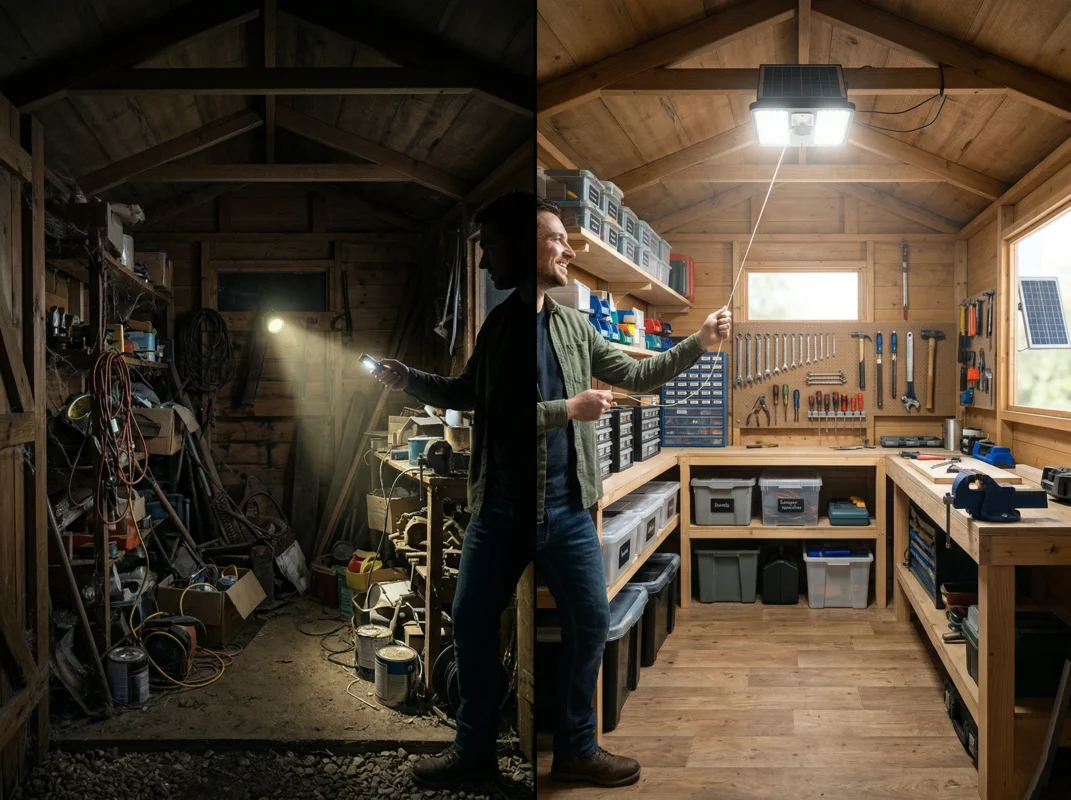
How to Install a Solar Shed Light with Pull Cord
Installing a solar shed light with pull cord is one of those rare projects that’s both beginner-friendly and genuinely useful. You don’t need electrical experience, but doing it right the first time makes a huge difference in brightness, battery life, and long-term reliability. Here’s a practical, field-tested approach.
Step 1: Evaluate Your Shed Layout and Lighting Needs
Before drilling anything, take a minute to think about how you actually use the space. Is it for storage, quick access, or detailed work? For a workspace, position your solar shed light with pull cord directly above the main working area. For general use, center placement usually provides the most even coverage. This step alone can prevent dark corners and wasted light.
Step 2: Choose the Best Location for the Solar Panel
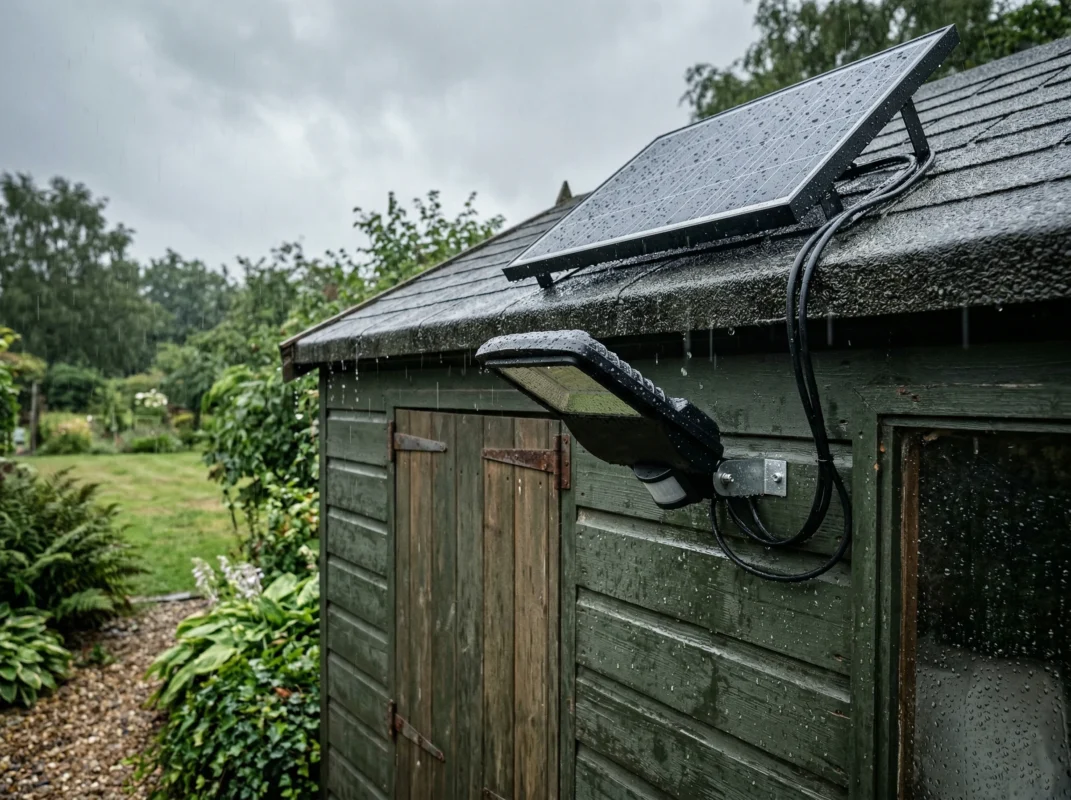
The panel placement matters more than the light itself. A solar light for off-grid shed depends entirely on consistent sun exposure. Mount the panel where it gets at least 4–6 hours of direct sunlight daily—typically on a roof or south-facing wall. If your shed has a metal roof, you can still install it securely using proper brackets, just ensure there’s airflow underneath to reduce heat buildup.
Step 3: Mount the Light Fixture at the Right Height
Install the light inside the shed where it can distribute illumination evenly. For most setups, 6–8 feet above the ground works well. If you’re using a solar pendant light for shed, let it hang slightly lower over work areas for better focus. Make sure the pull cord hangs within easy reach—this is what makes a solar shed light with pull cord so convenient in daily use.
Step 4: Connect the Panel and Manage the Cable Safely
Most systems come with a pre-attached cable. Carefully run it from the panel to the light, avoiding sharp edges or pinch points. If you’re routing through a wall, use a small sealed opening to keep out moisture. Pay attention to how long the cord between panel and light is—don’t stretch it tight, as that can damage connections over time.
Step 5: Secure Everything and Weatherproof the Setup
Tighten all screws, brackets, and mounts to prevent movement from wind or vibration. For a waterproof solar shed lamp, proper installation is just as important as the rating itself. Seal any exposed entry points and ensure the panel angle is slightly tilted to allow rainwater to run off instead of pooling.
Step 6: Test Performance and Adjust Positioning
Once installed, test your solar shed light with pull cord after a full day of charging. Check brightness, pull cord responsiveness, and coverage. If the light feels dim or uneven, adjust the panel angle or reposition the fixture slightly. Small tweaks can significantly improve performance.
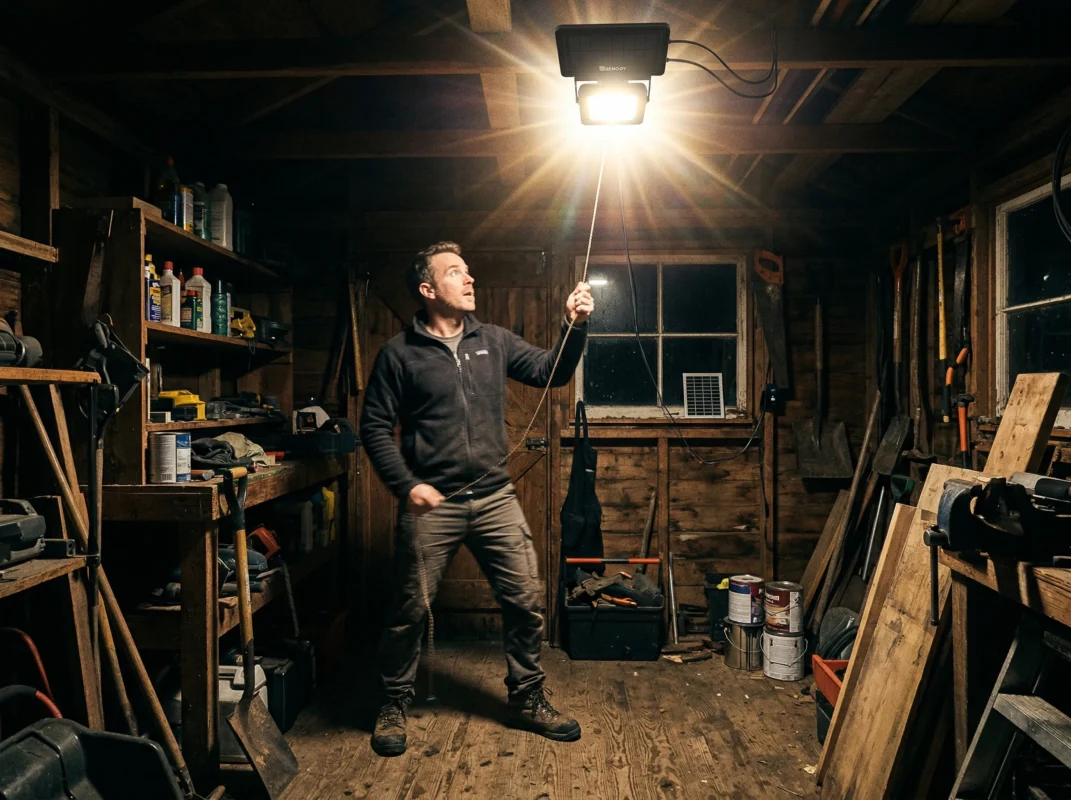
Optimizing Solar Shed Lighting Performance
Getting the most out of a solar shed light with pull cord isn’t just about installation—it’s about fine-tuning how the system performs day after day. Small adjustments can noticeably improve brightness, runtime, and overall reliability.
Maximize Solar Panel Exposure
The panel is the engine behind your solar shed light with pull cord. Even partial shade can reduce charging efficiency more than most people expect. Position the panel where it receives consistent, direct sunlight for several hours daily. If output seems weak, adjusting the angle by just a few degrees can make a visible difference.
Keep the Panel Clean and Unobstructed
Dust, leaves, and bird droppings can block sunlight and lower performance. In real-world use, I’ve seen panels lose up to 20% efficiency simply from surface buildup. A quick wipe every few weeks helps your solar light maintain consistent charging, especially in outdoor or farm environments.
Manage Battery Usage Wisely
Battery capacity determines how long your solar shed light with pull cord stays on at night. If you only need light for short tasks, avoid leaving it on unnecessarily. This is where the pull cord shines—manual control helps extend runtime compared to automatic systems.
Use Multiple Lights for Larger Spaces
For bigger sheds or barns, relying on a single fixture often leads to uneven lighting. Combining two or more high lumen solar shed light units creates balanced coverage and reduces strain on each individual battery.
Comparing Pull Cord vs. Motion Sensor Solar Shed Lights
If you’re deciding between a solar shed light with pull cord and a motion sensor model, the right choice really comes down to how you use your space. I’ve installed both in sheds and small workshops, and each has its strengths—but they solve slightly different problems.
Control and Reliability in Daily Use
A solar shed light with pull cord gives you direct, predictable control. You turn it on when you need it and off when you’re done—no guessing, no delays. That matters more than people think, especially when you’re working with tools or moving in and out of the shed frequently.
Motion sensor lights, on the other hand, rely on detection zones and timing settings. They’re convenient for quick visits, but in practice, they can turn off mid-task if you’re not moving enough. In dusty or enclosed sheds, sensors can also become less responsive over time.
Energy Efficiency and Battery Management
Motion sensors are designed to save energy by only activating when movement is detected. In theory, that extends battery life. But in real-world use, false triggers—like animals, wind-blown objects, or even shifting shadows—can drain power unexpectedly.
With a solar shed light with pull cord, you control usage directly. This often leads to more efficient battery use, especially in a solar light for off-grid shed where consistent runtime matters. You decide when the light is necessary, not the sensor.
Installation and Maintenance Differences
From an installation standpoint, both systems are straightforward. However, motion sensor units require more careful positioning to avoid blind spots or over-triggering. A poorly placed sensor can either miss movement or activate constantly.
A solar shed light with pull cord is simpler. You focus on light placement rather than detection angles. Maintenance is also easier—mechanical pull cords tend to be more durable than electronic sensors in humid, dusty, or temperature-variable environments.
Best Use Scenarios for Each Type
If your shed is used as a workspace—cutting wood, fixing equipment, organizing tools—a solar shed light with pull cord is usually the better choice. It provides stable, uninterrupted lighting exactly when you need it.
Motion sensor lights work well for occasional access, like grabbing tools or checking storage at night. They’re also useful for security purposes, where automatic activation is an advantage.
Hybrid Options for Flexibility
Some setups combine both features into a remote and pull cord solar light with optional motion sensing. This hybrid approach gives you the reliability of manual control with the convenience of automatic activation when needed—something I’ve found especially useful in larger or shared spaces.
Top Practical Applications for Solar Shed Lights
A solar shed light with pull cord isn’t just for basic lighting—it’s a practical upgrade that adapts to different real-world needs. From small backyard sheds to larger agricultural setups, I’ve seen how the right lighting setup can completely change how a space is used.
Garage Workshops and DIY Spaces
For hands-on work, lighting quality matters. An indoor solar light for garage paired with a solar shed light with pull cord gives you reliable illumination without running electrical wiring. It’s especially useful in detached garages where adding power lines would be expensive or impractical.
Barns and Agricultural Buildings
In barns, simplicity and durability are key. A solar barn light pull cord allows quick access to light during feeding, cleaning, or inspections. Since many barns are partially open, using a waterproof solar shed lamp ensures consistent performance despite dust, moisture, or temperature changes.
Off-Grid Sheds and Remote Storage
For remote locations, a solar light for off-grid shed is often the only realistic solution. A solar shed light with pull cord provides dependable lighting without relying on generators or extension cords. This setup works well for tool storage, gardening sheds, or backup utility spaces.
Interior Lighting Without Wiring
A solar pendant light for shed can double as a clean, wire-free indoor light solution. It’s ideal for anyone who wants a simple, functional lighting system without the hassle of electrical installation.
Troubleshooting Common Issues
Even a well-installed solar shed light with pull cord can run into occasional issues. The good news? Most problems are easy to diagnose and fix without replacing the entire unit. Here’s how to handle the most common situations based on real-world use.
Light Not Turning On
If your solar shed light with pull cord doesn’t respond, start with the basics. Check whether the battery has had enough time to charge—new installations often need a full day of sunlight before first use. Next, test the pull cord mechanism. If it feels stuck or loose, dust or internal wear could be the cause. A quick inspection usually reveals whether it’s a mechanical issue or simply low power.
Dim or Weak Lighting Output
When brightness drops, the issue is often related to charging efficiency. A high lumen solar shed light still depends on proper sunlight exposure. Check the panel for dirt, debris, or shading from nearby objects. Even partial obstruction can noticeably reduce output. Also, consider seasonal changes—shorter daylight hours naturally affect performance.
Short Runtime or Battery Drain
If your solar shed light with pull cord turns off sooner than expected, battery capacity may be the limiting factor. Over time, rechargeable batteries lose efficiency, especially in extreme temperatures. If the light used to last longer but doesn’t anymore, it may be time to replace the battery or adjust usage habits to conserve power.
Issues with Panel-to-Light Connection
For systems with separate panels, connection problems are more common than people think. Check the cable for wear, loose fittings, or tension. Pay attention to how long the cord between panel and light is—if it’s stretched too tight or sharply bent, it can affect power delivery.
Water or Weather-Related Problems
A waterproof solar shed lamp should handle outdoor conditions, but improper installation can still lead to issues. If moisture gets inside, inspect seals, mounting points, and cable entry areas. Make sure all openings are properly secured and angled to prevent water buildup.
Inconsistent Performance Over Time
If your solar shed light with pull cord works one day and not the next, look at environmental factors. Cloudy weather, panel angle, and even nearby obstructions like growing trees can impact consistency. Small adjustments to panel position often restore stable performance without further intervention.
Enhancing Brightness and Coverage
Getting enough light inside a shed isn’t just about buying a powerful unit—it’s about how you use it. A well-placed solar shed light with pull cord can feel twice as bright as a poorly positioned high-output fixture. From experience, a few smart adjustments can dramatically improve both visibility and coverage.
Choose the Right Lumen Output for the Space
Brightness starts with choosing a high lumen solar shed light that matches your actual needs. For small sheds, 600–800 lumens may work fine. But if you’re using the space as a workshop, aim higher—closer to 1,000 lumens or more. A solar shed light with pull cord should provide clear, shadow-free visibility, especially around work surfaces.
Optimize Light Placement for Even Distribution
Where you install the light matters just as much as how bright it is. Mount your solar shed light with pull cord near the center of the ceiling for general use, or directly above a workbench for task lighting. Avoid placing it too close to walls, where light gets trapped and leaves the rest of the space dim.
Use Multiple Lights for Larger Areas
If one light isn’t enough, don’t force it. Adding a second solar shed light with pull cord is often more effective than relying on a single unit at maximum brightness. This approach reduces shadows and spreads light evenly across the entire shed, especially in wider or partitioned spaces.
Combine Fixture Styles for Better Coverage
Mixing setups can improve results. For example, pairing a ceiling-mounted unit with a solar pendant light for shed helps target specific areas. This layered lighting approach is especially useful when you need both ambient light and focused illumination in the same space.
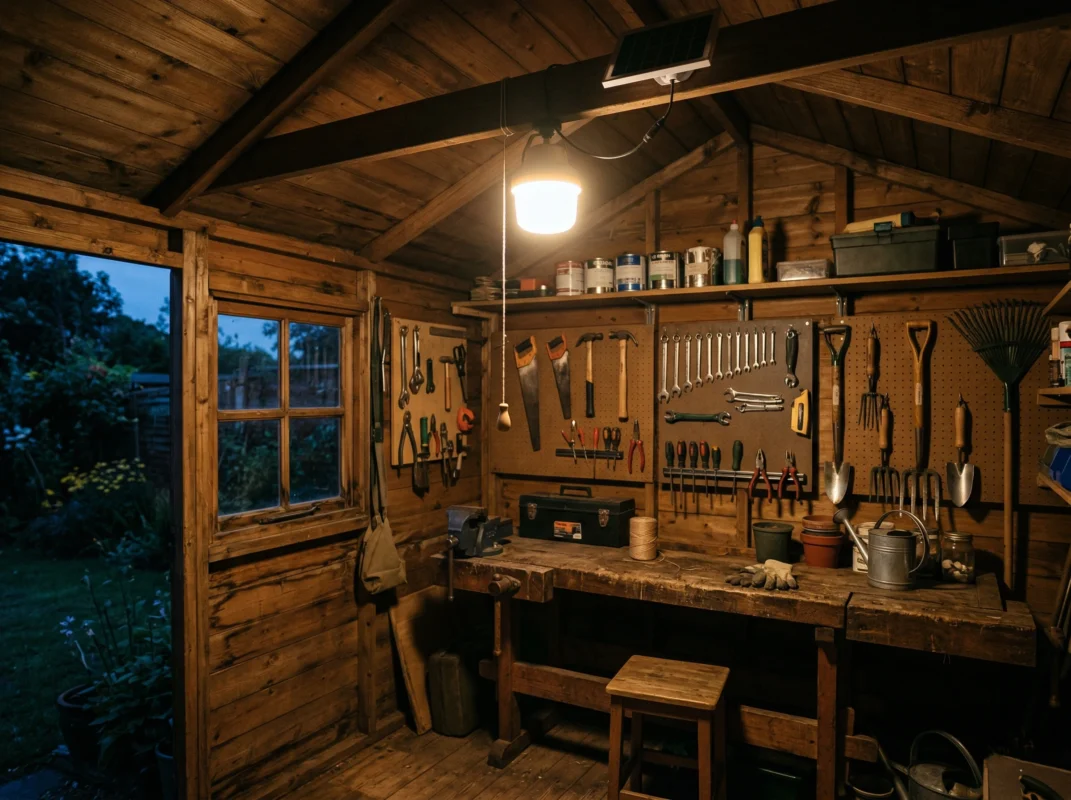
Expert Tips for Maximizing Your Solar Shed Light
A solar shed light with pull cord can perform far better than expected—if you treat it like a system, not just a fixture. After working with different setups in sheds, garages, and barns, a few practical habits consistently make the difference between average and excellent performance.
Position the Panel Like It Actually Matters
Most performance issues trace back to poor panel placement. Your solar shed light with pull cord is only as good as the sunlight it receives. Aim the panel toward consistent, direct sun exposure and avoid areas blocked by trees, walls, or roof overhangs. Even a small adjustment in angle can noticeably improve charging efficiency.
Use the Pull Cord Strategically
The pull cord isn’t just a switch—it’s a power management tool. Instead of leaving the light on longer than needed, turn it on only when necessary. This simple habit extends battery life and ensures your solar shed light with pull cord is ready when you actually need it.
Keep the System Clean and Maintained
Dust and debris build up faster than most people realize, especially in outdoor or agricultural settings. Wipe down the panel regularly and check connections for wear. A clean system helps your solar light maintain consistent output without unexpected drops in brightness.
Match Lighting to How You Use the Space
Think beyond one-size-fits-all. If your shed doubles as a workspace, combine a high lumen solar shed light with a focused fixture like a solar pendant light for shed. This layered setup gives you both general illumination and task lighting where it counts.
Plan for Long-Term Battery Performance
Batteries don’t last forever. If your solar shed light with pull cord starts losing runtime after a few years, it’s usually not the panel—it’s the battery aging. Planning for eventual replacement keeps your system performing like it did on day one.
Final Thoughts
Installing a solar shed light with pull cord is a practical, efficient, and eco-friendly way to transform your off-grid spaces. Whether you’re a DIY enthusiast, a farmer, or someone needing reliable lighting in a garage or shed, this solution offers flexibility, brightness, and long-term savings. With proper setup, maintenance, and placement, your shed will be safely and brightly illuminated all year round.
FAQs About Solar Shed Lights
Can the solar panel be separate from the light?
Yes. Most solar shed light with pull cord systems support a separate panel design. This allows you to place the panel in direct sunlight while installing the light exactly where you need it indoors, improving charging efficiency and overall performance.
How long is the cord between panel and light?
Typically, the cable length ranges from 6 to 15 feet. When installing a solar shed light with pull cord, always check the specified length to ensure it fits your layout without stretching or requiring extensions.
Does it work inside during the day?
Yes. Once fully charged, a solar shed light with pull cord works independently of sunlight. Even during the day, you can use it indoors as long as the battery has stored enough energy.
How bright is a shed light in lumens?
Most units deliver between 600 and 1,500 lumens. A high lumen solar shed light in the 800–1,200 lumen range is generally bright enough for storage, maintenance, and light workshop tasks.
Can I install the panel on a metal roof?
Yes, you can mount the panel on a metal roof. Just use proper brackets and ensure slight elevation for airflow. This helps your solar shed light with pull cord maintain stable charging without overheating.
How long does the charge last?
On a full charge, most systems run between 6 and 12 hours. Runtime depends on battery size, sunlight exposure, and how often the solar shed light with pull cord is used.
Is it bright enough to work under?
Yes—if you choose the right output. A solar shed light with pull cord with higher lumen output can provide sufficient brightness for tool use, repairs, and other detailed tasks in a small to medium-sized shed.