

Table of Contents
If you’ve ever walked into a home and instantly felt that effortless mix of vintage warmth and modern simplicity, chances are the lighting had something to do with it. A mid century modern pendant light has a way of anchoring a room without overwhelming it. It’s functional, sculptural, and timeless all at once.
But here’s the real question homeowners face:
How do you actually choose the right mid century modern pendant light—and where should you install it so it looks intentional rather than trendy?
After helping dozens of homeowners redesign kitchens, dining areas, and living spaces, I’ve learned that choosing the right mid century modern pendant light isn’t about following Pinterest trends. It’s about understanding scale, materials, light quality, and how a fixture interacts with the space around it.
In this guide, we’ll break down everything you need to know—from selecting the right mid century modern pendant light style to installing it like a pro.
What Makes a Mid Century Modern Pendant Light So Timeless?
Before you buy a mid century modern pendant light, it helps to understand why this design era still dominates modern interiors.
Lighting from the mid-century design movement (roughly 1945–1970) focused on clean geometry, honest materials, and functional beauty. Unlike ornate chandeliers or bulky fixtures, a mid century modern pendant light often feels lightweight and sculptural.
Typical design traits include:
- Simple geometric forms
- Natural materials like wood or brass
- Exposed bulbs or globe shades
- Minimal ornamentation
- Warm, ambient illumination
A well-chosen mid century modern pendant light doesn’t just light a room. It becomes a visual focal point.
Many interior designers consider a mid century modern pendant light the “jewelry” of a room—subtle, but impossible to ignore.
The Most Popular Types of Mid Century Modern Pendant Light
When homeowners start searching for the perfect mid century modern pendant light, they quickly realize there isn’t just one look that defines the style. Mid-century design is surprisingly diverse. Some fixtures lean toward sleek minimalism, while others embrace sculptural, space-age shapes that instantly become the centerpiece of a room.
From years of working with homeowners on lighting upgrades—especially kitchens and dining areas—I’ve noticed a pattern: people usually choose a mid century modern pendant light based on two things. First is the overall mood they want in the room. Second is how much visual impact they want the fixture to create.
Below are some of the most popular styles you’ll see when shopping for a mid century modern pendant light, along with practical advice on where each type works best.
Globe Pendant Lighting
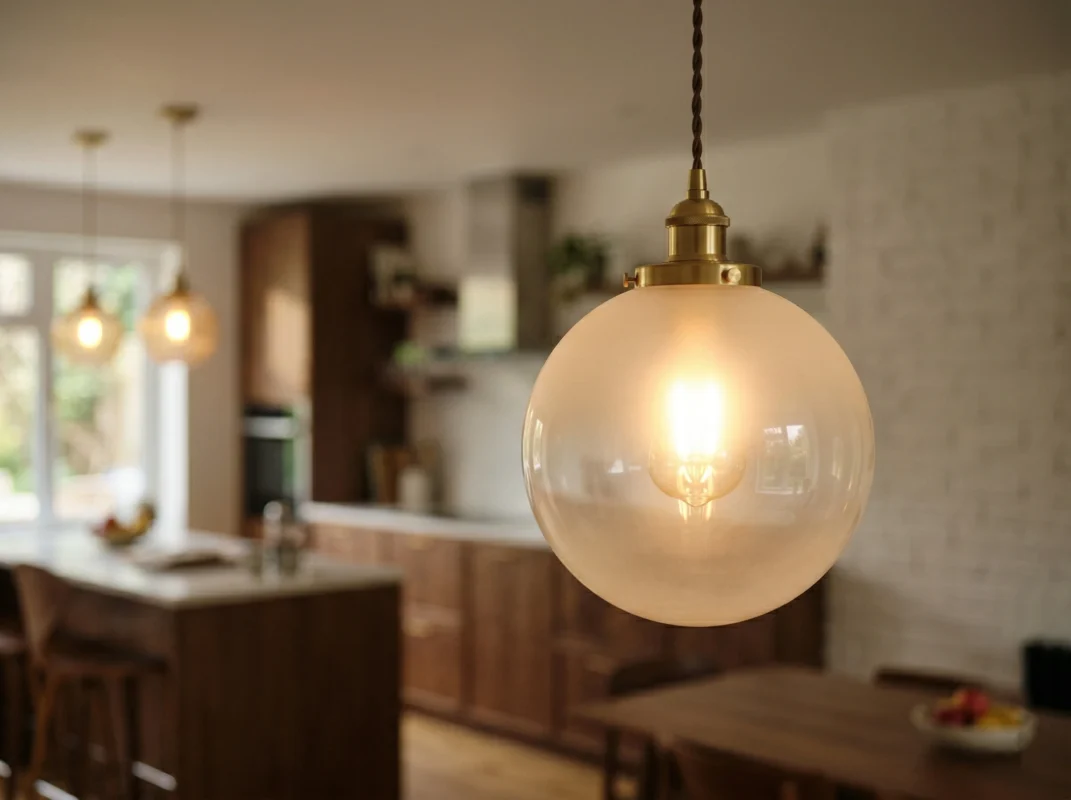
One of the most recognizable forms of a mid century modern pendant light is globe pendant lighting. The design is simple but incredibly effective: a spherical glass shade that diffuses light evenly in all directions.
The reason globe pendant lighting has remained popular for decades is its balance of form and function. The round shape softens hard architectural lines—something especially useful in kitchens filled with cabinets, countertops, and appliances.
In real homes, I often recommend globe pendant lighting for kitchen islands and breakfast bars. A row of two or three evenly spaced pendants can instantly upgrade a kitchen’s appearance while still providing practical task lighting.
Another advantage of this type of mid century modern pendant light is the light quality. Frosted or opal glass shades help eliminate glare, creating a comfortable ambient glow that works well in both kitchens and dining areas.
Brass Mid-Century Pendant
If you want a fixture that truly reflects the mid-century era, a brass mid-century pendant is one of the most authentic choices. Brass was widely used in mid-century interiors because of its warm tone and ability to reflect light softly.
A brass mid-century pendant works particularly well in rooms that already feature natural materials like wood cabinets, leather furniture, or walnut dining tables. The warm metallic finish complements those textures instead of competing with them.
From a practical perspective, a mid century modern pendant light with brass elements also ages beautifully. Unlike highly polished metals that show fingerprints easily, brushed or satin brass finishes tend to hide wear and develop a subtle patina over time.
Designers often combine a brass mid-century pendant with simple globe shades or minimalist cones to create a fixture that feels vintage without looking outdated.
Sputnik Pendant Light
For homeowners who want something more dramatic, the sputnik pendant light remains one of the most iconic expressions of mid-century design. Inspired by early space exploration aesthetics, this type of mid century modern pendant light features multiple arms extending outward from a central hub.
A sputnik pendant light is less about subtlety and more about architectural presence. In larger rooms—such as dining areas or entryways with higher ceilings—it acts almost like a sculptural centerpiece.
Because of its wide spread, a sputnik pendant light also distributes light across a larger area compared with smaller pendants. That makes it particularly useful in open-plan living spaces where one fixture needs to illuminate multiple zones.
That said, scale matters. When choosing this type of mid century modern pendant light, make sure the fixture diameter fits the room. Too large, and it overwhelms the space; too small, and the visual effect disappears.
Single Bulb MCM Pendant
Minimalists often gravitate toward the single bulb MCM pendant, which strips the design down to its essentials. With just one socket, one bulb, and a small shade or open frame, this type of mid century modern pendant light offers a clean, understated look.
This style is particularly popular for retro kitchen island lighting. Instead of one large fixture, homeowners often install a series of three single bulb MCM pendant lights in a row. The repetition creates visual rhythm while keeping the design lightweight.
Another advantage of this mid century modern pendant light style is flexibility. Because the fixture is simple, it can easily blend with different interior themes—from classic mid-century interiors to modern minimalist kitchens.
Bulb choice also plays a big role here. Many people pair a single bulb MCM pendant with vintage-style filament bulbs to emphasize the retro aesthetic.
Wood Mid-Century Pendant
Mid-century design was known for blending modern forms with natural materials, which is why the wood mid-century pendant continues to gain popularity today.
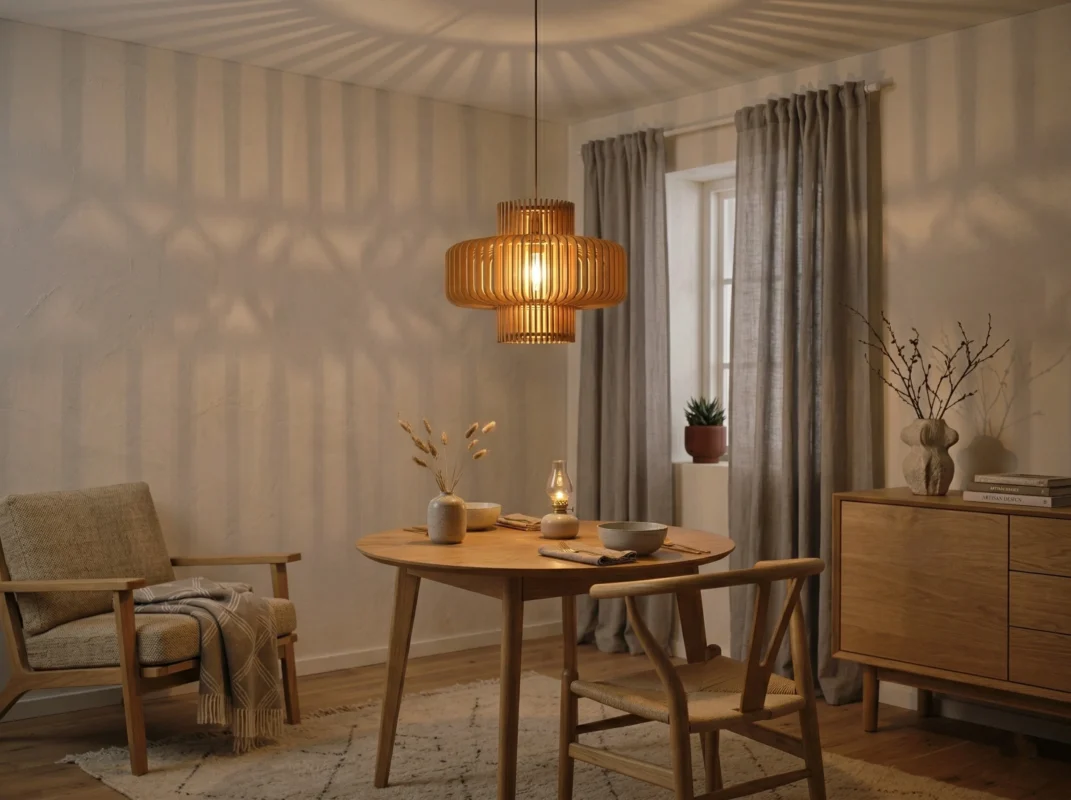
Unlike metal or glass fixtures, a wood mid-century pendant introduces warmth and texture into a room. Wood slats or curved wooden shades can also create interesting light patterns on nearby walls and ceilings.
A mid century modern pendant light made from wood works especially well in spaces that emphasize natural tones—think light oak flooring, neutral walls, and simple Scandinavian-inspired furniture.
From a design perspective, wood fixtures also help soften spaces dominated by metal appliances or stone countertops. In kitchens, a wood mid-century pendant can bring balance to an otherwise sleek, modern environment.
Industrial Mid-Century Lamp
The final category worth mentioning is the industrial mid-century lamp, which blends mid-century simplicity with industrial materials like matte metal, exposed bulbs, and mechanical hardware.
This hybrid style of mid century modern pendant light works particularly well in loft apartments or homes with open ceilings, brick walls, or concrete floors.
An industrial mid-century lamp often uses darker finishes—such as black or aged metal—which create strong contrast against lighter interiors. When used strategically, it adds character without overpowering the room.
For homeowners who like the structure of mid-century design but prefer a slightly more rugged aesthetic, an industrial mid-century lamp offers the perfect balance between vintage charm and industrial edge.
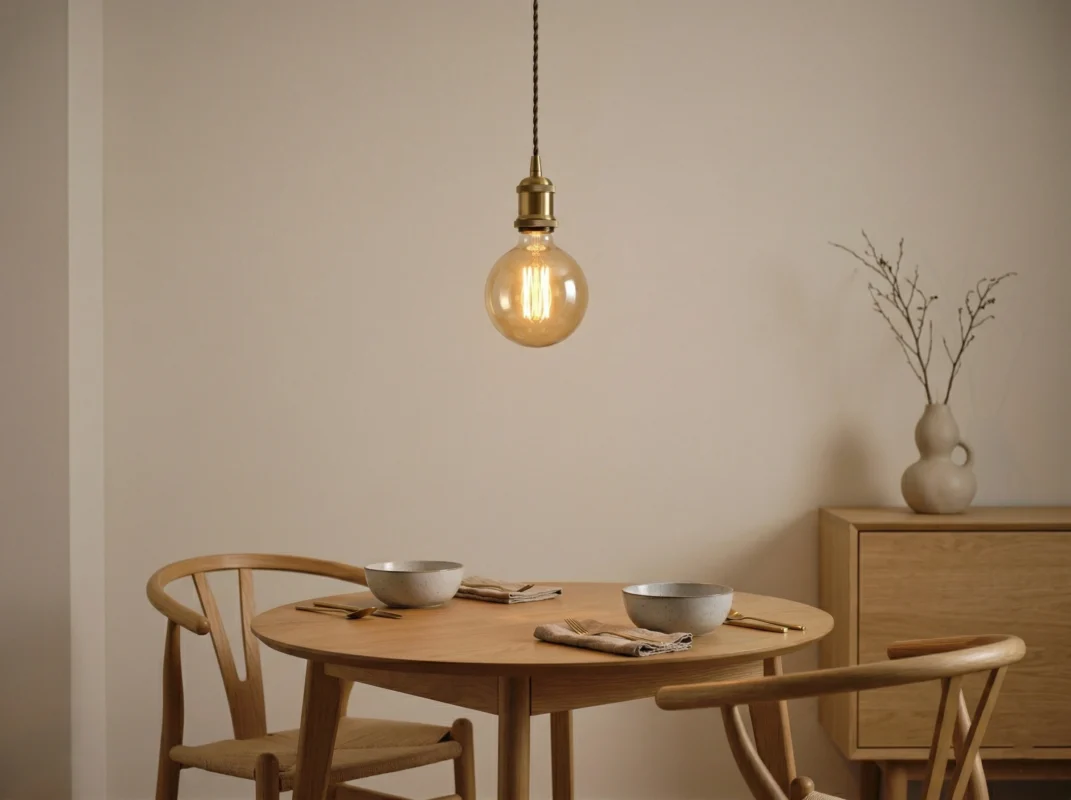
Where a Mid Century Modern Pendant Light Works Best
Choosing the right mid century modern pendant light isn’t just about style—it’s about placement. Even the most beautiful fixture can look awkward if it’s installed in the wrong spot or hung at the wrong height. In real interior projects, the success of a mid century modern pendant light often comes down to how well it fits the room’s layout, ceiling height, and daily use.
Below are some of the areas where a mid century modern pendant light performs especially well, both visually and functionally.
Kitchen Islands
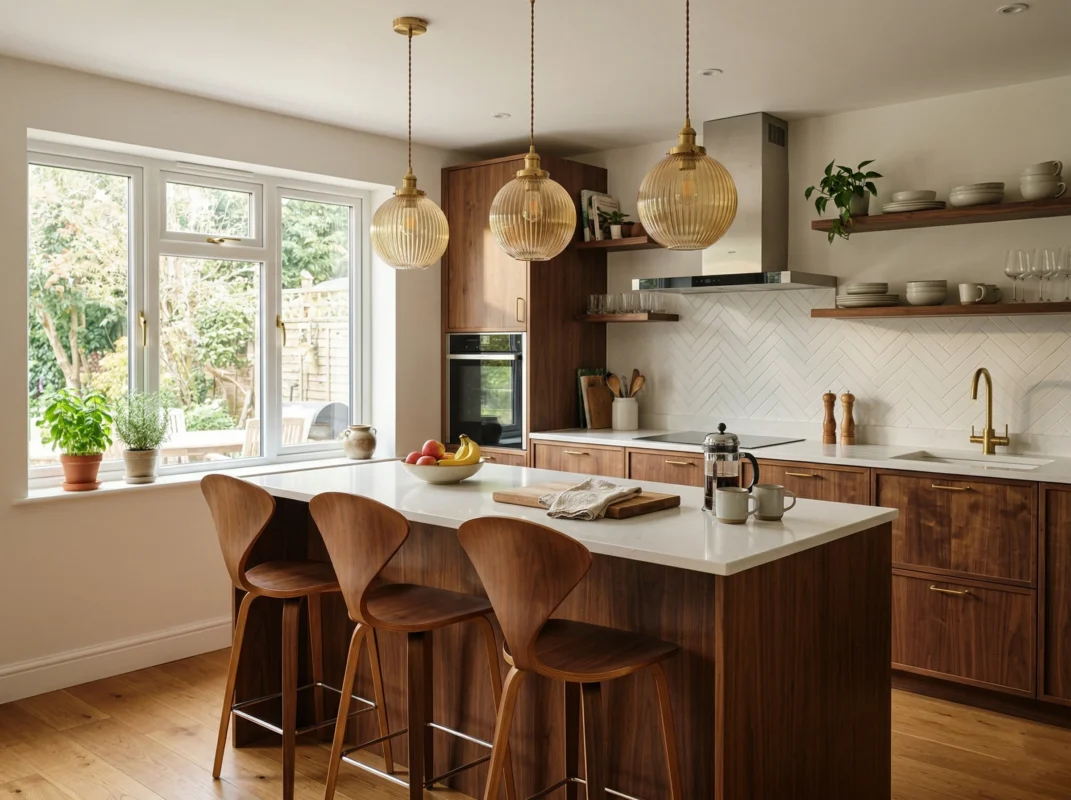
One of the most common places to install a mid century modern pendant light is above the kitchen island. Pendant lighting works well here because it provides focused illumination for food preparation while also acting as a visual centerpiece.
For retro kitchen island lighting, designers typically recommend installing two to three pendants in a straight line, depending on the island length. Even spacing—usually around 24–30 inches apart—helps the layout feel balanced.
Many homeowners choose globe pendant lighting for this area because the rounded glass shade spreads light evenly across the countertop without creating harsh shadows.
Dining Tables
A mid century modern pendant light also works beautifully over a dining table, where lighting plays a key role in setting the atmosphere. Unlike recessed ceiling lights, a pendant brings the light source closer to the table, creating a warm and inviting environment for meals.
For rectangular tables, a slightly wider mid century modern pendant light or a multi-arm fixture often looks more proportional. Round tables pair especially well with globe pendant lighting or a minimalist single bulb MCM pendant, which keeps the look clean and balanced.
Entryways and Hallways
Entryways are often overlooked when it comes to lighting, but they’re actually one of the best places to showcase a mid century modern pendant light. A well-chosen fixture immediately establishes the design tone of the home.
In taller foyers, a sculptural option like a sputnik pendant light can act as an architectural statement piece. In smaller entry spaces, a compact modern glass pendant light provides soft illumination without overwhelming the room.
Bedrooms and Reading Corners
In recent years, designers have started using a mid century modern pendant light as an alternative to bedside lamps. Hanging pendants on either side of the bed frees up nightstand space while creating a boutique-style hotel aesthetic.
A smaller mid century modern pendant light, such as a single bulb MCM pendant or a compact wood mid-century pendant, works well here. These fixtures provide soft ambient light for reading while adding a subtle decorative touch to the room.
How to Choose the Right Mid Century Modern Pendant Light
Picking the right mid century modern pendant light can make the difference between a room that feels thoughtfully designed and one that feels slightly off. Many homeowners focus only on the look of the fixture, but experienced designers usually start with three practical factors: size, height, and light quality. When these elements are balanced correctly, a mid century modern pendant light doesn’t just decorate the room—it improves how the space functions every day.
Below are the key considerations professionals use when selecting a mid century modern pendant light for kitchens, dining areas, and living spaces.
Choose the Correct Fixture Size
One of the most common mistakes people make is selecting a mid century modern pendant light that is too small. A fixture that’s undersized tends to disappear visually, especially in larger rooms or open-plan layouts.
A simple rule many interior designers follow is the room-size formula: add the room’s length and width in feet, and use that number in inches as the approximate fixture diameter. For example, a 12-by-10-foot dining space would work well with a mid century modern pendant light around 22 inches wide.
For kitchen islands, scale works a little differently. Instead of one large fixture, many homeowners choose two or three smaller pendants—such as globe pendant lighting or a single bulb MCM pendant—spaced evenly along the island. This approach improves both lighting coverage and visual balance.
Consider Ceiling Height and Hanging Distance
Height placement is just as important as size when installing a mid century modern pendant light. If the fixture hangs too high, it loses its design impact. Too low, and it can obstruct sightlines or feel intrusive.
In most kitchens, a mid century modern pendant light should hang about 30 to 36 inches above the countertop or island surface. For dining tables, 30 to 34 inches above the tabletop usually creates the most comfortable lighting.
Rooms with taller ceilings can handle slightly longer suspension rods or cables. In these spaces, a more sculptural fixture—like a sputnik pendant light or a layered modern glass pendant light—can help fill vertical space and create a stronger visual focal point.
Select the Right Materials and Finish
Material choice plays a major role in how a mid century modern pendant light fits into a room’s design. Mid-century interiors often combine metal, wood, and glass to create contrast without clutter.
For example, a brass mid-century pendant adds warmth and pairs well with wood cabinets or dining furniture. A wood mid-century pendant introduces natural texture and softens modern kitchens filled with metal appliances and stone surfaces. Meanwhile, a modern glass pendant light offers a lighter, more minimal look that works well in contemporary interiors.
The key is consistency. When choosing a mid century modern pendant light, try to repeat at least one material already present in the room—such as brass hardware, wood accents, or matte metal finishes.
Think About Light Output and Bulb Type
Finally, consider how much light the mid century modern pendant light actually provides. Some fixtures are designed mainly for ambient lighting, while others provide focused task illumination.
For kitchen islands or work areas, brighter bulbs inside globe pendant lighting or open-frame pendants help distribute light evenly across the surface. In dining rooms or bedrooms, softer lighting usually feels more comfortable.
Color temperature matters too. Most designers recommend warm white light between 2700K and 3000K for a mid century modern pendant light, because it enhances the warm tones of materials like brass and wood while keeping the space relaxed and inviting.
Installation Tips from Real Experience
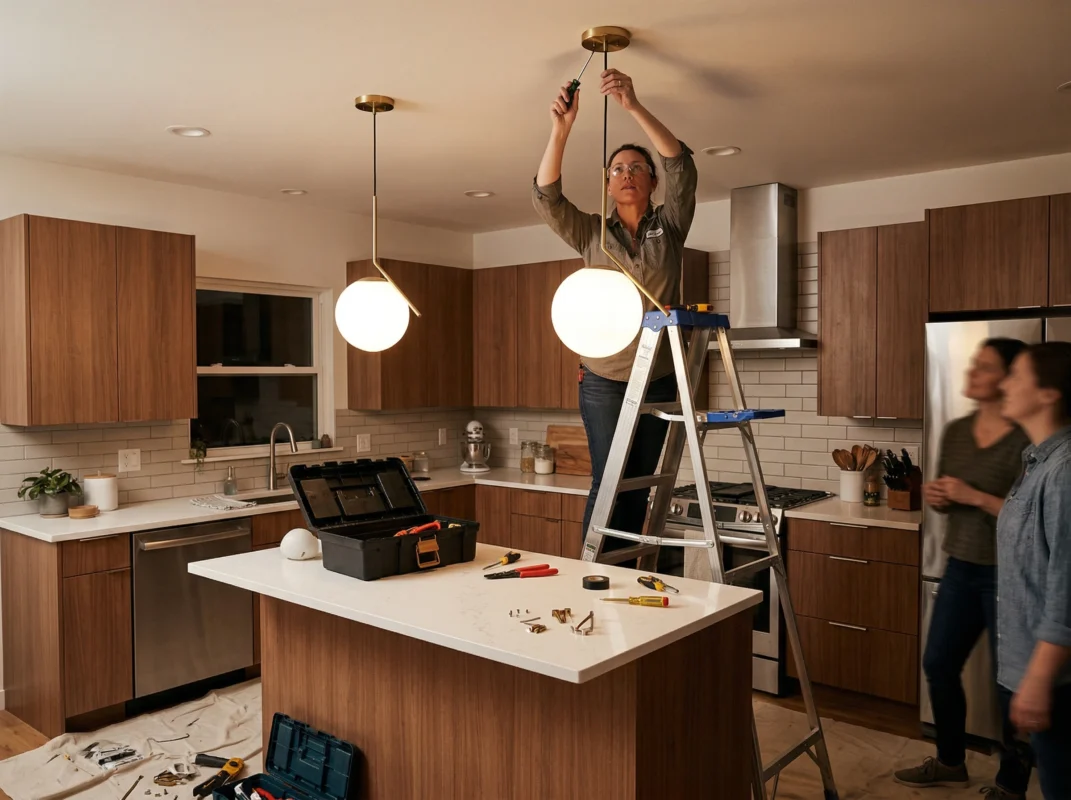
Installing a mid century modern pendant light isn’t overly complicated, but a few practical details can make the difference between a smooth installation and a frustrating afternoon. Over the years, I’ve seen many homeowners successfully install their own lighting fixtures—but I’ve also seen common mistakes that affect both safety and appearance.
If you’re planning to install a mid century modern pendant light yourself, the following tips come directly from real on-site experience. These small steps help ensure the fixture looks professional and performs reliably.
Check the Electrical Box and Ceiling Support
Before installing any mid century modern pendant light, the first step is to confirm that the ceiling electrical box is secure and rated to support the fixture. Most standard pendants are relatively lightweight, but larger designs—such as a sputnik pendant light—can place additional strain on the mounting hardware.
If the existing junction box feels loose or isn’t anchored to a ceiling joist, it should be reinforced before hanging the fixture. A properly supported electrical box prevents movement, which helps keep the mid century modern pendant light stable and aligned over time.
For homes with older wiring, it’s also a good idea to check that the wiring insulation is still in good condition before connecting the new fixture.
Adjust Hanging Height Before Final Tightening
One detail many people overlook is testing the hanging height before tightening the fixture permanently. A mid century modern pendant light can look very different depending on how low or high it hangs.
For kitchen islands or dining tables, most professionals aim for about 30–36 inches between the fixture and the surface below. This height allows the mid century modern pendant light to provide useful task lighting while still maintaining clear sightlines across the room.
Fixtures like globe pendant lighting or a modern glass pendant light often include adjustable rods or cords. Before locking everything into place, temporarily power the light on and step back across the room. This quick visual check helps ensure the mid century modern pendant light sits at a comfortable and visually balanced height.
Install Multiple Pendants with Precise Spacing
When installing more than one mid century modern pendant light, spacing becomes extremely important. Uneven placement is one of the most noticeable lighting mistakes in kitchens.
For retro kitchen island lighting, pendants should generally be spaced 24–30 inches apart and centered over the island surface. Using painter’s tape or temporary marks on the ceiling can help visualize the layout before drilling or mounting the hardware.
A row of evenly spaced mid century modern pendant light fixtures—especially single bulb MCM pendant designs—creates rhythm and symmetry, which are both hallmarks of mid-century design.
Add a Dimmer for Better Lighting Control
One upgrade I almost always recommend when installing a mid century modern pendant light is adding a dimmer switch. While many people focus on fixture design, lighting control plays a huge role in how comfortable a room feels.
A dimmer allows the mid century modern pendant light to serve multiple purposes. Bright light works well for cooking or working, while softer light creates a relaxed atmosphere for dining or entertaining.
Most globe pendant lighting and modern glass pendant light fixtures work beautifully with dimmable LED bulbs, giving homeowners flexibility without sacrificing energy efficiency. Adding this small feature during installation often makes the mid century modern pendant light far more versatile in everyday use.
Common Mistakes When Buying a Mid Century Modern Pendant Light
A well-chosen mid century modern pendant light can elevate an entire room, but the wrong choice can just as easily throw off the balance of a space. In real home projects, most lighting issues don’t come from poor design—they come from small decisions that seem harmless during the buying stage.
After seeing dozens of kitchen and dining lighting upgrades, a few common mistakes show up again and again. Avoiding these pitfalls will help ensure your mid century modern pendant light looks intentional and performs well in everyday use.
Choosing a Fixture That Is Too Small
One of the most frequent mistakes is selecting a mid century modern pendant light that’s undersized for the space. A fixture might look perfectly proportional in a product photo, but once installed in a real room—especially one with high ceilings—it can feel visually lost.
For example, installing a small pendant above a large kitchen island often results in weak lighting and poor visual balance. Instead of one tiny fixture, designers often recommend multiple pendants such as globe pendant lighting or a row of single bulb MCM pendant lights.
When in doubt, slightly larger fixtures usually work better with mid-century design because the style often celebrates bold geometric forms.
Ignoring Ceiling Height and Hanging Distance
Another common problem occurs when homeowners focus only on the style of a mid century modern pendant light without considering how low it will hang. Ceiling height directly affects how a fixture should be installed.
If the pendant hangs too high, it loses its visual presence. If it hangs too low, it can block sightlines or make the room feel cramped. This is particularly important for statement pieces like a sputnik pendant light, which needs enough vertical space to feel balanced.
A good rule is to hang a mid century modern pendant light about 30–36 inches above a kitchen island or dining surface. Proper height helps the fixture look intentional rather than awkward.
Mixing Too Many Finishes
Mid-century design is known for its clean simplicity, yet many homeowners accidentally clutter the look by mixing too many finishes. A mid century modern pendant light should complement the materials already present in the room.
For instance, if the kitchen has warm cabinet tones and brass hardware, a brass mid-century pendant will feel cohesive. If the space leans more modern and minimal, a modern glass pendant light or matte metal fixture may work better.
Combining too many competing finishes—such as chrome, brass, and black in the same small area—can make the design feel chaotic rather than refined.
Overlooking Light Distribution
Finally, many people forget that a mid century modern pendant light is not just decorative—it’s also a functional light source. Different fixtures distribute light in very different ways.
A modern glass pendant light or globe pendant lighting spreads illumination evenly throughout the room, making it ideal for ambient lighting. In contrast, metal shades often direct light downward, which works better for task lighting over counters or dining tables.
Choosing the wrong type of mid century modern pendant light for the job can leave parts of the room dim or unevenly lit. Understanding how the fixture spreads light helps ensure both style and practicality are achieved.
Styling Tips to Make Your Pendant Look Intentional
A mid century modern pendant light should look integrated with the room.
Try these tricks:
- Pair brass pendants with walnut furniture
- Use globe pendant lighting in minimalist kitchens
- Combine wood pendants with neutral palettes
- Balance bold fixtures with simple furniture
Even a small mid century modern pendant light can become a statement piece when styled thoughtfully.
Maintenance and Cleaning Tips
A mid century modern pendant light doesn’t require complicated maintenance, but regular cleaning helps preserve both its appearance and lighting quality. Dust, grease, and fingerprints can gradually dull finishes and reduce light output, especially in kitchens.
Clean Glass Shades Properly
Many homeowners choose globe pendant lighting or a modern glass pendant light for their soft, diffused glow. Over time, glass shades can collect dust or cooking residue. To clean them safely, turn off the power, remove the shade if possible, and wash it with warm water and mild soap. Dry thoroughly before reinstalling the mid century modern pendant light to prevent water spots.
Maintain Metal and Wood Finishes
A brass mid-century pendant or wood mid-century pendant should be cleaned with a soft microfiber cloth. Avoid harsh chemicals, as they can damage protective coatings or natural finishes. Regular wiping keeps the mid century modern pendant light looking polished without affecting the material.
Check Bulbs and Connections
Occasionally inspect the bulb socket and wiring connections. Replacing aging bulbs and ensuring secure fittings helps your mid century modern pendant light continue delivering consistent indoor light for years.
Final Thoughts
A well-chosen mid century modern pendant light can transform an ordinary room into something memorable.
Whether you prefer globe pendant lighting, a brass mid-century pendant, or a dramatic sputnik pendant light, the key is choosing a fixture that complements your space rather than competing with it.
Lighting isn’t just functional—it shapes how a room feels.
And when installed thoughtfully, the right mid century modern pendant light becomes the quiet centerpiece that ties everything together.
FAQs About Mid Century Modern Pendant Lighting
What defines mid-century modern lighting?
Mid-century modern lighting is defined by clean lines, geometric shapes, and functional design. A typical mid century modern pendant light uses simple materials such as glass, brass, or wood and avoids heavy ornamentation. The focus is on balanced proportions and warm ambient lighting that complements modern interiors.
How high should a globe pendant be?
For most kitchens and dining areas, globe pendant lighting should hang about 30–36 inches above the countertop or table surface. This height allows the mid century modern pendant light to provide effective task lighting while maintaining comfortable sightlines across the room.
Are Edison bulbs good for MCM lights?
Yes. Edison-style bulbs work well with a mid century modern pendant light because their warm glow complements the vintage-inspired design. They are especially popular in a single bulb MCM pendant, where the bulb itself becomes part of the visual style.
Can I use a dimmer with MCM pendants?
In most cases, yes. A mid century modern pendant light can typically be paired with a dimmer switch as long as the bulb type supports dimming. A dimmer allows you to adjust brightness levels, making the lighting suitable for both task use and relaxed evening ambiance.
How many pendants for a kitchen island?
The number depends on the island size. For retro kitchen island lighting, most designers recommend two pendants for small islands, three for medium islands, and four for larger islands. Even spacing ensures the mid century modern pendant light arrangement looks balanced and provides consistent illumination.
Is brass or black better for MCM style?
Both finishes can work with mid-century design. A brass mid-century pendant creates a warm, authentic retro look, while darker finishes offer stronger contrast in modern spaces. The best choice depends on the materials and colors already present in the room.
How do you clean glass globe lights?
To clean globe pendant lighting, turn off the power first. Remove the glass shade if possible and wash it with warm water and mild soap. Dry completely before reinstalling the mid century modern pendant light to avoid streaks or water spots.
Are they easy to install on a DIY basis?
Many homeowners with basic electrical knowledge can install a mid century modern pendant light themselves, especially lighter fixtures like modern glass pendant light designs. However, larger fixtures such as a sputnik pendant light may require professional installation due to weight and wiring complexity.