

Table of Contents
When it comes to designing your home, hallways are often overlooked. Yet, a well-lit hallway can transform your entire living space, creating safety, style, and a welcoming atmosphere. This guide dives deep into lamp hallway solutions, giving you practical insights, actionable tips, and expert strategies. Whether you’re upgrading a narrow hallway or planning a small hallway lighting setup, this article has everything you need to make your hallways shine.
Why Proper Hallway Lighting Matters
The Functional Importance of Lighting
Hallways aren’t just passageways—they are essential connectors in your home. A dim hallway can make daily life inconvenient and even dangerous. According to lighting experts, poorly lit hallways are one of the most common areas where trips and falls occur in residential spaces. That’s why lamp hallway design isn’t just aesthetic—it’s practical.
Indoor light options, including ceiling-mounted lamps or wall sconces, ensure every corner is visible. For those seeking energy efficiency, integrating solar light or LED-based solutions can provide sustainable illumination while keeping energy bills low.
The Psychological Impact
Lighting also influences how your space feels. A well-lit hallway can make a narrow corridor feel spacious, while soft, warm lighting encourages relaxation. Conversely, harsh or uneven lighting can create discomfort or make spaces appear claustrophobic. Using narrow hallway lighting ideas like recessed lamps or strategically placed wall fixtures can dramatically improve the visual flow of your home.
Energy Efficiency Considerations
Energy-conscious homeowners are increasingly looking for solutions that combine style with sustainability. Solar light fixtures can be installed near windows or skylights to capture natural light and supplement artificial sources. Even simple indoor LEDs consume far less power than traditional bulbs while maintaining brightness and longevity. This balance of efficiency and elegance is why modern lamp hallway designs often incorporate mixed lighting sources.
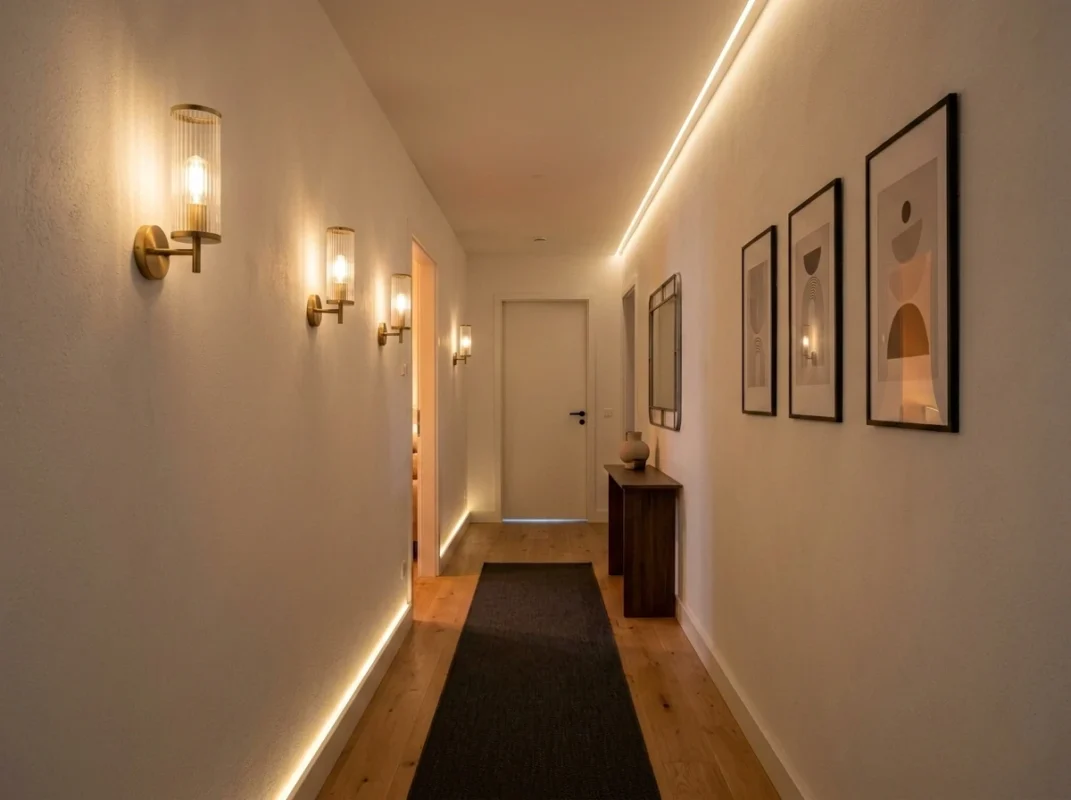
Types of Hallway Lights and Fixtures
When planning a lamp hallway, choosing the right type of lighting fixture is crucial. The wrong fixture can make a narrow corridor feel cramped, while the right one enhances style, safety, and functionality. Below, we explore the main types of hallway lights and their applications.
Recessed Lighting in Hallways
Recessed lighting is a go-to choice for many homeowners, especially for small hallway lighting. These fixtures sit flush with the ceiling, offering a clean, unobtrusive look that doesn’t overwhelm the space.
Why choose recessed lights?
- They provide even illumination, reducing shadows in long or narrow corridors.
- They are ideal for low ceilings, where hanging fixtures might obstruct movement.
- They can be spaced strategically along the hallway to ensure light on in the hallway without creating dark spots.
Expert insight: Lighting designers recommend spacing recessed fixtures roughly 6–8 feet apart, adjusting for ceiling height and hallway width. This ensures uniform coverage and avoids uneven lighting.
Use recessed lights in combination with wall accents to create a layered lighting effect, especially in narrow hallway lighting ideas.
Pendant and Flush Mount Lights
For hallways with taller ceilings, pendant lights can add both style and function. They offer a visual focal point and can highlight architectural features or artwork. Flush mount lights, on the other hand, sit closer to the ceiling and are perfect for hallways with standard or lower ceiling heights.
Benefits of pendants and flush mounts:
- Pendants provide decorative appeal while still illuminating the path.
- Flush mounts are unobtrusive and distribute indoor light evenly.
- Both options can complement recessed lighting for layered illumination.
Practical tip: In long hallways, avoid using a single large pendant as the primary light source. Instead, use multiple smaller fixtures or combine with recessed lighting for better coverage.
Wall Sconces and Accent Lighting
Wall-mounted lights are excellent for adding dimension to your lamp hallway. Wall sconces not only brighten the corridor but also create ambient lighting that enhances the atmosphere.
Best practices:
- Place sconces at eye level (about 5–6 feet from the floor) for optimal effect.
- Use them to highlight artwork, photos, or architectural details.
- Combine with ceiling lighting to avoid shadows, especially in narrow hallway lighting ideas.
Pro tip: Wall lighting works exceptionally well in hallways where ceiling fixtures alone may not provide sufficient coverage. LED wall sconces offer energy efficiency and long-lasting brightness.
Solar and LED Options
Modern hallways increasingly incorporate solar light and LED technology for energy-efficient, long-lasting illumination. Solar-powered lamps can be effective near windows or skylights, supplementing indoor light. LEDs, with their low heat emission and high longevity, are ideal for both recessed and accent applications.
Advantages:
- Reduced electricity consumption.
- Minimal maintenance due to longer lifespan.
- Compatibility with smart home systems for motion detection or dimming controls.
Lighting professionals highlight that combining solar or LED fixtures with traditional indoor lighting ensures both sustainability and consistent brightness, particularly in spaces requiring light on in the hallway at night.
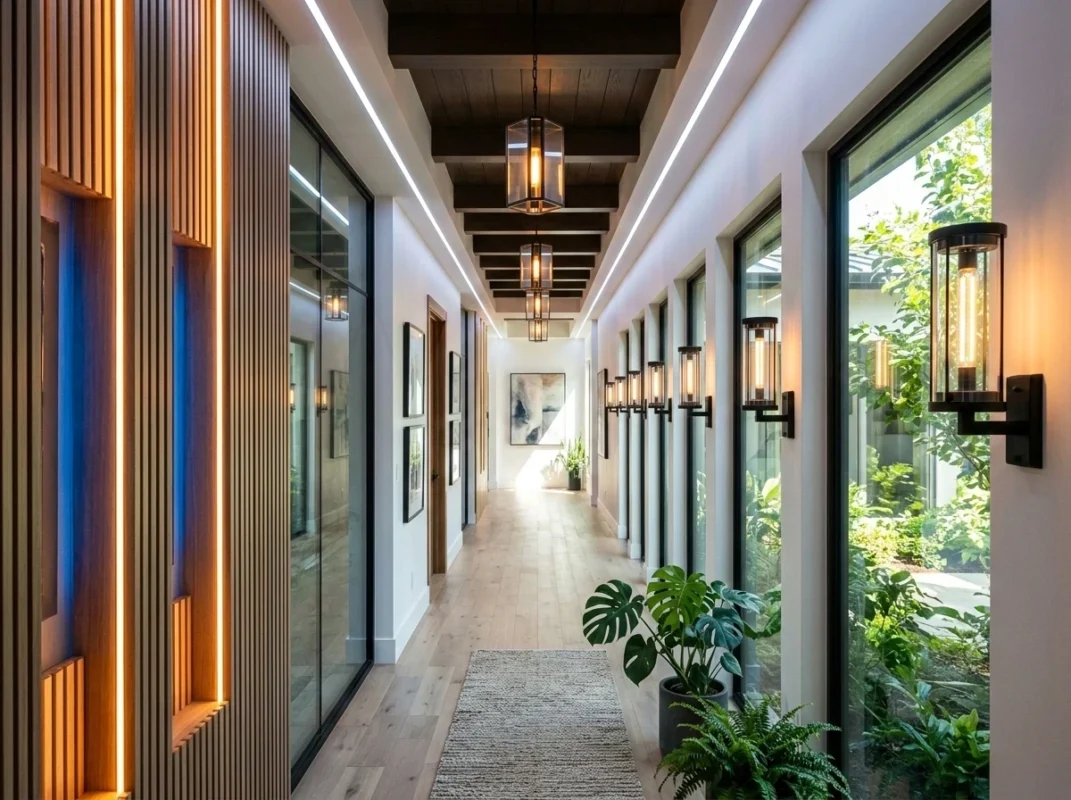
Planning Your Hallway Lighting Layout
Designing a lamp hallway isn’t just about picking a fixture—it’s about creating a layout that balances style, function, and safety. Proper planning ensures that every corner is illuminated, narrow corridors feel spacious, and long hallways avoid dark patches. Below, we break down the key factors to consider when planning your hallway lighting layout.
How Many Can Lights in a Hallway?
A common question homeowners ask is: How many can lights in a hallway should you install? Lighting experts recommend spacing recessed lights approximately 6 to 8 feet apart, depending on ceiling height and hallway width.
Practical guidance:
- For a standard 8-foot ceiling, lights spaced 6 feet apart typically provide even illumination.
- Wider hallways may require additional fixtures to prevent shadows.
- Using a combination of ceiling and wall-mounted fixtures ensures uniform brightness in narrow hallway lighting ideas.
Proper spacing prevents uneven lighting, which is a major cause of trips and falls in residential corridors. Designers emphasize that planning the exact number of fixtures based on hallway dimensions is crucial for both safety and aesthetics.
Proper Fixture Height
The height of your fixtures directly impacts both the look and function of your lamp hallway.
Key considerations:
- For standard ceilings (8–9 feet), recessed lights or flush mount fixtures are ideal.
- Tall ceilings (10 feet or more) can accommodate pendants or decorative fixtures.
- Avoid fixtures that hang too low in narrow corridors, as they can obstruct movement or create a cramped feeling.
Pro tip: Always measure ceiling height and factor in any furniture, artwork, or architectural features before selecting fixture height. Properly placed lighting ensures that light on in the hallway reaches every corner without glare.
Choosing the Right Light Size
Selecting the correct fixture size is essential, especially for small hallway lighting. Many homeowners make the mistake of using oversized fixtures in narrow spaces, which can overwhelm the hallway.
Rule of thumb:
- Measure your hallway width in feet, then use approximately one-third of that measurement as the fixture diameter.
- Example: A 3-foot-wide hallway works best with a 12-inch fixture.
- For long hallways, consider multiple smaller fixtures rather than a single large one to maintain uniform illumination.
Expert insight: Lighting designers suggest combining ceiling lights with wall sconces for both functionality and aesthetic balance. This layering creates depth and ensures every area is well-lit.
Layering for Uniform Illumination
A professional lamp hallway layout incorporates layered lighting to eliminate shadows and enhance ambiance.
Layering strategies:
- Combine recessed ceiling lights with wall sconces or LED strips.
- Use dimmable LEDs or adjustable fixtures to control brightness according to time of day.
- Highlight artwork or architectural details with accent lighting for visual interest.
Layered lighting is particularly important in narrow hallway lighting ideas and small hallways. It ensures safety, enhances aesthetics, and provides flexibility for different activities, such as passing through at night or displaying décor.
Incorporating Energy Efficiency
Energy efficiency should be part of your hallway lighting layout. Combining traditional indoor light fixtures with solar light or LED technology offers long-term benefits:
- Lower electricity costs without sacrificing brightness.
- Longer-lasting bulbs reduce maintenance.
- Smart lighting options, such as motion sensors, can automatically turn light on in the hallway only when needed.
Pro tip: Even in homes without full smart systems, selecting energy-efficient LEDs or hybrid solar-LED fixtures improves sustainability while maintaining high-quality illumination.
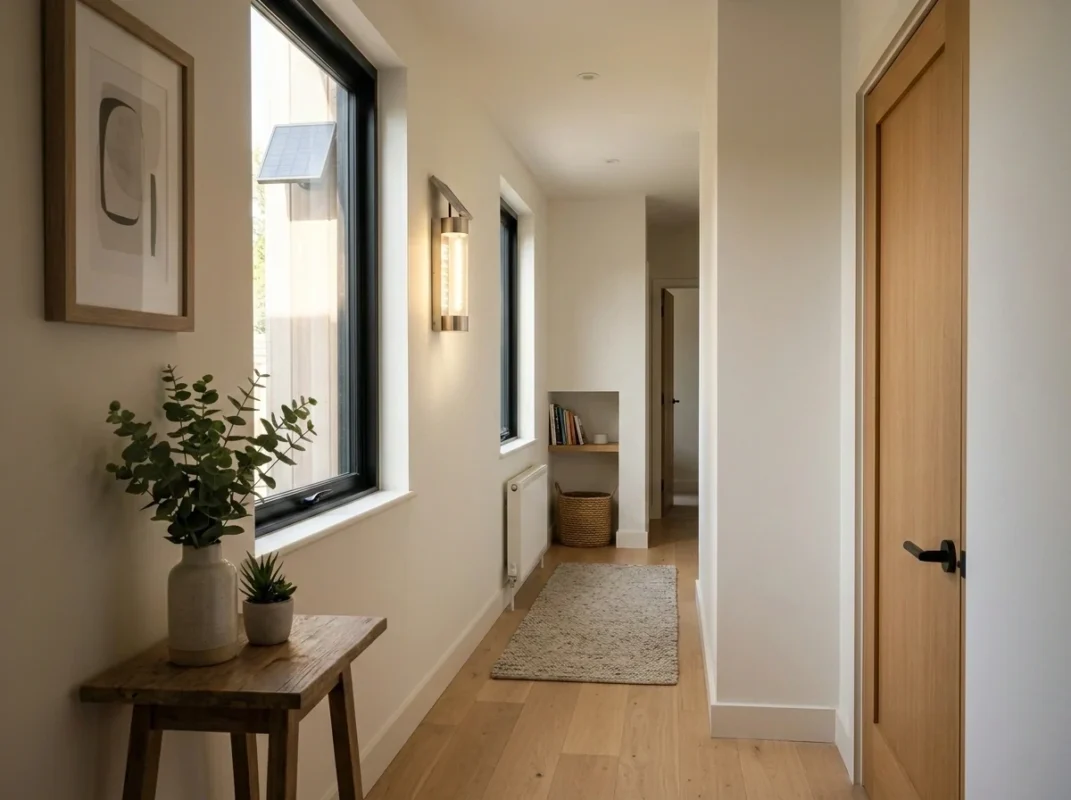
Small Hallway Lighting Solutions
Designing effective lighting for a small hallway can be challenging. Limited space often means you need fixtures that provide sufficient brightness without overwhelming the corridor. With the right planning, even the narrowest hallways can feel open, welcoming, and safe. Here’s a professional guide to small hallway lighting solutions.
How to Light a Small Hallway
For homeowners wondering how to light a small hallway, the goal is to maximize illumination without creating clutter. Recessed lighting is often the best starting point because it keeps ceilings clear and provides even coverage.
Expert tips:
- Space recessed lights approximately 6–8 feet apart to avoid dark spots.
- Use slim-profile fixtures for narrow spaces to maintain proportion.
- Combine ceiling lights with wall-mounted LEDs or sconces for layered brightness.
Practical insight: Adding a light on in the hallway sensor can automatically illuminate the space at night, improving both safety and convenience. Reflective surfaces and light-colored walls enhance the brightness without additional fixtures.
Compact Fixtures for Narrow Spaces
Narrow hallways require a thoughtful approach. Oversized fixtures can overwhelm a corridor, while too-small lamps won’t provide enough light.
Recommendations for narrow hallway lighting ideas:
- Select slim LED panels or small flush-mount lights.
- Consider wall-mounted fixtures to save ceiling space.
- For longer corridors, multiple smaller fixtures are better than one large central light.
Interior designers stress that proportion is key. Fixtures should complement the hallway’s dimensions to create balance, prevent shadows, and maintain indoor light consistency.
Using Mirrors and Reflective Surfaces
Mirrors and reflective surfaces are powerful tools for small hallway lighting. They bounce indoor light around the space, making narrow corridors feel larger and brighter.
Implementation tips:
- Place a mirror at the end of the hallway to create the illusion of depth.
- Use glossy or light-colored wall finishes to amplify light.
- Position reflective surfaces near ceiling or wall fixtures to distribute brightness evenly.
Practical example: A single recessed light paired with a mirror can illuminate an entire small hallway, reducing the need for multiple fixtures while enhancing visual appeal.
Incorporating Motion Sensors and Smart Controls
For small hallways, convenience is just as important as brightness. Light on in the hallway sensors or motion-activated LEDs ensure safety at night without wasting energy.
Advantages:
- Automatically illuminates the space when someone walks through.
- Prevents accidental trips in the dark.
- Can be combined with dimmable LEDs to adjust brightness depending on the time of day.
Lighting professionals recommend integrating motion sensors in small corridors to maintain a clean, functional layout without adding unnecessary switches or fixtures.
Layering for Maximum Effect
Even in a small hallway, layering is key to creating balanced illumination. Using a combination of recessed lights, slim wall fixtures, and reflective surfaces ensures no corner is left in shadow.
Layering tips:
- Combine ceiling and wall fixtures for depth and dimension.
- Accent lighting can highlight artwork or architectural features without crowding the space.
- Dimmable options provide flexibility for different activities or times of day.
Layering not only improves functionality but also aligns with hallway lighting ideas for small spaces, making the corridor feel more spacious and welcoming.
Energy-Efficient Solutions for Small Hallways
Energy efficiency is critical, even in compact spaces. Using LED or solar light options in a small hallway can provide sustainable illumination with minimal heat output.
Benefits:
- Lower electricity costs while maintaining bright lighting.
- Long-lasting fixtures reduce maintenance and replacement frequency.
- Compatible with smart sensors to ensure light on in the hallway only when necessary.
Expert tip: Combining LED and solar-powered indoor solutions can maintain consistent brightness in small hallways while reducing environmental impact.
Summary of Small Hallway Lighting Solutions:
- Use recessed or slim-profile ceiling fixtures for unobtrusive brightness.
- Incorporate wall-mounted lighting to layer illumination.
- Enhance light with mirrors and reflective surfaces.
- Add motion sensors or dimmable LEDs for convenience and energy efficiency.
- Prioritize proportion and layout to avoid overcrowding or shadowing.
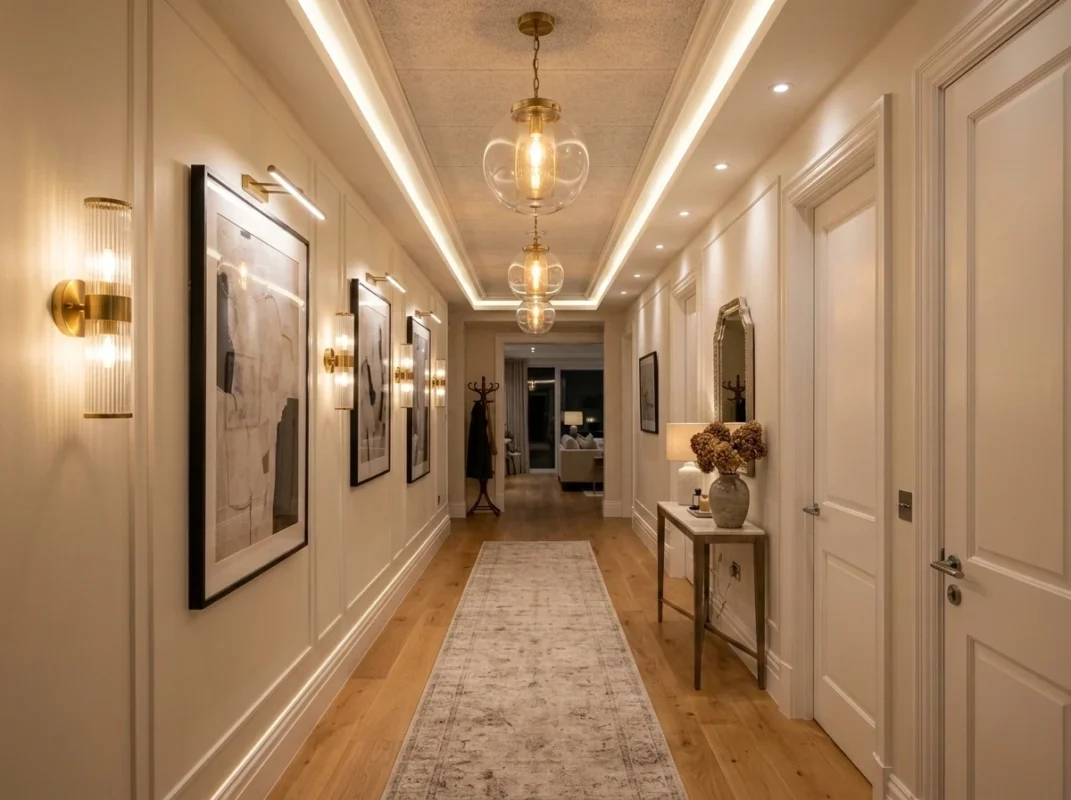
Creative Hallway Lighting Ideas
A hallway is more than just a passage—it can be a space that sets the tone for your entire home. With thoughtful lighting, even a narrow corridor can feel inviting, stylish, and functional. Here’s a guide to creative hallway lighting ideas that balance form and function while enhancing the lamp hallway experience.
Layered Lighting Techniques
Layering light is key to creating depth and dimension in any hallway. Combining ceiling, wall, and accent lighting ensures that shadows are minimized and the space feels bright throughout.
How to apply layering effectively:
- Use recessed ceiling lights as the primary source for general illumination.
- Add wall sconces or slim fixtures to highlight architectural features or artwork.
- Incorporate LED strips under moldings or along baseboards to create soft, indirect light for ambiance.
Expert insight: Interior designers emphasize that layered lighting not only improves visibility but also allows homeowners to customize the mood depending on the time of day or activity.
Layering is especially effective in narrow hallway lighting ideas, where a single light source often leaves unevenly lit areas.
Ambient vs. Task Lighting
Understanding the difference between ambient and task lighting is crucial in hallways. Ambient lighting provides overall illumination, while task lighting focuses on specific areas or functions.
Practical application:
- Use ceiling-mounted fixtures or recessed lights for ambient illumination.
- Add spotlights or wall-mounted lights near key areas, such as artwork, mirrors, or entry points, to serve as task lighting.
- Motion sensors can be added to ensure a light on in the hallway when needed without constant energy consumption.
Designers recommend blending ambient and task lighting to create a functional and visually appealing lamp hallway, especially in long or winding corridors.
Highlighting Architectural Features
Hallways often include niches, trim work, or built-in shelving. Strategic lighting can draw attention to these features, transforming a simple corridor into a visually engaging space.
Tips for feature lighting:
- Use small directional LEDs or adjustable recessed lights to focus on artwork or textured walls.
- Combine with reflective surfaces to amplify brightness without adding extra fixtures.
- Maintain even spacing to prevent harsh shadows or glare.
Professional recommendation: Highlighting features with subtle lighting enhances the perception of space and adds personality to your small hallway lighting design.
Smart Controls and Motion Sensors
Modern hallways benefit from integrating smart lighting controls, allowing you to tailor brightness and timing effortlessly.
Best practices:
- Install motion-activated LEDs to ensure light on in the hallway only when needed.
- Use dimmers to adjust ambient light during nighttime or low-traffic periods.
- Program schedules for energy efficiency, reducing waste while maintaining consistent brightness.
Motion sensors are particularly useful in narrow hallway lighting ideas, preventing over-illumination while enhancing safety in tight spaces.
Creative Fixtures for Aesthetic Appeal
Unique fixtures can serve as functional lighting while making a design statement. Consider fixtures that complement your home’s style while maintaining adequate indoor light coverage.
Ideas:
- Slim pendant lights for tall ceilings that add visual interest without overwhelming space.
- Flush mounts with translucent covers for soft, even lighting.
- Wall-mounted accents that double as décor elements while improving ambient light.
Practical insight: Choosing fixtures proportionate to hallway dimensions ensures safety, maintains balance, and supports layered lighting strategies.
Incorporating Energy-Efficient Solutions
Creative hallway lighting doesn’t mean sacrificing efficiency. Using LEDs or solar light options provides sustainable illumination while retaining design flexibility.
Advantages:
- Lower energy consumption while maintaining brightness.
- Long lifespan reduces the need for frequent bulb replacements.
- Compatible with motion sensors and smart controls for optimized performance.
Professional perspective: Designers encourage combining energy-efficient technologies with layered and accent lighting to create a lamp hallway that is both visually appealing and environmentally responsible.
Summary of Creative Hallway Lighting Ideas:
- Combine ambient, task, and accent lighting for depth and flexibility.
- Highlight architectural features to add personality and dimension.
- Use smart controls and motion sensors to enhance convenience and energy efficiency.
- Choose fixtures that are proportionate and aesthetically pleasing.
- Incorporate LEDs or solar light for sustainable, long-lasting solutions.
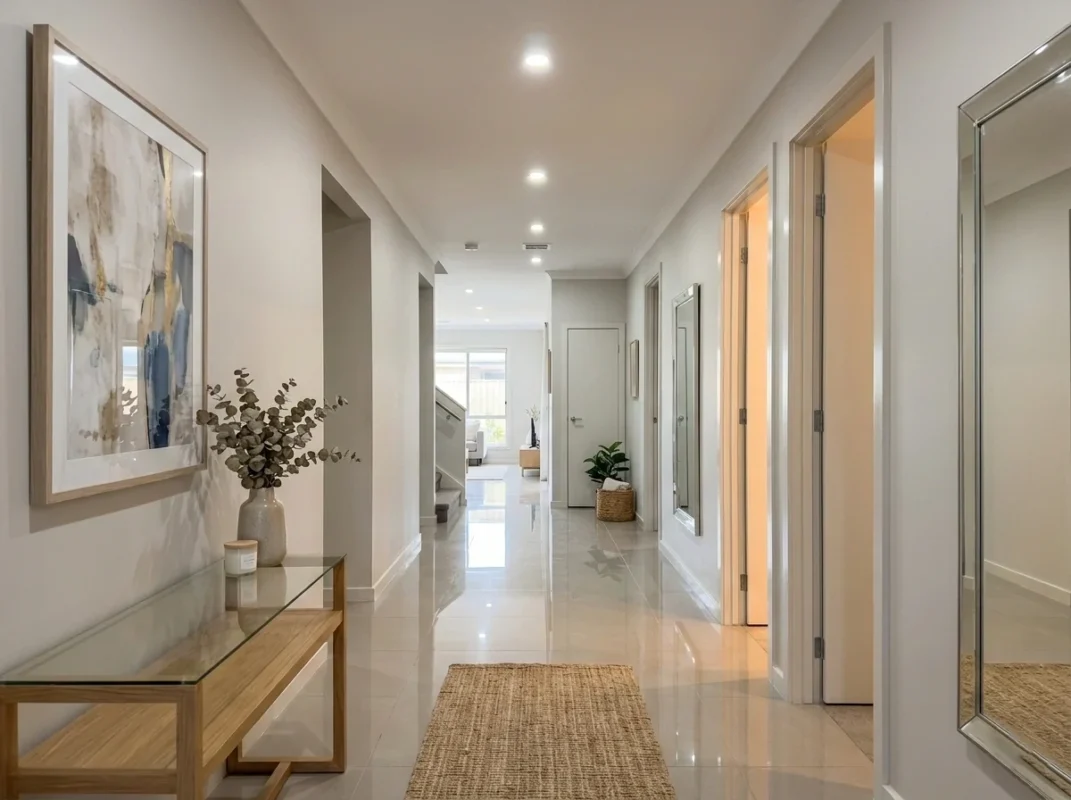
Common Mistakes to Avoid
Even a well-planned lamp hallway can fall short if common pitfalls are overlooked. Many homeowners make mistakes that compromise both safety and aesthetics. Understanding these errors helps you create a hallway that is bright, functional, and visually appealing. Here’s a breakdown of the most frequent mistakes and how to avoid them.
Choosing the Wrong Fixture Size or Style
One of the biggest errors in hallway lighting is selecting fixtures that don’t match the space.
Issues with improper sizing:
- Oversized fixtures can dominate a narrow hallway, making it feel cramped.
- Fixtures that are too small may not provide enough illumination, leaving dark spots.
Practical advice:
- Measure your hallway width and ceiling height before choosing fixtures.
- For small hallway lighting, aim for fixtures proportionate to the corridor’s dimensions.
- Consider combining ceiling and wall fixtures to balance functionality and style.
Lighting designers emphasize that proportion and style consistency are critical for maintaining both safety and visual harmony.
Improper Spacing of Fixtures
Spacing is essential for consistent illumination, especially with recessed lighting or ceiling-mounted lamps.
Common mistakes:
- Placing fixtures too far apart creates dark patches.
- Crowding too many lights in a small hallway can create glare and uneven lighting.
Expert recommendation:
- Space recessed lights roughly 6–8 feet apart depending on ceiling height.
- Use wall sconces or LED strips to supplement lighting in long or narrow corridors.
- This ensures light on in the hallway is consistent and shadows are minimized.
Ignoring Ceiling Height
Ceiling height significantly influences the type of fixture that works best.
Problems caused by ignoring height:
- Low-hanging pendants in narrow hallways can obstruct movement.
- Ceiling-mounted fixtures that are too small for high ceilings may leave spaces underlit.
Solutions:
- For standard 8-foot ceilings, use flush mounts or recessed lights.
- For taller ceilings, consider multiple pendants or layered recessed lighting to maintain brightness.
- Always account for hallway length, width, and usage when selecting fixture height.
Professional insight: Correct ceiling-height planning is crucial to achieving safe and comfortable indoor light distribution.
Relying on a Single Light Source
Another common mistake is depending solely on one type of lighting. A single ceiling fixture may leave shadows or unevenly lit areas.
Best practices:
- Layer lighting using ceiling lights, wall sconces, and accent lighting.
- Highlight architectural features or artwork to enhance both functionality and aesthetics.
- Incorporate dimmable LEDs or motion sensors to control light intensity in small or narrow hallways.
Layered lighting is particularly recommended for narrow hallway lighting ideas, providing both safety and design appeal.
Overlooking Maintenance and Energy Efficiency
Finally, ignoring maintenance and energy consumption can lead to practical issues over time.
Maintenance challenges:
- Fixtures that are hard to access make bulb replacement inconvenient.
- Non-LED bulbs burn out faster, requiring frequent changes.
Energy considerations:
- Choosing energy-efficient LEDs or solar light options reduces costs.
- Motion sensors can prevent lights from being left on unnecessarily, saving energy while maintaining safety.
Practical tip: Always select fixtures that are accessible and compatible with long-lasting, energy-efficient bulbs to minimize long-term hassle.
Summary of Common Mistakes:
- Choose fixtures proportional to hallway size.
- Space lights evenly to prevent dark areas.
- Account for ceiling height when selecting fixture types.
- Avoid relying on a single light source; layer your lighting.
- Prioritize accessible, energy-efficient solutions to maintain brightness and convenience.
Conclusion
Creating a well-lit, stylish hallway is about more than just visibility—it’s about safety, comfort, and aesthetics. From selecting the right lamp hallway fixtures to layering recessed lights, sconces, and LED options, every decision impacts both form and function. By applying these expert strategies, you can transform even the narrowest or smallest hallways into bright, welcoming spaces.
Whether you’re considering small hallway lighting, planning narrow hallway lighting ideas, or installing motion-activated light on in the hallway, this guide provides everything you need to make professional-level decisions.
FAQs About Lamp Hallway Lighting
Is recessed lighting good for hallways?
Yes, recessed lighting is excellent for hallways, especially small hallway lighting. It provides even illumination without taking up ceiling space, reduces shadows, and works well in narrow or long corridors. Designers recommend spacing fixtures 6–8 feet apart for optimal coverage.
How many can lights in a hallway should I install?
The number depends on hallway length, width, and ceiling height. A general rule is one light every 6–8 feet for standard ceilings. Wider hallways or higher ceilings may require more fixtures, while narrow hallway lighting ideas benefit from combining ceiling and wall lighting for uniform brightness.
What type of lighting is best for a hallway?
A combination of ambient, task, and accent lighting works best. Recessed ceiling lights provide general illumination, wall sconces or slim fixtures add layered brightness, and accent lighting highlights architectural features. This approach ensures both safety and style in your lamp hallway.
How to light a small hallway?
For small hallway lighting, use recessed or flush-mount ceiling fixtures to maximize space. Layer with wall sconces, reflective surfaces, or LED strips to avoid shadows. Motion sensors can automatically turn light on in the hallway when needed, improving convenience and energy efficiency.
What size light for a small hallway?
Choose fixtures proportional to hallway width. A common guideline is one-third of the hallway width for the fixture diameter. For example, a 3-foot-wide hallway works well with a 12-inch fixture. Multiple smaller lights are preferable for long hallways to maintain even illumination.
Can I use solar lights indoors in a hallway?
Yes, solar light options can supplement indoor light if the hallway receives natural light from nearby windows or skylights. They are energy-efficient and can be combined with LEDs or motion sensors to ensure light on in the hallway when needed.
How do I avoid shadows in narrow hallways?
Layer lighting using ceiling fixtures, wall sconces, and accent lighting. Position lights strategically to cover corners and artwork. Using reflective surfaces or light-colored walls amplifies brightness and reduces shadows in narrow hallway lighting ideas.
Can motion sensors improve hallway safety?
Absolutely. Motion-activated lights automatically illuminate the hallway when someone passes through, ensuring light on in the hallway without wasting energy. This is particularly helpful for small hallway lighting or areas used at night.