

Table of Contents
Walk into any well-designed bedroom and you’ll notice something immediately—even before you admire the furniture or wall colors. The lighting feels right. Not harsh. Not gloomy. Not random. Thoughtful lighting shapes how a bedroom looks, how it feels, and even how well you sleep.
That’s why exploring the right bedroom LED lights ideas isn’t about chasing trends. It’s about solving real problems: dark corners, uncomfortable glare, poor sleep lighting, wasted electricity, or a room that simply doesn’t feel relaxing.
I has worked closely with lighting designers, electricians, and energy-efficiency consultants across the U.S., I can tell you this: the most successful bedrooms don’t rely on one light source. They rely on layered, intentional LED lighting that balances comfort, function, and atmosphere.
In this guide, you’ll find practical, experience-based bedroom LED lights ideas, along with proven LED lighting ideas for bedroom spaces, safe placement advice for lights above bed, and creative inspiration for under bed LED lighting—all backed by data, design principles, and real-world installation wisdom.
Why Bedroom LED Lighting Matters More Than You Think
How Lighting Impacts Sleep Quality and Mood
Light directly influences your circadian rhythm—the internal clock that regulates sleep and wake cycles. Research consistently shows that exposure to cooler, blue-heavy light in the evening can delay melatonin production, making it harder to fall asleep.
That means your bedroom lighting isn’t just decorative. It’s biological.
Soft, warm LED lighting helps signal to your brain that it’s time to wind down. Bright, cool lighting, on the other hand, works best earlier in the day or for short task-oriented activities.
Well-planned bedroom LED lights ideas support:
- Faster sleep onset
- Better relaxation
- Reduced eye strain
- Improved mood
A lighting designer I interviewed once put it simply: “Think of bedroom lighting as emotional architecture. It quietly shapes how you feel the moment you enter the room.”
The Rise of LEDs in Modern Bedroom Design
LEDs dominate bedroom lighting today for three main reasons:
- They use far less electricity than traditional bulbs
- They last significantly longer
- They’re available in endless shapes, colors, and control options
From recessed ceiling lights to flexible strip lighting, LEDs allow designers to place light exactly where it’s needed—without bulky fixtures.
Energy Efficiency vs Traditional Lighting
According to U.S. energy data, LEDs typically consume about 75–85% less energy than incandescent bulbs and last up to 25 times longer. A 10-watt LED can produce roughly the same brightness as a 60-watt incandescent.
That efficiency opens the door to more creative bedroom LED lights ideas without worrying about skyrocketing utility bills.
Understanding the Core Types of Bedroom LED Lights
When people start researching bedroom LED lights ideas, they often jump straight to visual inspiration—photos, mood boards, and color schemes. But before style comes structure. The foundation of any successful bedroom lighting plan is understanding the main types of LED lighting available and what each one is actually good at.
Different LED formats serve very different purposes. Some create atmosphere. Some provide focused task lighting. Others exist mainly to add depth and visual interest. Knowing these differences allows you to combine the right elements into a layered system that feels intentional rather than improvised.
Below are the core categories that appear again and again in professional LED lighting ideas for bedroom designs, along with practical insights that come from real installations—not just catalogs.
LED Strip Lights
LED strip lights are one of the most flexible tools in modern bedroom lighting. They consist of long, narrow circuits populated with small LEDs and protected by a flexible coating. Because they are slim and bendable, they can be hidden almost anywhere.
In practice, strip lighting excels at creating indirect illumination. Instead of shining light directly into your eyes, strips bounce light off nearby surfaces, producing a soft glow. This is why they appear so often in high-quality bedroom LED lights ideas.
Common applications include:
- Behind headboards
- Under floating shelves
- Inside recessed ceiling coves
- Along the top edge of wardrobes
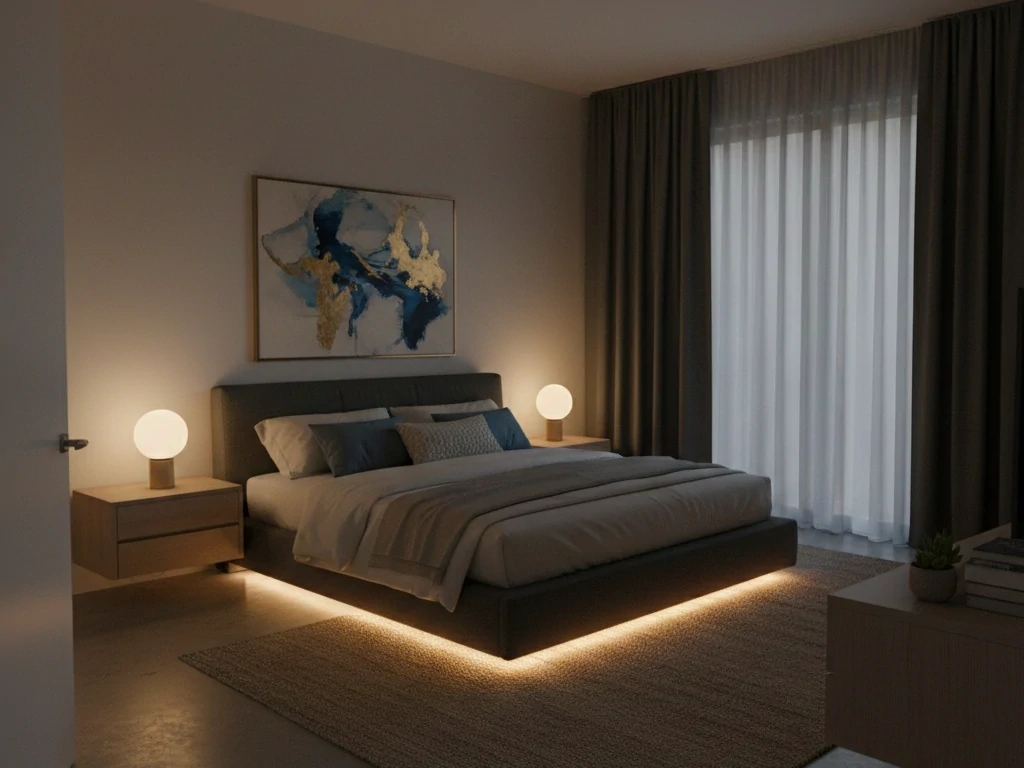
- Beneath bed frames for under bed LED lighting
From a professional perspective, the real value of LED strips is control. You can select warm white strips for relaxation, tunable white for flexibility, or color-adjustable strips for accent effects. Dimming capability is essential, especially in sleeping spaces.
One lighting technician I spoke with described strip lights as “the easiest way to make a bedroom feel designed instead of simply furnished.” That statement matches what I’ve seen repeatedly: even modest rooms gain depth and sophistication when indirect strip lighting is used correctly.
Installation-wise, strip lights are usually low-voltage and powered by a driver. This makes them relatively safe for DIY projects, as long as basic electrical guidelines are followed. However, planning wire paths and driver locations before installation saves significant frustration later.
Recessed LED Downlights
Recessed LED downlights are fixtures installed flush with the ceiling surface. They are often referred to as canless or low-profile downlights and are commonly used to provide ambient illumination.
In bedroom environments, recessed lights work best as part of a layered system rather than as the sole light source. A ceiling filled with bright downlights can feel clinical and uncomfortable. But a small number of strategically placed recessed LEDs can establish a clean, evenly distributed base layer of light.
Key benefits include:
- Minimal visual clutter
- Even light distribution
- Compatibility with dimmers
- Long service life
For most bedroom LED lights ideas, recessed lights should be spaced to avoid hot spots and shadows. Placing them closer to walls rather than directly above the bed helps prevent glare and creates softer reflections off vertical surfaces.
From an expert standpoint, choosing the right beam angle matters. Wide beam angles provide general illumination, while narrower beams are better for highlighting specific features such as artwork or textured walls.
Recessed downlights are usually hardwired, so installation often requires cutting ceiling openings and running cable. Homeowners comfortable with electrical work may handle this themselves, but many prefer to involve a licensed electrician—especially in finished spaces.
Wall Sconces and Bedside LEDs
Wall-mounted lighting is one of the most important elements in successful bedroom lighting design. It directly supports everyday activities like reading, using a phone, or getting dressed without relying on harsh overhead lighting.
Wall sconces are especially valuable near the bed, making them central to discussions about lights above bed placement.
Advantages include:
- Frees up nightstand space
- Positions light closer to eye level
- Reduces reliance on table lamps
- Creates balanced symmetry
Adjustable wall sconces allow users to aim light exactly where needed. Fixed sconces with diffusers provide softer ambient light that complements other layers.
In professional layouts, sconces are typically mounted so their center falls around 60–66 inches from the floor, depending on bed height and headboard design. This range aligns with ergonomic sightlines and minimizes glare.
Another popular option is integrated bedside LED lighting built directly into headboards or wall panels. These systems offer a seamless look and often include built-in dimming.
When evaluating LED lighting ideas for bedroom use, wall-mounted lighting consistently ranks among the most impactful upgrades because it improves both function and atmosphere.
Smart LED Bulbs and Smart Light Systems
Smart LED technology has transformed how people interact with bedroom lighting. Instead of simply turning lights on and off, users can now shape light behavior throughout the day.
Smart LEDs allow:
- Brightness adjustment
- Color temperature tuning
- Scene creation
- Scheduling
- Remote control via phone or voice
In real-world bedroom applications, smart features are most useful when they support routines. For example:
- Lights gradually dimming in the evening
- Warm light activating automatically at bedtime
- Gentle brightness increases in the morning
It’s important to note that smart functionality does not replace good lighting design. A poorly planned layout with smart bulbs remains a poorly planned layout. Smart systems should enhance well-chosen bedroom LED lights ideas, not compensate for their absence.
Most smart bulbs fit standard sockets, making them an easy entry point for homeowners who want advanced control without rewiring. More advanced systems integrate smart drivers directly into strip lighting and recessed fixtures.
LED Panel and Flush-Mount Ceiling Lights
LED panels and flush-mount fixtures provide broad, evenly diffused light from a single surface. They are commonly used in bedrooms with low ceilings where pendant fixtures would feel intrusive.
Their strengths include:
- Uniform illumination
- Slim profile
- Reduced glare when properly diffused
- Clean appearance
These fixtures often serve as the primary ambient light source in simpler bedroom LED lights ideas, especially in smaller rooms or apartments.
Professionals generally recommend pairing ceiling panels with at least one other lighting layer, such as wall sconces or strip lighting. This prevents the room from feeling flat or overly utilitarian.
When selecting panel or flush-mount fixtures, color temperature and brightness should be carefully matched to the rest of the lighting system. Mismatched tones are a common cause of visual discomfort in bedrooms.
Bringing the Types Together
No single type of LED light can meet every bedroom need. The most successful bedroom LED lights ideas combine several of these core types into a cohesive system:
- Recessed or panel lighting for ambient illumination
- Wall sconces or bedside LEDs for task lighting
- LED strips for accent and indirect glow
Understanding these core types gives you a practical vocabulary for planning your space. Instead of asking, “What looks good?” you start asking, “What does this area need?” That shift—from decoration to function—is what separates casual lighting choices from truly professional results.
Bedroom LED Lights Ideas for Different Zones
One of the biggest differences between amateur lighting and professional lighting is zoning. Instead of treating the bedroom as a single space that needs one bright fixture, designers divide the room into functional zones and assign the right type of light to each.
This approach dramatically improves comfort, usability, and visual depth. It also explains why many successful bedroom LED lights ideas don’t rely on a single “main light,” but on a carefully balanced combination of ambient, task, and accent lighting.
When zoning is done correctly, your bedroom adapts to different moments: sleeping, reading, relaxing, dressing, or even working—without feeling overlit or gloomy.
Below are practical, field-tested LED lighting ideas for bedroom zones that consistently deliver results.
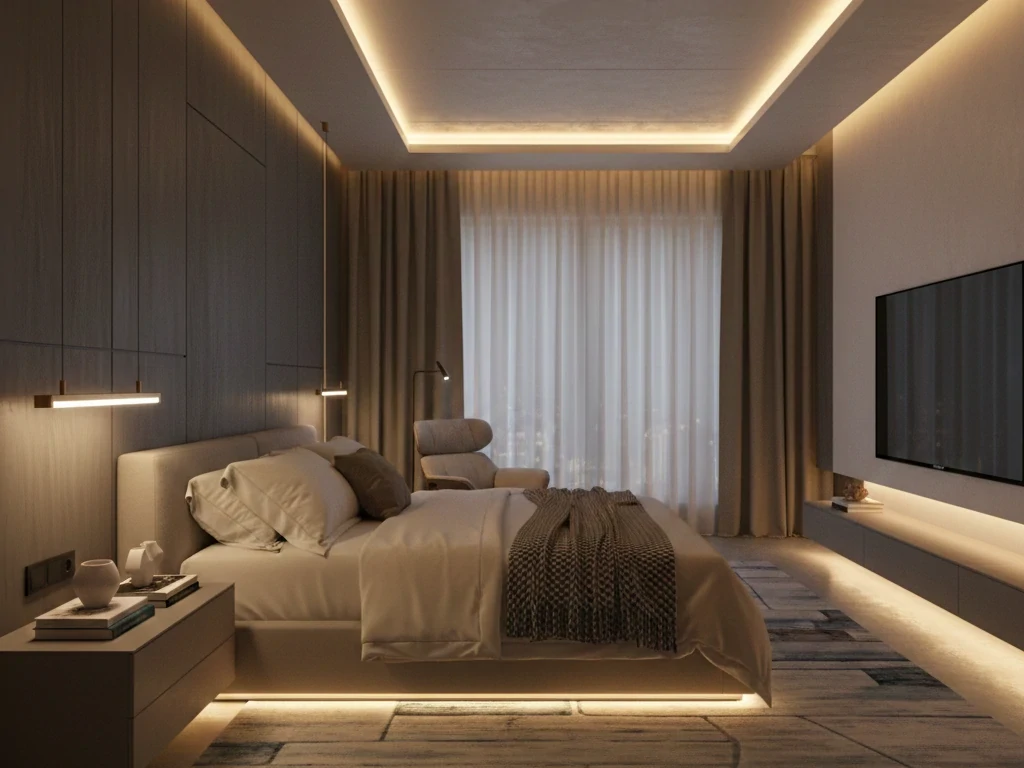
Ambient Lighting Ideas
Ambient lighting forms the base layer of your bedroom. Its job is simple: provide enough overall illumination to move around safely and comfortably without creating harsh shadows or glare.
In professional design, ambient light is usually soft, evenly distributed, and indirect whenever possible.
Effective ambient bedroom LED lights ideas include:
- Recessed ceiling LED downlights spaced around the perimeter
- Flush-mount LED ceiling fixtures with diffusers
- Hidden LED strips inside ceiling coves or tray ceilings
- Soft wall-washing LED strips near the upper wall line
The goal is to avoid a single bright source in the center of the ceiling. Centralized brightness creates contrast and eye fatigue. Perimeter-based ambient lighting feels calmer because light reflects off walls before reaching your eyes.
A lighting consultant once described good ambient bedroom lighting as “light you notice only when it’s missing.” That subtlety is exactly what you want.
For most bedrooms, total ambient output in the range of 1,500–3,000 lumens is sufficient, depending on room size and wall color. Light-colored walls reflect more light, reducing the required output.
Ambient lighting should almost always be dimmable. Dimming allows the same fixtures to support daytime tidying and nighttime relaxation without compromise.
Task Lighting Ideas
Task lighting is where functionality takes center stage. These lights are brighter, more focused, and placed close to the activity they support.
Common bedroom tasks include:
- Reading in bed
- Using a phone or tablet
- Working at a desk or vanity
- Choosing clothing
Practical task-focused bedroom LED lights ideas include:
- Adjustable wall sconces on each side of the bed
- Directional bedside reading lights
- Desk-mounted LED task lamps
- LED strips inside closets or wardrobes
When planning lights above bed for reading, placement and beam control are critical. Lights should aim toward the book or device, not directly into the eyes. Fixtures with adjustable heads or built-in diffusers make a noticeable difference in comfort.
Brightness is another key factor. Reading lights typically perform well in the 400–600 lumen range. More than that often feels harsh at close distance.
Color temperature also matters. Warm white light around 2700K–3000K supports relaxation, while still being bright enough for reading. Cooler temperatures may feel crisp but can interfere with winding down.
In professional layouts, task lighting is always independently switchable from ambient lighting. This gives users precise control instead of forcing all lights on or off at once.
Accent Lighting Ideas
Accent lighting is where personality enters the picture. While ambient and task lighting handle function, accent lighting shapes mood and visual interest.
Some of the most visually striking bedroom LED lights ideas rely heavily on accent lighting.
Popular accent applications include:
- LED strips behind headboards
- Shelf-edge LED strips
- Niche or alcove lighting
- Backlighting for artwork or wall panels
- Under bed LED lighting
Accent lighting usually operates at lower brightness levels than ambient lighting. Its purpose is to highlight forms, textures, and edges rather than illuminate entire areas.
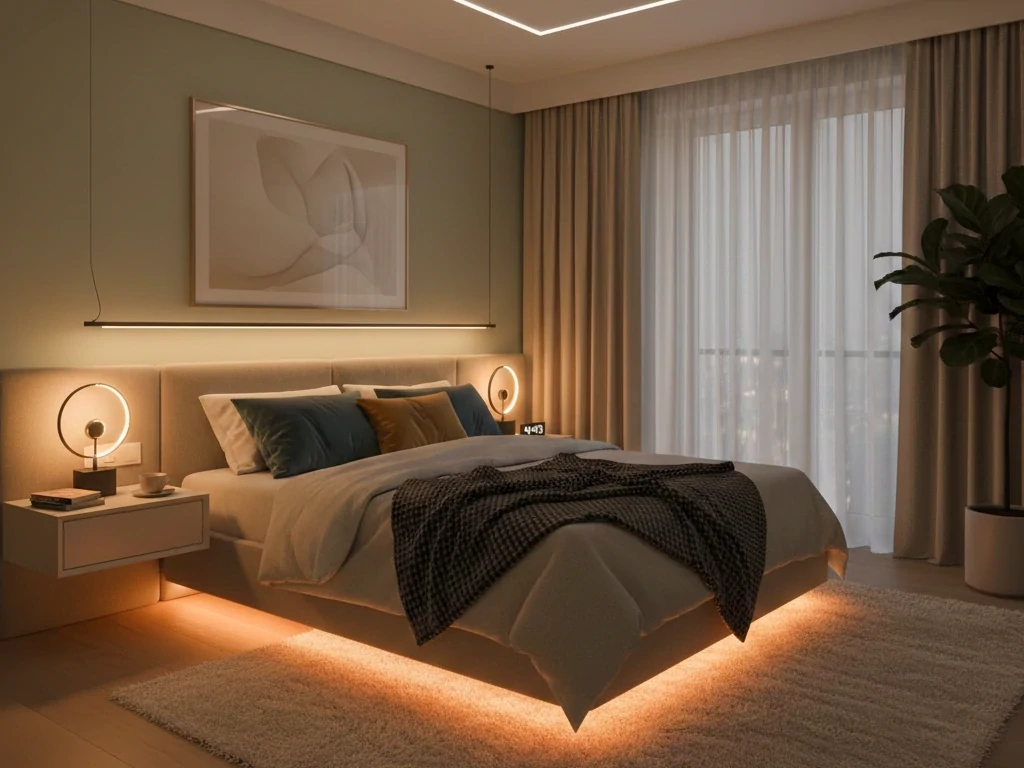
Under bed LED lighting deserves special attention because it serves both aesthetic and practical roles. A soft glow beneath the bed:
- Creates a floating visual effect
- Acts as a nighttime guide light
- Reduces the need for bright overhead lighting
Warm white tones are strongly recommended for under-bed use. Cool white light near floor level can feel clinical and disruptive at night.
Another powerful accent strategy is headboard backlighting. Installing LED strips behind or within the headboard produces a halo effect that adds depth to the wall and visually anchors the bed as the room’s focal point.
From an expert standpoint, accent lighting should never overpower ambient lighting. If accent light becomes the brightest element in the room, it stops feeling like an accent and starts feeling distracting.
How the Zones Work Together
The true strength of zoned lighting appears when all three layers operate together:
- Ambient lighting establishes overall comfort
- Task lighting supports specific activities
- Accent lighting adds atmosphere
For example, in the evening you might:
- Dim ambient lighting
- Turn on bedside task lights for reading
- Keep subtle accent lighting behind the headboard
This layered approach transforms static rooms into adaptable environments.
When homeowners struggle with bedroom LED lights ideas, it’s often because one zone is missing. A room with only ambient lighting feels flat. A room with only accent lighting feels impractical. Balanced zoning solves both problems.
Practical Planning Tips
Before purchasing any fixtures, walk through your bedroom mentally and ask:
- Where do I read?
- Where do I change clothes?
- Where do I want visual emphasis?
Sketching rough zones on paper can prevent expensive mistakes.
Also consider control grouping. Ideally:
- Ambient lights on one circuit
- Task lights on another
- Accent lights on a third
This simple separation dramatically increases flexibility.
Lights Above Bed – Placement, Height, and Safety
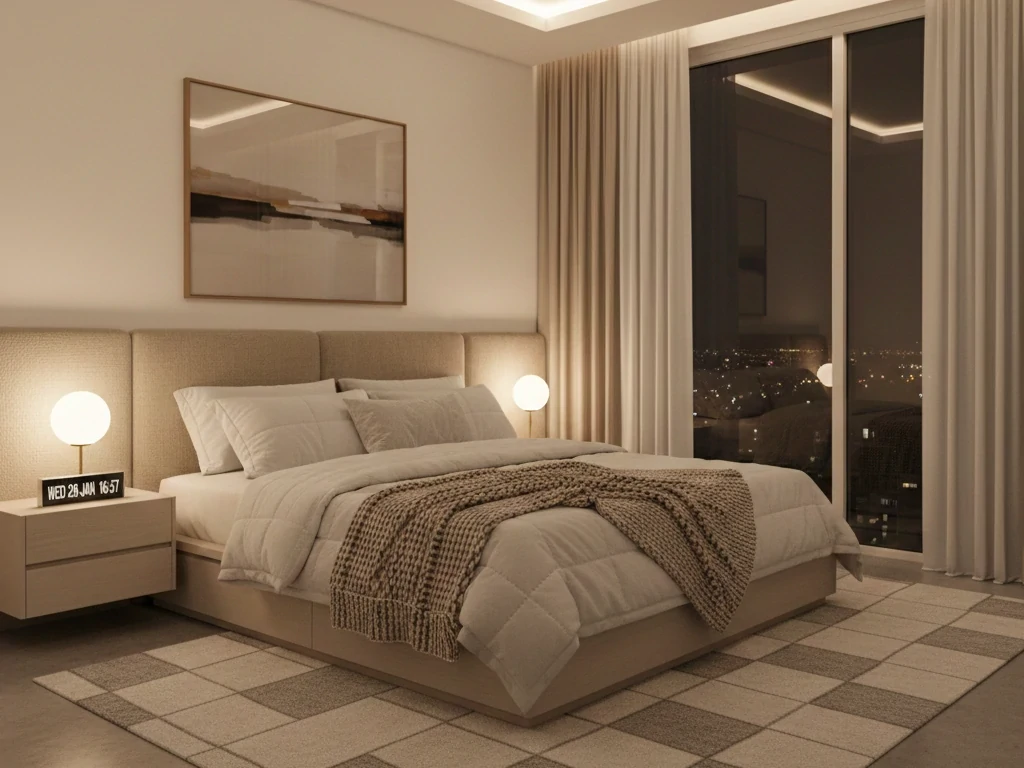
When people search for lights above bed, they are usually trying to solve one of three problems: they want better reading light, a cleaner-looking bedroom, or a more balanced design around the headboard.
This is one of the most sensitive areas in any bedroom lighting plan. Fixtures placed near the bed sit close to eye level, close to the face, and close to where you spend several hours each night. Small mistakes here create daily irritation. Good decisions, on the other hand, dramatically improve comfort and usability.
From a professional perspective, successful bedroom LED lights ideas treat lighting above the bed as a combination of ergonomics, visual balance, and electrical safety—not just decoration.
Best Positions for Lights Above Bed
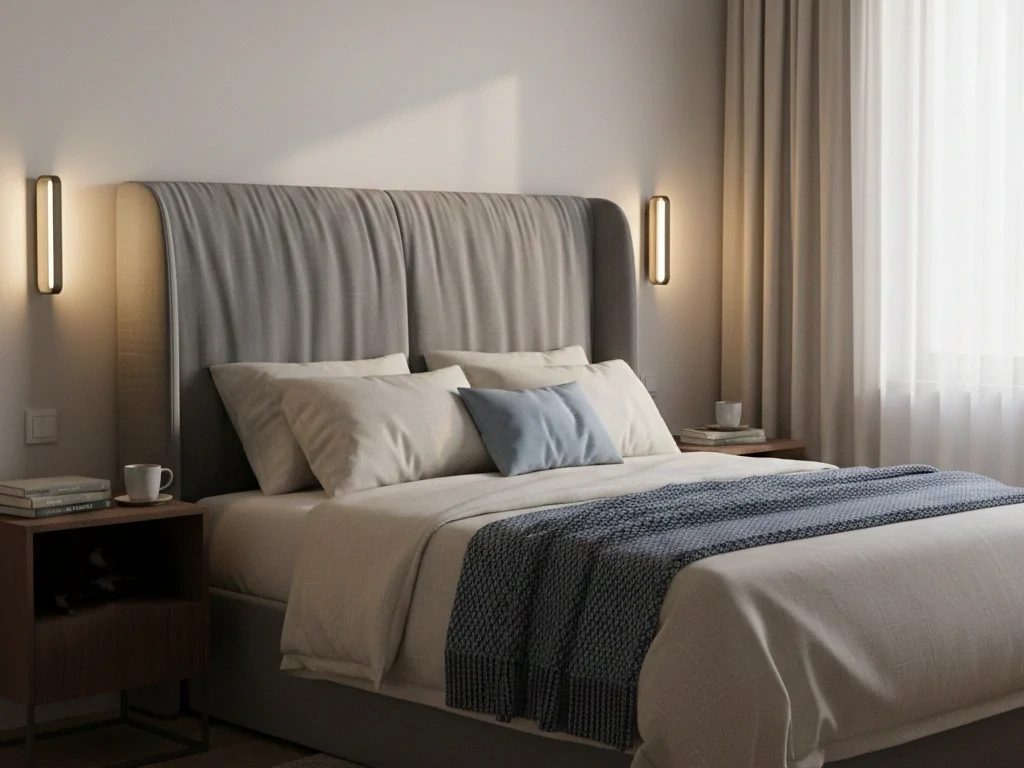
The most reliable approach is symmetrical placement. One light on each side of the bed creates visual balance and equal functionality for both sleepers.
Common professional positions include:
- Wall sconces mounted above each nightstand
- Adjustable reading lights mounted to the wall or headboard
- Integrated LED lighting built into the headboard
- Slim pendant-style fixtures dropping near each side of the bed
For wall-mounted fixtures, the horizontal position usually aligns with the center of each nightstand or the outer edges of the mattress. This ensures the light falls naturally onto the reading area instead of across the pillow.
In higher-end LED lighting ideas for bedroom designs, headboard-integrated lighting is often used. This places the light slightly behind or above the headboard panel, creating a soft glow rather than a visible bulb. It feels calmer and more architectural.
One important guideline: avoid placing a single fixture centered directly above the middle of the bed. This often creates shadows on the face and an unbalanced look. Two smaller lights almost always perform better than one central light in this zone.
Recommended Mounting Heights
Mounting height directly affects glare, shadow patterns, and comfort.
A widely accepted starting point is placing the center of wall-mounted bedside lights approximately 60 to 66 inches from the finished floor. This range aligns closely with average seated eye height when sitting up in bed.
However, height should always be adjusted based on:
- Mattress thickness
- Bed frame height
- Headboard height
- Fixture size
A simple field test used by installers is this: sit in bed against your pillows and imagine the light beam falling onto your book or lap. The light source itself should be just outside your direct line of sight.
For adjustable reading lights, slightly lower mounting may be acceptable because the beam can be aimed downward. For fixed sconces, staying closer to the upper end of the range helps reduce glare.
Getting height right is one of the most overlooked details in bedroom LED lights ideas, yet it has an outsized impact on daily comfort.
Hardwired vs Plug-in Options
Lights above the bed are available in both hardwired and plug-in versions. Each has legitimate use cases.
Hardwired fixtures
- Clean, seamless appearance
- Wall switch or dimmer control
- Best for new construction or renovations
Plug-in fixtures
- Easier installation
- No wall opening required
- Cord must be managed neatly
Hardwired installation offers greater long-term reliability and resale value. However, plug-in sconces are perfectly acceptable when wiring access is limited.
If choosing plug-in fixtures, route cords behind headboards or inside cable channels to prevent visible clutter and reduce snag risk.
Avoiding Glare and Eye Strain
Glare is the most common complaint with lights above bed. It occurs when the light source is visible from normal resting positions or when brightness is too high for close-range use.
To minimize glare:
- Choose fixtures with diffusers or shades
- Avoid exposed LED elements
- Select warm color temperatures (2700K–3000K)
- Use dimmable fixtures whenever possible
Another professional tip: look for fixtures that direct light downward or sideways rather than straight outward. Indirect or shielded light feels softer and more comfortable at night.
Brightness matters as much as direction. Reading lights in the 400–600 lumen range are typically sufficient. Higher output often feels harsh at bedside distance.
Well-designed bedroom LED lights ideas never force the eyes to adapt to extreme brightness changes late at night.
Electrical and Structural Safety
Because lights above the bed sit close to where people sleep, safety deserves special attention.
Key considerations include:
- Secure mounting into wall studs or approved anchors
- Proper strain relief for wiring
- Adequate ventilation around LED drivers
- Compliance with local electrical codes
LED fixtures produce far less heat than older technologies, but drivers and power supplies still generate warmth. They should never be buried inside insulation or sealed cavities without ventilation.
If cutting into walls for hardwired installation, confirm cable paths before drilling to avoid damaging existing wiring or plumbing.
For homeowners without electrical experience, hiring a licensed electrician is strongly recommended. Improper wiring behind the bed is not a place to experiment.
Integrating Lights Above Bed into the Overall Lighting Plan
Lights above the bed should never exist in isolation. They are one layer within a broader lighting system.
Ideally:
- Ambient lighting provides soft background illumination
- Bedside lights handle reading and personal tasks
- Accent lighting adds atmosphere
This layered structure is central to professional bedroom LED lights ideas and prevents overreliance on any single fixture type.
When integrated correctly, bedside lighting feels natural, supportive, and almost invisible in operation. You don’t think about turning on “a light.” You simply use your space comfortably.
Under Bed LED Lighting – Practical & Decorative Uses
When most people think about bedroom LED lights ideas, their minds jump to ceiling fixtures or bedside lamps. But one of the most underappreciated and effective strategies is under bed LED lighting. This approach combines functionality, ambiance, and style in a way that few other lighting solutions can. Done right, it elevates both comfort and design without overwhelming the space.
Under bed lighting is particularly appealing because it is subtle, indirect, and versatile. It enhances your bedroom’s visual depth while serving practical purposes, making it one of the most rewarding LED lighting ideas for bedroom installations.
Soft Nighttime Navigation
One of the most obvious benefits of under bed LED lighting is practical: guiding movement at night without disturbing sleep.
Imagine waking up for a late-night bathroom trip. Overhead lights can be harsh, waking both you and your partner. A soft under bed glow, activated by motion sensors or a low-brightness switch, illuminates the floor just enough to see clearly.
Key points for nighttime navigation:
- Use warm white LEDs (2700K–3000K) to avoid blue light that can disrupt circadian rhythm
- Low-lumen output (100–200 lumens) is sufficient for visibility without glare
- Motion sensors or timers reduce energy use and add convenience
Lighting professionals emphasize that under bed LEDs should never be the sole source of light when doing more demanding tasks. Their strength lies in creating gentle, navigable illumination rather than full-room brightness.
Creating a Floating Bed Effect
From a design perspective, under bed LED lighting offers one of the easiest ways to add a sense of luxury and visual intrigue to a bedroom.
When installed along the perimeter of a bed frame or beneath a floating bed, a soft glow creates a “floating” illusion. The bed appears to hover above the floor, adding depth and sophistication to the room.
Tips for achieving this effect:
- Place LED strips along the underside edges of the bed frame
- Keep strips hidden from direct view to maintain subtlety
- Diffuse light with a frosted cover or translucent channel to avoid harsh points of light
- Stick to warm or neutral white tones to maintain a relaxing atmosphere
This simple addition can transform even a minimalist bedroom into a design-forward space that feels curated by a professional.
Motion-Sensor Under Bed LED Lighting
Smart motion-sensor integration is a game-changer for under bed lighting. These systems only turn on when someone moves near the bed, providing illumination only when necessary.
Advantages include:
- Energy efficiency—lights run only when needed
- Convenience—hands-free operation at night
- Reduced disturbance—only illuminates immediate path, keeping the room calm
In practice, motion sensors work best when paired with low-profile LED strips and warm white tones. This ensures the lighting is functional without being harsh or distracting.
Motion-sensor lighting is particularly valuable in homes with children or elderly occupants. It reduces trips and falls and provides an extra layer of safety that is both subtle and unobtrusive.
Warm vs Cool Color Temperatures
The right color temperature is critical for under bed LED lighting. While cooler white tones may feel modern, they can appear stark or even unsettling in the low-light environment beneath a bed.
Professional guidelines recommend:
- Warm white (2700K–3000K) for a calming, cozy glow
- Avoid blue-heavy cool whites, which may interfere with sleep signals
- Tunable LED strips are an option for adjusting color based on mood or time of day
Brightness should be low enough to avoid reflecting harshly off nearby surfaces. Under bed LEDs are designed for ambiance and safety rather than task lighting, so subtlety is key.
Decorative Uses Beyond Function
Beyond practicality, under bed LED lighting adds a stylistic layer to your bedroom. Designers often use it to:
- Highlight floating beds or platform frames
- Emphasize bed textures and shapes
- Coordinate with headboard backlighting or cove lighting for cohesive layered lighting
- Introduce a subtle accent color in modern or playful bedrooms
Even simple monochrome warm strips can make a room feel intentional and polished. Accent colors or RGB strips offer dynamic possibilities, but they should be used sparingly to maintain restful energy in the bedroom.
Installation Best Practices
For under bed LED lighting, proper installation ensures safety, performance, and aesthetics:
- Use low-voltage LED strips to reduce heat and electrical risk
- Conceal wires and drivers to maintain a clean look
- Select adhesive or mounting channels rated for weight and temperature
- Test placement and brightness before final installation
- Consider dimmable or remote-controlled systems for maximum flexibility
Professionals often recommend pairing under bed lighting with other layers, such as ambient ceiling lights and bedside task lights, to complete a well-rounded lighting plan. This approach aligns perfectly with layered bedroom LED lights ideas, balancing function and design.
Color Temperature and Brightness Explained
When planning bedroom LED lights ideas, understanding color temperature and brightness is essential. These two factors are more than just numbers—they directly affect comfort, mood, and usability. Choosing the wrong combination can leave a room feeling either harsh and sterile or dull and insufficiently lit. Professionals treat color temperature and brightness as foundational elements, not afterthoughts.
Warm White vs Neutral White vs Cool White
Color temperature is measured in Kelvin (K) and describes the hue of light emitted by an LED source. In bedrooms, this choice impacts relaxation, alertness, and even sleep quality.
- Warm White (2700K–3000K): Produces a soft, cozy glow similar to incandescent lighting. Ideal for bedrooms, especially around beds, for reading and unwinding. Warm white enhances skin tones and textures, contributing to a calming environment.
- Neutral White (3500K–4000K): Appears more natural and is often used in task areas or rooms where true color representation is important. While still comfortable, it feels less cozy than warm white.
- Cool White (5000K+): Sharp, bright, and energizing, this temperature mimics daylight. It can be useful for work-focused zones or modern accent lighting but is generally too harsh for prolonged relaxation in bedrooms.
Lighting experts agree that most bedrooms benefit from warm white as the dominant ambient light, supplemented with neutral or adjustable tones for tasks like dressing or reading. Mixing temperatures without planning can create visual tension and discomfort.
Ideal Kelvin Ranges for Bedrooms
For most LED lighting ideas for bedroom spaces, the sweet spot is:
- Ambient Lighting: 2700K–3000K (warm and relaxing)
- Task Lighting: 2700K–3500K (warm to neutral for reading or desk tasks)
- Accent Lighting: 2700K–3000K (soft and subtle, supports mood)
These ranges support both physical comfort and psychological relaxation, aligning with the circadian rhythm. Using tunable white LEDs allows you to adjust the temperature as needed throughout the day, which can improve sleep quality and create versatile lighting experiences.
Lumens Guide for Bedroom Zones
Brightness, measured in lumens, determines how much light reaches a surface. Professionals plan bedroom lighting using layered lumens, balancing ambient, task, and accent layers.
Recommended ranges for typical bedroom zones:
- Ambient Lighting: 1,500–3,000 lumens total, distributed across ceiling and indirect sources
- Reading or Task Lights: 400–600 lumens per fixture, focused and directional
- Accent Lighting: 100–300 lumens, subtle highlights or decorative effects
Too few lumens can make a room feel dark and unsafe, while too many can create glare and tension. A dimmable system allows you to customize brightness according to activity and time of day.
Dimming and Tunable White Options
Modern LEDs often feature dimming and tunable white functionality, which adds flexibility and improves the bedroom experience. Dimming allows the same fixture to serve multiple purposes:
- Bright for tasks during the day
- Soft, gentle for winding down at night
Tunable white or adjustable color temperature LEDs take this further, shifting from cool morning light to warm evening light automatically or manually. Studies show that gradual color shifts that mimic natural light cycles can support circadian rhythm and improve sleep quality.
Expert Insights
Lighting designers emphasize that color temperature and brightness should be chosen together, not independently. A warm but overly bright light can feel harsh, just as a cool but dim light can feel dull. Professionals recommend testing your fixtures in the actual bedroom environment before final installation to ensure comfort and aesthetic balance.
Another key point: consistency is critical. In layered lighting plans—ambient, task, and accent—maintaining complementary color temperatures prevents visual dissonance. For example, pairing warm ambient strips with cool reading LEDs may feel unnatural unless carefully designed.
Practical Takeaways
- Prioritize warm white for main ambient lighting to promote relaxation and a cozy atmosphere.
- Use neutral or slightly cooler tones for task lighting like reading or dressing, ensuring clarity without glare.
- Keep accent lighting subtle with lower brightness and warm tones to highlight architectural features or decorative elements.
- Incorporate dimmers and tunable white systems to adapt lighting to different times of day and activities.
- Test fixtures in the actual bedroom space to assess comfort, coverage, and color consistency before final installation.
By carefully controlling color temperature and brightness, you can transform your bedroom into a space that feels both functional and restorative. Layered and intentional choices in these two dimensions are what turn ordinary LED lighting ideas for bedroom into a professional, expert-level lighting strategy.
Energy Consumption and Cost of Bedroom LEDs
One of the most common questions homeowners ask when planning bedroom LED lights ideas is: “Will LEDs run up my electric bill?” Understanding energy consumption and cost is crucial for designing a lighting plan that’s both beautiful and economical. Fortunately, LEDs are widely recognized as one of the most efficient lighting technologies available, making them ideal for bedrooms where lights may stay on for extended periods.
Why LEDs Are Energy-Efficient
LEDs consume significantly less energy compared to traditional incandescent or halogen bulbs. They convert a higher percentage of electricity into light rather than heat, which directly reduces energy waste.
For example:
- A 10-watt LED can produce the same brightness as a 60-watt incandescent bulb
- Typical bedroom ambient lighting totaling 3,000 lumens might only require 30–40 watts with LEDs
- LED strip lights under the bed or around coves often use less than 10 watts per meter
Because of this efficiency, even bedrooms with multiple layers of lighting—ambient, task, and accent—consume far less power than older lighting setups.
Calculating Energy Costs
Estimating cost is straightforward once you know the wattage of your fixtures and how long they are used. Here’s a simple method:
- Determine total wattage: Add up all LEDs in the bedroom. Example: 3 ceiling recessed lights at 10W each + 2 bedside wall sconces at 6W each = 42W
- Convert to kilowatt-hours (kWh): 42W ÷ 1,000 = 0.042 kWh per hour
- Estimate monthly use: 0.042 kWh × 6 hours/day × 30 days ≈ 7.56 kWh/month
- Calculate cost: Multiply by local electricity rate (e.g., $0.13/kWh in the U.S.) → 7.56 × 0.13 ≈ $0.98/month
Even with multiple layers of LED lighting, most bedrooms will only add a few dollars per month to the energy bill. This makes LEDs ideal for under-bed lighting, strip lighting behind headboards, and adjustable reading lights without concern for excessive costs.
Dimmer and Smart Controls Save More
Integrating dimmers, timers, or smart controls further reduces energy consumption:
- Dimming: Reduces wattage in proportion to brightness, sometimes cutting consumption by 50% or more
- Timers and motion sensors: Turn lights off when not in use, perfect for under bed LEDs or hallway-adjacent lighting
- Smart scheduling: Automatically adjusts brightness and color temperature to match daily routines
Professional designers frequently point out that the combination of LED efficiency and smart control makes a layered bedroom lighting system affordable even in energy-conscious households.
Longevity and Replacement Costs
Another cost factor is the lifespan of the fixture. LEDs last far longer than traditional bulbs—typically 25,000–50,000 hours of operation. This longevity reduces replacement costs and maintenance:
- An LED fixture in a bedroom can last over 10 years under typical use
- Strip lights, recessed lights, and smart LED bulbs all share similar extended lifespans
- Fewer replacements also mean less environmental impact and less labor involved
Investing in quality LEDs upfront usually results in lower total cost over time compared to cheaper, short-lived bulbs.
Balancing Efficiency and Comfort
While energy savings are important, they should not come at the expense of comfort or usability. Layered bedroom LED lights ideas should maintain the right color temperature, brightness, and placement—even if that means using slightly higher wattage in key zones. The efficiency of LEDs allows this balance without significantly impacting monthly costs.
For instance:
- Under bed LED lighting uses minimal energy but adds high perceived value in ambiance
- Bedside task lights consume a few watts but improve reading comfort dramatically
- Ceiling or recessed ambient lighting can be dimmed to save energy while still providing sufficient illumination
In real-world projects, experts recommend measuring total wattage before installation, incorporating dimmers and smart controls, and choosing warm white or tunable white LEDs for maximum energy-efficient comfort.
Key Takeaways
- LEDs use 70–90% less energy than incandescent or halogen bulbs, reducing utility bills.
- Even layered bedroom lighting with ambient, task, and accent zones usually costs only a few dollars per month.
- Dimmers, timers, and motion sensors further reduce electricity use.
- LEDs’ long lifespan minimizes replacement costs, making them a smart long-term investment.
- Properly designed LED lighting ideas for bedroom balance comfort, aesthetics, and efficiency without compromise.
By understanding energy consumption and cost, homeowners can confidently implement bedroom LED lights ideas, knowing their lighting system will be both beautiful and economical for years to come.
The 5’7” Lighting Rule Explained
If you’ve been exploring bedroom LED lights ideas, you’ve probably come across the term “5’7” lighting rule.” While it may sound like an arbitrary guideline, this rule is actually grounded in decades of ergonomic and design research. It helps ensure that your bedroom lighting is comfortable, balanced, and safe, particularly around areas like the bed, reading zones, and headboards.
Understanding this rule is essential for anyone serious about LED lighting ideas for bedroom, because proper fixture height and placement dramatically affect eye comfort, glare, and overall ambiance.
What the 5’7” Lighting Rule Means
The 5’7” lighting rule states that the center of a wall-mounted light source—typically sconces or reading lights—should be approximately 5 feet 7 inches (170 cm) from the finished floor. This height aligns with the average adult seated eye level when sitting upright on a bed.
Why does this matter?
- Lights placed too low can shine directly into your eyes while sitting, causing glare.
- Lights placed too high may fail to illuminate the intended reading or task area.
- Proper height ensures symmetry and balance when fixtures are installed on either side of the bed.
Professional designers emphasize that this rule is a guideline, not a hard requirement. Adjustments are often made based on mattress thickness, headboard height, or ceiling slope.
Practical Applications for Bedroom LEDs
- Bedside Wall Sconces: Installing sconces according to the 5’7” rule allows the light beam to fall naturally onto your reading material without shining into your face.
- Headboard Integrated LEDs: When LEDs are built into or just above a headboard, designers often align the center of the strip with the 5’7” line for optimal balance.
- Adjustable Reading Lights: Even if fixtures are adjustable, mounting at or near 5’7” ensures the light starts in a comfortable position.
- Accent Wall Lighting: For vertical accent strips or wall washers near the bed, the rule helps maintain visual proportion and aesthetic cohesion.
By following this guideline, you combine function and form—your lights perform their intended task while also complementing the room’s design.
Benefits of Following the Rule
- Reduces Glare: Proper height prevents direct light from hitting the eyes.
- Enhances Symmetry: Creates a visually balanced arrangement, particularly for lights above bed.
- Improves Comfort: Aligning lights with seated eye level supports reading, work, or other bedside activities.
- Supports Layered Lighting: When combined with ambient and accent lighting, the 5’7” rule helps maintain a harmonious lighting plan.
A lighting consultant explained that “small adjustments in fixture height have an outsized effect on comfort. The 5’7” rule gives a reliable starting point for almost any adult bedroom.”
Adjustments and Exceptions
While 5’7” is ideal for average adults, you may need to adjust in these cases:
- Tall or short occupants: Slightly higher or lower placement can align better with eye level.
- Low-profile beds or platform beds: Subtract headboard height from the 5’7” guideline to maintain proper beam direction.
- Decorative Fixtures: Some ambient or accent lights may intentionally break the rule to achieve a design statement.
Remember, the goal is functional comfort first, aesthetics second. Deviating from the guideline should always be deliberate and tested in the actual space.
Integration With Layered LED Lighting
Following the 5’7” rule doesn’t replace other layers of lighting. Instead, it integrates seamlessly:
- Ambient Lighting: Provides general room illumination.
- Task Lighting: Uses 5’7” placement to support reading or desk work.
- Accent Lighting: Positioned above or around this height for visual balance without interfering with task lighting.
This combination ensures your bedroom is both practical and visually cohesive, maximizing the impact of your bedroom LED lights ideas.
Feng Shui Principles for Bedroom LED Lighting
When designing bedroom LED lights ideas, many homeowners overlook the impact of energy flow and spatial harmony. Incorporating Feng Shui principles into your lighting plan can improve not only the look of your bedroom but also the overall sense of balance, comfort, and relaxation. Experts in interior design and traditional Feng Shui emphasize that light shapes the chi—the life energy—flowing through the room, which in turn influences mood, sleep quality, and personal well-being.
Positioning Lights According to Feng Shui
Feng Shui stresses symmetry, balance, and unobstructed energy flow. When applying these principles to LED lighting ideas for bedroom, consider the following:
- Avoid placing bright overhead lights directly above the bed.
- In Feng Shui, overhead lights create a feeling of pressure or heaviness.
- Instead, use soft, indirect lighting or layered ambient lighting that diffuses across the ceiling and walls.
- This also aligns with the functional lights above bed guidance: smaller, adjustable fixtures or wall-mounted lights are preferable to a central bright fixture.
- Balance the sides of the bed.
- Matching wall sconces or reading lights on either side create symmetry.
- Balanced lighting supports relationship harmony according to Feng Shui principles, especially in bedrooms shared by couples.
- Use soft, warm LED lighting.
- Warm white (2700K–3000K) is ideal for relaxing chi and creating a cozy, inviting atmosphere.
- Cool, blue-toned lights may disrupt sleep energy and are less favorable in Feng Shui bedrooms.
Layering Light for Feng Shui Harmony
Feng Shui encourages layering lighting to ensure energy flows evenly:
- Ambient Lighting: Soft, diffused light supports calm energy throughout the room. Cove lighting or indirect LEDs work well.
- Task Lighting: Bedside or desk lights for reading should be functional but gentle, avoiding harsh shadows.
- Accent Lighting: LED strips under the bed or behind headboards add subtle illumination without overwhelming chi.
Layered lighting not only improves usability but also maintains the balanced energy flow recommended in Feng Shui. Properly executed, it enhances both the aesthetic and emotional atmosphere of the bedroom.
Color and Brightness Considerations
Color and intensity are critical in Feng Shui:
- Brightness: Avoid overly bright, glaring lights. Use dimmers to create soft, adaptable lighting.
- Color Temperature: Warm hues are most conducive to restful energy, while cooler lights should be reserved for occasional task lighting.
Lighting that is too harsh or too cool can create “stagnant” chi, which can impact relaxation and sleep quality. Professional Feng Shui consultants often recommend combining ambient warm LED lighting with subtle accent illumination for a harmonious environment.
Incorporating Mirrors and Reflective Surfaces
Feng Shui also emphasizes how light interacts with room elements. Mirrors and reflective surfaces can amplify light but must be positioned carefully:
- Avoid reflecting bright lights directly onto the bed, which can cause restless energy.
- Softly reflected LED lighting, such as behind headboards or wall-mounted ambient LEDs, enhances space perception without disrupting balance.
Practical Feng Shui Tips for Bedroom LEDs
- Use warm, indirect lighting as the primary source.
- Install symmetrical bedside lights to promote harmony.
- Avoid direct bright lights above the bed; choose adjustable or wall-mounted fixtures instead.
- Layer lighting with ambient, task, and accent LEDs to maintain energy flow.
- Ensure motion-activated or under-bed LEDs are subtle and do not disrupt restful chi.
Benefits of Feng Shui Lighting Integration
Integrating Feng Shui principles into bedroom LED lights ideas goes beyond aesthetics:
- Enhances relaxation and sleep quality
- Promotes visual balance and symmetry
- Supports positive emotional and relationship energy
- Ensures that functional lighting does not create harsh or uncomfortable energy in the space
By thoughtfully combining Feng Shui insights with practical LED solutions, homeowners can create bedrooms that feel both restful and visually appealing, proving that lighting can influence not just what we see, but how we feel.
Key Takeaway: Applying Feng Shui to LED bedroom lighting means favoring warm, indirect, and symmetrical lighting while avoiding bright overhead fixtures. When combined with layered lighting strategies, this approach ensures both aesthetic beauty and balanced energy in the bedroom, making it a core consideration for professional LED lighting ideas for bedroom.
Common Bedroom Lighting Mistakes (and How to Avoid Them)
Even with the best intentions, many homeowners make mistakes when planning bedroom LED lights ideas. These missteps can reduce comfort, disrupt sleep, and make even a beautifully decorated bedroom feel unbalanced. By understanding common errors, you can avoid pitfalls and design a bedroom that is both functional and visually appealing.
Mistake 1: Relying on a Single Overhead Light
One of the most frequent mistakes is installing only a central ceiling fixture for the entire bedroom. This approach creates harsh shadows, uneven lighting, and often feels cold or sterile.
How to avoid it:
- Layer lighting by combining ambient, task, and accent LEDs.
- Use wall sconces or bedside lights above bed to support reading and personal tasks.
- Add subtle accent lighting like under bed LED lighting to create depth and visual interest.
Lighting experts emphasize that “a single source cannot meet the multiple functional and emotional needs of a bedroom.” Layered lighting ensures both comfort and versatility.
Mistake 2: Ignoring Glare and Direct Light
Glare from poorly positioned fixtures can cause eye strain and interfere with relaxation. Bright overhead LEDs or exposed strips near the eyes are common culprits.
How to avoid it:
- Install dimmable LEDs and indirect lighting wherever possible.
- Use diffusers or shades to soften light.
- Position bedside and task lights at the 5’7” guideline for optimal seated eye level.
Indirect or shielded light is especially important for creating a restful environment without sacrificing functionality.
Mistake 3: Overlooking Color Temperature
Using the wrong color temperature can drastically affect mood and sleep quality. Cool white lights may feel harsh and prevent relaxation, while overly warm lights might not be sufficient for tasks.
How to avoid it:
- Use warm white LEDs (2700K–3000K) for ambient and accent layers.
- Reserve neutral or slightly cooler tones for task lighting like reading or dressing.
- Consider tunable white LEDs to adjust lighting throughout the day.
Color temperature should always support the room’s function and the occupant’s circadian rhythm.
Mistake 4: Placing Lights Too High or Low
Incorrect fixture height—particularly for lights above bed—can cause discomfort and uneven illumination. Lights that are too low may shine directly into your eyes, while lights that are too high fail to illuminate the intended area.
How to avoid it:
- Follow the 5’7” rule as a starting point for wall-mounted reading lights.
- Test heights in the actual bedroom environment, considering mattress and headboard dimensions.
- Adjustable fixtures can provide flexibility if precise height is difficult to achieve.
Proper height ensures lighting is functional, visually balanced, and comfortable.
Mistake 5: Neglecting Accent and Under-Bed Lighting
Many homeowners skip accent lighting, thinking ambient and task lights are sufficient. This leads to flat, uninspiring spaces. Similarly, under bed LED lighting is often overlooked, even though it adds both ambiance and practical nighttime navigation.
How to avoid it:
- Use LED strips behind headboards, under shelves, or beneath beds for subtle accent lighting.
- Ensure these layers are dimmable or motion-activated to prevent over-brightness at night.
- Maintain consistency in color temperature and brightness across layers.
Accent lighting is a small addition with a large impact on mood, perceived space, and functionality.
Mistake 6: Failing to Consider Energy Efficiency
Another common oversight is ignoring energy consumption. Using multiple bright LEDs without considering wattage or dimming capabilities can lead to unnecessary costs.
How to avoid it:
- Select energy-efficient LEDs and low-wattage strips.
- Use dimmers, timers, or motion sensors for lights not in constant use.
- Plan layered lighting to maximize flexibility without excessive energy consumption.
With proper planning, even a multi-layered bedroom lighting system adds only minimal cost to monthly electricity bills.
Mistake 7: Not Thinking About Feng Shui
While often overlooked in Western design, improper placement or harsh overhead lighting can create visual and psychological imbalance.
How to avoid it:
- Avoid bright, direct ceiling lights above the bed.
- Balance lighting symmetrically on both sides of the bed.
- Favor warm, indirect LED lighting to support relaxation and positive energy flow.
Feng Shui-informed layouts enhance both aesthetics and the room’s calming effect.
Summary
Avoiding these mistakes is essential for creating a bedroom that is comfortable, functional, and visually appealing. Key takeaways:
- Layer your lighting—ambient, task, and accent.
- Minimize glare with diffused and indirect fixtures.
- Choose the right color temperature for function and relaxation.
- Position lights above bed using the 5’7” guideline.
- Incorporate under bed LED lighting and subtle accents.
- Plan for energy efficiency with dimmers and low-wattage LEDs.
- Consider Feng Shui principles for harmony and balance.
By addressing these common pitfalls, your bedroom LED lights ideas become intentional, professional, and user-focused—supporting both comfort and style every day.
Installation Tips and Safety Considerations
Implementing bedroom LED lights ideas isn’t just about aesthetics—it’s also about safety and functionality. Proper installation ensures your lighting performs optimally, lasts for years, and minimizes the risk of accidents. Whether you’re installing lights above bed, under bed LED lighting, or wall-mounted ambient fixtures, paying attention to best practices and safety guidelines is essential.
Planning Your Installation
Before any drilling, wiring, or mounting, a clear plan is critical:
- Map Out Your Lighting Layers
- Identify ambient, task, and accent zones.
- Decide where ceiling lights, bedside sconces, under-bed LEDs, and accent strips will go.
- Sketch the positions relative to the bed, furniture, and power outlets.
- Check Existing Electrical Infrastructure
- Confirm locations of outlets, switches, and circuit breakers.
- Identify whether fixtures will be hardwired or plug-in.
- Ensure total wattage does not exceed circuit capacity.
- Measure for Accuracy
- Use the 5’7” rule for wall-mounted lights above the bed.
- Account for mattress height, bed frame, and headboard dimensions.
- For under-bed LEDs, measure to maintain subtle, indirect illumination without glare.
Mounting and Wiring Tips
Proper mounting and wiring are key for both safety and longevity:
- Secure Fixtures Firmly: Use anchors or screws rated for the fixture weight. Improperly mounted sconces or ceiling lights can fall, causing injury.
- Follow Electrical Codes: Hardwired lights should comply with local regulations. This includes proper grounding, wire gauge, and switch placement.
- Use Low-Voltage LEDs When Possible: Especially for under-bed or accent strips, low-voltage systems reduce heat risk and simplify installation.
- Conceal Cables Neatly: Run wires behind headboards, inside wall channels, or along molding to avoid tripping hazards and maintain clean aesthetics.
- Test Before Final Fixing: Temporarily connect LEDs to check brightness, color, and coverage before mounting permanently.
Safety Considerations
LEDs are generally safe and produce less heat than traditional bulbs, but improper installation can still pose risks:
- Overheating Risks
- Ensure proper ventilation around drivers and power supplies.
- Avoid covering LED strips with blankets, pillows, or insulation.
- Avoiding Electrical Hazards
- Turn off power at the breaker before hardwiring.
- Use proper wire connectors and follow polarity instructions for LED strips.
- Hire a licensed electrician if unsure about wiring or load calculations.
- Preventing Glare and Eye Strain
- Position fixtures to avoid direct exposure to the eyes.
- Diffusers, shades, or indirect mounting reduce harsh glare.
- Child and Pet Safety
- Keep cords and low-mounted strips out of reach.
- Motion-activated or dimmable systems can reduce accidental contact or tripping.
Tips for a Professional Finish
- Layer Lighting Thoughtfully: Combine ambient, task, and accent layers for comfort and functionality.
- Dimmer Switches: Allow for adjustable brightness to suit reading, relaxing, or nighttime navigation.
- Color Temperature Consistency: Match warm white LEDs across layers for a cohesive and calming environment.
- Maintenance Access: Install in a way that allows easy bulb replacement or strip servicing without dismantling furniture.
Key Takeaways
- Plan meticulously: layout, measurements, and electrical capacity matter.
- Secure and code-compliant mounting ensures both safety and longevity.
- Low-voltage, diffused LEDs reduce heat, glare, and accident risk.
- Layering and dimming enhance comfort while minimizing energy waste.
- Professional consultation is recommended for hardwired systems, ensuring compliance and reliability.
By following these installation tips and safety considerations, your bedroom LED lights ideas will not only look professional but also operate safely and efficiently for years. Proper planning and execution transform LED lighting from a simple decorative element into a functional, comfortable, and safe part of your bedroom environment.
Final Thoughts – Building Your Ideal Bedroom LED Lighting Plan
Start with function. Add atmosphere. Finish with personality.
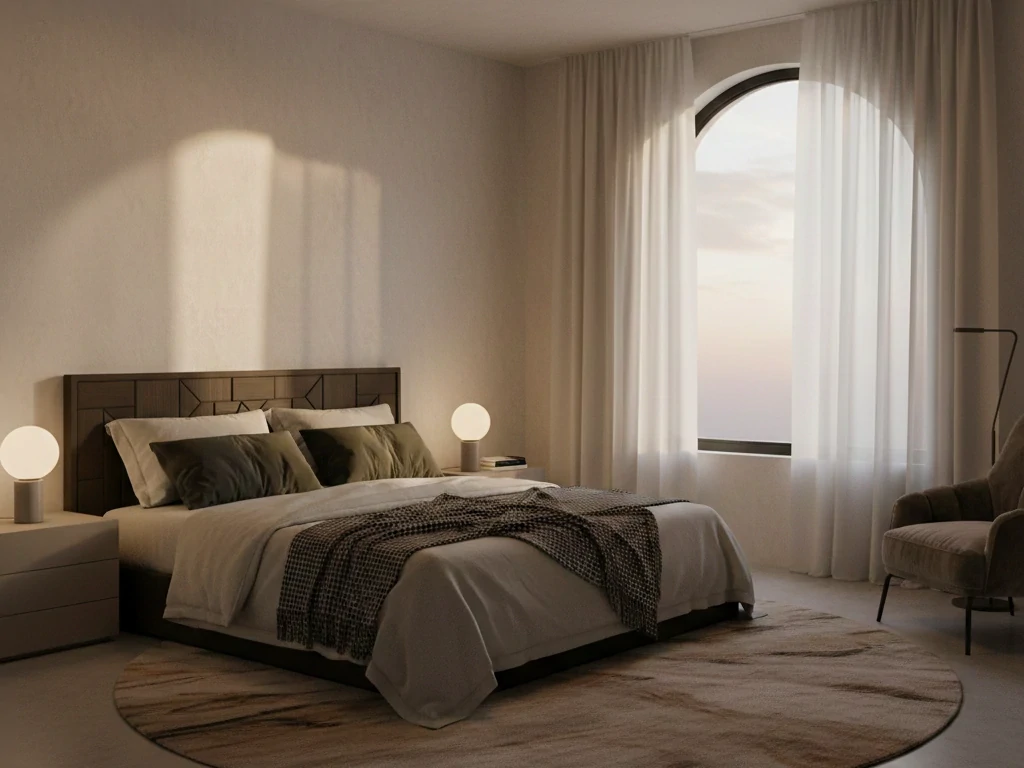
The best bedroom LED lights ideas don’t come from copying a photo—they come from understanding how you use your room, how you want to feel in it, and how light can quietly support both.
If you can plug in a strip light and mount a sconce, you can handle many upgrades yourself. For complex wiring, call a professional.
Either way, thoughtful lighting is one of the highest-impact upgrades you can make—and one you’ll feel every single night.
Frequently Asked Questions
What kind of LED lights are best for bedrooms?
For bedrooms, warm white LEDs (2700K–3000K) are generally recommended. They create a cozy, relaxing atmosphere conducive to sleep. Low-voltage strips for accent or under-bed lighting, dimmable sconces for reading, and diffused ambient ceiling LEDs are ideal. Avoid overly cool or harsh lights that can disrupt circadian rhythm.
How to style LED lights in a bedroom?
Styling is all about layering and balance. Combine ambient ceiling lights, task lighting like bedside or desk fixtures, and accent or under-bed LEDs. Use the 5’7” rule for wall-mounted lights above the bed, and add subtle decorative accents like LED strips behind headboards or inside coves. Dimmer switches and tunable LEDs allow you to adjust lighting for mood or function.
What are common bedroom lighting mistakes?
Common errors include relying on a single overhead light, ignoring glare, using the wrong color temperature, placing fixtures too high or too low, neglecting accent or under-bed lighting, and overlooking energy efficiency. Avoid these mistakes by planning layers, using dimmers, following the 5’7” rule, and choosing warm white tones.
Do LED lights run up your electric bill?
Not significantly. LEDs are highly energy-efficient, using 70–90% less electricity than incandescent bulbs. A fully layered bedroom setup usually costs only a few dollars per month in electricity. Using dimmers, timers, or motion sensors further reduces energy use, making LEDs cost-effective for both ambient and accent lighting.
What kind of bedroom lighting is trending?
Current trends emphasize layered, indirect, and customizable lighting. Popular approaches include under-bed LED lighting, wall-mounted sconces, LED strips behind headboards or mirrors, and tunable white LEDs that shift from warm to neutral depending on the time of day. Designers are also prioritizing dimmable, smart-controlled lighting for energy efficiency and convenience.
Where to put lights above bed?
Wall-mounted lights above bed should generally follow the 5’7” guideline, aligning with the seated eye level of an average adult. Place fixtures symmetrically on either side of the bed for balance. Adjustable sconces or directional LED reading lights allow flexibility for different tasks, from reading to ambient relaxation.
What is the 5’7” lighting rule?
The 5’7” rule recommends that wall-mounted bedroom lights be installed about 5 feet 7 inches (170 cm) from the floor, roughly aligning with seated eye level. This height ensures proper illumination for reading without causing glare, while maintaining aesthetic symmetry on either side of the bed. Adjustments may be needed based on bed height or occupant size.
Is it Feng Shui to have ceiling light above bed?
According to Feng Shui principles, bright, direct ceiling lights above the bed can create oppressive or “heavy” energy. It is better to use soft, indirect ambient lighting or balanced wall-mounted fixtures. Warm LED lighting, layered for ambient and task purposes, supports positive energy flow, relaxation, and visual balance.
Can under-bed LED lighting disrupt sleep?
Under-bed LEDs are typically low-lumen and warm-toned, which are minimally disruptive. Motion sensors or dimmable controls further reduce impact. Bright or cool-toned strips may interfere with melatonin production, so warm, indirect under-bed lighting is recommended for nighttime navigation.
How can I safely install bedroom LED lights?
Safety starts with planning. Ensure proper mounting, secure wiring, and adherence to local electrical codes. Use low-voltage LEDs where possible, conceal wires, and avoid placing lights near flammable materials. Dimmers, motion sensors, and diffusers reduce glare, heat, and accident risk. For hardwired or complex installations, consult a licensed electrician.
How bright should bedroom LED lighting be?
Ambient lighting typically ranges from 1,500–3,000 lumens total, while bedside or task lighting may need 400–600 lumens. Accent lighting, like under bed LED lighting or LED strips, can be 100–300 lumens. Brightness should be adjustable via dimmers to suit reading, relaxation, or nighttime navigation.
Can LED lighting improve bedroom design?
Absolutely. Layered LED lighting ideas for bedroom create depth, highlight architectural features, and improve mood. Under-bed and headboard accent lighting, combined with ambient and task layers, transforms even a simple room into a professional, high-end space. Proper color temperature and positioning also enhance comfort and perceived room size.