
Table of Contents
If you’ve ever installed solar lights, you’ve probably asked yourself the same question most homeowners eventually ask: how long do solar lights last—really? Not the number on the box. Not the optimistic claims. But in the real world, exposed to heat, rain, winter, cheap batteries, and human expectations.
I’ve worked with solar lighting projects long enough to see the same patterns repeat. Solar lights don’t usually “die” suddenly. They fade, flicker, shorten their runtime, or quietly stop turning on at night. And almost every failure has a reason.
By the end, you’ll know how long do solar lights last, whether yours are worth fixing, and what actually makes them last longer.
How Long Do Solar Lights Last on Average?
When people search how long do solar lights last, what they usually want isn’t a vague range or a marketing promise—they want a realistic expectation based on real use. So let’s be very clear and very honest.
The real-world average lifespan
In practical, everyday conditions, most solar lights last between 1 and 5 years, with the majority falling in the 2–3 year range. That may sound shorter than what you’ve seen advertised, but it aligns closely with what installers, maintenance technicians, and long-term users consistently report.
Here’s a realistic breakdown based on usage patterns and product quality:
- Decorative or low-cost solar lights: about 1–2 years
- Mid-range outdoor solar lights: about 2–3 years
- Well-designed, serviceable solar lights: 3–5 years, sometimes longer with maintenance
This range reflects the entire system lifespan, not just one component. When asking how long do solar lights last, you’re really asking how long all parts—panel, battery, electronics, seals—continue working together.
Why advertised lifespans are often misleading
You’ll often see claims like “50,000-hour LEDs” or “long-life solar panel.” Those numbers are not technically false, but they’re incomplete.
- LEDs can indeed last tens of thousands of hours
- Solar panels can continue producing power for 10–20 years
But here’s the key insight most articles skip: Solar lights usually fail long before LEDs or panels wear out
The weakest link is almost always the battery, followed by the charge controller and sealing quality. Once the battery can no longer hold enough charge, the light appears “dead,” even though most components still function.
That’s why the real answer to how long do solar lights last is much shorter than the lifespan of individual parts.
Average lifespan vs. usable lifespan
Another important distinction experts make is rated lifespan vs. usable lifespan.
- A solar light may technically still turn on after 3 years
- But if it only stays on for 30–60 minutes, most users consider it “finished”
From a user-experience standpoint, solar lights are considered to have reached end-of-life when:
- Runtime drops below a few hours
- Brightness is noticeably reduced
- Charging becomes inconsistent
This is why professionals focus on usable nighttime performance, not just whether the light technically turns on.
Environmental factors that shorten average lifespan
Even well-designed solar lights won’t all last the same length of time. The average lifespan drops significantly when lights are exposed to:
- High heat (accelerates battery aging)
- Frequent rain or humidity (causes corrosion over time)
- Partial shade (forces deeper battery discharge cycles)
- Winter conditions (shorter charging windows)
For example, a solar light installed in full sun in a dry climate may last twice as long as the same model placed in a shaded, humid yard.
This explains why two homeowners can buy identical lights and have completely different answers to how long do solar lights last.
What professionals consider a “good lifespan”
From an installer or maintenance perspective, a solar light that delivers 2–3 years of reliable nightly operation is considered acceptable. A unit that reaches 4–5 years without major performance loss is considered excellent.
Anything failing in under a year is usually traced back to:
- Poor battery quality
- Inadequate weather sealing
- Incorrect placement
Understanding this helps set realistic expectations—and helps you decide whether repairing, replacing, or upgrading makes sense when performance drops.
Component-by-Component Lifespan Breakdown (Where Failures Really Happen)
To truly understand how long do solar lights last, you have to stop thinking of them as a single product and start seeing them as a small, self-contained energy system. In the field, solar lights almost never fail all at once. One component weakens, that stresses another, and performance slowly collapses.
Below is a practical, component-by-component breakdown based on real failure patterns observed by installers, maintenance teams, and long-term users.
Solar Panels
Expected lifespan: 10–20 years Actual failure rate: low
Solar panels are usually the most durable part of any solar light. Even compact panels can continue producing electricity long after the light itself is considered unusable. From a technical standpoint, panels degrade slowly—often losing around 0.5–1% of output per year.
So why don’t solar lights last 10–20 years?
Because panels rarely fail outright. Instead, problems come from:
- Dirt, pollen, or snow blocking sunlight
- Poor mounting angles that reduce daily charging
- Partial shade that cuts output more than people expect
In practice, panels still “work,” but they can no longer charge the battery fully. This forces deeper discharge cycles at night, which shortens battery life and makes users think the entire light has failed.
Batteries (The Most Common Point of Failure)
Expected lifespan:
- 1–2 years for basic rechargeable cells
- 2–4 years for higher-quality lithium-based batteries
If you ask professionals what really determines how long do solar lights last, the answer is almost always the battery.
Solar light batteries are stressed in ways many people don’t realize:
- They charge and discharge every single day
- They often discharge close to empty overnight
- They experience high temperatures inside sealed housings
Each deep discharge permanently reduces capacity. Over time, the battery may still “work,” but it can no longer store enough energy to power the light through the night.
This is why a solar light that once stayed on for 8 hours may struggle to stay lit for 1–2 hours after a couple of years.
LEDs and Light Sources
Expected lifespan: 30,000–50,000 hours Actual failure rate: very low
LEDs are rarely the reason solar lights stop working. In most cases, they outlast every other component. However, users often mistake lumen degradation for failure.
What really happens is:
- LEDs slowly become dimmer over time
- Battery output drops, reducing brightness further
- The light technically turns on, but appears “dead”
From a usability standpoint, dim light is the same as no light at all, even though the LED itself is still functional.
Charge Controllers and Electronics
Expected lifespan: 2–5 years Actual failure rate: moderate
The charge controller is the silent manager of the system. It regulates how energy flows from the panel to the battery and from the battery to the LED. When it’s poorly designed, it causes long-term damage without obvious warning signs.
Common controller-related problems include:
- Overcharging batteries during long sunny days
- Allowing batteries to discharge too deeply at night
- Failing prematurely due to heat buildup
Once a controller starts misbehaving, battery life drops quickly—sometimes within months.
Sensors and Switches
Expected lifespan: 2–4 years
Motion sensors, light sensors, and manual switches introduce additional failure points. Dust, moisture, insects, and temperature swings all take their toll over time.
When sensors fail, users often assume the light is dead, when in reality:
- The battery still holds a charge
- The LED still works
- The sensor simply no longer triggers correctly
This is a common issue in motion-activated solar lights.
Housing, Seals, and Environmental Protection
Expected lifespan: highly variable Failure impact: critical
Water ingress is one of the fastest ways to shorten how long do solar lights last. Even a small amount of moisture can:
- Corrode battery terminals
- Damage control boards
- Create condensation that accelerates failure
Once moisture enters the housing, the clock speeds up dramatically. Many solar lights fail not because components are weak, but because seals degrade faster than expected.
Why one failed component ends the entire system
The most important takeaway is this: solar lights fail as systems, not parts.
- A weak battery stresses the controller
- A dirty panel forces deeper discharge cycles
- Moisture damages electronics that were otherwise fine
This chain reaction explains why solar lights often seem to “suddenly” stop working, even though the failure was building slowly for months.
If you want an honest answer to how long do solar lights last, this component-level understanding matters far more than any single advertised number.
How Long Do Solar Lights Last at Night?
When people ask how long do solar lights last, what they usually mean in practical terms is how long do solar lights last at night—how many usable hours of light they actually get after sunset. This is where expectations and reality often collide.
The honest answer is: it depends on how much energy the light collected during the day and how efficiently it uses that energy at night. Let’s break that down in a way that reflects real-world use, not ideal lab conditions.
Typical nighttime runtime under normal conditions
For most residential solar lights that are properly installed and in good working condition, nighttime runtime typically falls into these ranges:
- 6 to 8 hours for decorative or low-output lighting
- 8 to 10 hours for functional pathway or area lighting
- Up to 12 hours for efficient designs with healthy batteries and full sun exposure
These numbers assume:
- A full day of unobstructed sunlight
- Clean solar panels
- Batteries that are not heavily degraded
When those conditions aren’t met—and they often aren’t—runtime drops quickly. This is why two lights installed in the same yard can perform very differently.
Why runtime shortens over time
One of the most misunderstood aspects of solar lighting is that nighttime runtime naturally decreases as the system ages. This doesn’t mean the light is defective—it means the battery is wearing out.
Each night:
- The battery discharges to power the light
- Each discharge slightly reduces total storage capacity
After hundreds of charge cycles, the battery may only hold a fraction of its original energy. The light still turns on, but it shuts off earlier each night. This gradual decline is one of the clearest real-world indicators of how long do solar lights last at night in practice.
Seasonal impact on nighttime performance
Seasonal changes play a major role in runtime:
- Summer: Longer days and higher sun angles mean longer runtime
- Winter: Shorter daylight hours often cut runtime by 30–50%
- Cloudy or rainy weeks: Inconsistent charging leads to unpredictable performance
This effect is especially noticeable in solar lights that rely on small panels or have limited battery capacity. Many users mistake seasonal performance drops for permanent failure when, in fact, the system is simply receiving less energy.
Brightness settings and power consumption
Another factor that strongly affects how long do solar lights last at night is how much power the light uses once it turns on.
- Brighter output = faster battery drain
- Constant-on modes drain batteries more quickly
- Motion-activated operation conserves energy
Lights designed to dim automatically or adjust output throughout the night often provide longer usable runtime than lights that stay at full brightness until the battery is empty.
Why advertised runtime often doesn’t match reality
Manufacturers often test solar lights under controlled conditions:
- Perfect sunlight
- New batteries
- Optimal temperatures
Real outdoor environments are far less forgiving. Heat accelerates battery aging. Dirt reduces panel efficiency. Shade cuts charging time. Over months and years, these small losses add up.
This explains why a light advertised to run “up to 10 hours” may realistically deliver 6–7 hours after a year of use.
What professionals consider “normal” nighttime performance
From a practical standpoint, installers and maintenance professionals generally consider a solar light to be functioning normally if it:
- Turns on reliably at dusk
- Stays on for at least 5–6 hours under average conditions
Once runtime consistently drops below a few hours, it’s usually a sign that the battery is nearing the end of its useful life—not that the entire light has failed.
The practical takeaway
If you’re evaluating how long do solar lights last at night, focus less on advertised numbers and more on consistency over time. Reliable, predictable runtime—night after night—is a better indicator of a healthy system than maximum hours listed on a package.
Understanding this helps set realistic expectations and makes it easier to decide whether simple maintenance, battery replacement, or full replacement is the right next step.
Lifespan by Solar Light Type (What Lasts Longest and Why)
Not all solar lights are built—or used—the same way. When people ask how long do solar lights last, the most accurate answer often depends on what type of solar light they’re talking about. Design, placement, battery size, and exposure to the elements all play a major role in real-world lifespan.
Below is a practical, experience-based breakdown of lifespan by solar light type, focusing on where each design performs well and where it tends to fail.
Solar Rope Lights
Solar rope lights are popular for decorative accents, railings, and seasonal use, but they are rarely built for longevity.
Typical lifespan: 1–2 years
Why they fail sooner:
- Thin wiring is vulnerable to moisture and temperature changes
- Long runs create voltage loss
- Sealing at connection points is often minimal
Even when the solar panel and battery are still functional, internal wiring issues frequently cause sections of solar rope lights to stop working. From a durability standpoint, they should be treated as semi-disposable decorative lighting rather than long-term fixtures.
Solar Light Fence Post Caps
Solar light fence post caps sit in an exposed position and face unique challenges.
Typical lifespan: 2–3 years
Common issues include:
- Heat buildup inside hollow fence posts
- Poor drainage leading to trapped moisture
- Limited panel size restricting daily charging
Well-designed solar light fence post caps can last longer when they allow airflow and use batteries that are easy to replace. Without those features, battery degradation tends to accelerate.
Solar Night Light
Solar night light products are often used near doorways, patios, or semi-covered areas.
Typical lifespan: 2–4 years
Why they perform better:
- Lower brightness requirements
- Reduced exposure to direct rain and heat
- Smaller nightly energy draw
Because solar night light designs typically operate at lower output levels, their batteries experience less stress, which helps extend usable life.
Solar Powered Lightbulbs
Solar powered lightbulbs are often part of portable or indoor-outdoor systems.
Typical lifespan: 3–5 years
Key factors:
- Often used intermittently rather than all night
- Less exposure to extreme weather
- Batteries are sometimes replaceable
From a system perspective, solar powered lightbulbs benefit from controlled environments and moderate power demands, which helps them last longer than many decorative outdoor fixtures.
Solar Powered Table Lamp
A solar powered table lamp is usually placed in sheltered locations such as patios or balconies.
Typical lifespan: 3–5 years
Why they tend to last longer:
- Better protection from rain and dirt
- Larger batteries than small stake lights
- Lower daily discharge depth
Because they’re often turned on intentionally rather than running all night, batteries in solar powered table lamp designs age more slowly.
Solar Powered Ball Lights
Solar powered ball lights are visually appealing but mechanically vulnerable.
Typical lifespan: 2–3 years
Common problems:
- Water intrusion at seam lines
- Condensation forming inside the housing
- Limited ventilation accelerating battery wear
Once moisture enters, internal corrosion can shorten lifespan quickly, even if the light still appears sealed from the outside.
Outdoor Solar Christmas Tree Lights
Outdoor solar christmas tree lights are usually seasonal, which can work in their favor—or against them.
Typical lifespan: 2–4 holiday seasons
Key risks:
- Batteries degrading during long storage periods
- Improper storage while fully discharged
- Moisture exposure during winter weather
When stored partially charged in dry conditions, these lights often last longer than expected. Poor storage habits are the main reason they fail early.
Rain Gutter Solar Lights
Rain gutter solar lights experience extreme environmental stress.
Typical lifespan: 1–2 years
Why lifespan is shorter:
- High heat from roof exposure
- Suboptimal panel angles
- Rapid battery aging due to temperature swings
Even when they receive plenty of sunlight, heat-related battery degradation often limits how long rain gutter solar lights last.
Long Lived Solar Post Lights
Long lived solar post lights are typically larger and better engineered.
Typical lifespan: 3–5 years
What sets them apart:
- Larger solar panels
- Higher-capacity batteries
- Better housing and drainage design
These are among the few residential solar lights that can realistically approach the upper end of the lifespan range when properly installed.
Solar Powered LED Strip Lights
Solar powered led strip lights combine flexibility with complexity.
Typical lifespan: 1–3 years
Challenges include:
- Multiple connection points
- Voltage drop over long lengths
- Increased exposure to moisture
Performance depends heavily on installation quality and environmental exposure.
Solar Powered Sconces
Solar powered sconces are usually wall-mounted and more protected.
Typical lifespan: 3–5 years
Why they last longer:
- Fixed mounting reduces movement and stress
- Better sealing than ground-mounted lights
- More consistent sun exposure
Among residential options, solar powered sconces are often considered a solid balance between durability and performance.
Motion Sensor Solar Lamp
Motion sensor solar lamp designs use energy more efficiently.
Typical lifespan: 3–5 years
Benefits include:
- Reduced continuous battery drain
- Shorter lighting cycles
- Lower average power consumption
By limiting how long the light stays on, motion sensor solar lamp systems significantly reduce battery stress, which directly improves lifespan.
Why Do Solar Lights Stop Working So Quickly?
When solar lights fail earlier than expected, it often feels sudden and frustrating. One day they seem fine, and the next they barely turn on—or don’t turn on at all. This leads many people to question how long do solar lights last and whether solar lighting is even worth it.
In reality, solar lights almost never fail without warning. The failure just isn’t always obvious until performance drops below what’s useful. Below are the most common real-world reasons solar lights stop working so quickly, based on field observations and technician feedback.
Battery degradation happens faster than most people expect
The single biggest reason solar lights fail early is battery fatigue.
Solar light batteries:
- Charge and discharge every single day
- Often discharge close to empty overnight
- Operate in sealed housings where heat builds up
Each deep discharge permanently reduces battery capacity. After hundreds of cycles, the battery may still accept a charge—but it can no longer store enough energy to power the light for more than a short time.
This is why a solar light that once ran all night may suddenly shut off after an hour or two. From a user perspective, it feels broken, even though the system is technically still functioning.
Insufficient sunlight during the day
Solar lights rely entirely on daytime charging. Even small reductions in sunlight can have a big impact on nighttime performance.
Common causes include:
- Partial shade from trees or buildings
- Seasonal changes in sun angle
- Dirt, dust, or pollen covering the panel
When the panel can’t fully recharge the battery, the battery is forced into deeper discharge cycles at night. Over time, this dramatically shortens battery life and makes it seem like the light failed “too soon.”
Water intrusion and condensation damage
Moisture is one of the most destructive forces in outdoor solar lighting.
Even when a light looks sealed from the outside, temperature changes can cause:
- Condensation inside the housing
- Corrosion on battery terminals
- Damage to control circuits
Once moisture enters, failure accelerates. In many cases, the light may still work intermittently for weeks or months before stopping entirely. By the time the problem is obvious, internal damage is already extensive.
Heat buildup inside sealed housings
Heat is an invisible lifespan killer.
Solar lights installed in full sun—especially on rooftops, fences, or dark surfaces—can reach high internal temperatures during the day. Heat speeds up chemical aging inside batteries and can degrade electronic components.
This is a common issue with compact designs that lack ventilation. The light may appear perfectly fine externally while internal components age rapidly.
Poor charge regulation
The charge controller plays a critical role in protecting the battery. When regulation is inadequate, two damaging things happen:
- Batteries may be overcharged, causing long-term chemical damage
- Batteries may be over-discharged, shortening cycle life
Both scenarios lead to premature battery failure. Because the controller works silently in the background, users often blame the battery or panel without realizing regulation was the root cause.
Non-replaceable or low-quality internal components
Some solar lights are designed as sealed, disposable units. When the battery reaches the end of its useful life, the entire light becomes unusable—even if every other component is still functional.
This design approach:
- Reduces manufacturing cost
- Shortens practical lifespan
- Prevents cost-effective repair
As a result, users often conclude that solar lights “don’t last,” when the real issue is lack of serviceability.
Why failures feel sudden
From a technical standpoint, solar lights usually fail gradually, not suddenly. The reason failure feels abrupt is that performance crosses a usability threshold.
- Runtime drops from 8 hours to 4 hours
- Then to 2 hours
- Then to barely turning on
Once runtime falls below what’s useful, the light is considered “dead,” even though it may still function in a limited way.
Can You Replace the Battery in Solar Lights?
One of the most common follow-up questions after learning how long do solar lights last is simple and practical: Can the battery be replaced, or is the entire light destined for the trash? The answer is yes—sometimes, and knowing the difference can save both money and frustration.
Battery replacement is one of the most misunderstood aspects of solar lighting, largely because not all designs are intended to be serviced.
When battery replacement is possible
You can replace the battery in a solar light if the design allows physical access without damaging the housing. In practical terms, this usually means:
- A removable bottom or rear panel
- Screws instead of permanently sealed seams
- Standard battery formats rather than custom packs
Solar lights designed for long-term use often assume battery replacement as part of normal maintenance. In these cases, replacing the battery can restore most of the original runtime and brightness—provided the rest of the system is still healthy.
When battery replacement is not possible
Some solar lights are intentionally built as sealed units. In these designs:
- The housing is welded or glued shut
- Battery leads are permanently soldered
- Opening the unit breaks weather seals
Once the battery degrades, replacement becomes impractical or unsafe. Attempting to force the housing open often leads to water intrusion later, which shortens lifespan even further.
This is especially common in compact decorative solar lights where low cost and appearance are prioritized over serviceability.
How to tell if your solar light has a replaceable battery
Before attempting any repair, professionals recommend checking a few key things:
- Is there a visible battery compartment or access panel?
- Does the manual or label mention battery replacement?
- Can the battery be removed without cutting wires or breaking seals?
If the answer to all three is yes, replacement is usually straightforward. If not, replacement may cost more in time and risk than the light is worth.
Battery replacement doesn’t fix everything
It’s important to understand what battery replacement can and cannot solve.
Replacing the battery can fix:
- Short nighttime runtime
- Lights that turn on but shut off early
- Gradual brightness loss
Replacing the battery won’t fix:
- Water-damaged electronics
- Corroded wiring or terminals
- Failed charge controllers
This is why experienced technicians always inspect the housing for moisture damage before recommending battery replacement.
Safety and compatibility matter
Using the wrong battery type can shorten lifespan or create safety risks.
Key compatibility points include:
- Matching voltage exactly
- Using batteries designed for frequent charge cycles
- Avoiding higher-capacity batteries that exceed controller limits
A battery upgrade that looks good on paper can actually stress the charging system if it’s not properly matched.
Is battery replacement part of normal solar light ownership?
From a professional standpoint, yes—for serviceable designs.
Solar lights are not maintenance-free. Batteries are consumable components, much like tires on a car. Replacing them every few years is normal and expected if the light was designed to be maintained.
This perspective helps reset expectations around how long do solar lights last. In many cases, the light itself hasn’t reached the end of its life—the battery has.
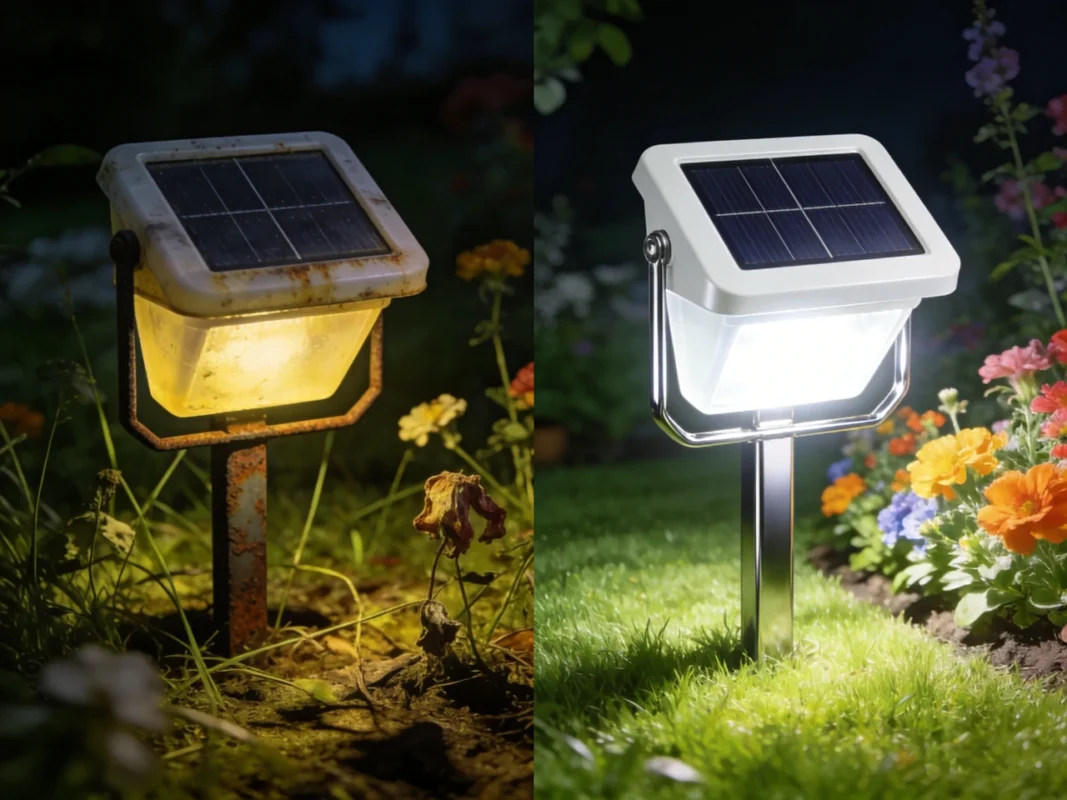
How Can I Make My Solar Lights Stay On Longer?
Once you understand how long do solar lights last, the next logical question is how to get the most usable light out of them each night—and for as many years as possible. The good news is that most solar lights don’t fail early because they’re poorly made. They fail because small, fixable issues slowly drain performance.
Below are proven, experience-based ways professionals use to extend nighttime runtime and overall lifespan.
Improve solar panel placement (this matters more than anything else)
If solar lights aren’t staying on long enough, start with the panel—not the battery.
Best practices include:
- Place panels where they receive 6–8 hours of direct sunlight
- Avoid even partial shade from trees, fences, or rooflines
- Adjust panel angles seasonally if possible
Even one hour of lost sunlight per day can significantly reduce charging efficiency. Over time, insufficient charging forces the battery into deeper discharge cycles, which shortens its life and reduces nightly runtime.
Keep solar panels clean and unobstructed
Dirty panels don’t look dirty—but they perform poorly.
Dust, pollen, bird droppings, and pollution can reduce output by 10–30% without being obvious. Professionals recommend:
- Wiping panels every 2–4 months
- Cleaning more frequently in dusty or high-pollen areas
This simple step alone often restores hours of lost runtime.
Reduce nighttime power consumption
The less energy a light uses at night, the longer it stays on.
Effective strategies include:
- Using lower brightness settings when available
- Avoiding constant-on modes for decorative lighting
- Limiting unnecessary all-night illumination
Lights that burn at full brightness until the battery is empty wear out batteries much faster than lights that manage output intelligently.
Use motion-activated modes whenever possible
Motion-based operation dramatically improves efficiency.
When lights only activate at full brightness when needed:
- Battery discharge is reduced
- Runtime is extended
- Battery lifespan increases
From a technical standpoint, reducing average nightly energy draw is one of the most effective ways to make solar lights stay on longer year after year.
Upgrade the battery when the design allows it
If your solar light supports battery replacement, upgrading to a higher-quality battery can noticeably improve performance.
What matters:
- Matching voltage exactly
- Choosing batteries designed for frequent charge cycles
- Avoiding oversized batteries that stress the charging system
A fresh, properly matched battery often restores most of the original runtime—sometimes more.
Protect lights from unnecessary heat and moisture
Environmental stress shortens lifespan more than most users realize.
To reduce damage:
- Avoid mounting lights directly above heat-reflective surfaces
- Improve drainage around ground-mounted fixtures
- Re-seat gaskets and seals if accessible
Lower internal temperatures slow battery aging and protect electronics.
Turn lights off during extended periods of non-use
Solar lights left on during long periods of bad weather or seasonal inactivity can fully discharge and remain empty for days or weeks. This is extremely hard on batteries.
When lights won’t be used:
- Switch them off if possible
- Store portable units partially charged
- Avoid leaving batteries fully depleted
This simple habit can add months—or years—to battery life.
Know when performance loss is normal
Not all runtime reduction is a problem. Some decline is expected over time.
Professionals consider a solar light healthy if:
- It turns on reliably at dusk
- It provides several hours of usable light
- Performance declines gradually, not suddenly
When runtime drops sharply or becomes inconsistent, that’s when intervention makes sense.
Buying for Longevity: What Experts Look for Before Choosing Solar Lights
Professionals look for:
- Replaceable batteries
- Proper drainage
- Conservative lumen ratings
- Clear runtime specs
- Honest warranties
That’s how you find long lived solar post lights.
Final Thoughts – Setting Realistic Expectations for Solar Lighting
If you understand how long do solar lights last, you won’t feel disappointed—you’ll feel prepared. Solar lighting is about convenience, efficiency, and realistic expectations, not permanence.
Choose wisely, install smartly, maintain occasionally—and your solar lights will do exactly what they’re meant to do.
FAQs – Expert Answers to the Most Common Solar Light Questions
Why do solar lights stop working so quickly?
In most cases, solar lights stop working quickly because the battery degrades faster than expected. Solar batteries are charged and discharged every day, often deeply, which accelerates wear. Heat buildup, insufficient sunlight, and moisture intrusion make the problem worse. The light usually doesn’t fail suddenly—it simply drops below a usable level of performance.
Can you replace the battery in solar lights?
Yes, if the design allows access to the battery compartment. Some solar lights are built with replaceable batteries as part of normal maintenance, while others are sealed and not meant to be serviced. If opening the light requires breaking seals or cutting wires, battery replacement is usually not worth the risk.
How long does outdoor solar light last?
Most outdoor solar lights last between 1 and 5 years, with 2–3 years being the most common real-world outcome. Lifespan depends heavily on battery quality, environmental exposure, and how well the light is installed and maintained.
Is it worth replacing batteries in solar lights?
Replacing batteries is worth it only when the rest of the light is still in good condition. If there’s no moisture damage and the electronics are functioning properly, a new battery can restore much of the original runtime. If corrosion or water damage is present, replacement rarely provides lasting results.
How can I make my solar lights stay on longer?
The most effective steps are:
• Improve solar panel exposure to full sun
• Keep panels clean
• Reduce brightness or constant-on operation
• Use motion-activated modes when available
• Replace aging batteries when possible
Small improvements in charging efficiency often translate into significantly longer nighttime runtime.
Do solar lights work in winter or cloudy climates?
Yes, but performance is reduced. Shorter daylight hours and lower sun angles mean less energy is collected during the day. As a result, nighttime runtime may drop by 30–50% in winter. This is normal behavior, not a defect.
What type of solar light lasts the longest?
Solar lights with larger panels, higher-capacity batteries, and better weather sealing tend to last the longest. Wall-mounted and post-mounted designs usually outperform small decorative or ground-level lights because they experience less moisture and physical stress.
Are motion-activated solar lamps better for battery life?
Yes. Motion-activated designs significantly reduce average nightly power consumption. Because the light isn’t running at full brightness all night, the battery experiences less stress, which extends both nightly runtime and overall lifespan.
How often should solar light batteries be replaced?
Most solar light batteries need replacement every 1 to 3 years, depending on battery type, climate, and usage patterns. Batteries in hot or humid environments typically require replacement sooner.
When should I stop repairing and just replace solar lights?
If the light shows signs of water intrusion, corrosion, or inconsistent behavior after battery replacement, it’s usually time to replace it. At that point, underlying damage to electronics or seals makes long-term repair unreliable.