
Table of Contents
If you’ve ever bought outdoor solar lights, installed them with high hopes, and then wondered “why are these so dim?” or “why did they stop working?” — you’re not alone.
Every week, homeowners search how do solar lights work because something didn’t behave the way the packaging promised. The truth is: solar lighting is simple in concept, but full of small technical details that determine whether it works beautifully or becomes yard clutter.
This guide explains how do solar lights work in the real world — not in marketing brochures. You’ll learn how they actually generate power, why placement matters more than price, how to fix common problems, and whether solar lights for yard use are worth it for your situation.
What Are Solar Lights and Why Are They So Popular Today?
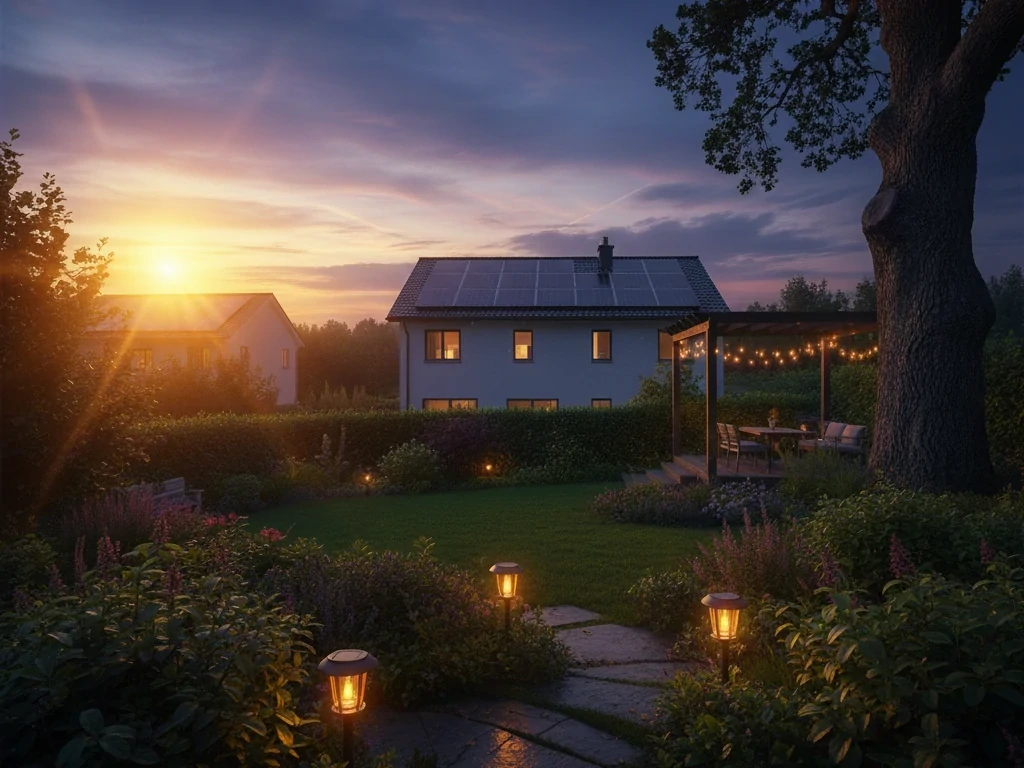
Solar lighting has moved far beyond novelty garden stakes. Today, outdoor light solar powered systems are used for pathways, security, landscaping, patios, and even off-grid properties.
The appeal is obvious: no wiring, no electric bill, and automatic operation. But popularity doesn’t mean they’re foolproof — and understanding how do solar lights work is the difference between success and frustration.
What Is a Solar Lamp and How Is It Different from Traditional Lighting?
A solar lamp is a self-contained lighting system powered entirely by sunlight. Unlike wired lights, it doesn’t pull electricity from your home. Instead, it captures solar energy during the day and uses it at night.
Traditional lighting relies on:
- Grid electricity
- Underground wiring
- Manual switches or timers
Outdoor light solar powered systems rely on:
- A small solar panel
- A rechargeable battery
- A light sensor
- An LED light source
This difference explains both the convenience and the limitations. If you don’t understand how does solar lights work, it’s easy to expect wired-light performance from a solar product — and that’s where disappointment starts.
Common Types of Solar Lights Explained
Not all solar lights are designed for the same job. Understanding the category helps set realistic expectations.
- Solar lanterns (solar laterns): Portable, decorative, or emergency lights. Often used on tables or hung from hooks.
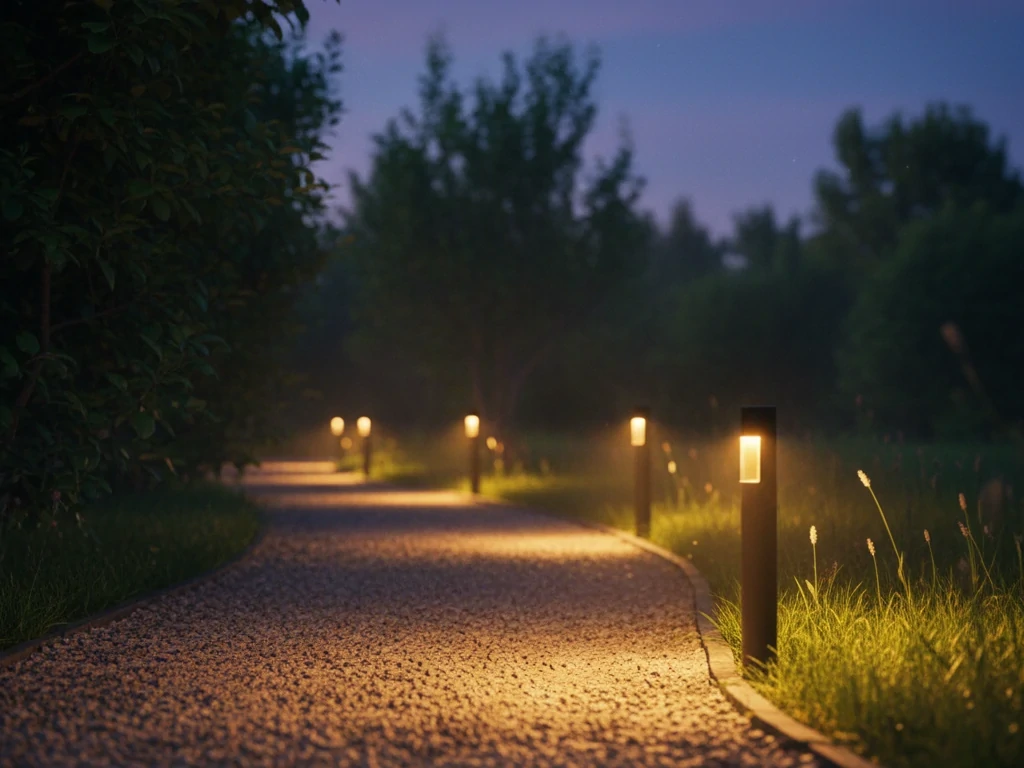
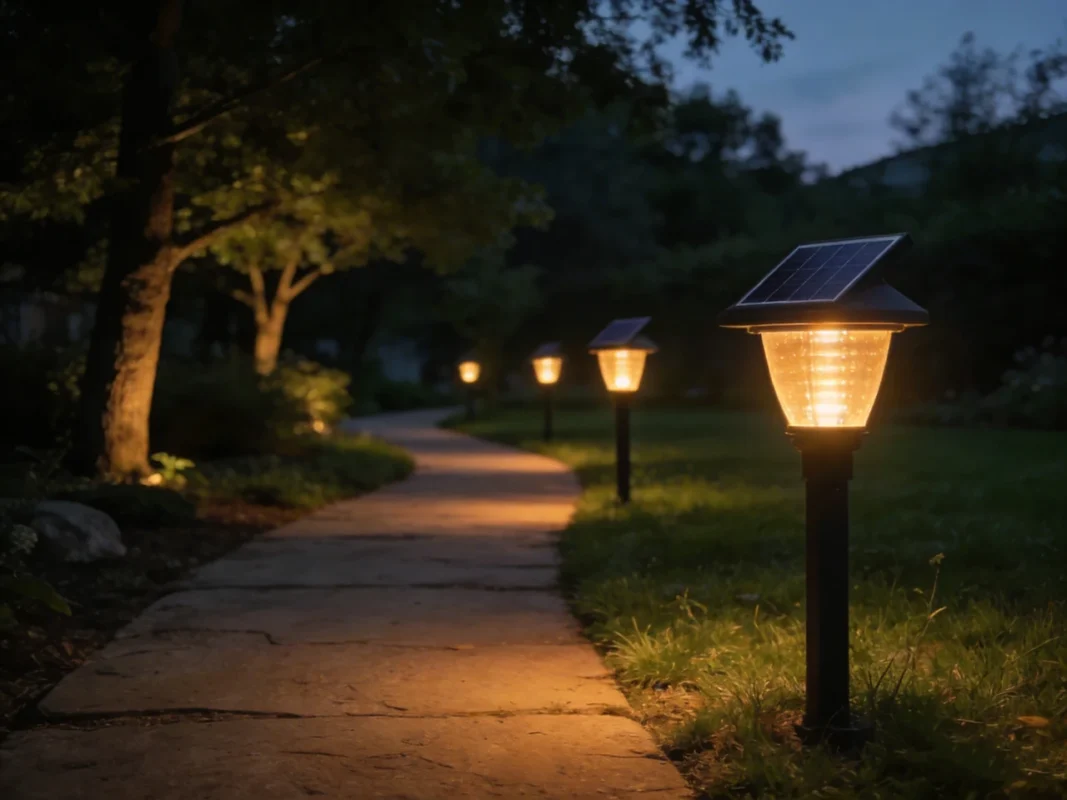
- Solar lights for yard and pathways: Low-profile lights meant for visibility, not brightness.
- Solar powered spot lighting: Directional lights designed to highlight trees, walls, or security areas.
- Wall-mounted solar lights: Common near doors, fences, and sheds.
Each type uses the same core technology, but the performance varies dramatically based on size, battery capacity, and panel exposure.
How Do Solar Lights Work? (Step-by-Step Technical Breakdown)
When people ask how do solar lights work, what they’re usually really asking is:
“Why do mine work great in one spot but fail in another?” “Why were they bright at first, then slowly faded?” “Is something broken, or is this just how solar lights behave?”
The truth is, solar lights are simple systems — but they are very sensitive systems. Once you understand how each component behaves in real outdoor conditions, most “mystery failures” suddenly make sense.
Let’s walk through how do solar lights work, step by step, the way a technician or installer would explain it on-site.
Solar Panel – How Sunlight Is Actually Converted into Power
Everything starts with the solar panel, and this is where most expectations go wrong.
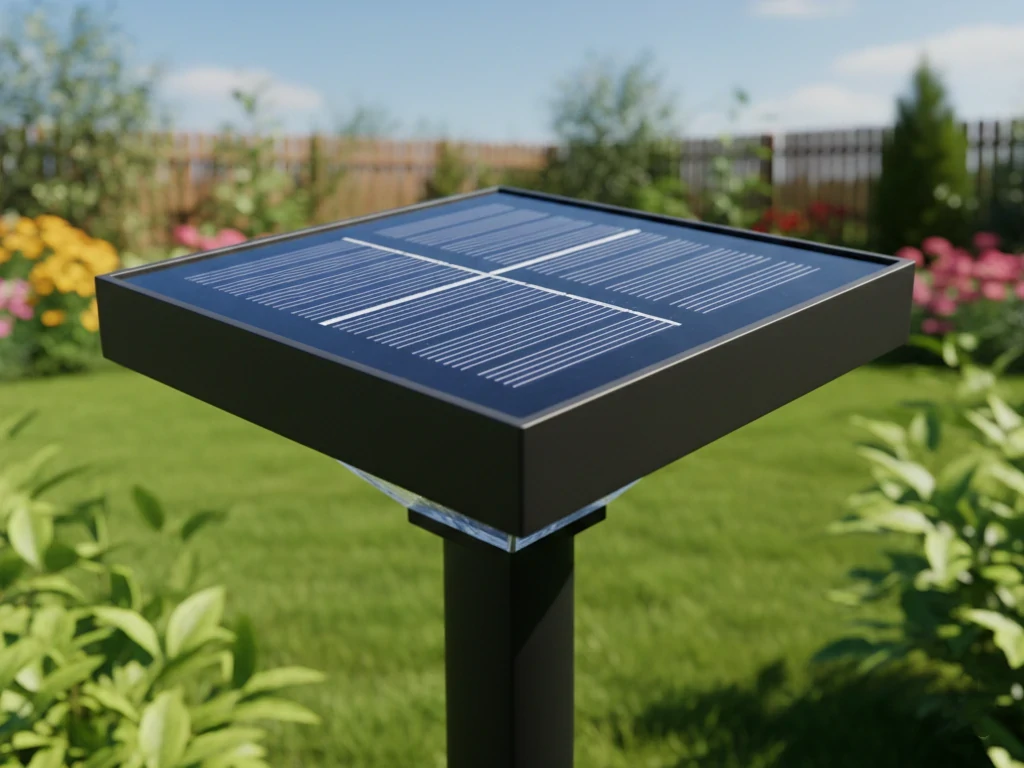
A solar panel does not store energy. It only converts light into electricity in real time. Inside the panel are photovoltaic cells that generate direct current (DC) electricity when exposed to sunlight.
Here’s the real-world part many guides skip:
- Solar panels work best under direct, unobstructed sunlight
- Even partial shade can reduce output by 40–70%
- Dirt, dust, pollen, or bird droppings reduce efficiency far more than people expect
Field measurements consistently show that a small solar panel on a garden light produces only a few watts at peak conditions, and often far less. That’s not a flaw — it’s physics.
An outdoor light solar powered system doesn’t need massive power, but it does need consistency. This is why two identical solar lights installed just a few feet apart can behave completely differently.
If you misunderstand this step, you’ll never fully understand how does solar lights work in practice.
Rechargeable Battery – The Most Common Point of Failure
Once electricity is generated, it flows directly into a rechargeable battery. This battery is the heart of the system — and also the weakest link over time.
Most solar lights use rechargeable batteries designed to:
- Charge slowly during the day
- Discharge gradually at night
- Tolerate thousands of shallow charge cycles
However, real outdoor conditions are harsh. Heat, cold, and incomplete charging all shorten battery life.
From hands-on experience, here’s what usually happens:
- Year 1: Bright, reliable performance
- Year 2: Shorter runtime, dimmer output
- Year 3: Inconsistent or no operation
This pattern leads many users to think the solar panel “stopped working,” when in reality the battery simply can’t hold enough charge anymore.
Any expert who truly understands how do solar lights work will tell you:
Battery degradation causes far more failures than panel damage.
Charge Controller & Light Sensor – The “Decision Maker”
Between the panel, battery, and LED sits a small control circuit. This component decides when to charge and when to illuminate.
Here’s how it works in practice:
- During daylight, the controller allows charging
- At dusk, it detects reduced light levels
- It then cuts off charging and sends power to the LED
This explains several common user complaints:
- Solar lights won’t turn on near porch lights
- Testing them indoors “doesn’t work”
- Lights turn off earlier than expected
The sensor doesn’t know what time it is — it only knows light intensity. Any nearby artificial lighting can confuse it into thinking it’s still daytime.
This is a critical real-world detail often missing from generic explanations of how does solar lights work.
LED Light Source – Why Solar Lights Look Dim (on Purpose)
Solar lights almost always use LEDs, and for good reason. LEDs produce usable light at extremely low power levels.
However, brightness is intentionally limited.
Why?
- The battery capacity is small
- The system must last all night
- High brightness would drain power in hours, not overnight
This is why:
- Pathway solar lights are meant for visibility, not illumination
- Solar lanterns (solar laterns) favor ambiance over power
- Solar powered spot lighting uses focused beams instead of flood output
Experienced installers know that solar lighting is about light placement, not brute force brightness. When users expect stadium lighting from a solar lamp, disappointment is inevitable.
Automatic On/Off Cycle – Why Solar Lights Feel “Smart” but Aren’t
One of the biggest selling points of solar lights is that they turn on and off automatically. But this automation is extremely simple.
There is:
- No clock
- No memory
- No intelligence
Just a sensor reacting to light levels.
This simplicity is actually a strength — fewer components mean fewer things to break. But it also means the system can be easily confused by reflections, nearby lights, or unusual placement.
Understanding this cycle completes the full picture of how do solar lights work in everyday use.
The Full System Working Together (Real-World Summary)
When everything works properly, the process looks like this:
- Sunlight hits the solar panel
- Electricity is generated and stored in the battery
- The controller monitors light levels
- At dusk, power flows to the LED
- The light runs until the battery reaches its safe minimum
When something fails, it’s almost always due to:
- Insufficient sunlight
- Battery degradation
- Sensor interference
- Poor installation angle
That’s not theory — that’s what shows up again and again in real yards, driveways, and gardens.
Why This Breakdown Matters Before You Buy or Install
If you truly understand how do solar lights work, you’ll:
- Place them differently
- Maintain them better
- Choose the right type for your needs
- Avoid unrealistic expectations
And most importantly, you’ll know when a problem is fixable — and when it’s simply the limit of solar technology.
Do Solar Lights Need Sun or Just Light? (Very Common Confusion)
This question shows up constantly — and not because people are careless, but because the term “solar” is misleading.
When homeowners ask whether solar lights need sun or just light, what they’re really asking is:
“Why did my solar lights work fine at first, then slowly get worse?” “Why do they turn on, but only stay lit for an hour?” “Why do they seem useless on cloudy days?”
To answer this properly, you need to understand how do solar lights work under real environmental conditions — not ideal lab settings.
Can Solar Lights Charge in Shade or Cloudy Weather?
Yes, solar lights can charge in shade or cloudy weather — but this is where expectations often break down.
Solar panels respond to light intensity, not just the presence of light. Direct sunlight provides far more usable energy than indirect or diffused light. Field testing shows that:
- Direct sunlight produces 100% rated output
- Bright overcast conditions may deliver 20–40%
- Heavy cloud or shade can drop output below 10%
That means a solar lamp placed in partial shade might technically charge all day — yet still fail to power the light for more than an hour at night.
This is why many solar lights for yard installations appear “defective” when they’re actually underpowered. The system is doing exactly what it’s designed to do, just with insufficient input.
Installers often explain it this way:
“Solar lights don’t fail suddenly — they fade when they’re starved of sunlight.”
Once you understand that, how does solar lights work becomes far more predictable.
Do Solar Lights Work with Reflected or Indirect Sunlight?
Indirect sunlight does charge solar panels, but the efficiency loss is significant.
Common real-world examples:
- Sunlight filtered through tree branches
- Light reflected off walls or pavement
- Sun exposure limited to early morning or late afternoon
In these situations, solar panels may collect energy, but not enough to fully charge the battery. Over time, this leads to:
- Shorter nightly runtime
- Dimming LEDs
- Battery stress and early failure
This is especially noticeable with decorative solar lanterns (solar laterns) and small garden lights, which use compact panels with minimal margin for error.
Do Solar Lights Work Indoors or Under Artificial Light?
This is one of the most persistent myths.
In theory, very strong artificial light can generate a small electrical response in a solar panel. In practice, it’s almost always irrelevant.
Standard indoor lighting:
- Lacks sufficient intensity
- Emits the wrong light spectrum
- Is inefficient for photovoltaic charging
Even leaving a solar light under a bright indoor bulb for hours usually produces less than a few minutes of usable runtime. That’s not a defect — it’s simply not what the technology is designed for.
This misunderstanding leads many users to incorrectly conclude their outdoor light solar powered system is broken, when it’s just being tested in an impossible environment.
Why “Sun Exposure” Is More Important Than “Daylight Hours”
Another subtle but critical point: solar lights care more about sun quality than day length.
For example:
- Six hours of strong midday sun can outperform ten hours of weak winter daylight
- A south-facing location in winter often beats an east-facing location in summer
- Cold but sunny days outperform warm, cloudy ones
Professionals who understand how do solar lights work always prioritize panel exposure over everything else. It’s not about how long the sun is up — it’s about how much energy actually reaches the panel.
What This Means for Real-World Installation
If your solar lights:
- Turn on but don’t last long
- Work better in summer than winter
- Fade gradually instead of failing outright
The cause is almost always insufficient sunlight, not faulty equipment.
For solar powered spot lighting, this matters even more. Spotlights demand more energy than pathway lights, so partial shade that might be “good enough” for small solar lights is completely inadequate for focused illumination.
Expert Takeaway: Sunlight Is Not Optional
Here’s the practical conclusion installers reach after years in the field:
Solar lights don’t just need light — they need usable sunlight.
If you plan placement around convenience instead of sun exposure, performance will always disappoint. But if you respect how solar panels actually behave, solar lighting becomes reliable, predictable, and cost-effective.
Understanding this single concept clears up more confusion about how do solar lights work than almost any other topic — and it’s the foundation for everything that follows in installation, troubleshooting, and long-term performance.
How Long Do Solar Lights Need to Charge?
This is one of the most practical questions people ask after learning how do solar lights work, because charging time directly determines whether solar lighting feels convenient or frustrating.
In real yards, gardens, and driveways, charging time is not a fixed number on a box. It’s the result of sunlight quality, battery condition, and how the system was installed.
If you’ve ever wondered why your solar lights charged “all day” but barely stayed on at night, this section explains exactly why.
Typical Charging Time for Outdoor Solar Lights
Under ideal conditions, most outdoor light solar powered systems need:
- 6 to 8 hours of strong, direct sunlight to reach a near-full charge
- Longer on cloudy days, often stretching to a full day or more
- Two full days for first-time charging after installation or storage
That “ideal conditions” phrase matters. In field conditions, very few installations actually meet it every day.
Solar panels are rated under laboratory sunlight levels that most residential yards don’t consistently achieve. This is why understanding how does solar lights work in real environments is more useful than relying on manufacturer estimates.
Why First-Time Charging Takes Longer Than Daily Charging
One of the most overlooked steps is initial activation.
When solar lights are new or have been stored for months:
- The battery is often partially discharged
- The internal chemistry needs a full cycle to stabilize
- The controller may limit output until voltage is consistent
Experienced installers routinely recommend at least 24–48 hours of uninterrupted sunlight before judging performance. Skipping this step is a common reason people assume a solar lamp is defective.
How Sun Quality Affects Charging Speed
Not all sunlight charges solar lights equally.
In practice:
- Midday sun charges faster than morning or evening light
- Clear skies outperform bright overcast conditions
- Cold but sunny days often charge better than warm, hazy ones
A solar panel might technically receive light for ten hours, but if most of that light is weak or indirect, the battery never reaches full capacity.
This explains why solar lights for yard use often perform well in summer but struggle in fall and winter — even when daylight hours seem reasonable.
How Long Do Solar Lights Stay On After Charging?
Charging time and runtime are tightly linked.
Typical results under good conditions:
- Small decorative lights: 6–8 hours
- Standard pathway lights: 8–10 hours
- Solar powered spot lighting: 6–9 hours, depending on brightness
If your lights turn off after just one or two hours, it usually means:
- The battery never fully charged
- The panel didn’t receive enough direct sun
- The battery has degraded with age
This behavior is often mistaken for a defect, when it’s simply a consequence of how how do solar lights work with limited energy storage.
Why Charging Seems Inconsistent from Day to Day
Solar lights don’t “remember” yesterday’s sunlight. Each day starts fresh.
Several real-world factors change charging time:
- Passing clouds
- Seasonal sun angle shifts
- Dust or pollen on the panel
- Temporary shading from leaves or snow
Even small changes can significantly affect charging performance, especially for compact solar lanterns (solar laterns) or small garden lights with limited panel surface area.
Expert Insight: Longer Charging Doesn’t Always Mean Better Performance
A common misconception is that leaving solar lights out longer automatically improves charging. In reality:
- Once the battery is full, extra sunlight doesn’t add capacity
- Overcharging is prevented by the controller
- Poor sun exposure can’t be “fixed” with more time
As one outdoor lighting technician summarized it:
“Solar lights don’t need more hours — they need better hours.”
That distinction is critical for anyone trying to optimize placement and performance.
What This Means for Real-World Use
If you want reliable results:
- Prioritize direct sun exposure over all-day light
- Allow two full days for initial charging
- Expect shorter runtime in winter
- Understand that charging time reflects environmental reality, not product quality
Once users internalize this, frustration drops dramatically — because they’re no longer fighting the physics behind how do solar lights work.
Charging time isn’t a flaw. It’s a feedback signal telling you whether the system is getting what it needs to perform.
Do You Have to Activate Solar Lights Before Using Them?
Short answer: yes — almost always.
This isn’t user error — it’s a design choice that rarely gets explained clearly.
Why Many Solar Lights Have an ON/OFF Switch
Most solar lights include a physical ON/OFF switch for one reason: battery protection.
During shipping and storage:
- Lights may sit in warehouses for months
- Any small power drain would fully discharge the battery
- Deep discharge shortens battery life permanently
The switch isolates the battery so it arrives usable. This is standard practice across solar lamp designs, from small decorative lights to solar powered spot lighting.
From an installer’s perspective, the logic is sound — but from a consumer’s perspective, it’s often confusing.
Why Solar Lights Don’t “Auto-Activate” Like People Expect
Many users assume that placing a solar light in the sun automatically activates it. That assumption makes sense — but it’s wrong.
Here’s why:
- The light sensor only controls when the LED turns on
- It does not override the master power switch
- If the switch is OFF, the system remains electrically isolated
This is one of the most common misunderstandings about how does solar lights work.
How to Properly Activate Solar Lights for the First Time
Based on field experience, this process avoids nearly all first-day failures:
- Locate the ON/OFF switch (often under the panel or battery cover)
- Turn the switch to ON
- Place the light in direct sunlight for a full day
- Avoid testing it under artificial light
- Check operation after dark
Skipping step three is the most common mistake. Even activated solar lights need time to build their first usable charge.
Why Activated Lights Still Might Not Turn On Immediately
This is where expectations matter.
Even after activation:
- Batteries may be partially discharged from storage
- Controllers may limit output until voltage stabilizes
- Indoor testing may confuse the light sensor
Experienced technicians often remind users:
“Activation turns the system on — it doesn’t magically charge the battery.”
This distinction clears up a lot of frustration around outdoor light solar powered systems.
How Activation Affects Long-Term Performance
Proper activation does more than just turn the light on. It:
- Prevents deep battery discharge
- Helps the battery reach full capacity safely
- Reduces early degradation
Improper activation — especially repeated partial charging — can shorten battery lifespan by months. That’s not theory; it’s observed behavior in long-term installations of solar lights for yard use.
Common Activation Mistakes That Cause “Dead” Solar Lights
From real-world troubleshooting, these show up again and again:
- Forgetting to turn the switch ON
- Testing the light indoors
- Installing it in shade immediately
- Assuming cloudy daylight equals charging
Each of these leads users to believe the product is faulty, when it’s simply not receiving the conditions required for how do solar lights work properly.
Expert Takeaway: Activation Is Mandatory, Not Optional
Here’s the practical truth installers share:
Solar lights don’t fail out of the box — they fail to be activated correctly.
Once activated and charged properly, most solar lights perform exactly as designed. Understanding this step eliminates one of the biggest pain points in solar lighting and prevents unnecessary returns, replacements, and frustration.
If someone truly understands how do solar lights work, activation becomes a simple habit — not a hidden obstacle.
How Do I Get Solar Lights to Work If They’re Not Turning On?
If your lights stopped working, don’t throw them away yet.
Quick Troubleshooting Checklist
- Confirm the switch is ON
- Clean the solar panel
- Move the light away from other light sources
Battery Issues That Stop Solar Lights from Working
If a solar light worked for 1–2 years and then faded, the battery is likely the issue. Replacing the battery often restores full function.
Sensor and Placement Problems
Streetlights, porch lights, or even reflective surfaces can confuse the sensor. This is a classic misunderstanding of how do solar lights work in real environments.
How to Install Solar Lights Correctly
Installation determines performance more than price.
Best Placement for Solar Lights for Yard and Garden
- South-facing exposure (in the U.S.)
- Minimum 6 hours of sun
- No shade from trees or roofs
Installing Solar Powered Spot Lighting
For spotlights:
- Angle the panel separately if possible
- Aim the light after sunset
- Avoid over-lighting small features
Common Installation Mistakes to Avoid
- Installing under eaves
- Forgetting seasonal sun changes
- Ignoring nearby lighting sources
How Much Do Solar Lights Cost?
Cost is more than the price tag.
Typical Price Ranges for Solar Lights
- Basic solar lanterns: low cost, short lifespan
- Mid-range solar lights for yard: balanced value
- Solar powered spot lighting: higher upfront, better performance
Solar Lights vs Traditional Lights – Cost Comparison
Traditional wired lights involve:
- Trenching
- Wiring
- Ongoing electricity costs
Outdoor light solar powered systems eliminate all of that. Over several years, solar often costs less — especially for landscape lighting.
What Are the Real Benefits of Using Solar Lights?
Beyond savings, convenience matters.
Energy Savings and Environmental Impact
Solar lights use renewable energy and reduce grid demand. For many homeowners, that alone justifies the choice.
Safety, Convenience, and Low Maintenance
- No wiring hazards
- Automatic operation
- Ideal for remote areas
Expert Tips to Maximize the Lifespan of Solar Lights
Most people think solar lights fail because they’re “cheap.” In reality, most solar lights fail early because they’re used the wrong way.
If you truly understand how do solar lights work, extending their lifespan becomes more about habits than hardware. Installers who maintain solar lights for years see the same patterns over and over — and the fixes are surprisingly simple.
Cleaning and Maintenance Best Practices
Solar panels are small. That makes them efficient — and vulnerable.
A thin layer of dust, pollen, or grime can reduce panel output by 15–30%. In real yards, especially near trees or roads, that loss adds up quickly.
From field experience:
- Panels should be cleaned every 2–3 months
- More often in dusty or high-pollen areas
- After storms that leave residue or debris
Cleaning doesn’t require chemicals. A soft cloth and water are usually enough. What matters is consistency.
This single habit directly affects how does solar lights work over time — because reduced charging today becomes battery stress tomorrow.
Seasonal Adjustments Most Homeowners Ignore
The sun doesn’t stay in the same place year-round.
In summer:
- Higher sun angle
- Longer charging windows
- Better performance even with imperfect placement
In winter:
- Lower sun angle
- Shorter daylight
- Shadows stretch farther
Professionals regularly adjust solar lights for yard installations seasonally, especially solar powered spot lighting. A slight tilt change can restore hours of runtime.
Homeowners who never adjust placement often assume the lights are “wearing out,” when they’re simply misaligned.
Battery Care: The Real Determinant of Lifespan
Batteries don’t fail suddenly — they degrade gradually.
Key practices that extend battery life:
- Allow full charging cycles when possible
- Avoid permanent shade
- Don’t store lights switched ON without sunlight
Repeated shallow charging — common in shaded locations — accelerates capacity loss. That’s why solar lanterns (solar laterns) stored indoors for long periods often perform poorly later.
Anyone who truly understands how do solar lights work knows that protecting the battery protects the entire system.
When to Replace Batteries vs Replace the Whole Light
This is a judgment call that comes with experience.
In general:
- If the panel is clear and intact → replace the battery
- If the panel is yellowed or cracked → replacement makes more sense
- If water has entered the housing → reliability is compromised
From long-term maintenance data, replacing a degraded battery often restores 70–90% of original runtime — a result that surprises many users.
Water, Heat, and Environmental Stress
Outdoor light solar powered systems live in harsh conditions.
Common threats include:
- Standing water after rain
- Heat buildup in enclosed housings
- Freeze-thaw cycles
Simple steps help:
- Ensure drainage holes aren’t blocked
- Avoid ground placement in flood-prone areas
- Relocate solar lights during extreme weather if possible
These are small decisions, but they add years of service life.
Avoiding the Most Common Lifespan-Killing Mistakes
From field troubleshooting, these mistakes show up repeatedly:
- Leaving lights in permanent shade
- Never cleaning the panel
- Testing indoors and assuming failure
- Ignoring seasonal sun changes
None of these indicate poor product quality. They indicate misunderstanding of how does solar lights work under real conditions.
Expert Takeaway: Longevity Comes from Respecting the System
Here’s the hard truth installers often share:
Solar lights don’t die young — they’re slowly starved.
When solar lights receive consistent sunlight, proper charging cycles, and basic maintenance, they routinely last far longer than people expect.
If users treat solar lighting as a living system — not a disposable gadget — performance stays predictable, and replacement becomes the exception, not the rule.
That mindset is what separates frustration from satisfaction when working with solar lights.
FAQs
Do solar lights need sun or just light?
Solar lights need usable sunlight, not just brightness.
They can technically respond to any light, but charging efficiency drops sharply without direct sun. In real-world testing, indirect or cloudy light often provides less than 30% of the energy needed for a full charge.
That’s why solar lights placed in shade may turn on but won’t last long. This behavior is not a defect — it’s exactly how do solar lights work when input energy is limited.
How do I get solar lights to work properly?
When solar lights don’t perform, the fix is usually environmental, not mechanical.
From field troubleshooting, the essentials are:
• Confirm the ON/OFF switch is activated
• Place the light in full, direct sunlight
• Allow at least one full day for initial charging
• Keep panels clean and unobstructed
• Avoid nearby artificial light at night
Once these conditions are met, most solar lights behave predictably. If they don’t, the battery is usually the next thing to evaluate.
Do you have to activate solar lights before using them?
Yes. Almost all solar lights require manual activation.
The switch prevents battery drain during shipping and storage. If it remains OFF, the system is electrically isolated — no charging, no lighting.
Professionals regularly see solar lights returned as “dead” simply because this step was missed. Understanding this is fundamental to understanding how does solar lights work in practice.
How long do solar lights need to charge?
Under good conditions, most outdoor light solar powered systems need 6–8 hours of direct sunlight to reach a near-full charge.
First-time use often requires 24–48 hours, especially after long storage. Weak sunlight stretches charging time but does not increase capacity — a key detail many users overlook.
Why do my solar lights turn off so early at night?
Early shutoff almost always points to insufficient charge or battery aging.
Common causes include:
• Partial shade during the day
• Dirty solar panels
• Short winter daylight
• Degraded batteries
This gradual fade is a textbook example of how do solar lights work when energy input doesn’t meet overnight demand.
How much do solar lights cost compared to traditional lighting?
The upfront price of solar lights varies, but long-term costs are usually lower.
Traditional lighting involves:
• Wiring and trenching
• Ongoing electricity bills
• Maintenance costs
Solar lights eliminate most of these. Over several years, especially for landscape and yard lighting, solar solutions often cost less overall — assuming they’re installed correctly.
What are the real benefits of using solar lights?
From an expert perspective, the biggest benefits are not just savings.
Solar lights offer:
• No wiring or electrical risk
• Automatic dusk-to-dawn operation
• Flexibility for remote or off-grid locations
• Lower long-term environmental impact
For many users, convenience and placement freedom matter more than brightness alone.
How to install solar lights so they actually work?
Installation quality determines performance more than price.
Best practices include:
• Prioritize sun exposure over aesthetics
• Face panels toward the strongest daily sun
• Avoid shade from trees, roofs, or fences
• Test placement before final installation
Professionals know that small placement changes often double runtime — a clear demonstration of how does solar lights work in the real world.
Why do solar lights stop working after one or two years?
In most cases, the battery has reached the end of its effective life.
Rechargeable batteries slowly lose capacity due to:
• Heat exposure
• Incomplete charging cycles
• Seasonal stress
This is normal aging, not product failure. Replacing the battery often restores most of the original performance.
Can solar lights work in winter or cold climates?
Yes, but with limitations.
Cold temperatures reduce battery efficiency, and shorter days reduce charging time. However, clear winter sunlight can still be effective.
Installers often see better winter performance on cold, sunny days than on warm, cloudy ones — another reminder that how do solar lights work depends more on sun quality than temperature.
Are solar lanterns useful for emergencies or power outages?
Yes — if they’re charged beforehand.
Solar lanterns (solar laterns) are commonly used as backup lighting because:
• They don’t rely on the grid
• They’re portable
• They’re safe indoors
However, like all solar devices, they only perform as well as their last charge.