

Table of Contents
When it comes to creating a bedroom that’s both comfortable and stylish, few additions make as much difference as a ceiling fan. Not only do ceiling fans enhance air circulation, but they also save energy, provide ambient lighting, and can even double as a key design element. This guide will dive deep into choosing the best ceiling fan for bedroom, covering everything from size and blade count to lighting options and installation tips. Along the way, we’ll also explore why bedroom light with fan combos and ceiling fans with lights for bedrooms can be an ideal solution for modern living.
Why Choosing the Right Ceiling Fan Matters for Your Bedroom
Comfort & Airflow Optimization
A ceiling fan isn’t just a decorative accessory—it’s a functional tool that directly impacts how comfortable your bedroom feels. Choosing the best ceiling fan for bedroom involves considering room size, blade span, and airflow efficiency. Proper airflow can help keep your bedroom cool during the hot summer months and evenly distribute warmth in cooler seasons. Fans for bedroom spaces can be powerful enough to circulate air in a small room or gentle enough to create a soft breeze for a restful sleep environment.
Energy Efficiency & Cost Savings
Energy-conscious homeowners are increasingly opting for best ceiling fans for bedroom setups because of their low energy footprint. A fan consumes far less electricity than an air conditioner while still providing a significant cooling effect. By strategically combining fans for bedroom with existing heating or cooling systems, you can reduce your energy bills substantially without sacrificing comfort.
Multi-Functionality: Fan + Light Combo
Today’s ceiling fans with lights for bedrooms aren’t just for airflow—they also double as essential lighting fixtures. Integrating fan lights into your bedroom can reduce the need for additional lamps, keep surfaces clutter-free, and even allow you to set the right ambiance with dimmable features. Opting for a bedroom light with fan combo is particularly advantageous in rooms with limited ceiling or floor space.

Key Features to Look For in the Best Ceiling Fans for Bedrooms
Choosing the best ceiling fan for bedroom isn’t just about picking a stylish fixture—there are several essential features that determine how well a fan performs, how comfortable it keeps your space, and how seamlessly it fits into your bedroom design. Let’s break down the key factors that should guide your decision.
Size and Blade Span
The size of the fan plays a crucial role in ensuring proper airflow. A fan that’s too small won’t circulate enough air, while one that’s too large can overwhelm the room and appear awkward. For fans for bedroom, the general guideline is:
- Small bedrooms (up to 100 sq. ft.): 29–36 inches blade span.
- Medium bedrooms (100–150 sq. ft.): 36–42 inches blade span.
- Large bedrooms (150–250 sq. ft.): 44–50 inches blade span.
Selecting the correct blade span not only improves comfort but also enhances the efficiency of fan lights if your ceiling fan includes integrated lighting. Proper sizing ensures air is distributed evenly and the fan can maintain a gentle, consistent breeze throughout the room.
Motor Type — AC vs. DC
Another critical factor is the motor. DC motors are becoming increasingly popular for bedroom fans because they are quieter, use less energy, and provide smoother speed control compared to traditional AC motors. Quiet operation is particularly important for bedrooms, as loud fans can interfere with sleep. Even a slightly more expensive fan with a DC motor can be a worthwhile investment for the comfort and tranquility of your bedroom.
Light Integration Options
Many modern ceiling fans with lights for bedrooms combine functionality with style. A bedroom light with fan allows you to minimize the need for additional lamps and can provide adjustable lighting for different moods or tasks. LED integration is especially beneficial because it offers long-lasting, energy-efficient illumination that can often be dimmed or controlled remotely. Choosing a fan with a well-designed light kit ensures you get both efficient airflow and optimal lighting without compromising on aesthetics.
Blade Material & Design
The blades themselves affect both performance and appearance. Wooden blades provide warmth and a traditional look, metal blades offer a sleek, contemporary feel, and high-quality plastic blades can deliver lightweight efficiency and easy maintenance. For best ceiling fans for bedroom, consider the visual appeal alongside functional aspects like blade pitch and durability. Well-balanced blades reduce wobbling, improve airflow, and contribute to the overall quietness of the fan.
Noise Level & Quiet Operation
In a bedroom, noise matters. Even subtle motor hums or unbalanced blades can disrupt sleep. Look for fans designed specifically for low-noise performance, with features like precision-balanced blades, smooth bearings, and, ideally, DC motors. The best ceiling fan for bedroom should operate quietly enough that you can enjoy its cooling benefits without being disturbed.
Control Types (Remote, Wall, Smart)
Finally, consider how the fan is controlled. Many homeowners prefer remote-controlled fans for bedroom use, allowing adjustments to speed, direction, and lighting without getting out of bed. Wall-mounted controls offer a straightforward solution, while smart fan options can integrate with home automation systems or voice assistants, providing convenience and advanced functionality. These controls enhance the overall user experience, making your fan more than just a cooling device—it becomes an effortless part of your bedroom environment.
Ceiling Fan Sizes Explained
Selecting the right size is one of the most critical steps in finding the best ceiling fan for bedroom. A fan that’s too small may struggle to circulate air efficiently, while a fan that’s too large can dominate the space and create excessive airflow. Understanding fan sizes and their relationship to room dimensions ensures both comfort and functionality.
Small Bedroom Fans (Up to ~100 sq. ft.)
For compact bedrooms, a fan with a blade span of 29–36 inches is typically ideal. This size provides enough airflow to keep the room comfortable without overwhelming the space. Small fans for bedroom areas are often perfect for guest rooms, home offices, or children’s bedrooms. If the fan includes fan lights, ensure the light output is sufficient to illuminate the entire room without needing additional lighting.
Medium Bedroom Fans (~100–150 sq. ft.)
Medium-sized bedrooms require slightly larger fans, generally with a 36–42 inch blade span. Fans in this range offer balanced airflow, ensuring that every corner of the room receives adequate circulation. When looking for ceiling fans with lights for bedrooms, medium fans often come with integrated lighting options that are bright enough for tasks like reading or getting dressed, while still creating a relaxing ambiance.
Large Bedrooms (~150–250 sq. ft.)
For larger bedrooms, choose fans with 44–50 inch blades. Fans of this size provide strong, even airflow throughout the room, preventing hot or stagnant spots. If you want a bedroom light with fan combination, larger fans can accommodate more powerful or multiple light sources, making them suitable for master bedrooms or shared sleeping areas. Proper blade sizing ensures that the fan performs efficiently and maintains quiet operation, even at higher speeds.
Extra-Large Bedrooms & High Ceilings
Bedrooms with vaulted ceilings or expansive floor areas often require fans exceeding 50 inches in blade span, or even dual-fan setups for optimal coverage. In these cases, using a downrod or adjustable mounting ensures the best ceiling fan for bedroom operates at the correct height for effective airflow. High ceilings also give you more flexibility in choosing fans with integrated lighting, as the height reduces glare and distributes light evenly.
Pro Tips for Choosing the Right Size:
- Measure your room’s length, width, and ceiling height before selecting a fan.
- Consider ceiling height when deciding between flush mount and downrod options.
- Larger fans with fan lights may require professional installation to ensure stability and safety.
Selecting the right size is not just about comfort—it also affects energy efficiency, airflow effectiveness, and the overall aesthetic of your bedroom. Choosing a properly sized fan ensures that your best ceiling fan for bedroom not only looks good but also performs optimally for years to come.
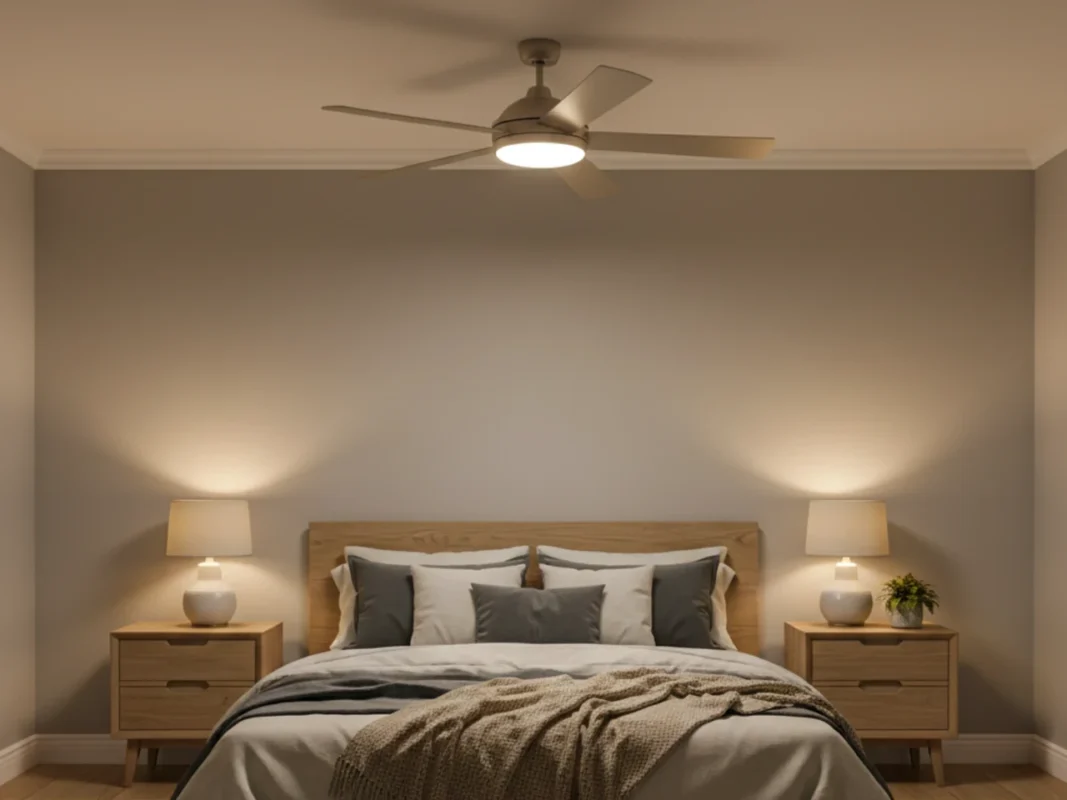
Blade Count & Performance: 3 vs 4 vs 5 Blades
Do More Blades Mean Better Cooling? – Myth vs. Reality
While it might seem logical that more blades provide better airflow, modern designs prove otherwise. Blade pitch, motor strength, and balance often have a more significant effect than sheer blade count.
3-Blade Fans
3-blade fans are often efficient, lightweight, and capable of creating strong airflow. Their modern aesthetic suits contemporary bedrooms, and they are particularly effective in rooms where the best ceiling fan for bedroom is a central cooling feature.
4-Blade Fans
4-blade fans offer smoother airflow and quieter operation, balancing style and functionality. Many homeowners prefer this blade count when looking for ceiling fans with lights for bedrooms to ensure both cooling and a subtle design.
5-Blade Fans
5-blade fans provide gentle airflow and a classic look. While performance differences are modest, they add a traditional charm to bedrooms. A bedroom light with fan with 5 blades can seamlessly combine comfort and style.
Style Guide — Matching Your Ceiling Fan With Bedroom Décor
Modern & Minimalist Fans
Sleek designs with minimalistic blades and integrated fan lights blend into modern interiors. These fans prioritize function while maintaining aesthetic subtlety.
Traditional & Rustic Fans
Wooden finishes, ornate details, and classic fan designs suit traditional bedrooms. A bedroom light with fan in this style adds warmth and elegance.
Integrated Lighting Styles
Lighting options range from soft, ambient light for relaxation to brighter LED options for reading or working in bed. Many homeowners prefer ceiling fans with lights for bedrooms to minimize clutter from lamps.
Installation Tips & Best Practices
Installing the best ceiling fan for bedroom correctly is just as important as choosing the right size and style. Proper installation ensures optimal airflow, quiet operation, and long-term safety. Whether you’re installing a simple fans for bedroom model or a more complex ceiling fans with lights for bedrooms setup, following key best practices can save you time, prevent problems, and improve overall performance.
Ceiling Height Considerations
The height of your ceiling plays a major role in determining the type of fan and installation method you should choose. For low ceilings, flush-mount or “hugger” fans sit close to the ceiling, providing ample headroom while maintaining effective airflow. Standard ceiling heights of 8 to 9 feet typically accommodate most best ceiling fan for bedroom designs with a short downrod. High or vaulted ceilings may require a longer downrod to ensure that the fan operates at an optimal height—generally at least 7 feet above the floor—to maximize air circulation.
Downrod vs. Flush Mount
Selecting between a downrod and a flush mount depends on your ceiling height and room configuration:
- Downrod Fans: Ideal for bedrooms with high or vaulted ceilings. The extended rod positions the fan blades at the correct height for optimal airflow. This setup is especially useful for larger bedrooms where a single fan must circulate air evenly throughout the space.
- Flush-Mount Fans: Perfect for low ceilings, flush-mount fans sit close to the ceiling, preventing head clearance issues. They are often used in smaller bedrooms or secondary sleeping areas where space is limited.
Choosing the right mounting method not only affects comfort but also contributes to the safety and longevity of your fan.
Safety & Professional Installation
Safety is paramount when installing any best ceiling fan for bedroom, especially models that include bedroom light with fan or multiple fan lights. Fans must be securely anchored to a ceiling joist or a rated electrical box to prevent wobbling, noise, or accidents. Loose or improperly mounted fans can cause blade imbalance, vibrations, or even fall hazards.
For most homeowners, professional installation is recommended, particularly if your fan includes integrated lighting or advanced controls. Electricians or certified installers can ensure proper wiring, grounding, and compliance with local building codes. Even if you’re comfortable with DIY projects, consulting a professional guarantees that your fan will operate safely and efficiently.
Additional Installation Tips
- Check Blade Clearance: Ensure blades are at least 7 feet from the floor and 18–24 inches from walls to prevent collisions and optimize airflow.
- Balance the Blades: After installation, verify that the blades are balanced to reduce wobbling and noise.
- Consider Remote or Smart Controls: Installing a fan with a wall switch or remote control can improve convenience, especially for fans with integrated lighting.
- Test Before Finalizing: Turn on the fan at various speeds to ensure smooth operation and quiet performance.
Proper installation not only improves comfort but also protects your investment. A well-installed best ceiling fan for bedroom will circulate air efficiently, operate quietly, and last for many years without problems. Following these best practices ensures that your fan delivers maximum performance while keeping your bedroom safe and stylish.
Pros & Cons of Fans With Lights vs. Without Lights
When selecting the best ceiling fan for bedroom, one major decision is whether to choose a fan with integrated lighting or a standalone fan. Both options have unique advantages, and understanding their pros and cons can help you make an informed choice that balances comfort, functionality, and style.
Ceiling Fans With Lights
Pros:
- Space-Saving Design: A fan with a built-in light eliminates the need for additional ceiling fixtures or lamps, making it ideal for bedrooms with limited space.
- Dual Functionality: Combines air circulation and illumination in one fixture, which is convenient for small or medium-sized rooms.
- Enhanced Ambiance: Many models offer dimmable LED options or multiple light settings, allowing you to adjust brightness for reading, relaxing, or sleeping.
- Streamlined Aesthetic: Integrating lights into the fan creates a clean, cohesive look without cluttering the ceiling with separate fixtures.
Cons:
- Slightly Heavier: Fans with lights can be heavier than standard fans, requiring secure mounting and sometimes professional installation.
- Higher Initial Cost: Integrated lighting can increase the upfront price compared to fans without lights.
- Maintenance Considerations: Changing bulbs or cleaning the light fixture can be more involved than with standalone lighting.
Fans Without Lights
Pros:
- Simpler Design: Without a light kit, the fan has a cleaner, lighter appearance, which suits minimalist or modern bedrooms.
- Flexibility in Lighting: You can pair a fan-only fixture with bedside lamps, wall sconces, or other lighting options to customize your room’s illumination.
- Potentially Lower Cost: Fans without integrated lighting are generally less expensive and may be easier to install.
Cons:
- Requires Additional Lighting: You’ll need separate light sources to properly illuminate your bedroom, which may increase overall installation complexity.
- Fewer Built-In Features: Fans without lights miss the convenience of controlling both airflow and lighting from one fixture.
Choosing Between the Two
The decision between ceiling fans with lights for bedrooms and fans without lights often comes down to room size, ceiling height, and personal preference. For small or medium bedrooms where overhead lighting is limited, a bedroom light with fan is often the most practical solution. In larger rooms or spaces with abundant natural or supplemental lighting, a fan without lights may be preferable to maintain a minimalist aesthetic while pairing it with existing light fixtures.
Ultimately, the best ceiling fan for bedroom is one that meets your airflow needs, complements your bedroom style, and fits your lighting requirements. Considering the pros and cons of each option ensures that you make a choice that enhances comfort, energy efficiency, and overall bedroom functionality.

Conclusion — Finding Your Best Ceiling Fan for Bedroom
Selecting the best ceiling fan for bedroom is a combination of science and style. Consider room size, blade count, motor type, and lighting needs. Whether you prefer ceiling fans with lights for bedrooms, bedroom light with fan combos, or standalone fans for bedroom, the right choice enhances comfort, energy efficiency, and overall aesthetics. By focusing on these details, you ensure a bedroom that’s both cozy and functional—where a good night’s sleep is just a switch away.
FAQs — Best Ceiling Fan for Bedroom
What ceiling fan is best for a bedroom?
The best fan for a bedroom combines efficient airflow, quiet operation, and suitable lighting. A fan with integrated lights or bedroom light with fan combo is ideal for small to medium rooms, while larger spaces may benefit from fans with longer blade spans and multiple speed settings. Ensure the fan is properly sized for your room to achieve both comfort and efficiency.
Which is better, a 3 blade or 4 blade ceiling fan?
3-blade fans typically offer stronger airflow and a modern aesthetic, making them ideal for medium and large bedrooms. 4-blade fans generally provide quieter operation and smoother airflow, which can be preferable in small or master bedrooms where silence during sleep is essential. Both options can work well; the choice depends on your priorities for noise, style, and airflow.
What size fan is good for a bedroom?
Fan size depends on room dimensions:
• Small bedrooms (up to 100 sq. ft.): 29–36 inch blades
• Medium bedrooms (100–150 sq. ft.): 36–42 inch blades
• Large bedrooms (150–250 sq. ft.): 44–50 inch blades
Choosing the right size ensures the best ceiling fan for bedroom circulates air efficiently and avoids wasted energy.
What size ceiling fan is recommended for a bedroom?
The recommended size aligns with room size. Measure your bedroom’s length, width, and ceiling height, then select a fan that matches those dimensions. Proper sizing enhances airflow and ensures that fan lights provide adequate illumination if integrated.
What size ceiling fan for bedroom with light?
The addition of lighting doesn’t change the recommended blade span. Choose a fan size based on room dimensions and ceiling height, then ensure the integrated light is sufficient for your needs. Many ceiling fans with lights for bedrooms feature dimmable LEDs for flexible lighting options.
Can ceiling fans really cool a bedroom?
Ceiling fans don’t lower the room temperature but create a wind-chill effect by circulating air across your skin. This makes the room feel cooler, reduces reliance on air conditioning, and can improve sleep comfort.
Is a fan with lights better than a separate light?
Fans with integrated lighting, or fan lights, save space, reduce clutter, and offer convenience by combining airflow and illumination in one fixture. In small bedrooms, a bedroom light with fan can replace multiple lamps and provide uniform light coverage.
Are DC motors worth it in bedroom ceiling fans?
Yes. DC motors are quieter, use less energy, and offer smoother speed control compared to AC motors. For bedrooms, where low noise is critical for sleep, DC motors provide superior comfort while maintaining efficient airflow.
How high should a bedroom ceiling fan be mounted?
Fans should be mounted at least 7 feet from the floor and at least 18–24 inches from walls or obstacles. High ceilings may require downrods to position the fan at an optimal height for efficient airflow and safety.
What features improve quiet operation for bedroom fans?
Key factors include:
• Balanced blades to reduce wobbling
• Smooth bearings or precision-engineered motors
• DC motor technology for lower noise
• Professional installation to ensure secure mounting
Selecting a fan with these features ensures the best ceiling fan for bedroom operates quietly, enhancing comfort and sleep quality.
Can I install a fan in a low-ceiling bedroom?
Yes. Flush-mount or “hugger” fans are designed for low ceilings, sitting close to the ceiling without compromising airflow. These are ideal for small bedrooms or rooms with 8-foot ceilings.
How do I choose a fan with suitable lighting?
Consider the size of the room, ceiling height, and the intended use of the light. Dimmable LED lights integrated into ceiling fans with lights for bedrooms offer versatility, while separate lamps or sconces can supplement lighting for reading or tasks.