

Table of Contents
Installing solar lamps for fence lighting is one of the smartest, most visually appealing ways to transform your outdoor space. Whether you’re upgrading a simple backyard boundary or creating an enchanting garden retreat, solar lamps for fence illuminate your space with minimal effort, zero wiring, and long-term savings. In this comprehensive article, I’ll walk you through every major decision point — from selecting the right fence with lighting options to installation tips, performance expectations, and the frequently asked questions that every homeowner considers before choosing fence solar lighting.
If you’ve been thinking: “Can solar lights really make my fence look great and work well?” — the short answer is yes, absolutely. And by the time you’re done reading, you’ll know everything you need about selecting, installing, and enjoying solar lamps for fence that add beauty, safety, and value to your home.
Introduction to Solar Lamps for Fence
What Are Solar Lamps for Fence?
Imagine a series of lights neatly positioned along your outdoor fencing, each one absorbing sunlight during the day and glowing softly at night — that’s the magic of solar lamps for fence. Unlike traditional wired fixtures, these lights are powered by built-in solar panels. They capture the sun’s energy and store it in rechargeable batteries, which then power the lights after sunset.
Solar lighting technology has advanced quickly. Modern solar lamps for fence can be bright, durable, and designed to withstand outdoor weather conditions, making them perfect for residential and commercial properties alike.
Why Fence Solar Lighting Is Growing in Popularity
In recent years, fence solar lighting has surged in popularity for three main reasons:
- Ease of Installation: No electrical wiring means you don’t need an electrician or major tools.
- Energy Savings: Solar lights use clean, free energy from the sun — no electric bills.
- Design Flexibility: You can place lights virtually anywhere on your fence without worrying about outlet locations.
Add that to the fact that fences with solar lights often elevate the look of your outdoor area, and it’s no surprise that more homeowners choose this solution every year.
Key Benefits of Using Solar Lights on Fences
When installing solar lamps for fence, you’re not just adding light — you’re enhancing ambiance, boosting safety, and creating an environment that feels welcoming after dark. Some major benefits include:
- Zero monthly energy costs
- Reduced installation complexity
- Increased property value
- Versatility in design and placement
- Environmentally friendly lighting solution
Types of Fences Suitable for Solar Lighting
To get the most out of your solar lamps for fence, it helps to understand the kinds of fences that work best.
Solid Fences vs Light-Through Fences
If you’re considering fences with solar lights, you first need to think about how sunlight reaches the panels.
- Solid Fences: These are traditional privacy fences that don’t allow much light through the slats. Solar lights on solid fences will still work, but panel placement should ensure direct sun exposure.
- Light-Through Fences: These include designs with gaps, slats, or decorative cutouts that let sunlight through — excellent for maximizing solar harvest.
What Is a Fence That Lets Light Through?
A fence that lets light through refers to designs where boards or panels are spaced or configured so that sunlight can pass between them. Common examples include:
- Slatted fences: Horizontal or vertical boards separated by small gaps
- Double-slatted fence panels: Decorative panels that provide a visual texture and allow light to pass
- Lattice or perforated panels: Great for adding climbing plants or additional design elements
These fence types are especially friendly to fence solar lighting because they allow the solar panels on your lights to capture more sunlight throughout the day.
Fence With Lighting: Functional vs Decorative Designs
When thinking about a fence with lighting, there are two main styles:
- Functional lighting: Bright lights for security or pathway visibility
- Decorative lighting: Soft, ambient lights that enhance outdoor aesthetics
Most homeowners choose a blend of both — solar lamps that are attractive but still powerful enough to illuminate garden paths or seating areas.
Types of Solar Lamps for Fence
Now let’s explore the most popular solar lamps for fence designs available today.
Solar Fence Post Cap Lights
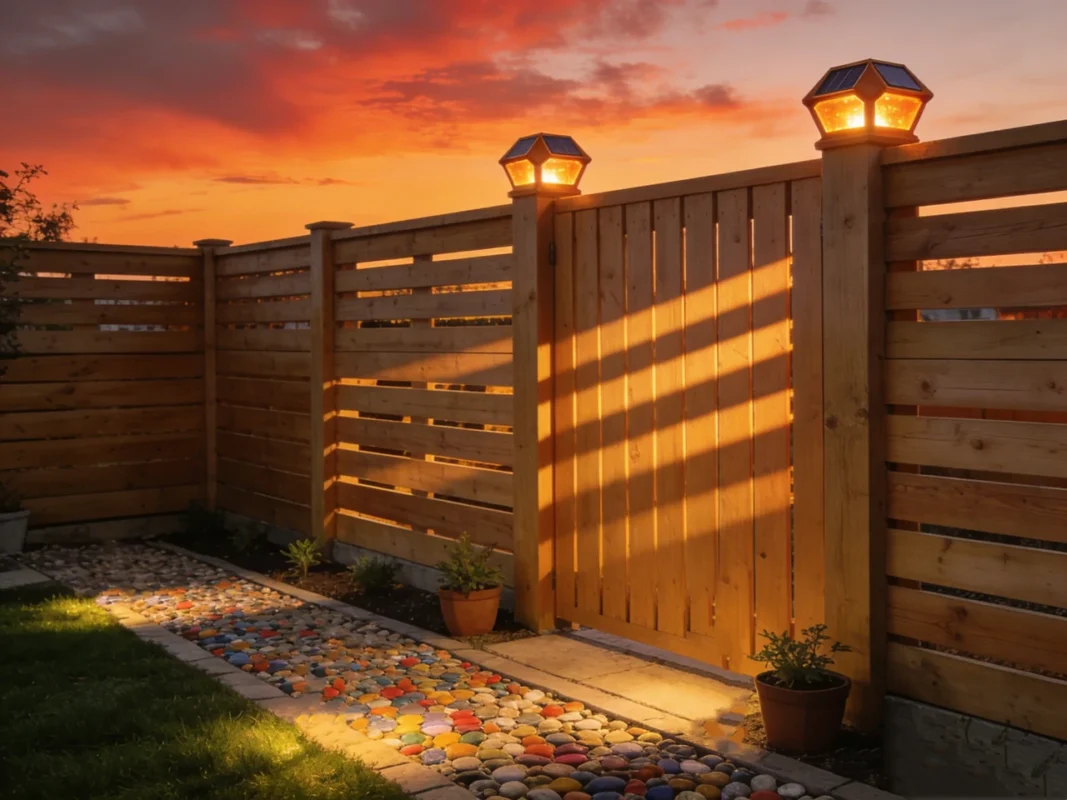
These fit right onto the top of your fence posts. They’re a favorite because they’re simple to install and deliver a clean, integrated look. Each light’s solar panel sits right where it catches the most sun — on top of the fence post.
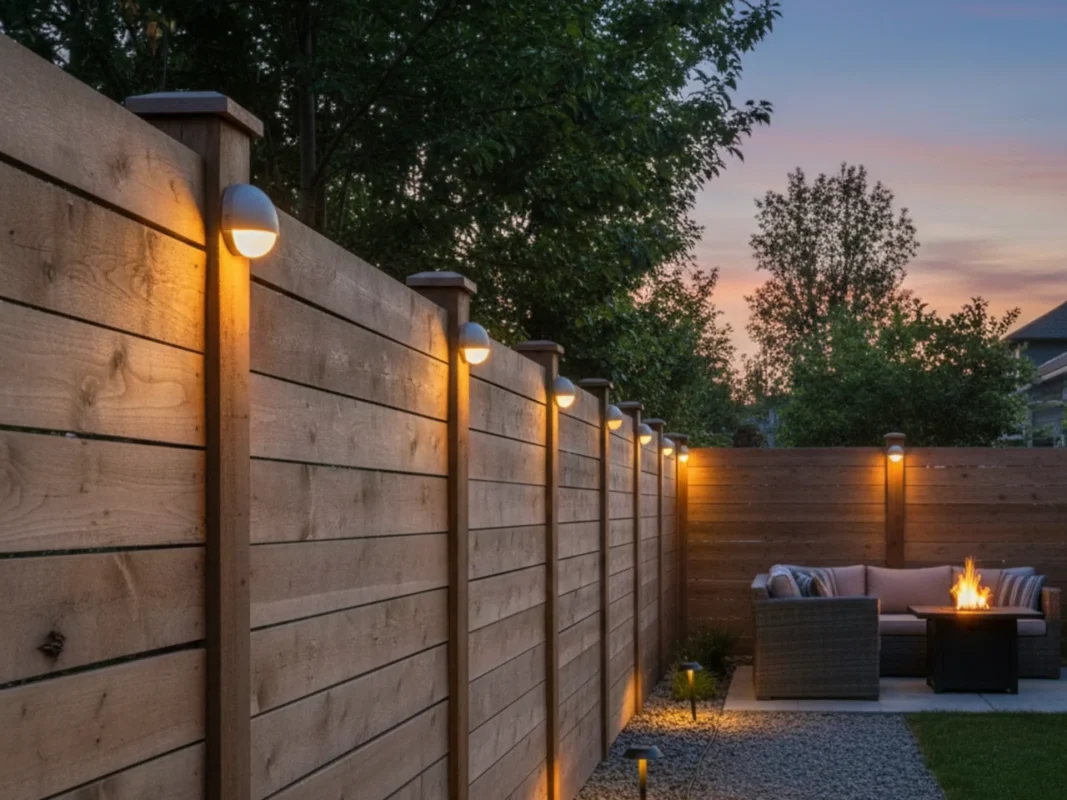
Solar Wall-Mounted Fence Lights
If your fence has flat panels or a wide face, wall-mounted solar lights are a flexible option. They come in many shapes and sizes and can be aligned in straight rows or staggered for creative effects.
Solar String and Fairy Lights for Fences
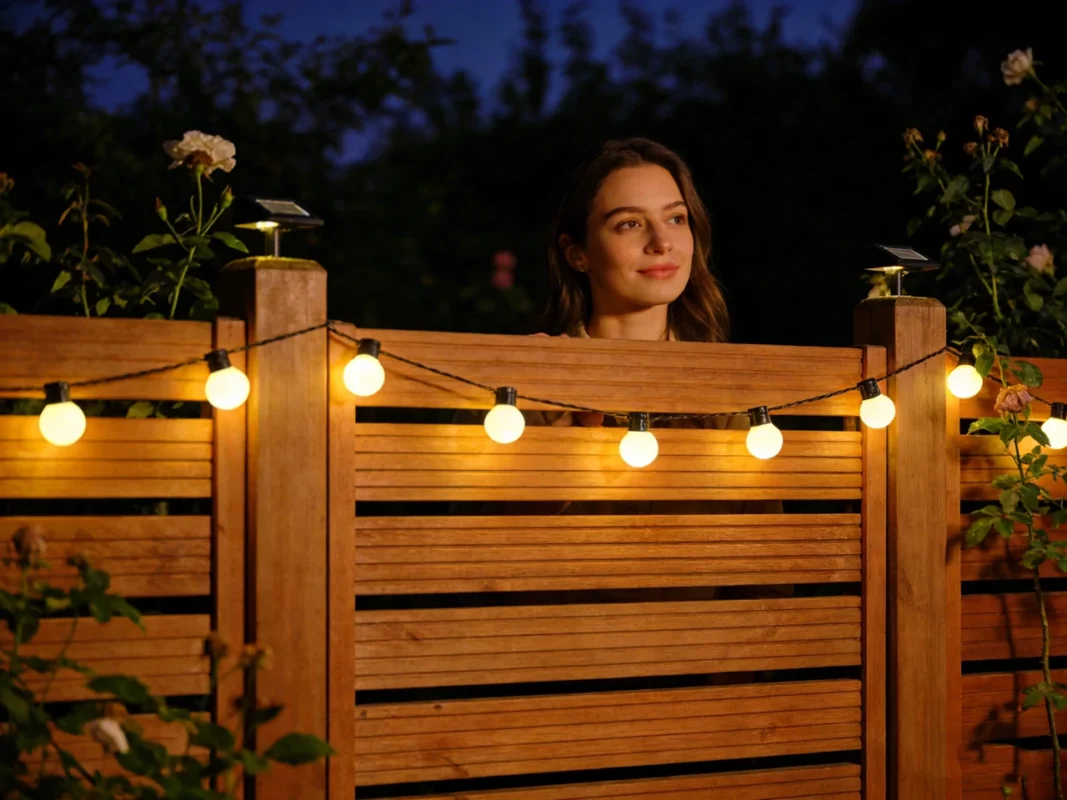
For more whimsical environments — patios, pergolas, or garden walls — string lights and solar fairy lights are perfect. They can be draped, weaved, or wrapped around beams, brackets, or landscaping features. These are especially popular in entertainment areas where ambiance matters.
Integrated Solar Fence Panels
Some homeowners go a step further with panels that combine the structure of the fence and the solar lighting system into one. These integrated units generate electricity and serve as part of the fence itself — perfect when you want both function and innovation.
How to Install Solar Lamps on a Fence
Installing solar lamps for fence is one of the most straightforward ways to upgrade your outdoor lighting, but doing it right ensures maximum efficiency, durability, and aesthetic appeal. The beauty of fence solar lighting is that it requires no electrical wiring, making it accessible for both DIY enthusiasts and professional landscapers alike. However, careful planning and proper placement are key to getting the best results.
Can You Put Lights on a Fence?
Before installation, it’s essential to understand property ownership and permissions. If the fence belongs entirely to you, you have full freedom to mount solar lamps for fence wherever you like. In the case of shared or boundary fences, it’s wise to consult neighbors and follow local regulations to avoid disputes. Fences with solar lights should be oriented to maximize sunlight exposure while minimizing light spill onto adjacent properties.
Best Placement for Fence Solar Lighting
Proper placement significantly impacts performance. Solar panels need direct sunlight to charge efficiently, so install lights in areas where they receive the most sun throughout the day. For optimal results:
- Position lights on the top of fence posts to capture maximum sunlight.
- Place them along the length of the fence at regular intervals—usually every 1.5 to 2 meters for even illumination.
- Consider side-mounted fixtures to highlight certain garden features or pathways.
In addition, orient solar panels facing south (in the Northern Hemisphere) for consistent charging, and avoid shaded areas under trees, awnings, or tall structures that could reduce solar gain.
How to Hang Solar Lights Without Damaging the Fence
One of the advantages of solar lamps for fence is that many installation methods are non-invasive, preserving your fence’s appearance:
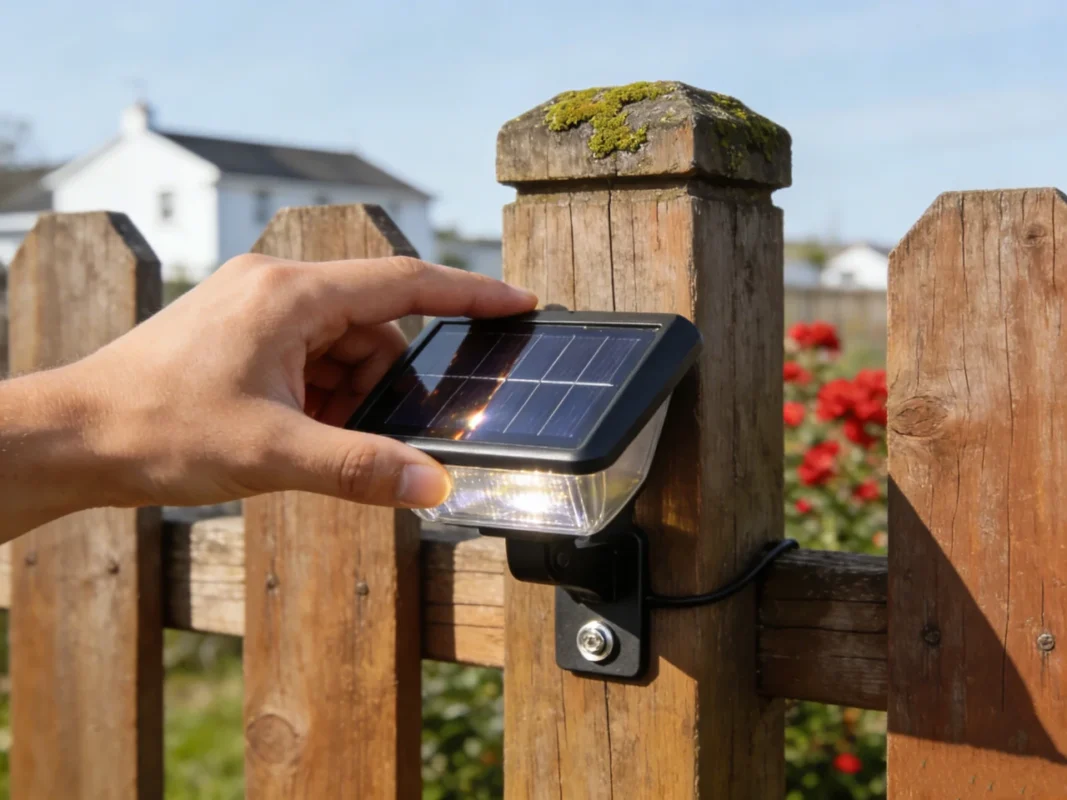
- Clips and brackets: Many solar lights come with adjustable clips that attach securely without drilling.
- Outdoor adhesives: Heavy-duty weather-resistant adhesive strips can hold lightweight fixtures on flat fence panels.
- Screws or bolts: For heavier or more permanent fixtures, corrosion-resistant screws are recommended. Pre-drill small pilot holes to prevent wood splitting.
Magnetic mounts or hook-based systems can also be useful for metal fences or removable installations. These methods allow flexibility, making it easy to rearrange lights or replace fixtures without leaving unsightly marks.
Practical Tips for Installation Success
- Check solar exposure: Track sunlight patterns to ensure panels aren’t shaded during peak daylight hours.
- Test before final mounting: Position lights temporarily to visualize brightness and coverage at night.
- Maintain accessibility: Install lights so you can clean the panels or replace batteries easily, prolonging the life of your fence solar lighting.
- Blend aesthetics with function: Use a combination of post caps, string lights, or wall-mounted solar fixtures to balance security and visual appeal.
By following these guidelines, you can achieve fences with solar lights that are not only visually stunning but also functional and reliable. Proper planning and thoughtful placement ensure your solar lamps for fence deliver consistent illumination and enhance your outdoor living experience year-round.
Legal and Boundary Considerations
Can a Neighbour Put Lights on My Fence?
This is a question we hear all the time when homeowners are considering fence solar lighting. The answer depends on fence ownership.
If the fence belongs entirely to you, then you’re free to install solar lamps for fence wherever you like. If you and a neighbor share the fence, then both parties typically need to agree on any installations.
Even if the neighbor owns the light fixtures, they shouldn’t install them without your permission — and you can request that they orient lights to avoid shining directly into your property or windows.
Boundary Fence Lighting Etiquette
Good neighbor etiquette goes a long way. When installing fence solar lighting near property lines:
- Aim lights inward toward your yard
- Use shields or angled fixtures to reduce light spill
- Choose softer lighting if it’s near sleeping areas
This ensures peace and avoids complaints about overly bright or disruptive lighting.
Advantages and Disadvantages of Solar Fence Lighting
Advantages of Solar Lamps for Fence
Here’s why so many homeowners love solar lamps for fence:
- Energy Savings: Solar lights cost nothing to operate once installed
- Easy Installation: No messy electrical wiring or permits
- Versatility: Works with any fence type — wood, vinyl, metal, or composite
- Automatic Operation: Built-in sensors turn lights on at dusk and off at dawn
Plus, they’re environmentally friendly, reduce your carbon footprint, and add charm to outdoor living spaces.
What Are the Disadvantages of Solar Fencing?
While fence solar lighting has many perks, there are a few things to consider before you invest:
- Sunlight Dependency: Cloudy days reduce charging efficiency
- Battery Lifespan: Rechargeable batteries will eventually need replacing
- Brightness Limits: Solar lights may not be as brilliant as wired fixtures
- Upfront Costs: Quality solar lights can cost more initially than basic wired lights
Despite these downsides, most homeowners find that the benefits — especially the energy savings and installation simplicity — outweigh the drawbacks.
Performance, Durability, and Lifespan
When it comes to solar lamps for fence, understanding performance, durability, and lifespan is crucial for making informed decisions. Unlike traditional wired lighting, fence solar lighting relies entirely on sunlight to function. This makes placement, weather conditions, and product quality key factors in achieving consistent illumination.
How Long Do Solar Fence Lights Last?
One of the most common questions homeowners ask is: “How long do solar fence lights last?” Typically, the LED bulbs used in fences with solar lights can last over a decade with proper care. The rechargeable batteries, however, have a shorter lifespan, often ranging from 1 to 3 years depending on usage patterns and environmental conditions. Regular inspection and timely battery replacement can extend the overall lifespan of your solar lamps for fence and ensure reliable nighttime performance.
Factors That Affect Solar Light Longevity
Several factors influence how well solar lamps for fence perform over time:
- Sunlight Exposure: Solar lights need direct sunlight to fully charge. Fences that are shaded by trees, buildings, or other structures may result in dimmer lights at night.
- Weather Conditions: Harsh climates, such as heavy rain, snow, or extreme heat, can reduce the durability of solar panels and battery efficiency. Choosing fixtures with a high weather-resistance rating ensures better long-term performance.
- Build Quality: Materials like UV-resistant plastics, corrosion-resistant metals, and tempered glass contribute to the longevity of your fence solar lighting. Investing in sturdy construction pays off in terms of fewer replacements and better reliability.
- Maintenance: Dirt, dust, and debris can block sunlight from reaching the panels. Regular cleaning of solar panels keeps your lights operating at peak efficiency.
Maintenance Tips for Optimal Performance
To get the most out of your fences with solar lights, routine maintenance is essential. Simple steps include:
- Cleaning the solar panels: Use a soft cloth to remove dust, leaves, or bird droppings that might reduce energy absorption.
- Battery replacement: Monitor the brightness of your lights. If they begin to dim earlier than expected, it may be time to replace the rechargeable battery.
- Seasonal adjustments: During winter, shorter days may require repositioning some lights to catch the maximum available sunlight.
Maximizing Lifespan Through Smart Installation
The initial setup of solar lamps for fence also impacts their performance over time. Installing lights in areas with unobstructed sunlight and avoiding overly shaded locations ensures batteries receive a full charge each day. Post caps or wall-mounted designs that elevate the solar panel above potential shade sources can dramatically increase efficiency and longevity.
Are Solar Fence Lights Worth It?
If you’ve been considering solar lamps for fence, you might be wondering: “Are solar fence lights really worth the investment?” The short answer is yes, for most homeowners, but understanding the advantages and limitations helps you make a well-informed decision. Fence solar lighting offers a unique combination of convenience, cost-effectiveness, and aesthetic value that wired lighting simply can’t match.
Cost vs. Value Analysis
One of the strongest arguments in favor of solar lamps for fence is the balance between cost and long-term value. While high-quality solar lights may require a higher upfront investment than basic wired alternatives, they offer:
- No electricity costs: Once installed, solar lights draw energy directly from sunlight, eliminating monthly energy bills.
- Minimal installation expenses: Without the need for electrical wiring or professional electricians, DIY installation is easy and affordable.
- Longevity: With proper maintenance, your fences with solar lights can provide reliable illumination for many years, making them a cost-effective solution over time.
Solar Lights vs. Wired Fence Lighting
Comparing solar lights to wired alternatives highlights several key benefits:
- Ease of Installation: Solar lights are plug-and-play, meaning you can position them anywhere on your fence without worrying about outlets, underground wiring, or safety hazards.
- Flexibility: If you decide to change your landscape design, fence solar lighting can be repositioned or expanded without rewiring.
- Environmental Impact: Solar lights use renewable energy, reducing your carbon footprint.
- Maintenance: While batteries may eventually need replacement, solar lights generally require less upkeep than wired systems with complex electrical components.
While wired fence lighting may provide brighter or more consistent illumination, for most homeowners, solar lamps for fence strike the perfect balance of brightness, convenience, and energy efficiency.
Best Use Cases for Solar Fence Lighting
Understanding where solar lamps for fence are most effective helps evaluate their worth:
- Ambiance and aesthetics: Decorative solar lights add a warm, inviting glow to patios, gardens, and outdoor entertaining areas.
- Pathway illumination: Strategically placed lights improve visibility along garden paths, gates, or backyard walkways.
- Perimeter security: Motion-sensor solar lights can enhance safety by illuminating dark corners or entry points.
- Seasonal versatility: Solar lights can be installed temporarily for events or festive occasions, making them highly adaptable.
By matching the type and placement of your fence solar lighting to your needs, you can maximize both functional and visual benefits.
Return on Investment
Beyond immediate convenience, solar lamps for fence can increase property appeal and outdoor usability. A well-lit fence contributes to a sense of safety, extends usable hours in your garden or yard, and enhances curb appeal — all of which can indirectly improve property value. When considering installation costs, energy savings, and added enjoyment, solar lights often provide a higher return on investment than many other outdoor improvements.
Design Ideas for Fences With Solar Lights
Your creative options are vast when integrating solar lamps for fence into your landscaping.
Modern Garden Fence Lighting Ideas
Combine spotlights, post caps, and linear lights for a sleek, contemporary vibe.
Rustic and Traditional Fence Solar Lighting
Choose warm-tone solar lights with decorative accents for classic charm.
Using Fairy and String Lights on Fences
Soft, cascading solar lights look magical draped over wooden fences, pergolas, or lattice panels.
Enhancing Security With Fence Solar Lighting
Install brighter solar lights with motion sensors near gates and pathways for added safety.
Choosing the Best Solar Lamps for Fence
Brightness and Lumens Explained
Lumens measure brightness. For solar lamps for fence, aim for at least 200 lumens for functional lighting and 50–150 lumens for decorative accents.
Motion Sensor vs Static Solar Lights
Motion sensor lights save energy and add security, while static lights provide continuous ambient glow.
Weatherproof Ratings and Build Quality
Choose products with solid weatherproof ratings — this ensures your fence solar lighting can handle rain, wind, and temperature changes.
Trusted Quality Indicators
Look for long warranties, good material quality, and consistent performance in both sunny and cloudy conditions. High-quality solar lamps for fence deliver years of reliable lighting.
Conclusion
Solar lamps for fence offer a flexible, energy-efficient, and stylish way to enhance your outdoor spaces. From aesthetic charm and security benefits to ease of installation and low operating costs, fence solar lighting delivers long-lasting value.
Whether you’re installing lights for the first time or upgrading existing outdoor illumination, understanding how to choose, place, and maintain your lights will help you get the most out of solar lamps for fence. With thoughtful planning and quality products, your outdoor environment will shine — day after day, night after night.
FAQs About Solar Lamps for Fence
What is a fence that lets light through?
A fence that lets light through features gaps, slats, or decorative panels that allow sunlight and artificial illumination to pass through. Examples include slatted wooden fences, double-slatted panels, and lattice designs. These fences are ideal for solar lamps for fence, as sunlight can easily reach the solar panels for efficient charging while still providing privacy and aesthetic appeal.
Can a neighbour put lights on my fence?
Generally, no. Only the fence owner has the right to install fixtures. If your fence is shared, any installation of fences with solar lights should be mutually agreed upon. Installing lights without permission may violate local property or nuisance regulations. Good practice is to ensure lights are directed inward and don’t shine into neighbors’ windows.
What are the disadvantages of solar fencing?
While solar lamps for fence are convenient and energy-efficient, they do have some limitations:
• Sunlight dependency: Performance drops on cloudy or shaded days.
• Battery lifespan: Rechargeable batteries usually last 1–3 years and need replacement.
• Brightness limitations: Solar lights may be less intense than wired lighting, making them less suitable for high-security needs.
• Initial cost: High-quality fixtures can be more expensive upfront.
Despite these drawbacks, proper placement and maintenance can mitigate most issues.
Can you put lights on a fence?
Yes, you can. Solar lights are particularly suitable because they don’t require electrical wiring. They can be mounted on posts, panels, or walls using brackets, clips, or adhesives, making it easy to create a fully illuminated fence without complex installation.
Are solar fence lights worth it?
For most homeowners, solar lamps for fence are worth it. They offer energy savings, aesthetic appeal, easy installation, and low maintenance. Beyond lighting, they enhance security, guide pathways, and create a cozy, inviting outdoor space — all without increasing your electricity bill.
How long do solar fence lights last?
The lifespan of fence solar lighting depends on the components. LED bulbs can last over 10 years, while rechargeable batteries typically need replacement every 1–3 years. Regular maintenance, such as cleaning panels and ensuring adequate sunlight, helps maximize their longevity.
Do solar fence lights work in winter?
Yes, but with some limitations. Shorter daylight hours and lower sun intensity reduce the amount of energy stored in the batteries, which may lead to dimmer lights or shorter runtime. Choosing panels with higher solar efficiency can help offset these seasonal challenges.
Are solar lamps for fence bright enough for security purposes?
Some fence solar lighting models are designed with higher lumen output and motion sensors, making them suitable for basic security applications. While they may not replace dedicated wired security lighting in high-risk areas, they can illuminate pathways, gates, and backyard perimeters effectively.
Can solar lights be installed on rented property fences?
Yes, provided you have landlord approval. Using non-invasive mounting methods, such as adhesive strips, clips, or freestanding post lights, allows you to enjoy fence solar lighting without damaging the fence structure or violating rental agreements.
How many solar lights should you put on a fence?
The number depends on fence length, desired brightness, and spacing. A common guideline is one light every 5–7 feet for balanced illumination, but for decorative effects, lights can be spaced closer together. Combining post caps, wall-mounted lights, and string lights can create a visually appealing mix of ambient and functional lighting along your fence.