

Table of Contents
Lighting can make or break the feel of a room. In today’s homes and commercial interiors, choosing the right kind of light is not just about brightness — it’s about atmosphere, focus, energy efficiency, and design. That’s why the humble spot light deserves more attention. In this article, we’ll deep‑dive into what a spot light really is, why it matters, and how to apply it smartly — whether you are going for ceiling spot lamps, decorative LED spotlights, or weighing flood vs spot light for a room or outdoor area.
Let’s shine a spotlight on spot lights.
What is a Spot Light? (and Why Should You Care)
A spot light is a lighting fixture designed to emit a narrow, focused beam of light — rather than broadly flooding a space with illumination. Unlike a generic ceiling light or wide‑angle fixture, a spot light concentrates light onto a specific spot: a wall, a piece of artwork, a reading corner, a countertop — whatever you choose.
That focused, directional nature gives spot lights unique value: you can control where light lands, create contrast, highlight features, and shape ambiance. In modern interior lighting design — from homes and apartments to offices, shops, galleries — spot lights are often the secret to combining practicality and style.
Because of that, spot lights (especially indoor LED spotlights) remain popular. They give flexibility, efficiency, and aesthetic control — whether you’re installing ceiling spot lamps for general or accent lighting, or using decorative LED spotlights to highlight design elements.
Types of Spotlights
Spotlights come in a variety of forms, each designed to meet specific lighting needs and installation preferences. Understanding the different types can help you select the right spot light for your space, whether for functional illumination or decorative purposes. Using the right type also enhances the effectiveness of ceiling spot lamps, led spotlights indoor, and decorative LED spotlights.
The Three Main Types of Spotlights
There are three primary types of spotlights commonly used in residential and commercial settings:
- Recessed Spotlights (Ceiling-Integrated)
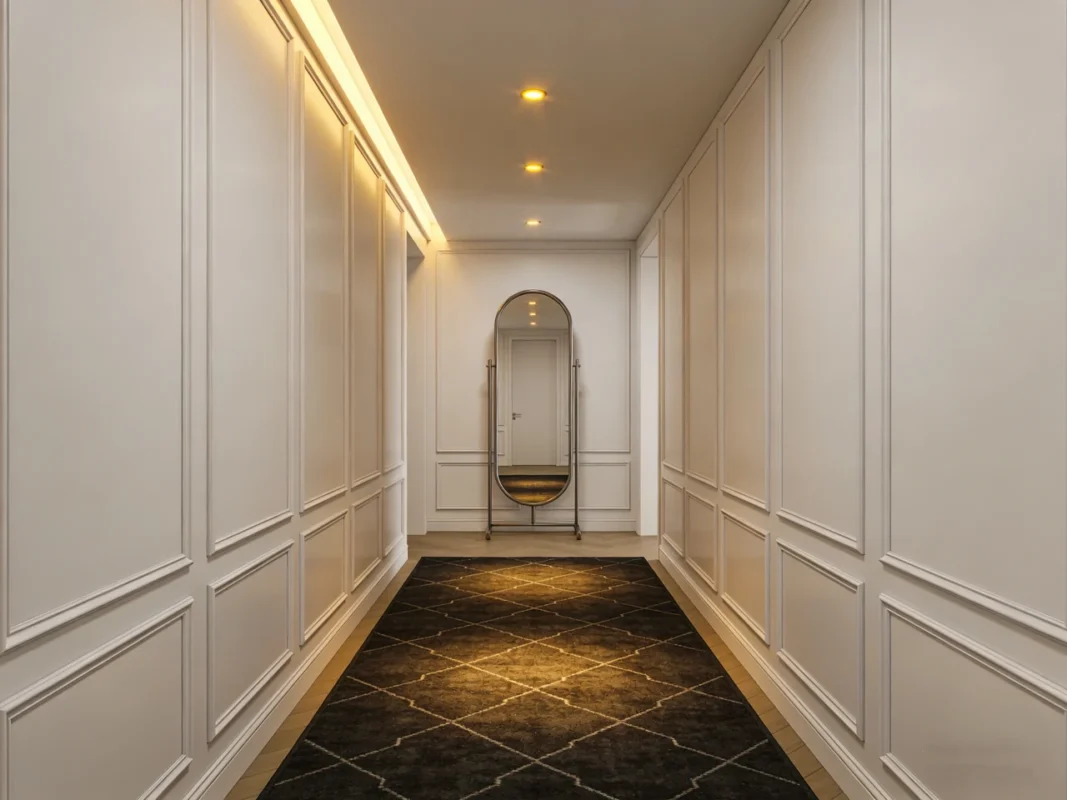
These fixtures are installed flush with the ceiling, creating a sleek and minimalist look. Recessed spotlights are ideal for modern interiors where subtlety is desired. They provide focused light without overwhelming the space and are especially effective as ceiling spot lamps for ambient or accent lighting.
- Surface-Mounted Spotlights (Fixed or Adjustable)
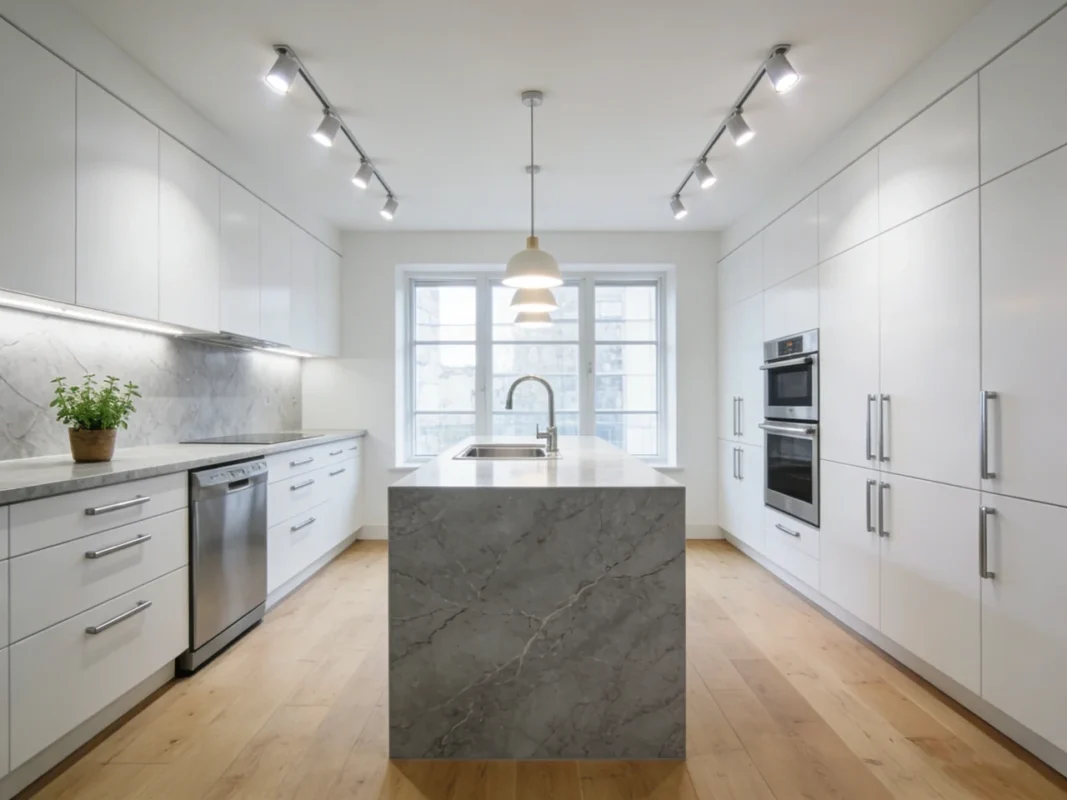
Surface-mounted spotlights attach directly to ceilings or walls. Many designs allow the light head to swivel or tilt, giving you control over the direction of illumination. This flexibility makes them excellent for highlighting specific areas, such as a reading nook or artwork, while also serving functional purposes in kitchens or workspaces.
- Track Spotlights (Adjustable Rail Systems)
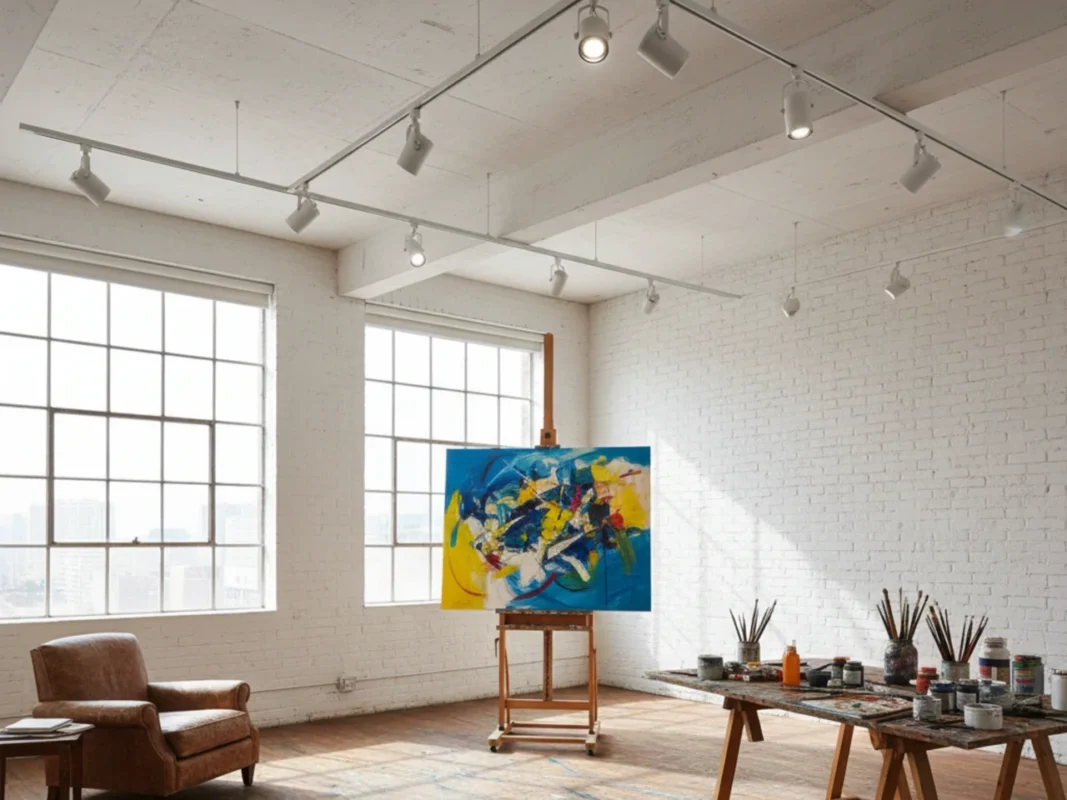
Track spotlights feature multiple light heads mounted on a single rail, which can be attached to the ceiling or wall. Each head is adjustable and can be moved along the track to change lighting focus. Track systems are particularly useful in dynamic spaces where lighting needs may change over time, such as art galleries, studios, or multifunctional living areas.
Each of these types offers a unique combination of flexibility, focus, and style. Choosing the right type depends on the room’s layout, ceiling height, and whether the spotlight is intended for general illumination, task lighting, or decorative accenting.
Spotlight vs Other Lighting Types — Where Spotlights Fit In
Spotlights differ from standard ceiling lights, downlights, and floodlights in both purpose and design. Their defining feature is the narrow, focused beam, which allows precise illumination of objects or areas. This makes them ideal for accentuating architectural details, artworks, or furniture without flooding the room with light.
Unlike broad ceiling lights, led spotlights indoor are energy-efficient and can be strategically positioned to complement existing lighting. They work especially well when combined with ambient fixtures, forming layered lighting schemes that balance general illumination with targeted highlights.
By understanding the different types of spotlights and how they function compared to other lighting options, you can make informed decisions that enhance both the functionality and aesthetic appeal of your space.
Technical Characteristics of Spot Lights & LEDs
To truly harness the power of a spot light, it’s important to understand its technical characteristics. Factors like beam angle, brightness, color temperature, and fixture design determine not only how well a spotlight illuminates a space but also how it shapes ambiance and energy efficiency. Whether you are installing ceiling spot lamps or decorative LED spotlights, knowing these technical details ensures your lighting setup is both functional and visually pleasing.
Beam Angle and Light Distribution
The beam angle is one of the defining features of a spot light. It describes the width of the light cone emitted by the fixture:
- Narrow beam angles (10°–30°) create highly focused illumination, perfect for highlighting artwork, architectural details, or countertops.
- Medium beam angles (30°–45°) balance focused lighting with broader coverage, making them suitable for small rooms or accenting multiple objects.
- Wide beam angles (45° or more) produce a softer, more dispersed light, which can function as ambient illumination for larger spaces.
A key advantage of spot lights is precision: you can direct light exactly where it is needed, reducing wasted illumination and creating visual depth. This is particularly useful for indoor LED spotlights, where the beam can emphasize textures, patterns, or furniture arrangements while avoiding glare or over-lighting.
Lumens, Brightness & Energy Efficiency
Modern LED spotlights indoor are evaluated by lumens rather than watts, which indicates actual brightness rather than energy consumption. Understanding lumens helps you select the right spotlight for a room’s size and purpose:
- Accent or decorative use: 200–500 lumens per fixture is generally sufficient for highlighting objects, shelves, or art.
- Task or functional use: 500–800 lumens per spotlight works well for kitchens, workspaces, or reading areas.
- Ambient or larger space use: Multiple fixtures may be required to reach the total lumen output needed for general illumination.
LED technology offers significant advantages over traditional halogen or incandescent spotlights: it delivers high brightness while consuming less energy, generates less heat, and has a longer operational lifespan. This efficiency makes decorative LED spotlights ideal for spaces where lights are used for extended periods.
Color Temperature, CRI, and Aesthetic Considerations
The visual impact of a spot light is influenced by its color temperature and color rendering:
- Color temperature: Measured in Kelvins (K), it affects mood and atmosphere. Warm white (2700–3000 K) creates cozy, inviting environments, ideal for living rooms and bedrooms. Neutral white (3500–4000 K) provides a balanced, natural light suitable for kitchens and offices. Cool white (5000 K or higher) produces crisp illumination for task areas or modern spaces.
- Color Rendering Index (CRI): A higher CRI ensures that colors appear natural and vibrant. For accenting artwork, furniture, or decorative elements, CRI 80+ is recommended.
- Fixture design and adjustability: Recessed, surface-mounted, or track-mounted spotlights affect both aesthetics and functionality. Adjustable heads allow you to reposition light to adapt to changing room layouts or highlight new décor elements.
Proper attention to these characteristics ensures that ceiling spot lamps and LED spotlights indoor not only illuminate effectively but also complement interior design and enhance mood.
Combining Technical Features for Optimal Lighting
For a balanced lighting plan, it is essential to combine beam angle, lumen output, color temperature, and fixture type. For example:
- Use narrow-beam, high-lumen spotlights for highlighting a kitchen island or art piece.
- Combine medium-beam spotlights with recessed ceiling spot lamps for ambient lighting in living rooms.
- Select adjustable track-mounted decorative LED spotlights to allow flexible focus on furniture, shelving, or feature walls.
By understanding and applying these technical characteristics, you ensure your spot lights deliver precise, efficient, and visually compelling illumination — all while maintaining energy efficiency and design cohesion.
Practical Applications: Indoor vs Outdoor, Ceiling Spot Lamps, Decorative Use
Understanding the practical applications of spot light helps you make informed choices for both residential and commercial spaces. Spotlights are versatile tools — they can provide focused illumination for functional tasks, enhance décor, or highlight architectural features. Using ceiling spot lamps, led spotlights indoor, or decorative LED spotlights strategically can transform the look and feel of any room.
Indoor Applications — Ceiling Spot Lamps and Task Lighting
Indoor lighting is one of the most common uses for spot lights. Ceiling spot lamps are ideal for creating layered lighting that combines ambient, task, and accent illumination:
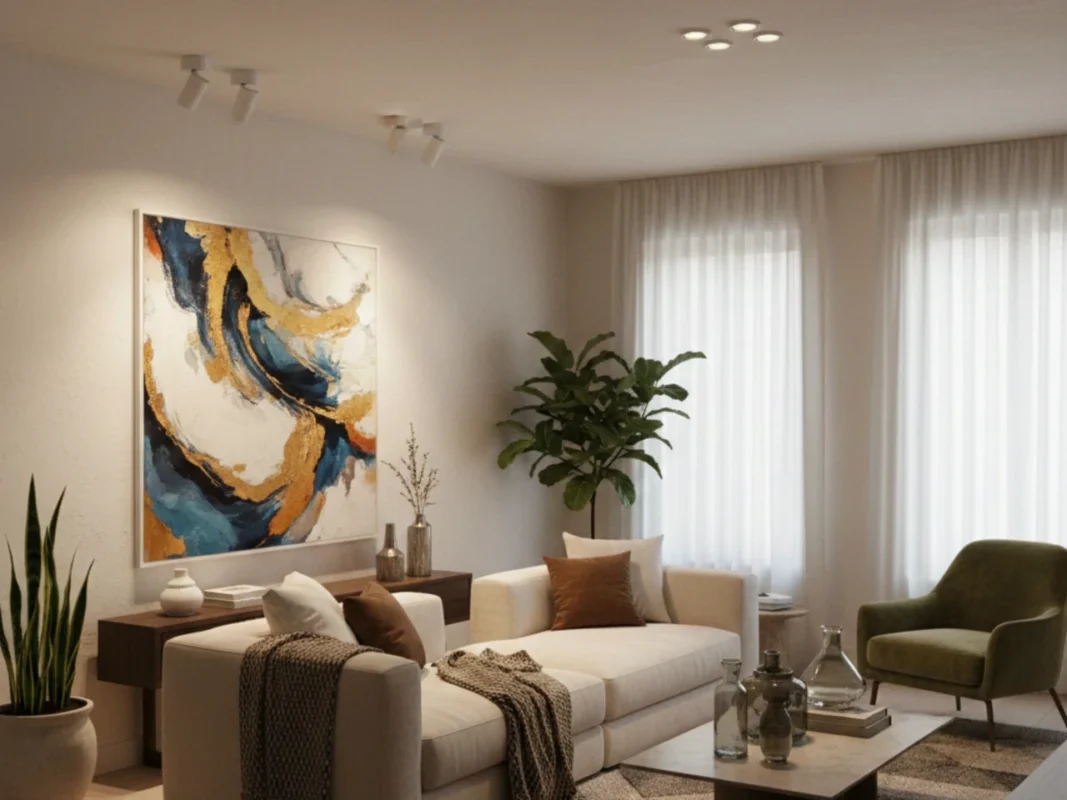
- Living Rooms: Recessed or surface-mounted spotlights can accentuate artworks, bookshelves, or feature walls. Using multiple fixtures with adjustable heads allows you to change lighting focus depending on furniture arrangement or seasonal décor.
- Kitchens: Spotlights provide bright, directional light for countertops, islands, and cooking areas. This makes led spotlights indoor practical for tasks like chopping, reading recipes, or highlighting kitchen features without relying solely on general ceiling lights.
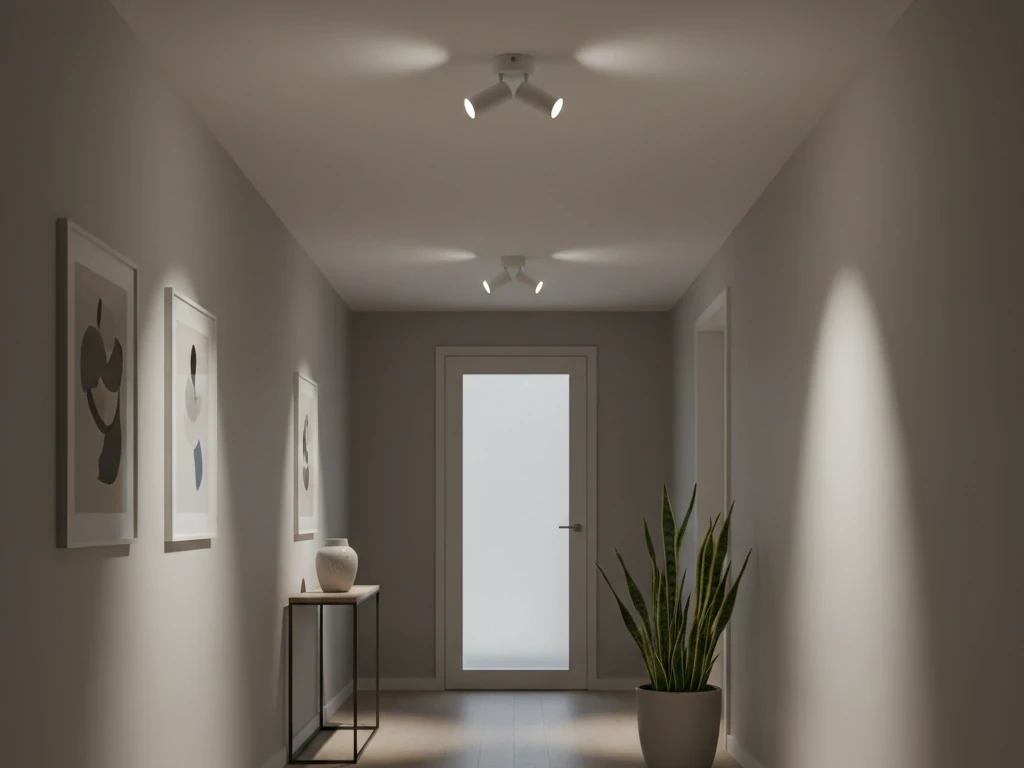
- Bedrooms and Hallways: Focused spotlights can guide movement, highlight specific décor, or create cozy reading corners. The ability to angle the light adds flexibility and prevents harsh, uniform illumination.
Layering ceiling spot lamps with ambient lighting ensures a balanced, visually appealing environment while maintaining energy efficiency.
Decorative LED Spotlights — Enhancing Aesthetics and Mood
Spotlights are not just functional; they play a critical role in interior design. Decorative LED spotlights can create atmosphere, drama, and visual interest:
- Highlighting sculptures, plants, or furniture adds depth and texture to a room.
- Track-mounted or adjustable spotlights allow you to redirect light as your interior arrangement evolves.
- Spotlights with warm white or neutral color temperatures can establish a welcoming and comfortable mood, while cooler tones can make spaces feel modern and crisp.
Decorative spotlights are particularly effective in accentuating features without overwhelming the room with general illumination. They make interiors look curated and professionally designed even in a home setting.
Outdoor Applications — Feature Lighting and Strategic Illumination
While often associated with indoor use, spot lights also serve valuable purposes outdoors:
- Architectural Highlighting: Spotlights can emphasize façade details, entranceways, or garden features. Their narrow beam allows for precise illumination without spilling light unnecessarily.
- Safety and Guidance: Placing spotlights along pathways or steps improves visibility while maintaining a focused, visually appealing light.
- Limitations: Spotlights are not ideal for lighting large open areas outdoors — for that, broader-beam floodlights or ambient outdoor fixtures are better. Spotlights work best when the goal is accent or decorative emphasis rather than general coverage.
By selecting the appropriate beam angle, lumens, and fixture type, you can balance both aesthetic appeal and functional utility, creating outdoor spaces that are visually compelling and safe to navigate.
Combining Indoor and Outdoor Applications
Many lighting designs benefit from combining spotlights with other lighting types:
- Layered indoor lighting: Combine ceiling spot lamps with ambient lights or downlights to achieve balanced illumination that is both functional and stylish.
- Accent-focused outdoor lighting: Use spotlights to highlight features, and complement them with floodlights for wider coverage.
- Flexible, adjustable setups: Track-mounted decorative LED spotlights provide adaptability for spaces that may change over time, such as galleries, studios, or multifunctional living areas.
Ultimately, thoughtful placement and understanding of technical characteristics ensure that your spot light installation — whether indoor or outdoor, functional or decorative — maximizes both performance and aesthetic impact.
Flood Light vs Spot Light — Which One Should You Choose?
When planning a lighting scheme, one of the most common questions is whether to use a spot light or a floodlight. Understanding the differences between these two lighting types is essential for making informed decisions that balance functionality, energy efficiency, and aesthetics. Whether you are considering ceiling spot lamps, led spotlights indoor, or outdoor illumination, knowing when to use a spotlight versus a floodlight can dramatically affect the outcome of your space.
Core Differences Between Spotlights and Floodlights
Spotlights and floodlights differ primarily in beam angle, light intensity, and intended use:
- Beam Angle and Focus: Spotlights have a narrow, concentrated beam, ideal for highlighting a specific object, area, or feature. Floodlights have a wide, dispersed beam that illuminates large areas uniformly.
- Intensity vs Coverage: Spotlights deliver high-intensity light to a small, targeted area, perfect for accenting décor, artwork, or task spaces. Floodlights provide lower intensity across a broader area, suitable for general illumination, security, or outdoor spaces.
- Fixture Design: Spotlights are often adjustable, track-mounted, or recessed, giving flexibility in directing light. Floodlights are typically larger, fixed, and designed for broad coverage.
Understanding these differences ensures that your lighting serves both purpose and design intent.
When to Choose Spotlights
A spot light is ideal when precision and focus are required:
- Accent Lighting: Highlight architectural features, paintings, sculptures, or shelves.
- Task Lighting: Illuminate work areas, kitchen counters, reading corners, or home offices.
- Mood and Atmosphere: Create layers of light in living rooms, bedrooms, or studios using adjustable spotlights to shape shadows and highlight textures.
Indoor applications often benefit from ceiling spot lamps or decorative LED spotlights, where focused illumination enhances design while maintaining energy efficiency.
When to Choose Floodlights
Floodlights are better suited for situations requiring broad, even lighting:
- Outdoor Security and Safety: Illuminate driveways, walkways, or large outdoor areas.
- General Room Illumination: Cover large spaces where concentrated light is insufficient.
- Events or Temporary Lighting: Provide consistent, wide-area illumination for gatherings or projects.
Floodlights complement spotlights rather than replace them, offering general coverage while spotlights handle focus and accent.
Combining Spotlights and Floodlights
For optimal lighting results, combining spotlights and floodlights is often the best approach:
- Indoor Layered Lighting: Use flood-style ambient fixtures for base lighting, and add led spotlights indoor for task or accent purposes.
- Outdoor Balanced Illumination: Pair spotlights for feature highlighting with floodlights to ensure safe, broad coverage across yards or pathways.
- Flexibility and Control: Adjustable spotlights allow for changes in focus without the need to move or add floodlights, providing adaptable lighting over time.
By carefully analyzing the purpose, coverage needs, and aesthetic goals of your space, you can make strategic decisions that maximize both functionality and design impact.
Pros & Cons of Spot Lights (and What to Watch Out For)
Spot lights are highly versatile and widely used in both residential and commercial spaces. However, like any lighting solution, they come with advantages and limitations. Understanding these pros and cons ensures that your lighting design — whether it includes ceiling spot lamps, led spotlights indoor, or decorative LED spotlights — delivers the best results for functionality, energy efficiency, and aesthetics.
Advantages of Spot Lights
- Precision and Focus
Spotlights allow you to direct light exactly where it’s needed. This makes them perfect for highlighting artwork, kitchen counters, furniture, or decorative features without flooding the entire room with light.
- Flexibility and Adjustability
Many spotlights feature adjustable heads, tilting mechanisms, or track-mounted systems. This flexibility enables you to change the focus of light as your space evolves, whether it’s a living room, studio, or gallery.
- Energy Efficiency with LEDs
Modern LED spotlights combine precise illumination with low energy consumption. They produce less heat, last longer, and maintain high brightness, making them ideal for both indoor and decorative lighting applications.
- Aesthetic and Design Benefits
Spotlights contribute to layered lighting schemes, combining ambient, task, and accent lighting. They allow you to shape shadows, highlight textures, and enhance the overall mood and ambiance of a space.
Limitations and Considerations
- Limited Coverage
Due to their narrow, focused beams, spotlights may not provide sufficient illumination for an entire room. Using only spotlights for ambient lighting can create dark areas or uneven light distribution.
- Risk of Glare or Harsh Shadows
Improperly positioned spotlights can produce glare or sharp shadows, which may be uncomfortable or visually unappealing. Careful planning of beam direction and placement is essential.
- Planning Complexity
Achieving balanced lighting with spotlights requires attention to the number of fixtures, placement, beam angles, and lumen output. Poorly planned layouts may result in insufficient lighting or wasted energy.
- Higher Initial Cost for Quality Fixtures
Adjustable, high-CRI, or dimmable LED spotlights can have a higher upfront cost compared to basic ceiling lights. However, this is often offset by their longevity and energy savings.
Tips to Maximize the Benefits
- Combine with Ambient Lighting: Use spotlights alongside downlights or ceiling-mounted fixtures to create a layered lighting approach that balances focus and general illumination.
- Select Appropriate Beam Angles: Narrow beams for accent lighting, medium beams for small tasks, and wider beams when some ambient coverage is needed.
- Consider Color Temperature and CRI: Match the lighting tone and color rendering to the room’s function and décor for natural and visually pleasing results.
- Plan Placement Strategically: Measure spaces and visualize the direction and reach of each spotlight before installation to avoid glare or uneven coverage.
When used thoughtfully, spot light fixtures — including ceiling spot lamps and decorative LED spotlights — can transform a space, offering precision, style, and efficiency. Awareness of their limitations ensures that your design choices support both function and beauty.
Designing Your Space with Spot Lights — What to Consider
Properly designing a space with spot light fixtures can elevate both functionality and aesthetics. Whether you are installing ceiling spot lamps, led spotlights indoor, or decorative LED spotlights, careful planning ensures optimal illumination, energy efficiency, and visual appeal. Here’s what to consider when integrating spotlights into your home or commercial space.
Assessing Room Function and Lighting Needs
Before selecting a spotlight, consider the room’s purpose:
- Living Rooms and Bedrooms: Focus on creating layers of light, combining ambient lighting with spotlights for accenting artworks, shelves, or feature walls. Adjustable fixtures allow you to change the focal points as décor evolves.
- Kitchens and Workspaces: Prioritize task lighting where precision is needed — countertops, islands, or desks benefit from focused beams from led spotlights indoor.
- Hallways and Corridors: Use spotlights to guide movement and highlight architectural features, ensuring even illumination without over-lighting.
By understanding the function of each area, you can determine the number of spotlights required and their optimal placement.
Calculating Lumens and Number of Fixtures
Spotlights are designed for focus, not broad coverage, so planning the quantity and brightness of fixtures is crucial:
- Lumens: Decide how much light each spotlight should emit. For accent purposes, 200–500 lumens may suffice; for task lighting, 500–800 lumens is typically recommended.
- Number of Fixtures: Larger rooms may require multiple spotlights to ensure balanced coverage. Recessed ceiling spot lamps often need spacing to avoid dark spots or uneven illumination.
Combining lumens and fixture count ensures both efficiency and effectiveness, avoiding unnecessary energy use while achieving the desired lighting effect.
Beam Angle and Placement
Selecting the correct beam angle and positioning the spotlight properly is key:
- Narrow Beams (10°–30°): Ideal for highlighting artwork, décor, or small focal points.
- Medium Beams (30°–45°): Suitable for accenting larger areas without overpowering the room.
- Wide Beams (45°+): Can contribute to ambient lighting when combined with other light sources.
Placement should consider the direction of the beam, avoiding glare and minimizing harsh shadows. Adjustable spotlights allow flexibility to adapt lighting as furniture or décor changes.
Color Temperature and Aesthetic Integration
Color temperature affects mood and visual comfort:
- Warm White (2700–3000 K): Creates cozy, inviting spaces, ideal for living rooms and bedrooms.
- Neutral White (3500–4000 K): Offers balanced lighting for kitchens, offices, and multipurpose areas.
- Cool White (5000 K+): Produces crisp illumination, suitable for modern or task-oriented spaces.
High CRI spotlights are recommended for spaces where accurate color representation is important, such as art displays or furniture showcases. Matching the fixture style to the interior ensures a cohesive and aesthetically pleasing design.
Layered Lighting Strategy
Spotlights perform best when integrated into a layered lighting plan:
- Ambient Lighting: General illumination from ceiling lights or broad-beam fixtures.
- Task Lighting: Focused led spotlights indoor for specific activities like cooking, reading, or working.
- Accent Lighting: Highlight architectural features, décor, or focal points using adjustable or decorative spotlights.
Layered lighting allows you to control brightness, mood, and energy use efficiently, while providing visual depth and flexibility for evolving interior layouts.
Safety and Installation Considerations
- Professional Installation: For recessed or hardwired ceiling spot lamps, a licensed electrician ensures proper wiring and compliance with safety codes.
- Spacing and Heat Management: Adequate spacing prevents overheating and ensures each spotlight functions efficiently.
- Dimming and Controls: Integrating dimmers or smart controls adds flexibility and energy savings.
By considering function, lumens, beam angles, color temperature, and installation safety, you can design a spotlight layout that enhances both the look and usability of your space. Thoughtful planning maximizes the benefits of spot light, ceiling spot lamps, and decorative LED spotlights, creating a balanced, versatile, and visually appealing lighting scheme.
Conclusion & Recommendations
Spot lights — especially in the form of ceiling spot lamps and indoor LED spotlights — are an essential tool in modern lighting design. They offer flexibility, precision, energy efficiency, and aesthetic power. Whether you’re accentuating a piece of art, brightening a kitchen counter, or creating a dramatic ambiance in a living room, spot lights give you control.
That said, spot lights are not a one-size-fits-all solution. Their narrow beam requires planning: number of fixtures, their placement, total lumen output, and the need to balance them with ambient or general lighting sources. Sometimes the best lighting scheme is a mix — combining spotlights with downlights, ambient fixtures, or even floodlights — to build layers of light: base, accent, and mood.
If you are about to design or renovate your space, I suggest: start by mapping how you use each room; define which areas need focused light (work corners, art walls, shelves) and which need general illumination (living room, corridors, large open areas); then choose spotlights — recessed, surface-mounted, or track — to address those needs. Pair them with LED fixtures for efficiency. And always, when wiring is involved, consider hiring a licensed electrician to ensure safety and compliance.
With thoughtful planning, spot light becomes more than a technical fixture — it becomes a design tool that shapes how your space feels, functions, and looks.
FAQs
Why is spot lighting illegal?
Spot lighting itself is not inherently illegal, but some installations can violate building codes or local regulations. For example, outdoor spotlights that create excessive glare or light trespass onto neighboring properties may be restricted. It’s important to follow electrical safety codes and ensure proper placement, especially for ceiling spot lamps or outdoor installations.
What does a spot light do?
A spot light provides focused, directional illumination, highlighting specific areas, objects, or architectural features. Unlike general lighting, it emphasizes visual points of interest, enhances décor, or supports task-oriented activities. Examples include accenting artwork, illuminating countertops with led spotlights indoor, or creating ambiance with decorative LED spotlights.
Do you need an electrician to install spotlights?
Yes, for recessed or hardwired spotlights, a licensed electrician is recommended to ensure safe wiring and compliance with local codes. Surface-mounted or plug-in spotlights may be installed without professional help, but proper planning and safety precautions are still crucial.
What are the three types of spotlights?
The three main types of spotlights are:
1. Recessed Spotlights (Ceiling-Integrated) — flush with the ceiling, ideal for minimalistic and modern designs.
2. Surface-Mounted Spotlights — attach directly to the ceiling or walls, often adjustable.
3. Track Spotlights — multiple heads on a rail, fully adjustable for flexible lighting arrangements.
Are ceiling spotlights good?
Absolutely. Ceiling spot lamps provide focused, flexible lighting that can serve ambient, task, or accent purposes. They work well in living rooms, kitchens, and bedrooms, offering modern aesthetics while enhancing functionality. Adjustable options allow you to change lighting focus without moving furniture or fixtures.
How many lumens is a good spotlight?
Lumens measure brightness. Recommended ranges for spotlights are:
• Accent or decorative use: 200–500 lumens per fixture.
• Task lighting: 500–800 lumens per fixture.
• General ambient coverage: Multiple spotlights may be needed to reach the desired lumen output. Proper lumen selection ensures that led spotlights indoor provide effective illumination without over-lighting or glare.
What is the difference between LED lights and spotlights?
LED lights refer to the light source technology, while spotlights describe the fixture and light distribution. You can have LED spotlights, which combine the energy efficiency of LEDs with the directional focus of a spotlight. LED spotlights are more efficient, generate less heat, and offer longer lifespans compared to traditional halogen spotlights.
What is better, a spotlight or a floodlight?
It depends on purpose:
• Spotlights: Narrow, focused beams for accenting, task lighting, and decorative purposes. Ideal for ceiling spot lamps or indoor focal points.
• Floodlights: Wide, broad beams for general illumination or outdoor security. For layered lighting, combining both provides balance between focus and coverage.
Can spotlights be used for decorative purposes?
Yes, decorative LED spotlights are perfect for enhancing aesthetics. They can highlight sculptures, plants, furniture, or feature walls, adding depth and visual interest without overwhelming the room with light.
Can I install spotlights in any room?
Spotlights can be installed in almost any room, provided electrical and safety considerations are met. Ceiling spot lamps work well in kitchens, living rooms, hallways, and bedrooms. The key is selecting the right beam angle, lumens, and color temperature for each space to achieve balanced lighting.
Are LED spotlights energy-efficient?
Yes. LED spotlights indoor consume significantly less electricity than traditional halogen spotlights, produce less heat, and have a longer lifespan, making them ideal for both functional and decorative use.
How do I avoid glare with spotlights?
Glare can be minimized by using adjustable heads, selecting appropriate beam angles, and combining spotlights with ambient lighting. Positioning ceiling spot lamps carefully and avoiding direct eye-level exposure ensures comfortable, visually appealing illumination.