

Table of Contents
If you’re shopping for a fan and you keep seeing / hearing about a 72 inch ceiling fan, you might be wondering: “Is bigger always better?” or “Will this massive fan crowd my room — or save me money in the long run?” In this article, we dig deep into what a 72 in fan really is, when it’s a brilliant choice, when it’s a mistake, and how to get the most out of a large fan ceiling installation (including options for a 72 in fan with light, or fan lights).
We cover how size affects performance, room-size and ceiling-height guidelines, pros and cons, installation and safety issues, and answer the most frequently asked questions. By the end, you’ll have everything you need to decide whether a 72″ ceiling fan is right for your home.
Understanding Ceiling Fan Size: How 72 Inch Compares
When homeowners or designers talk about a 72 inch ceiling fan, they’re referring to one of the largest air-circulating fixtures commonly used in residential and light-commercial spaces. This size isn’t just a matter of aesthetics—it directly affects airflow performance, comfort, energy savings, and how the entire room “feels.” To understand whether a 72 inch fan is right for you, it helps to break down what the measurement means, how it compares with standard sizes, and why it’s placed in the “large” or “extra-large” category.
What Does “72 inch” Mean?
The term “72 inch” refers to the blade span of the fan—measured straight across from the tip of one blade to the tip of the opposite blade. This dimension defines how broadly the fan can move air.
A 72 inch ceiling fan typically includes:
- A blade sweep of exactly 72 inches
- Larger, wider, or more aerodynamically sculpted blades
- A heavier motor designed to support that blade span
- Increased airflow capacity measured in higher CFM (cubic feet per minute)
In comparison:
- A small bedroom fan might be 42–48 inches.
- A standard living room fan tends to fall in the 52–56 inch range.
- Extra-large fans—including the 72 inch fan—start at around 65 inches and can exceed 84 inches in very spacious areas.
Because the 72 inch ceiling fan spans six full feet across, it naturally covers a much broader area and circulates air far more efficiently than smaller fixtures. This is why homeowners with open-concept layouts, vaulted ceilings, expansive patios, and great rooms often gravitate toward this size.
Typical Ceiling Fan Size Recommendations by Room Size
Choosing the proper fan size is one of the most important steps in creating balanced, effective airflow. The key is matching the blade span to the square footage of the room.
Below is a widely accepted guideline used by electricians, HVAC professionals, and energy-efficiency organizations:
| Room Size (sq. ft.) | Recommended Fan Size |
|---|---|
| Under 100 sq. ft. | 29–42 inches |
| 100–150 sq. ft. | 42–48 inches |
| 150–300 sq. ft. | 48–56 inches |
| 300–450 sq. ft. | 56–65 inches |
| 450+ sq. ft. | 65–72+ inches |
A 72 inch ceiling fan is ideal for:
- Great rooms
- Open-concept living/dining areas
- Large primary bedrooms
- Oversized game or media rooms
- Large home offices
- Covered patios or outdoor lounges
- Shops, garages, barns, or lofts
This size also suits high or vaulted ceilings because it can push air down more efficiently than a standard fan. When ceilings exceed 10 feet, a large fan ceiling setup often performs better than a smaller model, even at lower speeds.
Why 72″ Is Usually Considered a “Large” or “Extra-Large” Fan
A 72 inch ceiling fan is classified as “large” or often “extra-large” because it is engineered to handle significantly more air volume than mid-size models. Several factors contribute to this categorization:
- High Airflow Output
The extended blade reach increases the amount of air captured and moved per rotation. A large fan ceiling configuration distributes airflow over a broader zone, reducing hot or stagnant pockets throughout the room.
- Lower Energy Consumption per Square Foot
Interestingly, bigger fans can be more efficient because they move more air at lower speeds. Many homeowners find that they can run a 72 inch ceiling fan on a medium or low setting and achieve the same comfort level a smaller fan would deliver on high.
- Enhanced Comfort in Open Layouts
Open-concept homes have fewer walls, meaning air needs to travel farther to be felt. The sheer sweep of a 72 inch fan makes it ideal for maintaining consistent comfort across a large shared space.
- Balanced Proportions in Spacious Rooms
Oversized rooms can make smaller fans look undersized and ineffective. A 72-inch model fills the scale visually and functionally, complementing large architecture and high ceilings.
- Better Outdoor Performance
Covered patios and outdoor kitchens benefit from wider blade spans because air disperses more quickly outside. A 72 inch ceiling fan can help maintain steady airflow, deter insects, and improve overall outdoor comfort.
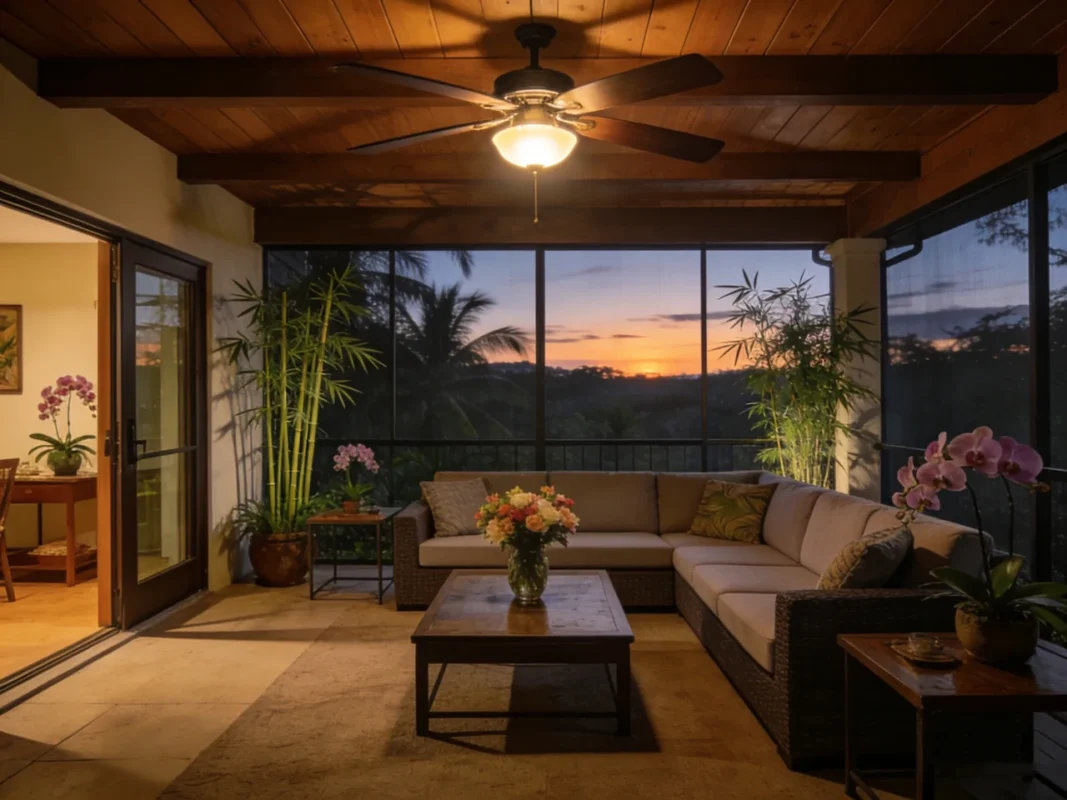
When a 72-Inch Fan Makes Sense — Use Cases & Benefits
A 72 inch ceiling fan isn’t just a larger version of a standard fan—it’s a specialized airflow solution built for spaces that demand broader coverage, stronger air circulation, and better environmental comfort. Whether indoors or outdoors, certain rooms simply perform better with a wide blade span. Understanding when a 72 inch fan is the right fit helps you avoid underpowered airflow, energy waste, or the frustration of installing multiple smaller fans that never quite achieve the results you want.
Ideal Room / Space Types for a 72″ Ceiling Fan
A 72 inch ceiling fan finds its sweet spot in open, airy, or oversized rooms where smaller fixtures struggle to move air effectively. Because the blades sweep over a six-foot span, the airflow pattern reaches farther and pushes more air downward—crucial for comfort in expansive environments.
Here are the most common (and most effective) locations for a large fan ceiling setup:
- Great Rooms and Open-Concept Living Areas
Modern homes with combined living, dining, and kitchen spaces benefit tremendously from the broad coverage of a 72 inch ceiling fan. Instead of having airflow confined to a single seating area, the fan distributes breezes throughout the entire open floor plan.
This creates:
- More consistent temperature
- Less reliance on air conditioning
- Better comfort across multiple zones
The visual scale also fits seamlessly with large room proportions.
- Oversized or Primary Bedrooms
A large primary suite with vaulted or extended ceilings can feel warm or stuffy if air stagnates in upper zones. A 72 inch fan gently circulates air across the entire room—especially helpful for sleepers who prefer low, quiet fan speeds at night.
- Home Offices, Studios, or Bonus Rooms
Workspaces tend to accumulate heat from electronics, screens, and lighting. A 72 inch ceiling fan keeps airflow balanced without creating a draft directly over your desk. It also helps regulate temperature when multiple people share the space.
- Garages, Workshops, and Utility Areas
Large utility spaces often lack strong HVAC airflow. A large fan ceiling configuration pushes air into every corner, reducing humidity, clearing fumes, and keeping temperatures manageable—especially in climates with intense heat.
- Covered Outdoor Patios and Porches
Outdoor areas behave differently from indoor rooms: air dissipates faster, heat builds more quickly, and breezes are inconsistent. A 72 inch ceiling fan can overcome these issues by maintaining a steady airflow that deters insects, cools the space, and keeps air circulating even when natural breezes drop.
- Lofts, Barns, and High-Ceiling Architecture
Tall ceilings can trap heat above head level. Wider blades help push warm air down in winter and provide broad cooling coverage in summer. A 72 inch fan also visually balances large architectural spaces where a smaller fan would look out of scale.
If any room exceeds 450 square feet or reaches ceiling heights above 10 feet, a 72 inch ceiling fan almost always makes practical and aesthetic sense.
Advantages of Using a Large Fan vs. Multiple Smaller Fans
Homeowners often debate whether it’s better to install one 72 inch ceiling fan or several smaller fans. While multiple small fans can work in certain layouts, a single large unit offers a surprising number of benefits that many people overlook.
Below are the most compelling reasons to consider a 72 inch fan instead of doubling up on smaller fixtures:
- More Efficient Airflow Distribution
A single large fan ceiling setup creates one continuous, uniform airflow pattern rather than multiple overlapping airflow zones that can create turbulence or dead spots.
Larger blades naturally move air farther and more evenly, making the entire room feel balanced without hot pockets or excessive drafts.
- Lower Energy Usage for Large Spaces
Because a bigger fan moves more air at lower speeds, it can be more energy-efficient than two smaller fans running on high. A 72 inch ceiling fan often achieves the same comfort level while consuming less electricity overall.
This is especially beneficial in large living rooms, basements, and open-concept homes.
- Cleaner Aesthetics and Less Visual Clutter
Installing multiple fans in one space can make the ceiling look busy or fragmented. A single, well-scaled 72 inch fan simplifies the design and creates a more cohesive, upscale appearance.
This is especially true in rooms with:
- Vaulted ceilings
- Exposed beams
- Minimalist décor
- Open floor plans
The fan becomes a central focal point rather than visual noise.
- Fewer Wiring and Installation Requirements
Every additional fan requires wiring, support bracing, and a mounting point. One larger appliance reduces the amount of:
- Electrical work
- Ceiling reinforcement
- Switch or remote configuration
- Maintenance points
In many cases, installing one 72 inch fan is faster, safer, and more cost-effective than setting up multiple smaller units.
- Better Noise Control
Two or three small fans may generate more sound than one large fan operating at a lower speed. A well-balanced 72 inch ceiling fan is often quieter because it doesn’t need to spin as fast to move the same amount of air.
This matters in:
- Bedrooms
- Home offices
- Media rooms
- Open living spaces
Lower RPM often equals less hum and fewer mechanical noises.
- More Versatile Seasonal Performance
Larger fans excel at year-round comfort. In summer, they create widespread cooling. In winter, they gently mix warm air trapped at the ceiling without overpowering the room.
Multiple fans can interfere with each other’s airflow patterns, making seasonal performance less predictable or consistent.

Potential Drawbacks & What to Watch Out For
A 72 inch ceiling fan delivers exceptional airflow and comfort when used in the right space. But like any home improvement decision, bigger isn’t always better. Oversized fans can create issues if placed in the wrong environment, installed incorrectly, or matched with ceilings that don’t meet clearance requirements. Understanding these potential drawbacks helps you avoid costly mistakes and ensures that your 72 inch fan installation performs safely and efficiently for years.
Oversizing — What Happens If a Fan Is Too Big for the Room
Many homeowners assume that a larger fan automatically produces better airflow, but placing a 72 inch ceiling fan in a small or medium-sized room can cause more problems than benefits. Here’s what can happen when a fan’s blade span overwhelms the space:
- Discomfort From Excessive Air Movement
A room that’s too small for a large fan ceiling setup may experience:
- Strong, uncomfortable drafts
- Uneven cooling
- Constant wind-chill effect even at low speeds
Instead of subtle comfort, the airflow may feel overpowering—especially in bedrooms or workspaces where calm circulation is preferred.
- Poor Air Distribution
Counterintuitively, a fan that’s too large may reduce effective circulation. When the blades dominate the ceiling area, the airflow can become turbulent and struggle to disperse evenly. Smaller spaces benefit more from a fan scaled to the room’s dimensions.
- Awkward or Unbalanced Aesthetics
A 72 inch ceiling fan requires visual breathing room. In a tight bedroom or modest office, it can look overwhelming, making the ceiling feel lower and the room feel cramped.
- Safety Clearance Issues
Oversized blades installed in areas with limited ceiling height can create clearance risks. Most experts recommend at least:
- 7 feet between blade and floor (absolute minimum)
- Ideally 8–9 feet for comfortable airflow
- 18 inches between blade tip and walls or sloped ceilings
If these minimums can’t be met, the fan is simply too big.
- Reduced Efficiency Rather Than Improved Efficiency
While a larger fan can be more efficient in big rooms, it becomes less efficient in small spaces. Running a 72 inch fan at the lowest speed may still move more air than needed, which can force you to adjust the thermostat or leave the fan off altogether—defeating the purpose of installing it.
In short: scaling matters. A 72 inch ceiling fan shines in spacious, open rooms, but it can disrupt comfort and aesthetics if used where it doesn’t belong.
Installation & Safety Considerations for Large Fans (72″)
Installing a 72 inch ceiling fan requires more planning and structural awareness than setting up a smaller fixture. The wide blade span, heavier motor housing, and longer downrods all contribute to a different set of safety and installation requirements.
Below are the key considerations you should keep in mind:
- Structural Support and Proper Bracing
A large fan is heavier and generates more torque than a standard model. It must be mounted to:
- A fan-rated ceiling box
- A properly secured electrical junction
- Adequate ceiling joists or a mounting bracket designed to handle the load
Using a general-purpose electrical box is unsafe and can cause the fan to wobble, loosen over time, or fail altogether.
- Correct Ceiling Height and Downrod Selection
The ideal blade height for general comfort is typically 8–9 feet from the floor. Because a 72 inch ceiling fan requires clearance from both ceiling and floor, many installations require a downrod.
General guidelines:
- Ceilings 9–10 feet: short or standard downrod
- Ceilings 10–14 feet: extended downrod
- Vaulted ceilings: angled adapters plus extended downrods
Proper height ensures the fan doesn’t create excessive wind while maximizing efficiency.
- Checking Clearance From Walls, Beams, or Sloped Ceilings
Blades should have at least 18 inches of clearance on all sides. If the room has beams, angled ceilings, or architectural features, measuring beforehand is crucial.
A large fan ceiling fixture in a tight or irregularly shaped room can pose safety and performance issues if installed too close to obstacles.
- Electrical Load and Wiring Requirements
A 72 inch ceiling fan often features more powerful motors or additional features such as reversible modes, integrated controls, or optional fan lights. Although they typically operate on standard household wiring, installations must follow:
- Correct circuit load limits
- Proper grounding
- NEC-compliant wiring standards
If integrating switches, dimmers, or advanced controls, the wiring may require adjustments.
- Secure Blade Attachment
Large blades produce more drag and must be firmly secured. Loose blades can cause wobbling, noise, or imbalance. Checking blade screws during installation—and periodically afterward—is essential.
- Professional Installation Is Advisable
While many homeowners install smaller fans themselves, a 72 inch ceiling fan often benefits from professional installation due to:
- Higher ceiling work
- Heavier components
- Stricter balance requirements
- Additional safety considerations
A licensed installer can also verify weight rating, wiring, and ceiling structure to prevent long-term issues.
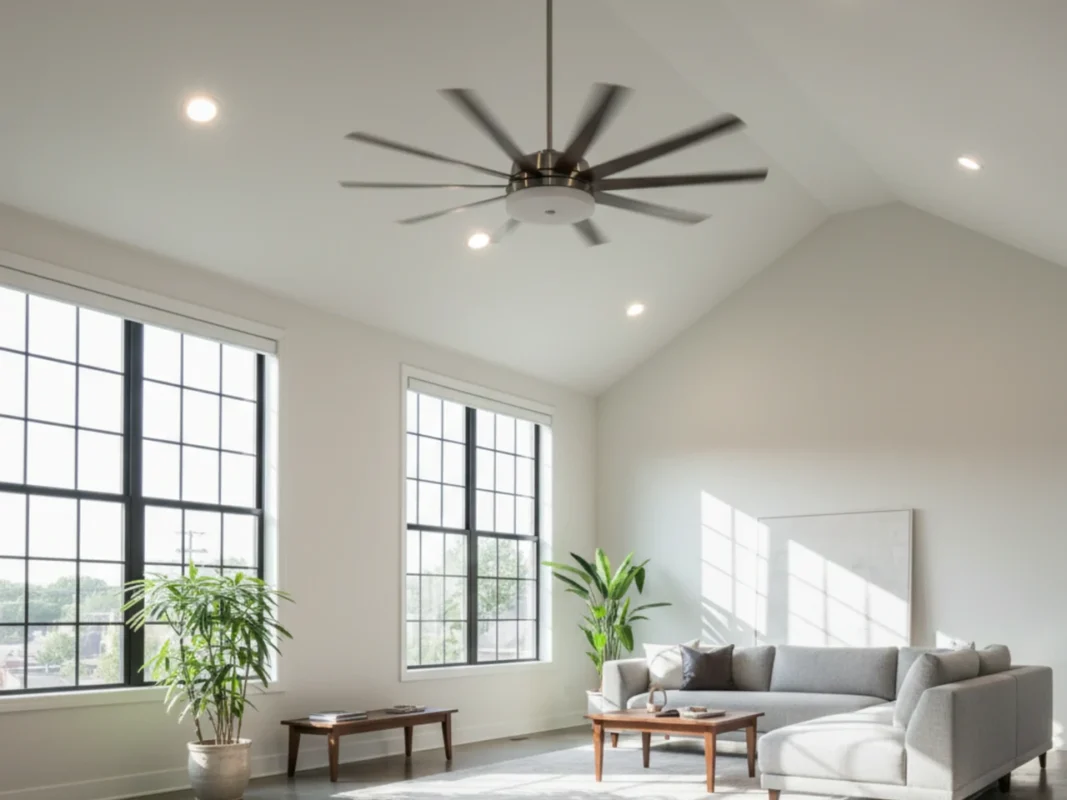
Ceiling Fans With Lights — Do They Work Well at 72″ Size?
A 72 inch ceiling fan already makes a strong impression, but when lighting is integrated into the design, its functionality expands even further. Many homeowners are now combining large-scale airflow with decorative or task lighting by choosing a 72 in fan with light, sometimes referred to as a fandelier when the lighting element is more decorative or chandelier-like.
But does a large fan work well with integrated lighting? Absolutely—when designed and installed correctly. In fact, a well-made combination can provide comfort, illumination, and style in one efficient fixture. Still, larger fans carry unique considerations that buyers should understand before committing.
The Appeal of 72 in Fan With Light (Fandelier)
A 72 in fan with light blends powerful air circulation with practical illumination, creating a multi-purpose centerpiece that can transform the look and feel of large rooms. Here’s why many homeowners gravitate toward this style:
- A Central All-In-One Solution
Large rooms often require both a strong fan and a primary source of lighting. A 72 inch ceiling fan with integrated lights eliminates the need for separate ceiling fixtures, simplifying the ceiling layout and providing uniform lighting from the room’s central point.
This is particularly useful in:
- Open living rooms
- Great rooms
- Outdoor covered patios
- Large bedrooms
- Lofts and bonus rooms
You get both the airflow of a large fan ceiling setup and the convenience of overhead lighting without additional wiring or fixtures.
- Enhanced Aesthetic Impact
A fandelier-style setup can create a dramatic design statement. Because a 72 inch fan occupies significant visual space, adding a beautiful lighting element helps it feel finished, intentional, and integrated into the room’s overall style.
Some homeowners find that the lighting feature softens the look of an oversized fan, making it feel less industrial and more decorative.
- Ideal for Rooms With High Ceilings
Rooms with tall or vaulted ceilings often suffer from dim lighting unless recessed fixtures or sconces are added. A 72 in fan with light helps pull light down into the living space, ensuring that the room feels bright, comfortable, and functional.
- Excellent for Outdoor Use
On covered patios or porches, lighting is essential once the sun sets. Pairing fan lights with a 72 inch ceiling fan keeps the space illuminated while circulating fresh air—especially valuable during warm evenings.
- Year-Round Functionality
Fan lights serve both summer and winter use. During warm seasons, the airflow and lighting work together for comfortable evening gatherings. In colder months, reverse mode plus lighting turns the fan into a practical year-round fixture.
What to Check When Using Fan Lights on Large Fans
Adding lighting to a 72 inch ceiling fan can be a smart upgrade, but it’s important to consider a few key factors to ensure performance, safety, and long-term satisfaction.
- Weight Capacity of the Fan
A 72 inch fan is already a heavy fixture, so any lighting element must be properly supported. The fan must be designed to carry the additional weight of the lighting kit. Overloading the motor housing can lead to wobbling, reduced lifespan, or safety hazards.
Always confirm that the fan model is rated for integrated lighting or compatible with add-on lights.
- Lumens, Not Wattage
Because modern lighting uses efficient LED technology, wattage no longer determines brightness. For large rooms, aim for a lighting output that provides sufficient lumens to illuminate the entire space.
Typical targets:
- 1,500–3,000 lumens for most great rooms
- Higher for rooms with dark walls or tall ceilings
A 72 in fan with light should contribute enough illumination to reduce the need for large amounts of supplemental lighting.
- Balance and Blade Clearance
Light fixtures add weight and can affect balance. An imbalanced 72 inch ceiling fan may:
- Wobble
- Generate noise
- Reduce motor efficiency
Ensure the light kit is properly secured and blades are evenly balanced after installation.
- Dimmability and Control Options
Large rooms need flexible lighting. Consider whether the fan lights support:
- Dimmable LEDs
- Wall controls
- Remote operation
- Smart integration (if desired)
A large fan with non-dimmable lights may feel harsh or inflexible, especially at night.
- Heat Output Concerns
Older bulbs generate heat that can negatively affect the fan motor. LED lights are the preferred choice because they:
- Stay cool
- Reduce energy usage
- Last longer
- Are safe for enclosed fixtures
Modern fan lights are almost always LED-compatible for this reason.
- Downrod Length for Proper Light Positioning
Because a 72 inch ceiling fan often hangs lower to maintain proper blade height, the lighting must also be positioned carefully. The goal is to ensure the light sits at a comfortable height:
- Not too high, which wastes illumination
- Not too low, which creates glare
This is especially important in rooms with tall or sloped ceilings.
- Compatibility With Outdoor Environments
For outdoor areas, the lighting and fan housing must be rated for damp or wet locations. Improperly rated lighting can fail prematurely or become a safety hazard.
- Maintenance Accessibility
Bigger fans often sit higher, making light replacement and cleaning more challenging. Choose long-life LED bulbs and designs that are easy to reach if you have vaulted ceilings.
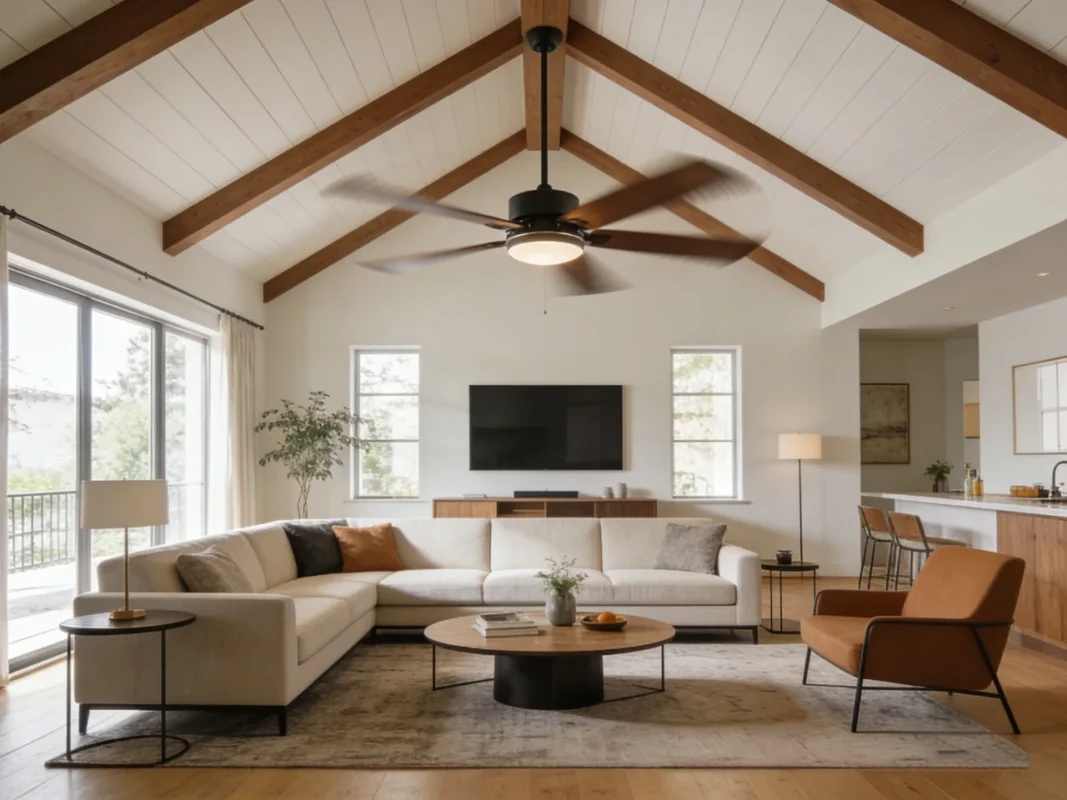
Best Practices & “Rules” for Installing a 72″ (or Large) Ceiling Fan
Installing a 72 inch ceiling fan requires more planning and precision than smaller fans. Because of the large blade span, heavier motor, and potential for integration with lighting, following best practices ensures safe, efficient operation and optimal airflow. This section outlines the “rules” that homeowners, designers, and installers should follow when adding a large fan ceiling setup.
Room Size & Ceiling Height Requirements
Correct sizing is the cornerstone of successful fan performance. A 72 inch ceiling fan is best suited for large rooms or open spaces, and ceiling height is a critical factor for both safety and comfort.
- Room Size
- Recommended for spaces over 450 square feet
- Ideal for great rooms, open-concept layouts, lofts, covered patios, and large bedrooms
- Avoid installing in rooms smaller than 300 square feet, as oversized fans can create uncomfortable drafts, noise, and visual imbalance
- Ceiling Height
- Minimum height: 7 feet from blade tip to floor
- Optimal height: 8–9 feet for proper airflow and head clearance
- For vaulted ceilings or rooms above 10 feet, consider a longer downrod to bring the fan to an effective height
- Ensure at least 18 inches of clearance between blade tips and walls, beams, or other obstacles
Matching room size and ceiling height with fan dimensions ensures even air distribution, energy efficiency, and a safe environment for everyone in the room.
Choosing Mount Type & Downrods for High Ceilings
For large fans like a 72 inch ceiling fan, mount type and downrod selection are crucial to maintain airflow efficiency and safety.
- Mount Types
- Standard/Downrod Mount: Most common for high or vaulted ceilings; positions fan at the ideal height for maximum circulation
- Flush Mount (Hugger): Not recommended for a 72 in fan due to blade size and weight; insufficient clearance may create safety hazards
- Downrod Selection
- Helps bring fan to optimal height (8–9 ft from floor)
- Short downrod for ceilings around 9–10 feet
- Longer or angled downrods for vaulted ceilings above 10 feet
- Ensure the downrod is properly balanced and rated for the weight of the fan, especially if integrating lighting
Correct mounting ensures the 72 inch ceiling fan operates safely, avoids wobble, and distributes air evenly throughout the room.
Consider Airflow (CFM), Efficiency, and Energy Use
Airflow is the primary function of a ceiling fan, and larger fans like a 72 inch fan can move a significant volume of air when installed correctly.
- Airflow Measurement
- Measured in cubic feet per minute (CFM)
- Higher CFM indicates more air circulation
- Ideal for large rooms: 8,000–12,000+ CFM, depending on room layout and ceiling height
- Efficiency
- Larger fans often operate at lower RPM while still producing strong airflow, which can reduce noise and energy consumption
- Properly sized fans are more efficient than multiple smaller fans in the same space
- Energy Use
- High-efficiency motors (especially DC motors in modern fans) can reduce electricity consumption
- A properly installed 72 inch ceiling fan may allow homeowners to reduce air conditioning usage in the summer by maintaining a comfortable breeze
- Consider seasonal use: reverse function in winter to distribute warm air that rises to the ceiling, improving heating efficiency
- Maintenance for Optimal Performance
- Regularly clean blades to maintain airflow efficiency
- Check for wobble or imbalance, especially after installation or in rooms with vaulted ceilings
- Inspect mounting brackets and downrods periodically to ensure stability
By following these best practices, a 72 inch ceiling fan can deliver maximum comfort, energy efficiency, and long-lasting performance while maintaining safety and aesthetic appeal.
Conclusion
If you’ve got a large room, open layout, high ceiling, or a spacious covered patio — a 72 inch ceiling fan is not just “a bigger option,” but often the most sensible choice. It provides broad airflow, energy-efficient cooling, clean design (especially when combined with a light kit), and can even replace multiple smaller fans for simpler installation and maintenance.
That said, a 72 in fan is not a one-size-fits-all solution. In smaller rooms, or in spaces with low ceilings, installing a fan that large can backfire — causing uncomfortable drafts, noise, visual imbalance, and even safety issues.
If you go for a 72 in ceiling fan, plan your installation carefully: make sure ceiling height and room layout are appropriate, ensure proper clearance and support, and consider a fan with efficient motor (ideally DC) and, if desired, a light kit (fan lights) — but only if the model is rated for such use and you observe all wiring and mounting best practices.
In many homes, especially with large open rooms or covered outdoor areas, a 72 in fan can become the centerpiece — cooling, lighting, and styling the room all in one. When selected and installed thoughtfully, it’s more than just a fan — it’s a smart, long-term comfort investment.
Frequently Asked Questions
What size room is a 72 ceiling fan for?
A 72 inch ceiling fan is best suited for large rooms, typically over 450 square feet. Ideal spaces include great rooms, open-concept living areas, lofts, large bedrooms, and covered outdoor patios. It ensures even airflow, cooling, and comfort in open layouts or rooms with high ceilings.
What is the largest size ceiling fan you can buy?
Most residential ceiling fans top out at around 84 inches in blade span, though 72 inch fans are already considered extra-large. Beyond this, fans are usually reserved for commercial or industrial spaces, where extremely high ceilings require specialized airflow solutions.
How big is a 72 inch ceiling fan?
A 72 inch ceiling fan has a blade span of six feet from tip to tip. This large size allows it to circulate air efficiently across broad areas and makes it suitable for rooms with high ceilings or open-concept layouts.
What happens if you put too big of a ceiling fan in a room?
Installing a fan that’s too large can create strong, uncomfortable drafts, uneven airflow, and visual imbalance. In smaller rooms, oversized fans may also increase noise, reduce efficiency, and pose safety concerns if there isn’t enough clearance from walls or furniture.
Are bigger ceiling fans better?
Bigger fans are better only in appropriately sized spaces. A large fan ceiling like a 72 inch model moves more air at lower speeds, improving comfort and energy efficiency in large rooms. However, in small or medium rooms, a large fan can be overpowering and less effective than a properly sized smaller fan.
What are the rules for ceiling fans?
Key rules include:
• Maintain at least 7 feet of clearance from blade tip to floor
• Ensure 18 inches of clearance from walls, beams, or angled ceilings
• Choose a fan size proportional to the room (72 inch fans for 450+ sq. ft.)
• Install using a fan-rated ceiling box and proper mounting hardware
• Use downrods for ceilings over 10 feet to achieve optimal airflow
Do fandeliers require special wiring?
Yes. A 72 in fan with light or fandelier often requires a ceiling box rated for both fan and lighting weight. Proper wiring, grounding, and electrical load assessment are essential. Depending on the configuration, professional installation may be recommended to ensure safety and stability.
Are fan lights worth it?
Fan lights can be highly practical in large rooms, providing centralized illumination while maintaining airflow. A 72 in fan with light can replace multiple ceiling fixtures, especially in open-concept layouts, high ceilings, or covered outdoor spaces. Look for dimmable, LED-compatible options for energy efficiency and ease of use.
Can a 72 inch ceiling fan be used outdoors?
Yes, 72 inch ceiling fans can work outdoors if rated for damp or wet locations. They are ideal for covered patios, porches, or pergolas. Proper installation ensures consistent airflow, comfort, and safety in outdoor environments.
How do I maintain a 72 inch ceiling fan?
Regular maintenance includes:
• Cleaning blades to prevent dust buildup and maintain airflow efficiency
• Checking for wobble and tightening screws if necessary
• Inspecting mounting brackets and downrods for stability
• Replacing bulbs in fan lights with long-life, energy-efficient LEDs