

Table of Contents
When it comes to making your garage both functional and inviting, garage lighting plays a crucial role. A well-lit garage is more than just a convenience—it’s a safety feature, a workspace enhancer, and even a style statement. Whether you’re tinkering with your car, organizing storage, or crafting your next DIY masterpiece, the right lighting can transform your garage from dark and unwelcoming to bright, efficient, and visually appealing.
Not all lighting is created equal, though. Choosing the correct type, intensity, and arrangement of light can be overwhelming. This guide dives deep into garage lighting, exploring LED garage lighting, hexagon garage lighting, and other innovative solutions to help you illuminate your space effectively.
Understanding Lumens and Color Temperature
When planning your garage lighting, understanding both lumens and color temperature is essential. These two factors determine not only how bright your space will be, but also how comfortable and functional the lighting feels for work, storage, or hobby activities.
What Are Lumens and Why They Matter for Garages
Lumens measure the actual brightness of a light source, rather than its energy usage. While watts tell you how much energy a bulb consumes, lumens tell you how much light it emits. For garages, this distinction is critical. A dimly lit garage can make simple tasks like finding tools, working on projects, or parking a car unsafe, while over-lighting can create glare and waste energy.
Here’s a practical guide:
- Small one-car garages (around 12×20 ft): 4,000–6,000 lumens total can provide adequate brightness.
- Two-car garages (20×20 ft): 8,000–12,000 lumens are recommended for even coverage.
- Workshop-style or high-ceiling garages: Up to 15,000 lumens may be necessary, especially if you’re performing detailed mechanical or craft work.
The key is even distribution. Multiple fixtures with moderate lumens often work better than a single overly bright fixture, as they reduce shadows and minimize strain on your eyes.
Choosing the Right Color Temperature (Kelvin)
Color temperature, measured in Kelvin (K), describes the hue of the light. Choosing the right temperature can dramatically affect how a garage feels and functions.
- 2700K–3000K (Warm White): These emit a soft, cozy glow. While perfect for living spaces, they can feel dim or yellowish in a garage, making detailed tasks harder.
- 4000K (Neutral White): Neutral white strikes a balance between comfort and visibility, making it suitable for general garage use without overwhelming the eyes.
- 5000K–6000K (Daylight): These higher Kelvin options create bright, crisp white light. 5000K is ideal for most garage spaces because it mimics natural daylight, helping you see details clearly while maintaining a neutral feel. 6000K can also work for garages, especially in workshops or areas where high-contrast visibility is required, though it may appear slightly bluish.
When deciding on color temperature, think about the primary use of your garage. If you mostly park your vehicles and store seasonal items, 4000K–5000K is sufficient. If you perform mechanical work, woodworking, or detailed crafting, 5000K–6000K ensures you have enough clarity to avoid mistakes or eye strain.
How Ceiling Height Impacts Lighting Requirements
Ceiling height plays a major role in how many lumens and fixtures you need. In standard 8–10 foot garages, typical garage overhead lighting panels or LED strips spaced evenly will provide sufficient coverage. However, in garages with ceilings above 12 feet, light can disperse too much if fixtures aren’t chosen correctly.
For taller garages, consider fixtures that focus and distribute light efficiently, ensuring that the floor and work surfaces are well-lit. This prevents dark corners, shadows, and inconsistent lighting. In some cases, using LED garage lighting with a wider beam angle or modular panels like hexagon lights can provide bright, even coverage for high-ceiling garages without creating glare.
- Pro Tip: When planning your garage lighting layout, calculate total lumens required based on your space dimensions and ceiling height, and choose color temperatures that suit both work tasks and general illumination. This ensures safety, functionality, and comfort while avoiding wasted energy.
LED Garage Lighting: Benefits and Installation
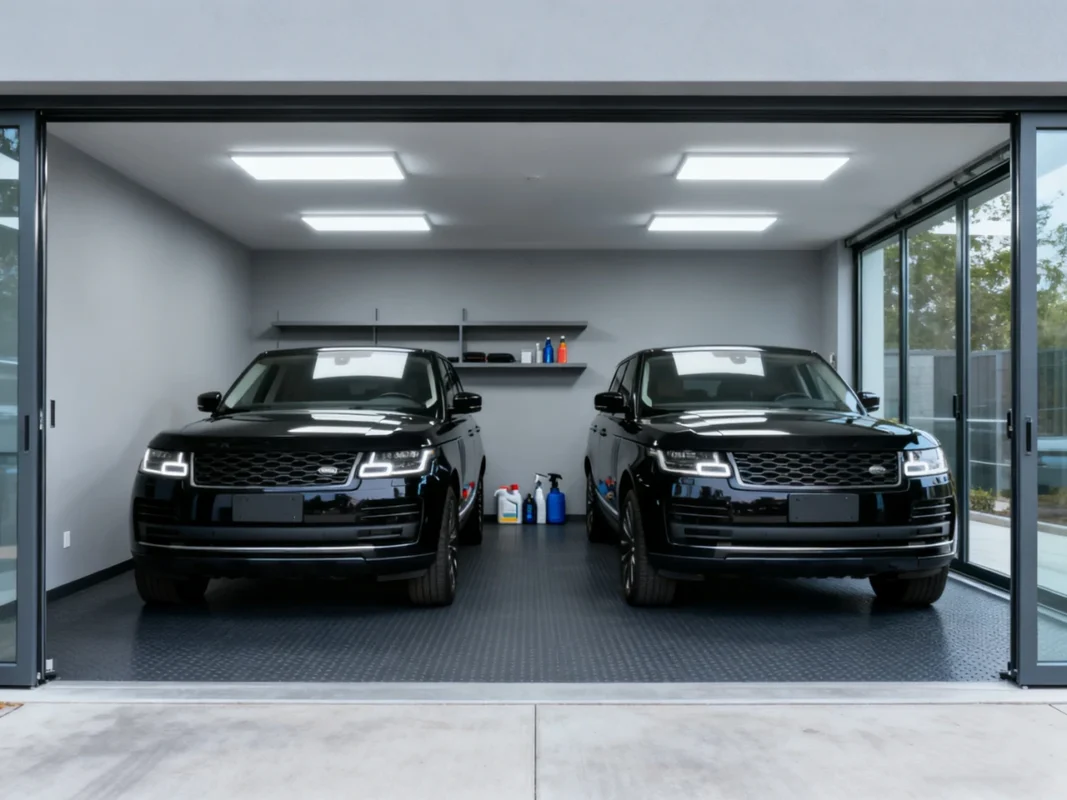
Upgrading your garage with LED garage lighting is one of the most effective ways to combine energy efficiency, brightness, and long-term convenience. LED technology has transformed how garages are illuminated, providing clear advantages over traditional incandescent or fluorescent options. In this section, we’ll explore the benefits of LEDs, creative lighting ideas for garages, and practical installation tips that ensure you get the most out of your setup.
Advantages of LED Garage Lighting
LED lights offer several advantages that make them the preferred choice for modern garages:
- Energy Efficiency
LED lights consume far less electricity than traditional bulbs, often using up to 75% less energy. This means running your garage lighting all day or night doesn’t have to translate into a massive energy bill. For garages that see frequent activity, such as workshops or hobby areas, this efficiency adds up quickly.
- Long Lifespan
One of the standout benefits of LEDs is their longevity. With lifespans ranging from 40,000 to 50,000 hours, LEDs drastically reduce the frequency of replacements. This is particularly valuable in garages with high ceilings, where changing bulbs can be cumbersome.
- Bright, Consistent Illumination
LED garage lighting provides bright, even light that minimizes shadows and dark corners. This makes tasks like automotive work, crafting, or tool organization much easier and safer. Unlike older bulbs that dim over time or flicker, LEDs maintain consistent brightness throughout their lifespan.
- Low Heat Emission
LEDs emit minimal heat compared to incandescent or halogen bulbs, which reduces the risk of overheating in enclosed garages. This not only improves safety but also allows for closer proximity to shelving or storage areas without concern.
- Eco-Friendly
Lower energy consumption and extended lifespan make LEDs an environmentally responsible choice. Less energy usage reduces your carbon footprint, while fewer replacements minimize waste.
LED Garage Lighting Ideas
Modern garage lighting ideas go beyond a single overhead fixture. Combining multiple lighting styles can create a well-lit, versatile space:
- Overhead LED Panels: These provide uniform, bright illumination for the entire garage floor. They’re especially useful for two-car garages or larger workshop spaces. Properly spaced panels prevent dark spots and shadows.
- Wall-Mounted Task Lighting: Ideal for workbenches or storage areas, wall-mounted LEDs ensure precise illumination exactly where you need it. Adjustable arms or pivoting panels can further enhance flexibility.
- Motion Sensor LEDs: Motion-activated lights offer convenience and energy savings. They turn on automatically when you enter and turn off after a period of inactivity, making them perfect for garages frequently used for short errands.
- Dimmable Options: For garages that serve multiple purposes, dimmable LEDs allow you to adjust brightness based on the activity. Bright light is perfect for mechanical work, while softer lighting creates a comfortable atmosphere for casual use.
- Modular Panel Systems: Configurable panels, including hexagonal designs, let you create custom layouts. These are ideal for large garages where a single fixture wouldn’t provide even coverage.
Installation Tips for LED Garage Lighting
Installing LED garage lighting can be straightforward if you plan carefully. Here are some practical considerations:
- DIY vs Professional Installation: Many LED panels and fixtures are plug-and-play, allowing for a DIY installation. However, if your lighting setup requires hardwiring to your electrical system or high-power configurations, hiring a licensed electrician is recommended to ensure safety and compliance with local codes.
- Spacing and Placement: Correct placement ensures even lighting. For overhead panels, evenly space fixtures across the ceiling, ensuring no area is left in shadow. Consider height, garage dimensions, and beam angles when planning placement.
- Wiring and Circuit Considerations: Check the capacity of your electrical circuit before installing multiple high-power fixtures. LEDs are efficient, but a large array of lights can still impact older wiring.
- Combining Lighting Layers: Pair overhead lights with task lighting for specific zones like workbenches, storage racks, or car maintenance areas. This layered approach enhances visibility and reduces eye strain.
- Safety Precautions: Always turn off power at the circuit breaker when installing or replacing lighting. Use appropriate mounting hardware for heavy panels, and ensure fixtures are compatible with your ceiling type—flat, vaulted, or angled.
Pro Tip: Maximizing Your LED Garage Lighting
For garages that serve multiple purposes—parking, storage, workshops, or home gyms—consider mixing overhead LED panels with wall-mounted task lights and motion sensors. This combination not only optimizes brightness and coverage but also enhances energy efficiency. Additionally, selecting neutral or daylight color temperatures (5000K–6000K) ensures bright, clear illumination suitable for both detailed work and general use.
Hexagon Garage Lighting: Innovative Options
In recent years, hexagon garage lighting has emerged as a modern solution for garages seeking both functionality and style. These modular, geometric LED panels offer a customizable approach to illuminating large or uniquely shaped spaces, making them increasingly popular among homeowners, hobbyists, and professionals alike.
What Are Hexagon Garage Lights?
Hexagon garage lights are LED panels shaped in hexagonal patterns that can be linked together to form custom grids. Unlike traditional rectangular or circular fixtures, hexagonal panels allow for versatile configurations, which is particularly helpful in irregularly shaped garages or areas with high ceilings.
The modular design enables homeowners to expand or rearrange their lighting setup without replacing the entire system. Each panel typically provides bright, even illumination, ensuring that the entire garage floor is lit consistently, with minimal shadows or dark corners. This is especially useful for garage workshops, where clear visibility is essential for detailed tasks.
Are Hexagon Lights Worth It?
When deciding whether to invest in hexagon garage lighting, several benefits make them a compelling choice:
- Customizable Layouts
Hexagon panels can be arranged to fit your garage’s unique dimensions. Whether you have a standard two-car garage or a large workshop with multiple work zones, hexagonal configurations adapt easily.
- Bright and Even Illumination
The geometric design ensures light disperses uniformly across the space. This reduces harsh shadows and creates a visually comfortable environment, ideal for tasks like mechanical work, woodworking, or vehicle maintenance.
- Energy Efficiency
Despite their size and brightness, hexagon LEDs remain highly energy-efficient, consuming significantly less power than traditional lighting solutions while providing superior coverage.
- Modern Aesthetic Appeal
Beyond functionality, hexagon lights add a stylish, futuristic look to your garage. They serve as both a practical and decorative element, transforming a utilitarian space into a visually striking environment.
- Long Lifespan
Similar to other LED solutions, hexagon panels typically last tens of thousands of hours, reducing maintenance and replacement costs over time.
Installation Requirements for Hexagon Lights
Installing hexagon garage lighting is generally straightforward, but proper planning ensures safety and optimal performance:
- Plug-and-Play Panels Many hexagon LED panels are designed for easy DIY installation. Panels can be connected together on the floor first to create your desired layout, then mounted to the ceiling.
- Electrical Considerations Some setups may require hardwiring to the electrical system for a cleaner installation or to handle larger arrays. In these cases, consulting a licensed electrician is recommended to comply with local electrical codes.
- Ceiling Compatibility Hexagon lights work well on flat, vaulted, or angled ceilings. Ensure mounting hardware is secure and rated for the fixture’s weight.
- Spacing and Coverage To maximize efficiency and prevent dark spots, space panels evenly across the ceiling. Layering hexagon panels with wall-mounted LED task lights can further enhance visibility in work areas or storage zones.
Pro Tip: Optimizing Hexagon Garage Lighting
For large or multifunctional garages, consider combining hexagon garage lighting with other garage lighting ideas such as motion sensors, dimmable LEDs, and task lighting over benches or storage racks. This layered approach creates a well-lit, energy-efficient, and highly functional environment.
Additionally, choosing panels with a daylight color temperature (around 5000K) ensures bright, natural illumination that reduces eye strain during detailed work, while maintaining a clean, modern look.

Garage Overhead Lighting and Layout Planning
Properly designed garage overhead lighting is the foundation of a well-lit, functional garage. While task lighting and wall-mounted options enhance specific areas, the main ceiling lights are responsible for creating uniform brightness across the entire space. Without careful planning, overhead lighting can leave shadows, dark corners, or glare, making your garage less safe and less efficient. In this section, we’ll explore how to plan, position, and optimize your overhead lighting setup for garages of all sizes.
How Many Lights Do You Need for a Garage?
Determining the right number of lights depends on the size of your garage, ceiling height, and intended usage:
- One-Car Garage (12×20 ft): Typically, 2–3 overhead LED fixtures with a total of 4,000–6,000 lumens provide sufficient illumination.
- Two-Car Garage (20×20 ft): A common recommendation is 4–6 LED panels, totaling 8,000–12,000 lumens. This ensures even lighting for both vehicles and any work areas.
- Workshops or Multi-Purpose Garages: Large garages or areas with high ceilings (10–12 feet or more) may require 6–8 fixtures or a combination of LED garage lighting and hexagon garage lighting to reach 12,000–15,000 lumens.
The key is not just brightness but even distribution. Multiple mid-brightness fixtures often perform better than a single ultra-bright light, reducing glare and shadows while improving visual comfort.
Best Garage Overhead Lighting Placement
Even with the right number of fixtures, placement is crucial. Here are some practical guidelines:
- Ceiling Spacing: Spread lights evenly across the ceiling, leaving no areas unlit. For rectangular garages, place lights in rows parallel to the length of the garage, keeping equal spacing between fixtures.
- Height Considerations: For standard ceilings (8–10 feet), simple overhead panels provide sufficient coverage. For high ceilings (12 feet or taller), consider LED panels with a wider beam angle or high bay-style fixtures to maintain uniform illumination at floor level.
- Layered Lighting Approach: Combine overhead fixtures with wall-mounted task lighting or adjustable LED arms over workbenches. This ensures focused light in critical areas while maintaining general illumination across the garage.
- Avoiding Shadows: Position overhead lights so that they do not cast shadows on work surfaces. For garages used as workshops, placing lights slightly forward or above workbenches reduces glare and ensures clear visibility of tools and projects.
- Reflective Surfaces: Light-colored walls and ceilings enhance the effect of overhead lighting by reflecting and dispersing light, reducing the number of fixtures needed to achieve uniform brightness.
Optimizing Overhead Lighting for Different Uses
Different garage activities require slightly different lighting strategies:
- Parking and General Storage: Uniform overhead lighting with 4,000–8,000 lumens ensures safety when moving vehicles or accessing stored items. Motion sensors can add convenience.
- Workshop Areas: Bright, cool white LEDs (5000K–6000K) above benches or machinery provide clarity for detailed tasks. Layering with hexagon garage lighting or adjustable task lights improves precision.
- Multi-Purpose Garages: For garages used as gyms, hobby spaces, or small studios, consider dimmable overhead fixtures. This allows you to adjust brightness to suit different activities without installing separate lighting systems.
Pro Tip: Planning Your Garage Lighting Layout
Sketch your garage and mark areas requiring higher light intensity, such as workbenches, tool racks, or car maintenance zones. Calculate the total lumens needed based on square footage and ceiling height, then determine fixture quantity and placement. Using a mix of garage overhead lighting and modular solutions like hexagon panels can maximize brightness while maintaining flexibility for future adjustments.
Garage Lighting Ideas for Different Uses
Workshop and Tool Areas
Bright, focused lighting is essential in work areas. Use LED garage lighting with 5,000K color temperature above workbenches and tool storage zones. Motion sensors or dimmable LEDs can make tasks easier and energy-efficient.
General Garage Illumination
For parking and storage, uniform overhead lights are key. Hexagon garage lighting grids can cover large spaces effectively, preventing dark corners and uneven illumination.
Stylish and Modern Garage Lighting Ideas
Combine hexagon garage lighting with contemporary wall sconces or slim LED panels. Dimmable LEDs allow mood control, while daylight-temperature lights maintain bright, clear visibility for projects.
Energy Efficiency and Maintenance Tips
A well-lit garage isn’t just about brightness—it’s also about efficiency, longevity, and smart upkeep. Optimizing garage lighting for energy savings and proper maintenance ensures that your space remains functional, cost-effective, and safe over time. This section will guide you through practical strategies to reduce energy consumption and extend the life of your lighting setup.
How to Save Energy With Garage Lights
Energy-efficient LED garage lighting is already a significant step toward reducing electricity costs, but there are additional strategies to maximize savings:
- Use Motion Sensors:
Motion-activated lights only turn on when someone enters the garage, preventing hours of wasted illumination. They’re especially useful in garages used for quick errands, storage access, or short-term projects.
- Install Dimmable Fixtures:
Dimmable LEDs allow you to adjust brightness to match the task. Full brightness is ideal for workbenches or mechanical projects, while a lower setting can create gentle light for casual parking or storage access.
- Layer Lighting Efficiently:
Combining overhead fixtures with wall-mounted or modular panels ensures that you use bright light only where it’s needed. This avoids over-lighting the entire space, reducing unnecessary energy usage.
- Select the Right Color Temperature:
Choosing 5000K–6000K daylight LEDs not only provides clear visibility for detailed tasks but also ensures energy efficiency. Cooler white LEDs tend to appear brighter, allowing fewer fixtures to achieve the same level of illumination.
- Reflective Surfaces and Ceiling Paint:
Painting walls and ceilings with light colors can reflect light more effectively, enhancing brightness without additional energy consumption.
- Turn Off Lights When Not in Use:
Even energy-efficient LEDs benefit from manual control. Make it a habit to switch off lights when leaving the garage for extended periods, especially if motion sensors are not installed.
Maintenance Tips for Long-Lasting Garage Lights
Proper maintenance of garage lighting is essential to preserve brightness, ensure safety, and extend the life of your fixtures. Here are key tips:
- Regular Cleaning:
Dust, cobwebs, and grease can accumulate on garage lights, reducing brightness and efficiency. Wipe panels and fixtures periodically with a soft, damp cloth. Avoid harsh chemicals that can damage LED surfaces.
- Inspect Fixtures and Wiring:
Check for loose connections, frayed wiring, or damaged mounts. Addressing minor electrical issues early prevents larger problems and maintains consistent illumination.
- Replace Bulbs and Panels Carefully:
Although LEDs last tens of thousands of hours, they eventually dim. Replace faulty or dim panels promptly to maintain uniform lighting across the garage.
- Avoid Overheating:
Even LEDs can suffer from heat stress if installed too close to walls, shelving, or insulating materials. Ensure proper spacing and ventilation around fixtures.
- Monitor Performance of Motion Sensors:
Sensors may lose sensitivity over time due to dust or misalignment. Test periodically to ensure they trigger correctly and adjust if necessary.
- Layered Upgrades Over Time:
As garage usage evolves, consider adding new fixtures or swapping older panels for more energy-efficient models. This approach maintains optimal lighting without major renovations.
Pro Tip: Balancing Brightness, Efficiency, and Longevity
For garages with multiple purposes—workshops, parking, storage, or hobby spaces—think of garage lighting as an investment. Combine energy-efficient LEDs with smart placement, sensors, and routine maintenance to reduce utility costs, improve safety, and preserve lighting quality. By planning for both efficiency and upkeep, your garage will remain bright, functional, and cost-effective for years to come.
Conclusion
Choosing the right garage lighting is more than picking bright bulbs—it’s about creating a safe, functional, and visually appealing space. Whether you opt for LED garage lighting, modern hexagon garage lighting, or a combination of overhead and task lights, careful planning ensures optimal brightness, energy efficiency, and style.
Remember: consider lumens, color temperature, ceiling height, and fixture placement for the best results. With the tips, ideas, and examples above, your garage can evolve from a dim, utilitarian space into a bright, organized, and welcoming environment for work, storage, or hobby projects.
Frequently Asked Questions
What type of lighting is best for a garage?
For most garages, LED garage lighting is the ideal choice. LEDs provide bright, even illumination while using far less energy than incandescent or fluorescent options. Pairing overhead LED panels with task lighting or hexagon garage lighting ensures both general coverage and focused light for work areas, creating a versatile and functional space.
How many lights do you need for a 20×20 garage?
A standard 20×20 garage usually requires 4–6 LED fixtures, depending on ceiling height and intended use. Each fixture should provide sufficient lumens to achieve a total of 8,000–12,000 lumens, ensuring uniform brightness across the garage. For workshops or garages with high ceilings, adding more fixtures or using high bay LED panels can prevent dark spots.
How many lumens do you need to light up a garage?
Lumens measure the brightness of your lights. For a typical one-car garage, 4,000–6,000 lumens are sufficient, while a two-car garage requires 8,000–12,000 lumens. High-ceiling garages or spaces used as workshops may need up to 15,000 lumens. Distributing lumens across multiple fixtures helps reduce shadows and ensures consistent visibility.
Is 5000K or 6000K better for a garage?
5000K is generally ideal for most garages. It provides bright, white light that closely resembles natural daylight, making it perfect for tasks like working on vehicles or DIY projects. 6000K offers slightly cooler, bluish light, which can be useful for precision tasks but may feel harsher in a general-purpose garage.
How many lights do you need for a 2-car garage?
A typical two-car garage benefits from 4–6 LED fixtures, totaling approximately 8,000–12,000 lumens. Proper placement is key: evenly spaced overhead panels reduce shadows and ensure both cars and work areas are well illuminated. For larger garages, consider supplementing with hexagon garage lighting or wall-mounted task lights.
What is the best lighting for a 12-foot ceiling garage?
Garages with 12-foot ceilings require lighting that reaches the floor evenly. High bay LED lights or wider beam LED panels are recommended to prevent dark corners. Modular systems, including hexagon garage lighting, can also be configured to ensure full coverage while maintaining energy efficiency.
Are hexagon lights good for a garage?
Yes, hexagon garage lighting is an excellent choice for garages. They offer modular, customizable layouts that provide bright, uniform light across large or irregularly shaped spaces. Beyond functionality, they also add a modern aesthetic, making the garage visually appealing while remaining practical.
Do hexagon lights need an electrician?
Many hexagon LED panels are plug-and-play, allowing for DIY installation. However, if you plan to hardwire them into your garage’s main electrical system or install a large array, hiring a licensed electrician is recommended for safety and code compliance.
Can I mix different types of lighting in a garage?
Absolutely. Combining garage overhead lighting, LED panels, and wall-mounted task lights provides layered illumination. This approach ensures bright general lighting while giving flexibility for specific work zones, reducing shadows and improving overall visibility.
How can I reduce shadows in my garage lighting setup?
Shadows can make a garage feel dim and limit visibility. To minimize them:
• Use multiple evenly spaced overhead fixtures.
• Combine garage overhead lighting with wall-mounted LEDs or task lights.
• Position lights at angles that prevent glare on work surfaces.
• Consider modular solutions like hexagon garage lighting to fill in coverage gaps.