

Table of Contents
If you’re reading this, chances are you’re planning to brighten your pool, pond, or water feature—and you’ve heard the buzz about waterproof LED lights. But the question is: which ones truly live up to submersion? In this deep dive, we’ll explore everything from IP ratings to design, installation, and long-term care. We’ll also specifically address underwater led lights for swimming pool, led swimming pool underwater light, pool lights underwater led, swimming pool lights led underwater, and even submerged pond lights.
By the end, you’ll feel confident specifying, installing, or upgrading an underwater LED system that lasts for years.
Why Use Waterproof LED Lights Underwater?
Benefits vs Traditional Lighting
When you choose true waterproof LED lights, you gain multiple advantages over older halogen or incandescent underwater lights:
- Energy efficiency: LEDs consume far less energy for the same light output. Over time, the savings in electricity can add up significantly in large pools or continuous illumination.
- Longevity & low maintenance: Quality waterproof LED lights often deliver 50,000+ hours of service under favorable conditions (as many LED lighting catalogs and pool-lighting guides attest).
- Better creative control: With LED, especially RGB or RGBW versions, you can shift colors, fade, chase, dim, or synchronize with music—something not feasible with traditional bulbs.
- Lower heat, safer in water: LEDs generate much less waste heat, reducing risks of overheating in water environments.
- Aesthetic & visual impact: Well‐placed underwater led lights for swimming pool transform nighttime swimming into magical experiences—highlighting steps, walls, contours, fountains, or reflecting surfaces.
In contrast, older underwater lights often degrade, have high bulb replacement costs, and offer little flexibility in color or dynamics.
Applications & Use Cases
You might wonder: where exactly do waterproof LED lights shine? Here are prime zones:
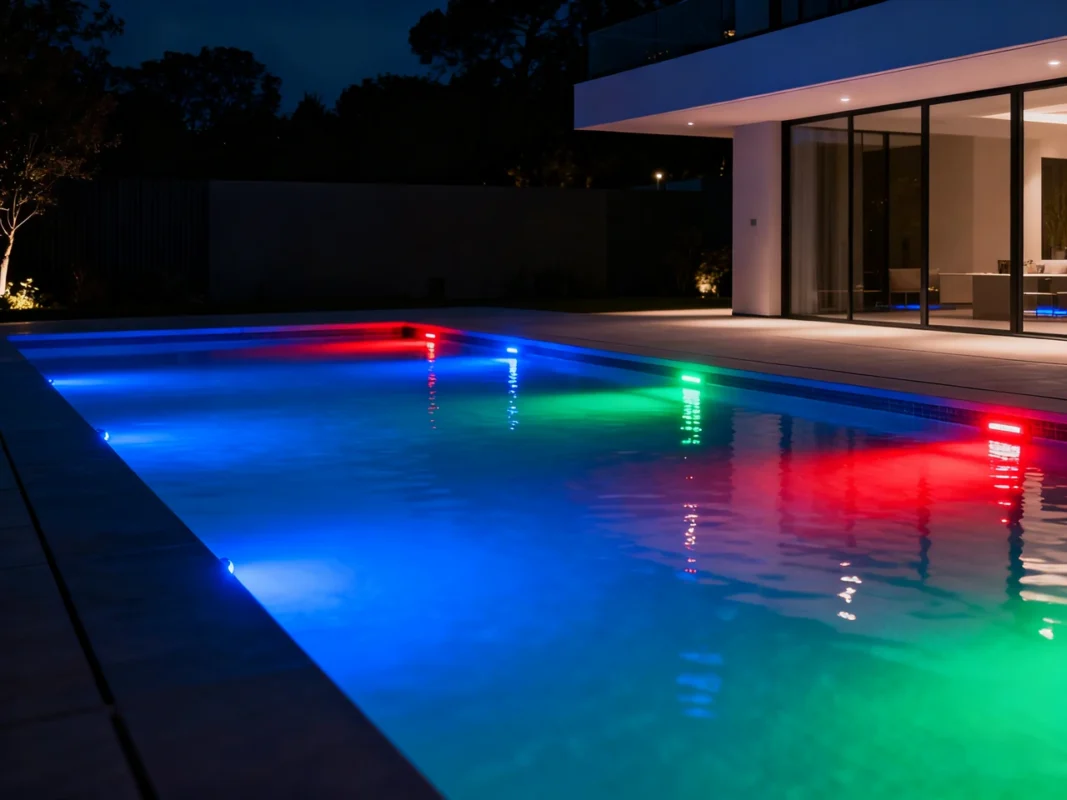
- Inground and above-ground swimming pools — the most common use. You want robust, safe, and high-output led swimming pool underwater light units to illuminate the body of water.
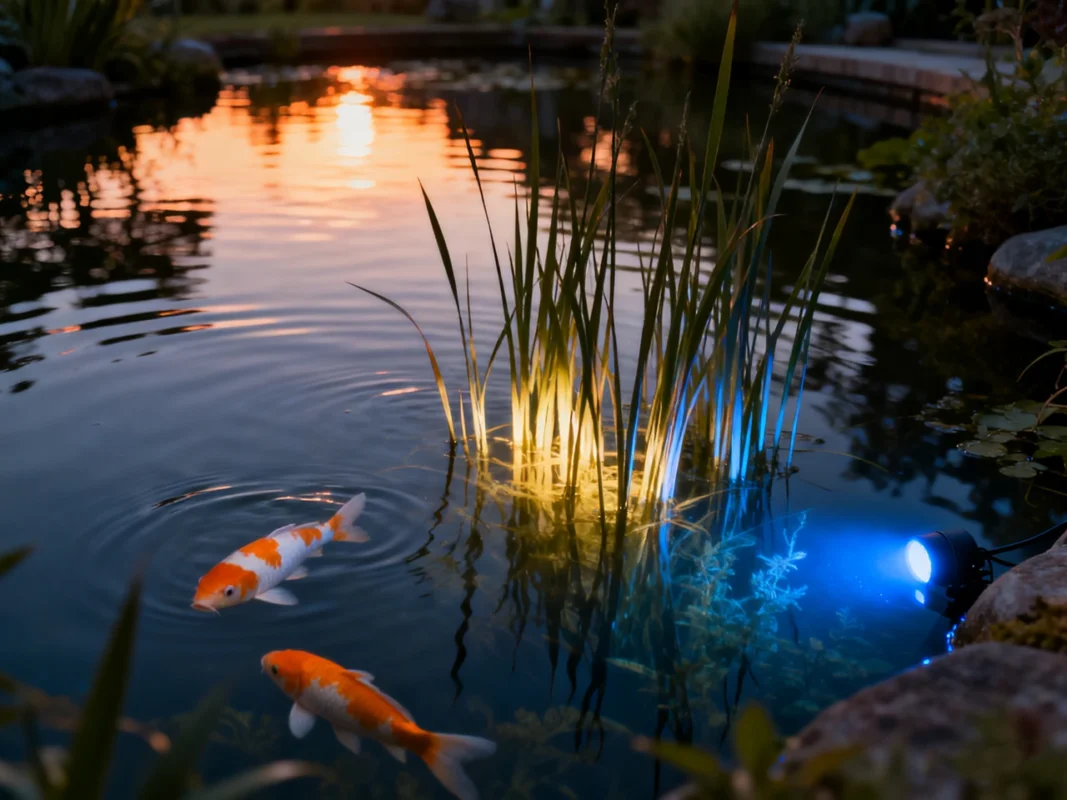
- Ponds, decorative water gardens, koi ponds — here submerged pond lights add drama and gentle glow under lily pads or fish.
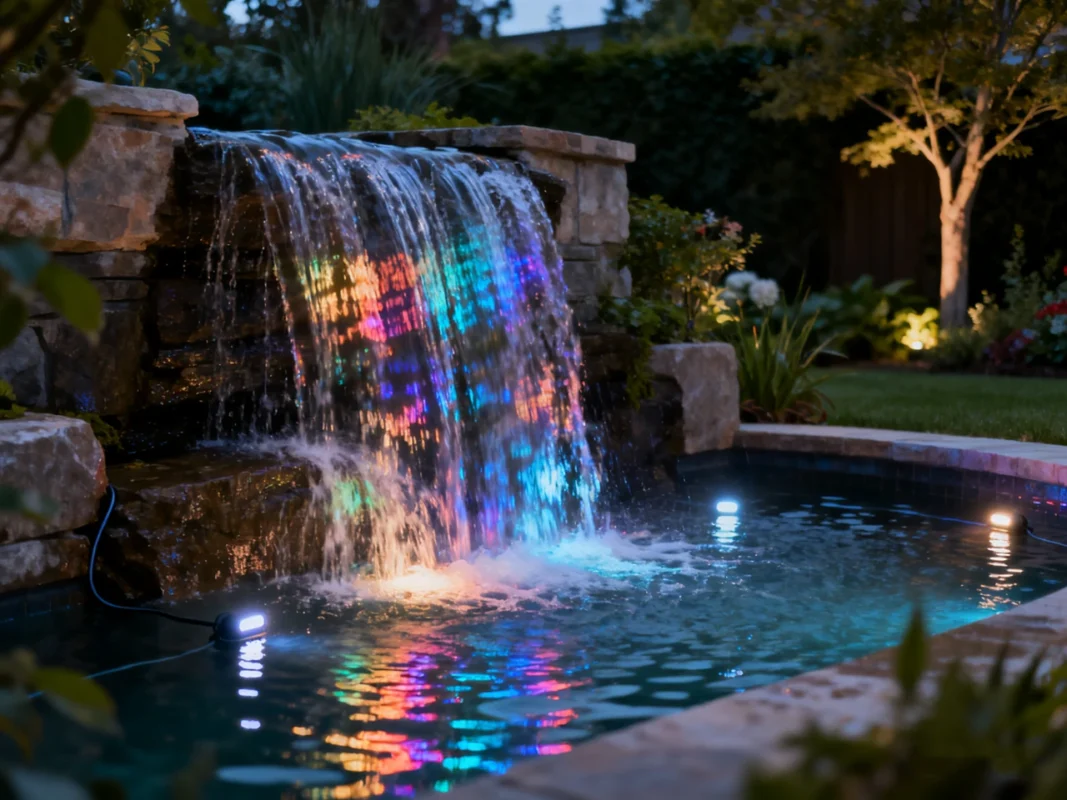
- Fountains, waterfalls, cascades — accents and visual highlights.
- Underwater architectural features — steps, underwater benches, niches, submerged walls.
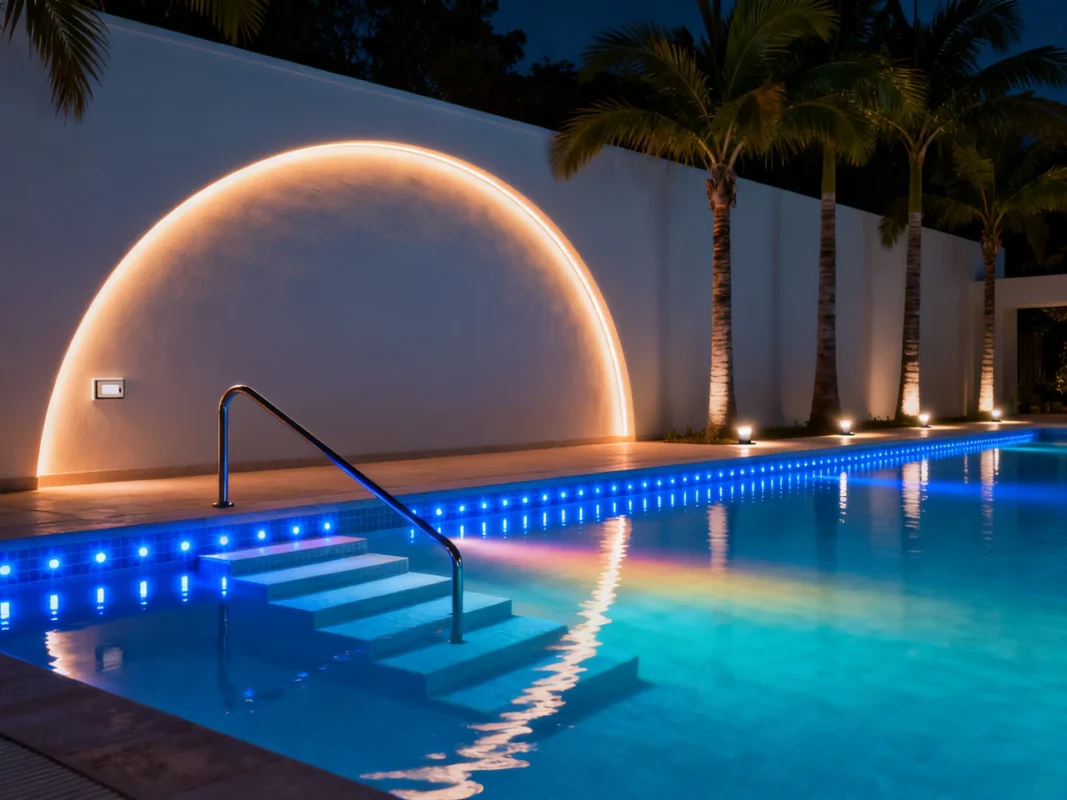
- Ambient bordering or accent installations — LED strip lighting integrated at the edges of pools or ponds (in wall channels or niches) for continuous lighting lines.
This broad range shows why having a full guide is critical—water places unique demands on electronics.
Technical Considerations & Waterproofing Methods
IP Ratings & Waterproof Standards
You’ll often see terms like IP65, IP67, or IP68 on LED product datasheets. These are Ingress Protection ratings that define how well a device resists dust and moisture. Here’s what matters for underwater use:
- The first digit (6, 5, etc.) is about solids (dust, particles).
- The second digit is about liquids:
- IP65 protects against water jets and splashes (not enough for immersion).
- IP67 handles temporary submersion (e.g. up to 1 meter for limited time)
- IP68 allows continuous submersion (commonly used for underwater fixtures)
So for a true underwater application—pool, pond, fountain—you’ll almost always aim for IP68 or better. Anything lower is risky.
Further, check that the datasheet states continuous submersion rating, not just splash resistance.
Waterproofing Methods & Construction
When it comes to waterproof LED lights, the magic doesn’t just happen because the LEDs are bright or efficient — it happens because they’re meticulously engineered to keep water out. Proper waterproofing is the heart of any reliable underwater led lights for swimming pool, led swimming pool underwater light, or pool lights underwater led system. Without strong waterproof construction, even the most advanced LED chips will fail prematurely once submerged.
Below, we’ll explore the key waterproofing techniques manufacturers use, how they work, and what you should look for when choosing lighting that’s built to last under water.
Resin Potting (Encapsulation) – The Fort Knox Approach
One of the most common and robust methods for waterproofing waterproof LED lights is resin encapsulation. In this process, the entire internal circuit board, including the LEDs, drivers, and solder points, is sealed inside a hardened resin or epoxy compound. This essentially creates a protective shell around the sensitive electronics, leaving no room for moisture to enter.
- Why it works: Resin creates a seamless, impenetrable barrier against water, dust, and pool chemicals like chlorine or salt.
- Where it’s used: Premium led swimming pool underwater light units and submerged pond lights often use resin encapsulation for IP68-rated protection.
- Pros: Highest level of waterproofing, zero gaps for water to infiltrate, ideal for permanent underwater installations.
- Cons: Because everything is sealed inside, these lights are not repairable — if they fail, the entire fixture must be replaced. Additionally, resin isn’t as efficient at dissipating heat, so proper thermal design is essential.
This “set it and forget it” style is perfect if you want swimming pool lights led underwater that you won’t have to touch for a decade.
Structural Sealing – Precision Engineering with Gaskets and O-Rings
While resin sealing locks everything in place permanently, structural sealing is a more mechanical solution. Here, manufacturers design the light housing itself as the waterproof barrier, using O-rings, silicone gaskets, compression seals, and precision-machined housings to block water from entering.
- How it works: The LED and electronics are enclosed within a sealed compartment. Silicone gaskets and O-rings are compressed tightly at all joints, lens covers, and cable entries to create a watertight seal.
- Why it’s great: Because components remain accessible, lights can often be serviced or repaired by replacing gaskets or seals — a big plus for long-term maintenance.
- Best use cases: Structural sealing is common in pool lights underwater led fixtures where serviceability and longevity are priorities.
However, precision is key here. Poorly designed housings or low-quality gaskets can degrade over time, especially in chlorinated or saltwater environments. Always look for fixtures made from marine-grade stainless steel, tempered glass, or high-quality ABS plastic, as these materials resist corrosion and chemical attack.
Cable and Connector Sealing – The Hidden Weak Link
Even if the body of your waterproof LED lights is sealed perfectly, they can still fail if water sneaks in through the cable entry point — a surprisingly common weak spot. That’s why top manufacturers pay special attention to how cables and connectors are sealed.
- Cable glands and compression fittings: These create tight seals where cables enter the light housing.
- Heat-shrink tubing and silicone sealing: Often used in combination to protect joints and solder points.
- Resin-filled junctions: For extra protection, some designs fill cable entry points with resin to eliminate any chance of water penetration.
A well-sealed cable system is critical in underwater led lights for swimming pool because even a pinhole-sized leak can allow water to wick down the cable and damage internal components.
Housing Materials and Corrosion Resistance
Beyond sealing methods, the materials used in waterproof LED lights directly affect their longevity underwater. Constant exposure to chlorine, salt, and shifting temperatures demands materials that won’t degrade over time.
- Stainless steel (316L): Resists rust and corrosion, ideal for saltwater pools or coastal installations.
- Tempered glass: Protects LEDs while withstanding pressure and temperature changes.
- UV-stable plastics (ABS, polycarbonate): Lightweight, cost-effective, and resistant to UV and chemical damage.
- Protective coatings: Some fixtures use anti-corrosion or hydrophobic coatings on internal components for extra protection.
When choosing swimming pool lights led underwater or submerged pond lights, always check material specifications — they’re as important as the IP rating.
Testing & Certification – Trust but Verify
Reputable manufacturers don’t just claim their lights are waterproof — they prove it. Before shipping, quality waterproof LED lights go through rigorous testing:
- Pressure testing: Ensures housings can withstand water pressure at depth.
- Thermal cycling: Tests durability under temperature fluctuations.
- Salt spray and chemical resistance tests: Simulate years of exposure to pool water.
- Ingress Protection (IP) certification: Verifies compliance with IP68 or higher standards.
If a brand doesn’t clearly list its testing procedures or certifications, treat that as a red flag. In underwater environments, shortcuts show up quickly — often as flickering lights or expensive failures.
Common Pitfalls & Installation Mistakes
Even the best waterproof LED lights can fail if they’re not installed or handled correctly. It’s not uncommon for pool owners and even contractors to overlook small details that lead to big headaches later — like leaks, electrical shorts, or premature light failure. If you’re planning to use underwater led lights for swimming pool, led swimming pool underwater light, pool lights underwater led, or submerged pond lights, knowing what not to do is just as important as knowing the right steps. Below are the most common pitfalls you should avoid and how to fix them before they cost you time and money.
Using Lights with the Wrong IP Rating
This is one of the most frequent mistakes made by DIYers and inexperienced installers. Not all waterproof LED lights are created equal — and “waterproof” doesn’t always mean “submersible.”
- The mistake: Choosing fixtures rated IP65 or IP67 and expecting them to survive long-term underwater use. While IP67 might handle short-term submersion, it’s not intended for continuous operation under water.
- The consequence: Moisture slowly seeps into the housing, damaging electronics and causing flickering, corrosion, or complete failure.
- The solution: Always choose IP68-ratedswimming pool lights led underwater or submerged pond lights. IP68 means they’re designed for continuous submersion and tested under realistic underwater conditions.
A single misstep here can shorten your light’s lifespan from 10 years to 10 months.
Poor Cable and Connector Sealing
A light fixture can have perfect waterproof construction — but if the cables and connectors aren’t sealed properly, water will find its way in. This often happens at junction points where the cable enters the housing or connects to the power supply.
- The mistake: Leaving connectors exposed, skipping heat-shrink tubing, or failing to apply silicone or resin sealant around entry points.
- The consequence: Water wicks through the cable and enters the light body, leading to internal corrosion or short-circuits.
- The solution: Use IP68-rated cable glands, apply silicone or epoxy sealants, and always heat-shrink exposed joints. Pre-manufactured waterproof connectors can also simplify the job and improve reliability.
Remember: in underwater environments, water behaves like a determined intruder — even a tiny gap can cause a major failure over time.
Incorrect Fixture Selection for Pool Type
Not all waterproof LED lights work in every pool. Using the wrong type of fixture for your pool’s structure is another common and costly mistake.
- The mistake: Installing niche-style lights in a pool that’s designed for surface-mounted fixtures (or vice versa).
- The consequence: Leaks around the housing, poor beam angles, reduced lighting performance, or even structural damage to the pool wall.
- The solution: Match your fixture type to your pool design. If you’re retrofitting, consider surface-mounted led swimming pool underwater light units that don’t require major structural changes. If you’re building new, recessed niche lights offer a sleek, integrated look.
Proper planning at the design stage avoids expensive rework down the road.
Overlooking Water Chemistry and Corrosion
Even the toughest waterproof LED lights can’t fight bad water chemistry forever. Salt, chlorine, and imbalanced pH are among the most underestimated enemies of underwater lighting systems.
- The mistake: Ignoring water maintenance, especially in saltwater pools or decorative ponds.
- The consequence: Corrosion on metal housings, degraded gaskets, discolored lenses, or accelerated wear on cable sheaths.
- The solution: Choose fixtures built from marine-grade stainless steel (316L), tempered glass, and UV-stable plastics. Regularly test and balance water chemistry, and rinse fixtures periodically if your pool uses salt chlorination.
This is particularly important for submerged pond lights where organic material and algae growth can also impact seals and lenses.
Skipping Pre-Installation Testing
Another avoidable error: skipping dry-run tests before final installation. Even high-quality pool lights underwater led can have defects, or wiring mistakes may occur during setup.
- The mistake: Installing fixtures directly into the pool without first powering them up and checking all modes and colors.
- The consequence: If a fixture is defective or miswired, you may have to drain the pool or redo major work — an expensive and time-consuming process.
- The solution: Bench-test every light before sealing it. Check color modes, brightness levels, and any smart control features. This small step saves countless headaches later.
Neglecting Thermal Management
It might sound counterintuitive, but waterproof LED lights still need to manage heat — even underwater. Overheating shortens LED lifespan and can lead to early failure.
- The mistake: Using resin-filled lights in shallow water or outside water where heat cannot dissipate.
- The consequence: LEDs degrade faster, colors fade, and output drops prematurely.
- The solution: Choose lights designed for the depth and conditions of your installation. For shallow water, opt for structurally sealed units with better heat dissipation. Always follow manufacturer depth recommendations.
Failing to Plan for Future Maintenance
A final but common mistake: installing lights without thinking about future maintenance or replacement.
- The mistake: Hardwiring fixtures with no slack in the cable, installing them in inaccessible locations, or sealing them permanently without considering future access.
- The consequence: When a light fails or an upgrade is needed, you might have to drain the pool or break into the wall — an expensive and avoidable problem.
- The solution: Leave extra cable length coiled behind the light (within the niche), use connectors that can be accessed above water, and choose designs that allow replacement without draining. Many led swimming pool underwater light retrofit kits now support quick swap-outs without major disruption.
LED Options for Swimming Pools & Underwater Lighting
When it comes to transforming your backyard oasis into a glowing nighttime retreat, waterproof LED lights are the gold standard. Their energy efficiency, long lifespan, vibrant color options, and design flexibility make them far superior to traditional halogen or incandescent fixtures. But with so many types and technologies available, choosing the right underwater led lights for swimming pool, led swimming pool underwater light, pool lights underwater led, swimming pool lights led underwater, or even submerged pond lights can feel overwhelming.
This section breaks down the most popular LED lighting options for pools and other water features, their unique advantages, and how to choose the right one for your space.
Fixed-Color vs. Color-Changing LED Lights
The first big decision you’ll face is whether to go with fixed-color or color-changing waterproof LED lights. Both types have their strengths, and the right choice depends on the mood and functionality you’re after.
- Fixed-Color LED Lights: These offer a single, consistent color output — usually cool white, warm white, or blue. They’re simple, reliable, and often more budget-friendly. Fixed-color led swimming pool underwater light units are perfect for homeowners who prefer a classic, elegant look without the complexity of controllers or remote systems.
- ✅ Best for: Minimalist pool designs, architectural lighting, and areas where consistency matters.
- ✅ Bonus: They tend to consume slightly less power and are easier to install.
- Color-Changing RGB & RGBW LED Lights: If you want to elevate your pool from a functional space to a dramatic visual centerpiece, RGB (red, green, blue) and RGBW (RGB + white) LEDs are the way to go. These pool lights underwater led allow you to create stunning effects, from tranquil blue glows to vibrant party-ready color cycles. Many models are app- or remote-controlled, letting you change colors, brightness, and even lighting modes with a tap.
- ✅ Best for: Entertaining, holiday themes, dynamic lighting effects.
- ✅ Bonus: RGBW versions offer crisp white light in addition to colors, giving you more versatility.
Recessed (Niche) vs. Surface-Mounted Fixtures
The physical design of waterproof LED lights affects both aesthetics and ease of installation. Two main styles dominate the market: recessed (also known as niche) lights and surface-mounted lights.
- Recessed LED Pool Lights: Installed into a pre-built niche in the pool wall, recessed lights sit flush with the surface for a sleek, professional appearance. They’re the go-to choice for new pool construction or major renovations.
- ✅ Pros: Ultra-clean look, protected from accidental impact, excellent beam control.
- ❗ Cons: Require more planning and structural work to install.
- ✅ Best for: New pools, luxury designs, and minimalist aesthetics.
- Surface-Mounted LED Pool Lights: As the name suggests, these fixtures attach directly to the pool wall’s surface, making them ideal for retrofits or upgrades without structural changes. Many swimming pool lights led underwater kits are designed for surface mounting, which simplifies installation.
- ✅ Pros: Easier to install and replace, ideal for existing pools.
- ❗ Cons: Slightly more visible and may protrude from the wall.
- ✅ Best for: Retrofit projects, quick upgrades, and DIY-friendly installations.
Spotlights, Floodlights, and Accent LEDs
Waterproof LED lights for pools come in more than just one shape or style. Understanding the three main functional categories will help you create a balanced and visually pleasing lighting design.
- Spotlights: These narrow-beam lights are perfect for highlighting specific areas like steps, waterfalls, sculptures, or fountains. Submerged pond lights often use spotlight-style LEDs to accentuate plants, fish, or water movement.
- ✅ Tip: Combine several spotlights for dramatic visual layering.
- Floodlights: Floodlights cast a wide, even beam across large areas, making them ideal for general pool illumination. A well-placed led swimming pool underwater light floodlight can make the entire pool glow with uniform brightness.
- ✅ Tip: Position floodlights strategically to avoid glare and shadows.
- Accent and Niche LEDs: These are smaller fixtures used to enhance ambiance and detail. They’re perfect for outlining pool perimeters, highlighting steps, or adding sparkle to fountains and spas. Accent lights are also widely used in submerged pond lights setups for subtle illumination.
Combining these three types often produces the best results — spotlighting key features while using floodlights for overall illumination and accents for atmosphere.
Smart & Connected LED Lighting Options
In the era of smart homes, waterproof LED lights are getting smarter too. Many modern pool lights underwater led come equipped with wireless connectivity, enabling integration with your smartphone, smart home hub, or voice assistant.
- App-Controlled Lights: Adjust color, brightness, and lighting modes from your phone, even when you’re not home.
- Voice-Activated Systems: Control your underwater led lights for swimming pool hands-free with Alexa, Google Assistant, or Siri.
- Automated Scheduling: Program lights to turn on at sunset, change colors automatically during parties, or dim for evening swims.
These smart features don’t just add convenience — they allow for creative lighting schemes that transform your pool area into a dynamic, interactive space.
Eco-Friendly and Energy-Saving LEDs
Another major advantage of waterproof LED lights is their impressive energy efficiency. Compared to traditional pool lighting, LEDs consume up to 80% less electricity and last 10–15 times longer, significantly reducing maintenance costs and environmental impact.
- Low Voltage Options: Safer for underwater use and easier to install, often at 12V or 24V.
- Solar-Powered Models: Great for decorative submerged pond lights or smaller water features.
- High-Efficiency Chips: Deliver bright illumination without overheating or energy waste.
If sustainability is part of your pool project goals, choosing energy-efficient swimming pool lights led underwater helps you save money while reducing your carbon footprint.
Specialty Options – From Ponds to Waterfalls
Beyond traditional swimming pools, waterproof LED lights are used in a variety of aquatic settings. Specialty lights are designed to meet the unique challenges of these environments:
- Submerged Pond Lights: Engineered to illuminate natural ponds, koi ponds, or garden water features. These lights often feature rugged housings, warm tones, and focused beams to highlight plants and fish.
- Waterfall & Fountain LEDs: Built to resist constant water flow and splashing, often using resin encapsulation for extra durability.
- Spa & Hot Tub LEDs: Compact lights with thermal-resistant components for higher-temperature environments.
These specialized options extend the beauty of LED technology beyond pools, turning any water feature into a nighttime focal point.
Installation & Maintenance Best Practices
Pre-Installation Planning
Before touching anything underwater, do your homework:
- Electrical safety: Use low-voltage systems (12V or 24V DC) for underwater lighting. Ensure GFCI (ground-fault circuit interrupter) protection on all circuits near water.
- Wiring paths: Plan conduit, junction boxes, and cable routing well away from sharp edges or areas where abrasion could occur.
- Bonding & grounding: Local electrical codes often require pool lighting to be bonded to a grounding grid.
- Placement, aiming, spacing, beam angles: Design lighting to cover all pool surfaces evenly, avoid glare, and accent desired areas.
- Dry-run testing: Before sealing anything, test each fixture on the bench—they should power up and work correctly in dry conditions.
Step-by-Step Installation Workflow
- Power off all circuits and lock out, tag out as needed.
- Mount the fixture (in niche or bracket) per manufacturer instructions.
- Wire and seal: pull cable through glands, connectors, and apply sealants, heat shrink or epoxy as needed.
- Seal connectors well—don’t leave joints exposed.
- Pressure test / leak test the housing (some installers use air or vacuum) before filling the pool.
- Fill water slowly, observing for leaks or faults.
- Commissioning: turn on the lights, step through modes, check for flickers, color uniformity, or dark spots.
- Document: note wire lengths, component serials, and take photographs for maintenance reference.
Maintenance, Troubleshooting & Upgrades
- Routine inspection: annually or semiannually clean lenses, check gaskets, inspect for leaks or corrosion.
- Dealing with ingress/leaks: a tiny amount of moisture inside may cause corrosion. If structural sealed, you may re-seal joints. If resin-filled, replacement is often required.
- Replacing a light (without draining): In many systems, a retrofit kit or smart design lets you remove a led swimming pool underwater light by withdrawing it from the niche, even underwater, and insert a new one. This avoids draining the entire pool.
- Upgrading or expanding: If you want more color or brightness later, plan wiring and conduit with spare capacity.
- Lens & gasket replacement: For structurally sealed types, you may replace rubber O-rings or gaskets to keep integrity.
- Watch chemical effects: Chlorine, salt, pH swings, and UV degrade materials—regular maintenance helps extend life.
Dive Deep: Underwater LED Lighting in Pools & Ponds
Safety & Regulations
- Underwater lights must comply with local electrical codes and safety standards (UL, CE, IEC).
- Use certified underwater fixtures rated for continuous submersion.
- Install with low-voltage systems with proper GFCI and bonding.
- Hire or consult a licensed electrician or pool lighting professional—mishandling underwater wiring is dangerous.
Environmental & Water Chemistry Considerations
- Regularly monitor chlorine, pH, salt levels to ensure no accelerated corrosion.
- Clean lenses and housings to prevent scale, algae, mineral build-up.
- UV exposure above water surfaces can degrade plastic housings or cable jackets—use UV-stable materials.
- Temperature cycling (hot sun to cold nights) can stress seals—check for micro-cracks.
Design & Visual Effects
- Use beam shaping: narrow beams to highlight waterfalls, wide beams to wash pool walls.
- Use color gradients—fade from shallow to deep in cool tones, or create dramatic color transitions.
- Highlight features: steps, benches, water features, walls, tile patterns.
- Dynamic lighting sequences: fade, chase, strobe, synchronize across multiple lights, sync with music.
- Blend accent strip lighting with underwater fixtures for layered visual depth.
Conclusion & Recommendations
Choosing, installing, and maintaining waterproof LED lights for underwater applications like pools or ponds is a nuanced endeavor—but when done properly, the rewards are spectacular: energy savings, visual drama, and durability for years.
FAQs
Are there waterproof LED lights?
Absolutely — waterproof LED lights are widely available and specifically engineered to operate in wet and submerged environments. Look for fixtures with an IP68 rating, which means they’re designed for continuous underwater use and sealed against both water and dust. These lights are built using advanced waterproofing techniques like resin encapsulation, gasket sealing, and waterproof cable glands to ensure long-lasting performance even under challenging conditions.
Many modern led swimming pool underwater light systems are designed to withstand years of exposure to chlorine, saltwater, and temperature fluctuations without degradation.How to make LEDs waterproof?
There are several proven methods for waterproofing LED fixtures, and manufacturers often combine more than one for maximum protection:
• Resin Potting (Encapsulation): The internal components are sealed in a solid resin block, keeping out moisture completely.
• Gaskets & O-Rings: Mechanical seals at joints and covers prevent water ingress.
• Waterproof Cable Glands: Properly sealed cable entry points stop water from wicking through wires.
• Protective Housings: Durable housings made of stainless steel, tempered glass, or ABS plastic add structural defense.
If you’re attempting a DIY project — for example, building submerged pond lights — always use waterproof enclosures and silicone sealant, and never expose solder joints directly to water.What is the best lighting for a swimming pool?
The best lighting depends on your pool’s size, style, and purpose, but LED underwater lighting almost always comes out on top. High-quality waterproof LED lights provide superior brightness, color options, energy efficiency, and lifespan compared to halogen or incandescent alternatives.
• For general illumination: Choose flood-style pool lights underwater LED.
• For dramatic effects: Go with RGB or RGBW color-changing systems.
• For safety: Use step and perimeter lights to illuminate stairs and edges.
If you want versatility, smart-controlled underwater led lights for swimming pool allow you to customize colors and lighting effects with a smartphone or voice assistant.Can pool lights be installed underwater?
Yes, they can — in fact, pool lights are designed to be installed underwater. Modern swimming pool lights led underwater are sealed to prevent water ingress and built with materials that resist corrosion from chlorine and salt. Always choose IP68-rated fixtures, and follow manufacturer installation instructions carefully, especially regarding cable sealing and mounting depth.
It’s also crucial to work with a qualified electrician to ensure the wiring and grounding meet local safety codes.Can you change a LED pool light without draining water?
In most cases, yes, you can replace a LED pool light without draining the water. Many led swimming pool underwater light systems are designed to be accessed and replaced from above the waterline. Typically, you’ll remove the fixture from its niche, bring it up to the pool deck (while still connected by a waterproof cable), replace the light or housing, and reinstall it.
However, always switch off power before attempting any maintenance. If the fixture is not designed for in-water servicing, consult a pool professional.How long do waterproof LED pool lights last?
Top-quality waterproof LED lights can last anywhere from 30,000 to 50,000 hours — that’s roughly 10 to 15 years of typical use. Lifespan depends on build quality, installation quality, water chemistry, and how often the lights are used. Choosing IP68-rated fixtures with corrosion-resistant materials and proper thermal management will ensure you get the most out of your investment.
Are LED pool lights energy-efficient?
Yes — one of the biggest advantages of pool lights underwater LED is their energy efficiency. LEDs consume up to 80% less power than halogen lights while producing the same (or greater) brightness. They also generate less heat, reducing strain on the fixture and increasing lifespan.
In addition, smart LED systems can be dimmed or scheduled, further optimizing energy use.What safety precautions should I take with underwater LED lights?
Safety is paramount with any electrical equipment near water. Follow these key steps:
• Always use low-voltage (12V or 24V) swimming pool lights led underwater to minimize shock risk.
• Ensure all connections are waterproof and properly sealed.
• Hire a licensed electrician for installation and repairs.
• Test GFCI (Ground Fault Circuit Interrupters) regularly to ensure protection.
Following these best practices will keep your waterproof LED lights safe and reliable for years to come.Can waterproof LED lights be used outside of swimming pools?
Absolutely. The same technology that powers underwater led lights for swimming pool is also used in submerged pond lights, fountains, waterfalls, aquariums, and architectural water features. Just make sure the fixture you choose is designed for the specific environment — for instance, pond lights often prioritize focused beams and warm tones, while fountain LEDs emphasize water movement and sparkle.
How do I maintain waterproof LED pool lights?
Maintenance is simple but essential for longevity:
• Inspect seals and cables annually for signs of wear or cracks.
• Clean lenses gently with a soft cloth to remove calcium buildup or algae.
• Balance your pool chemistry to prevent corrosion and gasket degradation.
• Check mounting points to ensure fixtures are secure and stable.
With proper care, led swimming pool underwater light systems will remain bright, efficient, and safe year after year.