

Table of Contents
Imagine stepping into your backyard at dusk, and your pool comes alive with gentle orbs of light dancing on the water’s surface. Floating points of glow, shifting colors, and unexpected ambiance — that’s what floating pool lamps bring to your nighttime oasis. This isn’t just about aesthetics; it’s about creating a safe, magical, and functional space after dark.
In this guide, you’ll discover everything about floating pool lamps: what they are, how they compare to traditional underwater lighting, how to choose the right model, how they perform in real life, and, of course, how to light up your pool — and even waterfalls — with elegance and safety in mind.
Here’s what you’ll learn:
- Types of floating pool lamps (solar, LED, inflatables, string lights)
- Pros and cons of using lights that float in the pool
- Brightness, color, and layout strategies
- Installation, safety, and maintenance guidelines
- How to combine floating lights with fixed underwater lighting
- Waterfall lighting techniques (and mixing floating lights)
- Bug-resistant lighting and pest control around your pool
- A hands-on buying guide and checklist
- A robust FAQ section answering common questions
Let’s dive in — your evening swims just leveled up.
What Are Floating Pool Lamps?
Definition & Core Concept
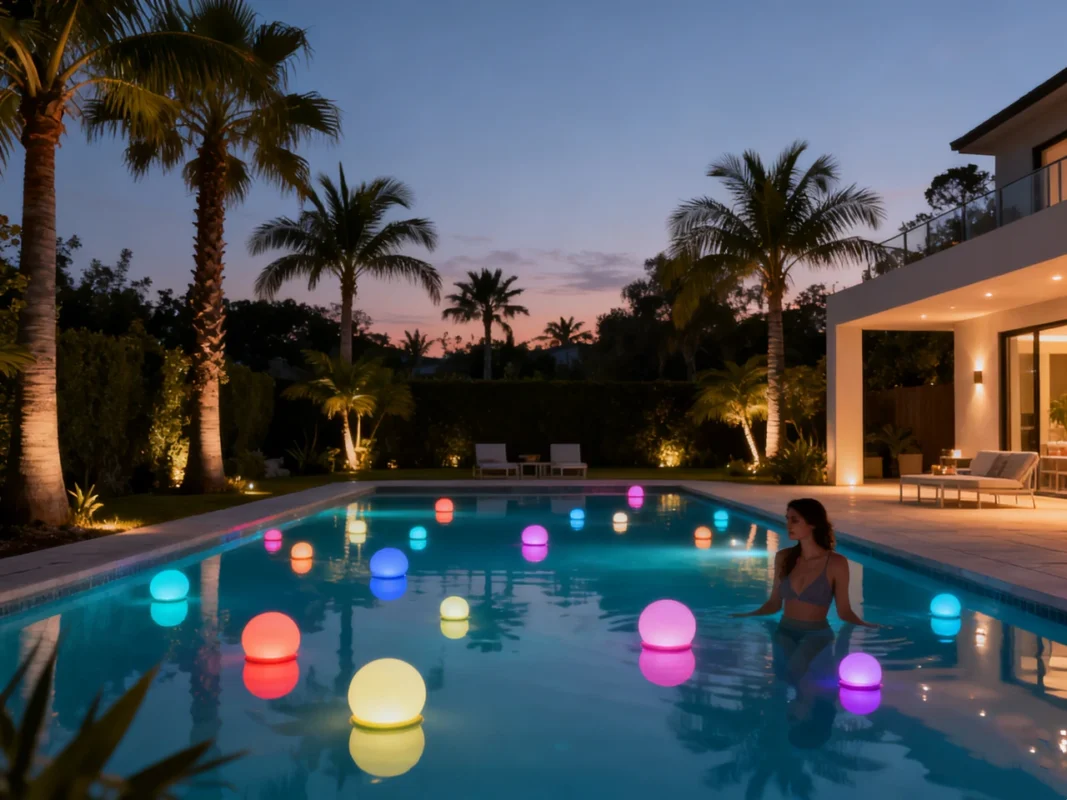
Floating pool lamps are lighting fixtures specially designed to float on the surface of a pool rather than being permanently fixed underwater or on pool walls. Their light source — typically LEDs or solar cells — sits above or just at the waterline, dispersing glow downward and around. Because they hover on water, they offer mobility, instant setup, and decorative flexibility.
You’ll often see them marketed under terms like lights that float in the pool, floating swimming pool lights, floating led pool light, floating lights for a pool, floating pool light, or solar floating lights for pool. They come in many shapes — spheres, discs, domes, string-style — and with features like color-change, remote controls, timers, and rechargeable batteries.
How They Work
- Solar-powered floating lamps capture sunlight during the day, store energy in internal batteries, and automatically activate at dusk (solar floating lights for pool).
- Battery/rechargeable LEDfloating lamps run on internal lithium-ion or AA/AAA cells, and you recharge them via USB or docking stations.
- Some designs also allow partial submersion (check specifications), but most float with only a small portion in the water.
- Many units offer remote control or app-based control over brightness, color, and modes.
Common Forms & Features
- Orb / Sphere / Bubble designs — circular shapes that float freely.
- Disc / flat shapes — low-profile floating lights.
- Inflatable floating lights — encased in inflatable balloons or decorative shells.
- String or rope floating lights — connected floats forming lines across the pool surface.
- Modular / cluster units — sets of smaller floating orbs that can be grouped or spread out.
Key features to look for:
- Brightness / lumens
- Color modes / single-color / RGB color-changing
- Waterproof rating / IP rating
- Battery life / charge cycles
- Remote control / app interface / timer modes
- Durability / UV-resistance / shock resistance
Types of Floating Pool Lights
When it comes to choosing the right floating pool lamps, you’ll quickly discover that not all lights are created equal. Different designs serve different purposes—some maximize brightness, others focus on aesthetics, and a few aim for convenience above all. Below, we’ll walk through the most common styles of lights that float in the pool, explaining how each works, where they shine, and when you might want to use them.
Floating LED Pool Light (battery or wired)
The most popular choice by far is the floatingLED pool light. These units rely on either replaceable batteries, rechargeable batteries, or in rarer cases, low-voltage wired connections. They’re known for their brightness, wide range of colors, and long lifespan compared to older halogen bulbs.
- Battery-powered models: Ideal for homeowners who want plug-and-play convenience. Simply drop them into the water, switch them on, and enjoy hours of illumination. Battery life typically ranges from 6–20 hours, depending on brightness settings and color modes.
- Rechargeable versions: A step up in convenience, since you can recharge them via USB or docking station. These are more eco-friendly and cut down on constant battery purchases.
- Wired systems: Less common but useful for permanent decorative installations, especially in commercial or resort settings.
LED lights are also energy-efficient, safer than traditional bulbs, and available in models with remote controls or smart-home connectivity. For pool owners who want reliable illumination without worrying about wiring complexity, floating swimming pool lights powered by LEDs are the go-to solution.
Solar Floating Lights for Pool
If you’re looking for eco-friendly and low-maintenance lighting, solar floating lights for pool use the sun’s energy to power up during the day and glow at night. These are especially useful in sunny climates where charging is rarely an issue.
- Advantages: No batteries to replace, no cords, and no electricity bills. They turn on automatically at dusk, which makes them a favorite for people who want “set it and forget it” convenience.
- Limitations: On cloudy days or in shaded yards, runtime may be shorter (often 4–6 hours instead of a full 8–10).
- Best use cases: Accent lighting for casual night swims, eco-minded households, or pools in vacation homes where maintenance needs to be minimal.
While they may not offer the brightness of a high-end floatingLED pool light, solar floaters deliver a warm, welcoming glow that can completely transform the pool’s ambiance.
Inflatable / Decorative Floating Lamps
Sometimes lighting isn’t just about visibility—it’s about atmosphere. Inflatable or decorative floating lights for a pool are designed more for mood and creativity than pure brightness. They come in all shapes and themes: glowing beach balls, lotus flowers, glowing cubes, or even seasonal designs like floating pumpkins for Halloween or stars for the Fourth of July.
- Pros: Affordable, fun for parties, and often color-changing for extra drama.
- Cons: Durability can be an issue, and they’re less effective at lighting the entire pool area.
These are the perfect floating pool light option when you want to wow guests at a pool party or add a whimsical, decorative touch. They won’t replace a safety-oriented lighting setup, but they will instantly create a memorable atmosphere.
Rope / String Floating Lights
A creative alternative to single units, rope or string floating swimming pool lights connect multiple light points along a cord or floating strand. They can be draped across the surface of the pool, strung around its edge, or used to form shapes for events.
- Advantages: Even distribution of light across the pool’s surface, customizable layouts, and the ability to create a “floating border” around the water.
- Best for: Defining swimming lanes, marking boundaries during night parties, or decorating pools for weddings and other special events.
Rope lights often combine LED efficiency with flexible installation, giving homeowners a way to create professional-looking designs without the cost of permanent wiring.
Hybrid / Mixed Systems
For pool owners who want the best of both worlds, hybrid systems combine multiple styles—such as pairing solar floating lights for pool with LED rechargeable units or mixing decorative inflatables with rope strands. These setups allow you to layer light in different zones: functional lighting where safety is a priority and decorative lighting where ambiance matters most.
- Examples: A pool lit by rechargeable LED orbs for consistent brightness, accented by solar floaters for eco-friendly glow, plus inflatable novelty lights during parties.
- Benefits: Greater flexibility, backup lighting if one type fails, and the ability to tailor your lighting plan to different occasions.
A hybrid approach is particularly popular for homeowners who entertain often but also want reliable, everyday illumination.
Benefits & Drawbacks of Floating Pool Lamps
Like any product you bring into your backyard, floating pool lamps come with both clear advantages and some trade-offs. Knowing the upsides and limitations helps you make an informed decision and choose the type of floating swimming pool lights that truly fits your needs.
Benefits (Why Use Floating Pool Lamps)
- Instant Ambiance Without Hardwiring Traditional pool lighting often involves electricians, drilling, and permits. By contrast, lights that float in the pool require no installation. You simply place them in the water and enjoy the glow. It’s the fastest way to change your pool’s atmosphere for evening swims or late-night parties.
- Portability and Flexibility Because they aren’t permanently fixed, floatingLED pool light units can be moved wherever you need them. Hosting a romantic evening? Cluster warm-white lamps near the steps. Throwing a birthday bash? Scatter color-changing orbs across the pool’s surface. Their mobility allows you to create different looks without commitment.
- Safety Enhancement for Night Swims Even though they can’t fully replace built-in underwater fixtures, floating pool lights add visibility around steps, shallow areas, and the pool perimeter. Parents in particular appreciate the extra glow that makes it easier to keep an eye on swimmers.
- Energy Efficiency & Eco Options Modern floating lights for a pool rely on LED technology, which uses minimal energy compared to halogen bulbs. Many options are solar-powered, reducing operating costs and cutting down on battery waste. For eco-minded homeowners, solar floating lights for pool offer both sustainability and convenience.
- Affordable Decorative Upgrade Permanent lighting systems can run thousands of dollars. A set of floating pool light orbs or inflatable designs gives you decorative appeal at a fraction of the cost. They’re also perfect for renters or seasonal homeowners who want flexibility without a permanent investment.
- Variety of Designs for Every Occasion From sleek glass-like globes to whimsical lotus flowers, the variety of floating swimming pool lights means there’s something for every mood or event. Some even sync with music or come with remotes for color programming, giving you control over the vibe.
Drawbacks & Critical Considerations
- Brightness Limitations While great for ambiance, most floating pool lamps won’t match the power of built-in underwater LEDs. If your priority is safety lighting for diving or large pools, you’ll likely need a hybrid setup that includes permanent fixtures.
- Battery Life and Charging Battery-powered lamps eventually run down. Rechargeable models need regular charging, and solar units may underperform on cloudy days. If you expect long night swims or frequent gatherings, plan for extra sets or backup lighting.
- Movement and Drifting By design, lights that float in the pool move with the water’s surface. This can be charming, but it may frustrate swimmers when lamps gather near skimmers or pool corners. Some owners tether their lights with subtle anchors to control drift.
- Durability Concerns Inflatable or budget models are prone to punctures, fading, or water leakage. Even sturdy LED orbs can develop condensation if seals degrade. Always check IP ratings and user reviews before purchase.
- Not a Substitute for Safety Lighting It’s important to emphasize that floatingLED pool light products are decorative supplements, not replacements for code-compliant pool lighting. They add atmosphere and visibility but should not be the sole source of illumination in high-use pools.
- Ongoing Maintenance Like any outdoor accessory, floating lights for a pool require care—cleaning algae build-up, wiping solar panels, or replacing batteries. Skipping maintenance reduces lifespan and performance.
Brightness, Color & Visibility: Technical Guidance
The charm of floating pool lamps lies not just in their portability but also in how they deliver light. To get the most out of your investment, you’ll want to understand a few fundamentals: brightness levels, color temperature, visibility trade-offs, and proper placement. The following technical guidance will help you select the right floating swimming pool lights for both ambiance and safety.
Brightness & Measurement
When shopping for a floatingLED pool light, don’t be misled by wattage alone. Wattage measures energy consumption, not light output. Instead, look for lumens, which quantify actual brightness.
- Small pools or spas: 50–100 lumens per floating unit is often enough for mood lighting.
- Medium pools: Multiple units in the 100–200 lumen range provide balanced illumination.
- Large pools: Consider layering with built-in underwater LEDs or string-style floating lights for a pool for broader coverage.
Keep in mind that water absorbs and disperses light differently than air. Even a bright orb can look dim if your pool is especially wide or deep. Distribute several lamps across the surface to reduce dark patches.
Color Temperature & Mood
Color temperature, measured in Kelvins (K), dramatically changes the pool’s nighttime feel:
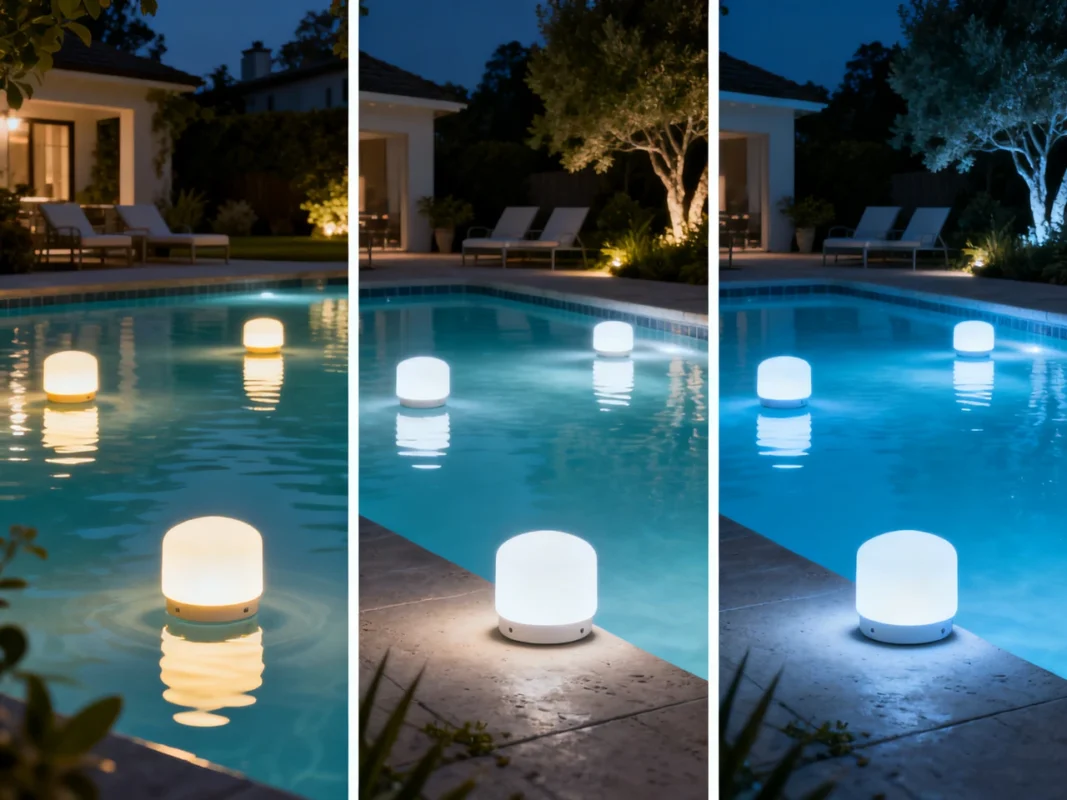
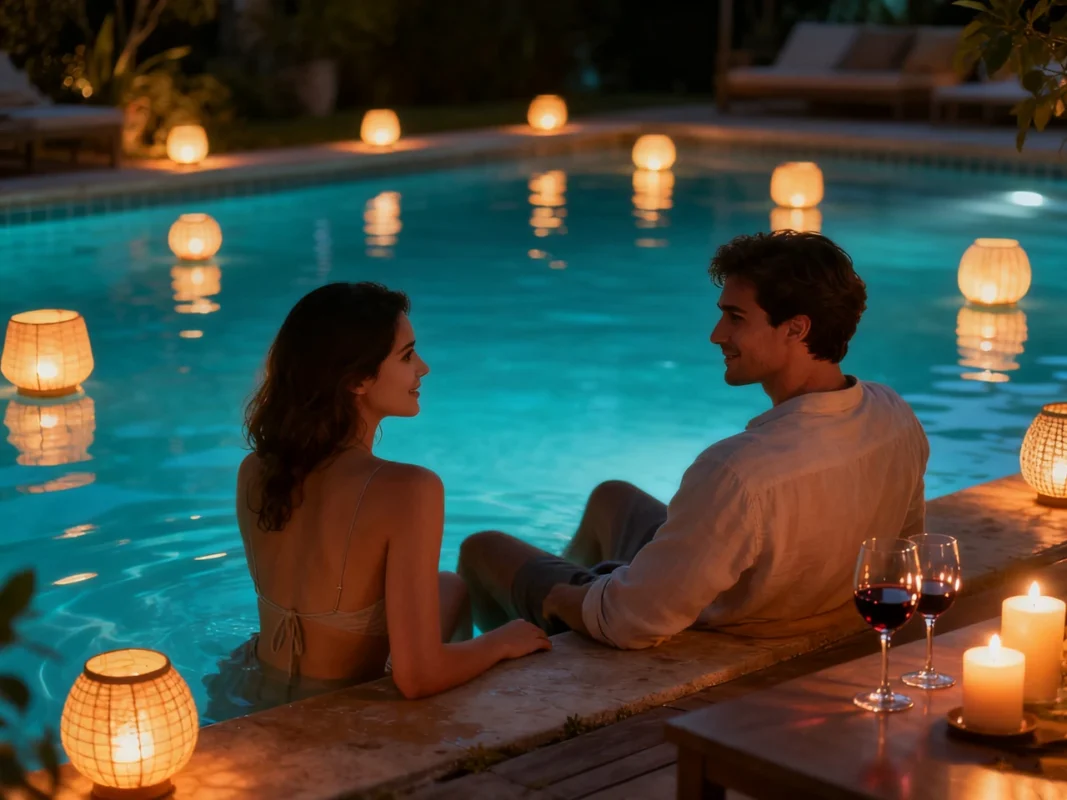
- Warm white (2700K–3000K): Creates a cozy, inviting glow, ideal for romantic evenings or backyard lounging.
- Neutral white (3500K–4000K): Balanced brightness that offers both clarity and comfort—excellent for casual swims.
- Cool white (5000K–6000K): Crisp, bright light, closer to daylight. Best for visibility and activity-focused swimming.
Many solar floating lights for pool default to warm or neutral whites, while higher-end floating LED pool light models feature tunable or color-changing options. Choosing the right temperature ensures your lighting matches your desired atmosphere.
Color vs. Visibility Trade-offs
Color-changing lamps are a highlight of modern floating pool light design. They’re perfect for parties, themed events, or simply adding fun to a night swim. However, there’s a trade-off:
- Colored light (blue, green, red, etc.): Enhances mood but can make water depth and swimmer visibility harder to judge.
- White or neutral light: Offers the best clarity for safety and navigation.
For maximum flexibility, many pool owners use a mix—setting white lights around steps or shallow areas, then scattering decorative floating swimming pool lights in colors across the water. That way, you enjoy both visibility and ambiance without compromise.
Placement & Spill Control
The way you position your lights that float in the pool matters just as much as brightness or color:
- Even distribution: Spread lamps across the pool surface to avoid clusters of light and dark areas.
- Strategic grouping: Place brighter or neutral-white units near entry steps, ladders, or shallow zones where swimmers enter and exit.
- Avoid glare: If you notice reflections off the water’s surface creating glare, adjust the lamps’ positions or combine them with soft deck lighting for balance.
- Spill control: Limit light bleeding into neighboring yards by choosing lamps with directional control or positioning them away from edges. This creates a pleasant glow for you without disturbing the neighbors.
When planned carefully, the combination of brightness, color, and placement transforms floating pool lamps from simple novelties into a smart part of your pool’s nighttime design.
Installation & Safety
While floating pool lamps are designed to be simple and approachable, you’ll still want to follow best practices to ensure safety, efficiency, and long-term performance. Unlike wired lighting systems, most floating swimming pool lights don’t require professional installation, but that doesn’t mean you can skip precautions. Here’s how to do it right.
Installing Floating Lamps
One of the biggest advantages of lights that float in the pool is how easy they are to set up.
- Step 1: Charge or insert batteries — If you’re using rechargeable or solar floatingLED pool light units, make sure they’re fully charged before first use. For battery-operated versions, insert fresh batteries and check seals for waterproof integrity.
- Step 2: Inspect for damage — Verify that the outer casing and seals are intact. Cracks or worn gaskets may allow water to leak inside, shortening the lamp’s lifespan.
- Step 3: Place strategically — Position your lamps across the surface of the water. For decorative setups, scatter them evenly; for functional lighting, concentrate brighter units near steps, shallow zones, or ladders.
- Step 4: Test before guests swim — Turn them on early in the evening so you can confirm battery strength, brightness, and placement before anyone gets in the pool.
Because most floating lights for a pool are cordless and self-contained, installation is usually no more complex than pressing a power button.
Underwater LED vs Floating LED — When to Use Which
It’s important to understand that floating pool light products are not designed to replace permanent underwater fixtures. Each has a distinct role:
- Underwater LED pool lights
- Best for: long-term, full-coverage illumination.
- Why: These lights are engineered to remain submerged, which helps cool the LED components and evenly disperse light underwater.
- Consideration: They require professional installation, electrical wiring, and adherence to safety codes.
- FloatingLED pool lights
- Best for: flexible, portable, decorative, or temporary lighting.
- Why: They can be added or removed instantly, and they’re perfect for parties, seasonal use, or as supplemental accents.
- Consideration: They shouldn’t be submerged beyond their design limits and don’t provide the same brightness as built-in fixtures.
For a well-rounded pool setup, many homeowners use both: permanent LEDs for visibility and safety, and floating swimming pool lights for color, mood, and versatility.
Electrical Safety & Codes
Even though most solar floating lights for pool and rechargeable units operate independently of your home’s electrical system, safety awareness is critical:
- Avoid DIY wiring for underwater lights — Electrical systems in and around pools must follow strict national and local codes (such as NEC in the U.S.). Improper wiring can pose serious electrocution risks.
- Check waterproof ratings — Always confirm the IP rating (Ingress Protection) of your floating lamps. IP65 or higher is recommended for pool use.
- Use GFCI outlets — If you’re charging rechargeable lights outdoors, plug chargers into ground-fault circuit interrupter outlets for added protection.
- Store chargers and spare batteries safely — Keep them dry and away from splashing zones.
Following code and manufacturer guidelines not only ensures safety but also extends the life of your floatingLED pool light products.
Night Swim Safety Checklist
Adding floating lamps can make night swimming safer and more enjoyable, but they should be part of a complete lighting strategy. Before hosting an evening swim, run through this quick checklist:
- ✅ Pool entry points are lit: Steps, ladders, and shallow ends should be visible, ideally with neutral-white floating pool lamps nearby.
- ✅ Perimeter and deck lighting works: Pathways, seating areas, and exits should have steady illumination to prevent accidents.
- ✅ No glare on water: Position floating lamps so they don’t create reflective hotspots that make it harder to see swimmers.
- ✅ Emergency lighting available: Keep a waterproof flashlight or battery lantern on hand in case solar lamps run out of charge.
- ✅ Bug control in place: Choose warm or amber-toned floating lights for a pool, which attract fewer insects, or supplement with non-toxic repellents.
- ✅ Electrical cords out of reach: If using chargers or wired accessories, ensure they’re kept well away from the water’s edge.
By pairing floating swimming pool lights with thoughtful placement and safety practices, you can create a backyard environment that’s not only beautiful but also secure for family and guests.
How to Light Up a Pool at Night — Strategies & Layouts
Night swimming is one of the best ways to enjoy your backyard oasis, but it requires more than just tossing in a few floating pool lamps. To balance beauty, safety, and practicality, you’ll want to think in terms of layers, layouts, and contingency planning. Whether you’re designing a lighting plan for a rectangular lap pool or an organic freeform shape, the strategies below will help you make the most of your floating swimming pool lights and other fixtures.
Layered Lighting Approach
A single source of light rarely does the job. The smartest way to illuminate a pool at night is through a layered approach that combines multiple lighting types:
- Underwater LED fixtures: Provide consistent, bright illumination across the pool floor and walls.
- FloatingLED pool light units: Add portable, decorative glow that enhances mood and visibility.
- Deck and landscape lighting: Ensures safe navigation around the pool and highlights nearby plants, rocks, or architectural features.
- Accent lighting: Spotlights or lanterns can be used to highlight waterfalls, fountains, or sculptures.
By mixing permanent and portable solutions, you get both the safety of built-in lights and the flexibility of lights that float in the pool for ambiance.
Layout Examples by Pool Type
Different pool shapes require different strategies for effective lighting.
- Rectangular Pools
- Place underwater LEDs evenly along the long walls to avoid shadows.
- Scatter floating lights for a pool down the center to create a glowing “runway effect.”
- Use deck lights at both ends for easy entry/exit.
- Freeform Pools
- Combine accent lighting on curves and landscaping with clusters of floating lamps.
- Vary colors and brightness of floating pool light units to highlight natural shapes.
- Lap Pools
- Stick with bright, neutral-white underwater lights for clear visibility.
- Use solar floating lights for pool edges or ends to softly mark start/finish points.
- Plunge Pools / Spas
- Use warm-white or soft-colored floatingLED pool light units for intimate ambiance.
- Place floating orbs in pairs to prevent glare from concentrated brightness.
Design layouts should reflect not only pool size but also how you use the space—fitness, entertaining, or relaxation.
Using Floating Lights as Temporary Markers
Beyond decoration, floating swimming pool lights can also serve as functional markers:
- Mark shallow vs. deep areas: Place white or amber floating orbs near shallow zones so swimmers can easily orient themselves.
- Define boundaries during events: Rope-style floating lights can be arranged to separate swimming areas from floating lounge zones.
- Highlight water features: Place floating lights near fountains or waterfalls to draw attention to movement and create shimmer.
Because floatingLED pool light units can be moved at will, they’re perfect for temporary or special-event applications without altering your permanent lighting.
Backup & Emergency Lighting
Even the best lighting plan should include a backup. A stormy evening or drained batteries can leave your pool dark at the wrong moment. Smart homeowners prepare with:
- Battery lanterns or waterproof flashlights stored poolside.
- Solar floating lights for pool that charge independently, ensuring at least a soft glow even if the power goes out.
- Portable floodlights for patios or decks to cover the area if fixed lighting fails.
Think of backup lighting as insurance: it might not be used every night, but it provides peace of mind when you’re entertaining guests or swimming with children.
Bug-Resistant Lighting & Pest Considerations
A peaceful evening swim can quickly lose its charm if your pool becomes a magnet for insects. The good news? With the right lighting strategy, you can minimize the presence of bugs while still enjoying the beauty of floating pool lamps. Not all lights attract pests equally, and combining smart lighting with pest-control practices ensures your pool stays inviting all summer long.
Choosing Bug-Friendly Lighting
Insects are drawn to light sources, but some types of floating swimming pool lights are far less appealing to them than others.
- Color Temperature Matters
- Warm white or amber tones (2700K–3000K): These attract fewer bugs compared to cool white or blue lights. If you want fewer moths and gnats hovering, opt for warmer floatingLED pool light models.
- UV and bright blue spectrums: These are most attractive to insects and should be avoided if you live in an area with high bug activity.
- Solar Floating Lights for Pool Many solar-powered units use softer LEDs, which can be easier on the eyes and less tempting for insects. If you want decorative glow without turning your pool into a bug beacon, solar lamps are a practical choice.
- Placement Is Key Scatter lights that float in the pool across the water but avoid placing the brightest ones near seating areas. This draws insects toward the pool surface instead of your guests.
In short, the type, tone, and positioning of your floating lights for a pool can determine whether you’re setting a romantic scene or an accidental insect buffet.
Complementary Pest Strategies
Lighting is just one part of a bigger picture. To truly keep bugs at bay while enjoying your floating pool light setup, integrate other pest-control methods:
- Natural Repellents Plant citronella, lavender, or lemongrass near the pool deck. These plants naturally repel mosquitoes while adding greenery to your landscape.
- Bug-Control Systems Use outdoor-safe sprays, traps, or misting systems in high-insect areas. A low-maintenance approach is to hire a professional pest-control service for scheduled treatments.
- Water Surface Management Skim your pool regularly to remove floating debris where insects might rest or breed. A clean surface reflects light better, making your floating swimming pool lights more effective.
- Alternative Light Sources Place an inexpensive bug-attracting lamp (sometimes called a “sacrifice light”) farther away from your pool. This draws pests away while your floatingLED pool light units illuminate the water undisturbed.
By combining warm-tone floating pool lamps with smart pest-prevention techniques, you can strike a balance between beauty and comfort. Guests won’t have to swat at mosquitoes while you create a magical nighttime atmosphere.
Maintenance & Longevity
Even the most stylish floating pool lamps won’t deliver lasting value unless you maintain them properly. Like any outdoor accessory, exposure to water, sun, and debris can shorten their lifespan if ignored. With a little care, your floating swimming pool lights can keep glowing for many seasons. Below are practical strategies to protect your investment and extend the longevity of your lighting setup.
Cleaning & Debris Removal
Pool environments can be tough on lighting fixtures. Chlorine, salt, leaves, and dirt can all affect performance.
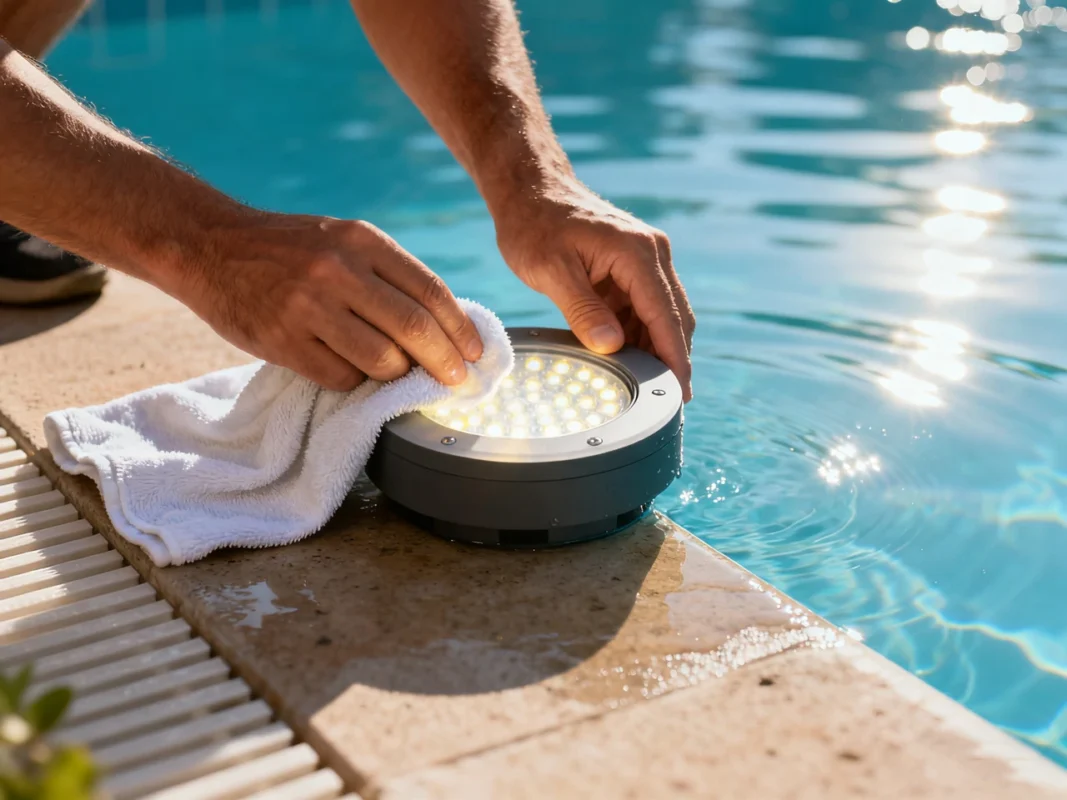
- Regular Wipe-Downs: After use, rinse your floatingLED pool light with fresh water to remove pool chemicals, then gently wipe with a soft cloth.
- Remove Leaves and Insects: Floating lamps naturally collect debris at the surface. Skim them off before they stick to the casing or block solar panels.
- Check Solar Panels: For solar floating lights for pool, a clean panel is essential. Wipe the surface weekly with a microfiber cloth so it charges efficiently.
- Avoid Abrasives: Never use harsh scrubbing pads or chlorine-heavy cleaners, as they can scratch or damage the lamp’s waterproof coating.
A quick two-minute cleaning routine can dramatically increase the durability and brightness of your floating lights for a pool.
Battery Care & Storage
The performance of your floating pool light is closely tied to how you manage its power source.
- Rechargeable Models: Top up batteries before they’re completely drained. Deep discharges can shorten battery life. Store them charged during off-seasons.
- Solar Models: Place lamps where they receive maximum sun exposure. During cloudy weeks, consider supplementing with USB charging if available.
- Battery Replacement: If your lamp dims quickly, the battery may be wearing out. Check the manual for compatible replacements rather than discarding the whole unit.
- Winter Storage: In freezing climates, remove all floating swimming pool lights from the water. Dry them thoroughly, store them indoors, and recharge them every 1–2 months.
Good storage habits can easily double the lifespan of rechargeable or solar floatingLED pool light systems.
Troubleshooting Common Problems
Even high-quality floating pool lamps can run into issues. Fortunately, most problems are easy to resolve:
- Light Doesn’t Turn On
- Check the power button or auto sensor (many solar lamps activate only in darkness).
- Replace or recharge the batteries.
- Inspect for water intrusion in the housing.
- Dim Light Output
- Clean off debris or film from the lamp’s casing or solar panel.
- Confirm batteries are fully charged.
- Replace old batteries if brightness continues to fade.
- Intermittent Operation
- Ensure sensors are not blocked by dirt or leaves.
- Reset the unit by removing and reinserting the batteries (if applicable).
- Water Leakage
- Look for cracked seals or warped casings. If water has entered, dry the lamp immediately. In most cases, a damaged seal means replacement is safer than repair.
With preventive care and occasional troubleshooting, your floating lights for a pool will continue to deliver reliable performance while saving you from frequent replacements.
Buying Guide: How to Choose the Best Floating Pool Lamp
Shopping for floating pool lamps can feel overwhelming with so many styles, power options, and price ranges available. The good news? Once you know what features to look for, you can easily find the right balance between functionality, aesthetics, and budget. This buying guide breaks down the essentials, from must-have features to side-by-side comparisons, so you can choose the perfect floating swimming pool lights for your backyard.
Essential Feature Checklist
Before you hit “buy,” evaluate your options with this checklist:
- Waterproof Rating: Look for IP65 or higher to ensure protection against splashes and immersion.
- Brightness (Lumens): Choose based on pool size—smaller pools may need 50–100 lumens per lamp, while larger ones benefit from 150–200 lumens.
- Power Source: Decide between battery, rechargeable, or solar floating lights for pool. Solar is eco-friendly, but rechargeable offers more control.
- Battery Life: Aim for 6–12 hours of runtime per charge to cover an evening of swimming.
- Color Options: Do you want fixed white, adjustable temperature, or color-changing RGB floatingLED pool light systems?
- Durability: UV-resistant casing is crucial if your lamps will be exposed to direct sunlight for long periods.
- Ease of Use: On/off buttons, remote controls, or auto sensors add convenience.
- Style: Consider whether you prefer sleek globes, lantern shapes, or themed floating lights for a pool (like flowers or stars).
Value Tiers & Recommendation Examples
Budget-Friendly ($20–$40 per lamp)
- Best for: casual use, seasonal parties, or decorative flair.
- Pros: Affordable, lightweight, often solar-powered.
- Cons: Lower brightness, shorter battery life, basic designs.
Mid-Range ($40–$80 per lamp)
- Best for: families or frequent swimmers who want reliable light output.
- Pros: Better waterproofing, longer runtimes, adjustable colors.
- Cons: Slightly higher upfront cost.
Premium ($80+ per lamp)
- Best for: large pools, luxury designs, or year-round use.
- Pros: Strong brightness, durable build, advanced features (remote control, smart-home integration).
- Cons: Higher investment, but long-term savings due to durability.
Solar vs. LED vs. Decorative — Which to Choose?
- Solar Floating Lights for Pool
- Eco-friendly and cost-effective in the long run.
- Ideal for homeowners who want set-and-forget functionality.
- Limitations: rely on sunny days to charge; may fade on cloudy weeks.
- FloatingLED Pool Light (Battery or Rechargeable)
- Provide stronger, more consistent brightness.
- Best for evening parties or when you need guaranteed light output.
- Limitations: batteries need replacing or recharging.
- Inflatable / Decorative Floating Lamps
- Perfect for themed events or adding artistic flair.
- Shapes like lotus flowers or glowing balls enhance aesthetics.
- Limitations: more fragile, typically less bright, better as accents than main lighting.
The best choice often involves mixing types—for example, solar for eco-friendly daily use and a few rechargeable floating pool light units for parties.
Side-by-Side Comparison Table
| Feature | Solar Floating Lights for Pool | Floating LED Pool Light (Battery/Rechargeable) | Decorative/Inflatable Floating Lights |
|---|---|---|---|
| Power Source | Sunlight (solar panel) | Batteries or USB recharge | Battery, solar, or none (for glow props) |
| Brightness | Low–Medium | Medium–High | Low–Medium |
| Battery Life | 6–10 hours (weather-dependent) | 8–12 hours (consistent) | 4–8 hours |
| Durability | Good, but panel needs cleaning | High, often IP65+ | Lower (inflatable or decorative casings) |
| Ease of Use | Automatic on/off sensors | Manual/remote control options | Easy, but may require frequent setup |
| Best For | Eco-conscious users, daily glow | Parties, family use, high visibility needs | Events, decoration, themed ambiance |
| Drawbacks | Dependent on sunlight | Requires charging or battery swaps | Less robust, usually accent-only |
Whether you choose floating swimming pool lights for safety, solar floating lights for pool for sustainability, or decorative lamps for charm, the key is matching the features to your pool’s needs and your lifestyle.
FAQs
How to light up a pool waterfall?
To highlight a waterfall, use a combination of floating pool lamps and permanent underwater LEDs. Position a few floating LED pool light units near the base of the waterfall to create shimmer and depth, and complement them with deck-mounted or submerged spotlights to accentuate the water flow. Warm white or neutral LEDs work best to avoid glare and enhance the natural sparkle.
How to light up a pool at night?
A layered lighting approach works best. Combine permanent underwater LEDs for consistent brightness, floating swimming pool lights for ambiance, and deck/landscape lighting for safe navigation. Scatter floating lights for a pool strategically across the surface to reduce dark zones, and use accent lights to highlight features like steps, fountains, or pool edges.
What pool light doesn’t attract bugs?
Insects are less attracted to warm-colored lights (2700K–3000K). Opt for amber or warm-white floatingLED pool light units rather than blue or UV-spectrum options. Solar-powered lamps with soft glow and properly positioned floating lights can further reduce insect activity. Complement with natural repellents like citronella or lemongrass near the pool deck.
What is the best lighting for a swimming pool
The “best” lighting depends on your goals:
• Safety: Bright underwater LEDs and well-placed floating pool lamps.
• Ambiance: Warm or color-changing floating swimming pool lights, solar units, or decorative inflatables.
• Efficiency: Solar floating lights for pool reduce energy costs, while rechargeable LEDs offer flexibility.
Combining multiple lighting types ensures both visibility and atmosphere.Do LED pool lights need to be submerged?
Not all LED lights require submersion. Floating LED pool light units are designed to sit on the water surface and illuminate without being fully underwater. In contrast, built-in underwater LEDs must remain submerged to function properly and to avoid overheating or damage. Always follow manufacturer guidelines.
Can floating lights be left in the pool overnight?
Yes, but consider battery life and water conditions. Rechargeable floating swimming pool lights can usually remain overnight safely, but solar units may drain if cloudy, and decorative inflatables might shift or drift. Remove or tether lamps if high winds, heavy rain, or freezing temperatures are expected.
Are solar floating lights bright enough for large pools?
Solar floating lights for pool provide soft, ambient glow rather than full illumination. For larger pools, combine solar units with permanent underwater LEDs or multiple high-lumen rechargeable floating LED pool light units to maintain visibility.
How do I maintain floating pool lamps?
Clean your lamps regularly to remove debris, algae, and chemical buildup. Recharge batteries for rechargeable units and wipe solar panels for solar lamps. Inspect seals to prevent water intrusion and store lamps indoors during freezing weather to prolong life.
Can I use floating lights in saltwater pools?
Yes, but look for corrosion-resistant and high-IP-rated floating pool lamps. Saltwater can accelerate wear on low-quality plastics or metals. Rinse the lamps with fresh water after use and follow maintenance guidelines.
How many floating lights do I need for my pool?
The number depends on pool size and purpose:
• Small pools or spas: 2–4 lamps.
• Medium pools: 4–8 lamps.
• Large pools: 8+ lamps, or mix floating swimming pool lights with permanent underwater LEDs.
Distribute evenly for safety and aesthetic balance, and consider accent or decorative units for specific features like waterfalls or fountains.Can floating pool lights be used in indoor pools?
Yes. Indoor pools benefit from floatingLED pool light units for ambiance, especially when permanent lighting is insufficient or you want a customizable color scheme. Ensure proper ventilation and check for water-resistant ratings suitable for indoor use.
Are decorative floating lamps suitable for daily use?
They are best used for accent lighting or special occasions. While decorative floating lights for a pool add charm, they typically have lower brightness and may be less durable than standard LED or solar floating pool light units. For everyday swimming, supplement with brighter, functional lamps.